





İLKE Vakfı
Platform
  • Türkçe
No Result
View All Result
  • PLATFORM
  • NEWS
    Filistin Sempozyumu: Filistin ve Küresel İlişkilerin Geleceği

    Exploring Islam’s View on Slavery and Blackness: Seminar by Jonathan A.C. Brown

    The Conference on Contemporary Muslim Thought

    The Conference on Contemporary Muslim Thought

    Filistin Sempozyumu: Filistin ve Küresel İlişkilerin Geleceği

    Palestine Symposium: Palestine and the Future of Global Affairs

    İLKE Agenda: Muzzammil Ayyub Thakur ile Keşmir’in “Filistinleştirilmesi”

    The Platform Talks: Palestine after October 7 with Azzam Tamimi

    İLKE Agenda: Muzzammil Ayyub Thakur ile Keşmir’in “Filistinleştirilmesi”

    The Palestine Talks: Syria after December 8 with Kinda Hawasli

    İLKE Agenda: Muzzammil Ayyub Thakur ile Keşmir’in “Filistinleştirilmesi”

    İLKE Agenda: The “Palestinization” of Kashmir with Muzzammil Ayyub Thakur

    İLKE Agenda: Muzzammil Ayyub Thakur ile Keşmir’in “Filistinleştirilmesi”

    Khaled Beydoun: “Islamophobia is a modern manifestation of the crusades”

  • ANALYSIS
    • All
    • Culture, Arts and Media
    • Economy
    • Education
    • Energy and Environment
    • Fundamental Rights and Freedoms
    • Migration
    • Opinion
    • Social Issues
    8 Aralık 2024’ten Bugüne Suriye: Devrimin İlk Yılının Muhasebesi

    From December 8th, 2024, to the Present: An Assessment on the First Year of the Revolution in Syria

    7 Ekim Sonrası Gazze’de Çöken Sağlık Sistemi ve Yeryüzü Doktorları’nın Rolü

    The Collapse of the Healthcare System in Gaza After October 7 and the Role of Doctors Worldwide

    Possible Scenarios Regarding Iran’s Nuclear Negotiations

    Possible Scenarios Regarding Iran’s Nuclear Negotiations

    Katliamların Gölgesinde Sudan

    In the Shadow of Massacres: Sudan

    Syrian Druze from December 8th to the Present, Between Sectarian, Social, and Political Identity Crises

    Syrian Druze from December 8th to the Present, Between Sectarian, Social, and Political Identity Crises

    Religion and Identity in the Crossfire of Sahelian Awakening

    Religion and Identity in the Crossfire of Sahelian Awakening

  • INTERVIEWS
    From the Ballot Box to the Street: The Rising Social Wave in Tanzania After the Election

    From the Ballot Box to the Street: The Rising Social Wave in Tanzania After the Election

    Kafkasya’da Müslümanlar ve İslami Eğitim: TCDİB Kuzey Kafkasya Koordinatörü Selim Akburak ile Söyleşi

    Muslims and Islamic Education in the Caucasus: An Interview with Selim Burak North Caucasus Coordinator in Directorate of Religious Affairs

    Göçü Yönetmek: Dr. Mehmet Köse’yle Söyleşi

    Interview with Mehmet Köse

    Gurbet Hikayeleri

    Interview on Gurbet Hikayeleri

    İstanbul’daki Uluslararası Öğrencilerle Söyleşi

    Interview with International Students in Istanbul

    Gazze’den Bir Ses

    A Voice from Gaza: Sarah al-Najjar

    Filistinli Kadınları Anlamak: Yıldız Ramazanoğlu

    Understanding Palestinian Women: Interview with Yıldız Ramazanoğlu

    Filistinli Yönetmen Nevres Salih’le Söyleşi

    Interview with Palestinian Director Nawras Abu Saleh

    Çin’de Bir Hattat: Haji Noor Deen

    A Calligrapher in China: Haji Noor Deen

  • VOICES
    Anas Altikriti | Voices from the Muslim World | Türkçe Altyazılı

    Anas Altikriti | Voices from the Muslim World | Türkçe Altyazılı

    Basil Mustafa (Oxford) | Voices from the Muslim World | with Turkish subtitles

    Basil Mustafa (Oxford) | Voices from the Muslim World | with Turkish subtitles

    OMAR SULEIMAN | VOICES FROM THE MUSLIM WORLD

    OMAR SULEIMAN | VOICES FROM THE MUSLIM WORLD

    Paul Williams | Voices from the Muslim World

    Paul Williams | Voices from the Muslim World

  • DATABASE
    • All
    • Institutions
    • Movements
    • People
    Afganistan Araştırma ve Değerlendirme Birimi

    Afghanistan Research and Evaluation Unit

    Afgan Stratejik Çalışmalar Merkezi

    Afghan Institute for Strategic Studies

    Abaad Araştırma Merkezi

    Abaad Studies & Research Center

    Hamid Dabashi

    Hamid Dabashi

    Fuad Sezgin

    Fuad Sezgin

    Fikret Karcic

    Fikret Karcic

    Fatıma Mernissi

    Fatıma Mernissi

    Farid Hafez

    Farid Hafez

    Enes Karic

    Enes Karic

  • PLATFORM
  • NEWS
    Filistin Sempozyumu: Filistin ve Küresel İlişkilerin Geleceği

    Exploring Islam’s View on Slavery and Blackness: Seminar by Jonathan A.C. Brown

    The Conference on Contemporary Muslim Thought

    The Conference on Contemporary Muslim Thought

    Filistin Sempozyumu: Filistin ve Küresel İlişkilerin Geleceği

    Palestine Symposium: Palestine and the Future of Global Affairs

    İLKE Agenda: Muzzammil Ayyub Thakur ile Keşmir’in “Filistinleştirilmesi”

    The Platform Talks: Palestine after October 7 with Azzam Tamimi

    İLKE Agenda: Muzzammil Ayyub Thakur ile Keşmir’in “Filistinleştirilmesi”

    The Palestine Talks: Syria after December 8 with Kinda Hawasli

    İLKE Agenda: Muzzammil Ayyub Thakur ile Keşmir’in “Filistinleştirilmesi”

    İLKE Agenda: The “Palestinization” of Kashmir with Muzzammil Ayyub Thakur

    İLKE Agenda: Muzzammil Ayyub Thakur ile Keşmir’in “Filistinleştirilmesi”

    Khaled Beydoun: “Islamophobia is a modern manifestation of the crusades”

  • ANALYSIS
    • All
    • Culture, Arts and Media
    • Economy
    • Education
    • Energy and Environment
    • Fundamental Rights and Freedoms
    • Migration
    • Opinion
    • Social Issues
    8 Aralık 2024’ten Bugüne Suriye: Devrimin İlk Yılının Muhasebesi

    From December 8th, 2024, to the Present: An Assessment on the First Year of the Revolution in Syria

    7 Ekim Sonrası Gazze’de Çöken Sağlık Sistemi ve Yeryüzü Doktorları’nın Rolü

    The Collapse of the Healthcare System in Gaza After October 7 and the Role of Doctors Worldwide

    Possible Scenarios Regarding Iran’s Nuclear Negotiations

    Possible Scenarios Regarding Iran’s Nuclear Negotiations

    Katliamların Gölgesinde Sudan

    In the Shadow of Massacres: Sudan

    Syrian Druze from December 8th to the Present, Between Sectarian, Social, and Political Identity Crises

    Syrian Druze from December 8th to the Present, Between Sectarian, Social, and Political Identity Crises

    Religion and Identity in the Crossfire of Sahelian Awakening

    Religion and Identity in the Crossfire of Sahelian Awakening

  • INTERVIEWS
    From the Ballot Box to the Street: The Rising Social Wave in Tanzania After the Election

    From the Ballot Box to the Street: The Rising Social Wave in Tanzania After the Election

    Kafkasya’da Müslümanlar ve İslami Eğitim: TCDİB Kuzey Kafkasya Koordinatörü Selim Akburak ile Söyleşi

    Muslims and Islamic Education in the Caucasus: An Interview with Selim Burak North Caucasus Coordinator in Directorate of Religious Affairs

    Göçü Yönetmek: Dr. Mehmet Köse’yle Söyleşi

    Interview with Mehmet Köse

    Gurbet Hikayeleri

    Interview on Gurbet Hikayeleri

    İstanbul’daki Uluslararası Öğrencilerle Söyleşi

    Interview with International Students in Istanbul

    Gazze’den Bir Ses

    A Voice from Gaza: Sarah al-Najjar

    Filistinli Kadınları Anlamak: Yıldız Ramazanoğlu

    Understanding Palestinian Women: Interview with Yıldız Ramazanoğlu

    Filistinli Yönetmen Nevres Salih’le Söyleşi

    Interview with Palestinian Director Nawras Abu Saleh

    Çin’de Bir Hattat: Haji Noor Deen

    A Calligrapher in China: Haji Noor Deen

  • VOICES
    Anas Altikriti | Voices from the Muslim World | Türkçe Altyazılı

    Anas Altikriti | Voices from the Muslim World | Türkçe Altyazılı

    Basil Mustafa (Oxford) | Voices from the Muslim World | with Turkish subtitles

    Basil Mustafa (Oxford) | Voices from the Muslim World | with Turkish subtitles

    OMAR SULEIMAN | VOICES FROM THE MUSLIM WORLD

    OMAR SULEIMAN | VOICES FROM THE MUSLIM WORLD

    Paul Williams | Voices from the Muslim World

    Paul Williams | Voices from the Muslim World

  • DATABASE
    • All
    • Institutions
    • Movements
    • People
    Afganistan Araştırma ve Değerlendirme Birimi

    Afghanistan Research and Evaluation Unit

    Afgan Stratejik Çalışmalar Merkezi

    Afghan Institute for Strategic Studies

    Abaad Araştırma Merkezi

    Abaad Studies & Research Center

    Hamid Dabashi

    Hamid Dabashi

    Fuad Sezgin

    Fuad Sezgin

    Fikret Karcic

    Fikret Karcic

    Fatıma Mernissi

    Fatıma Mernissi

    Farid Hafez

    Farid Hafez

    Enes Karic

    Enes Karic

No Result
View All Result
Platform
No Result
View All Result
Home Analyses

Islamophobia and its Production

Mahmut Hakkı Akın by Mahmut Hakkı Akın
6 July 2022
in Analyses
A A
0
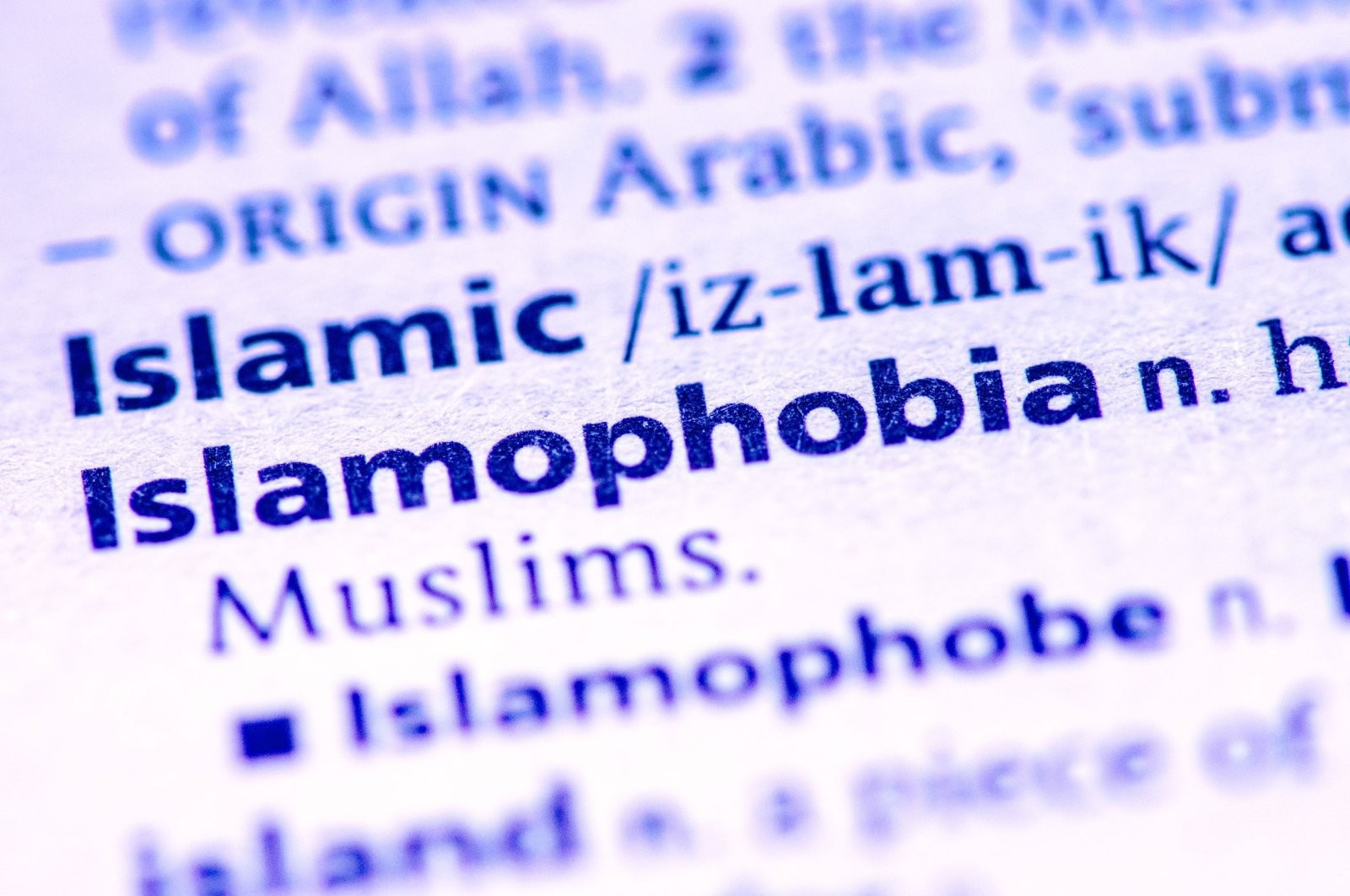
Islamophobia and its Production
Share on FacebookShare on Twitter

Islam spread around the globe mainly during the early Muslim period despite some internal tensions back then. The fact that this spread reached vast geography in a short time requires serious attention because the existence of Islam and, therefore, Muslims in vast geography in a short time cannot be explained only through wars or conquests. One of the most critical reasons for this spread is the fact that Muslims offer better alternatives when they meet people from different religions and cultures. Offering a better alternative served to set the early Muslims as an example. Based on this example, the effort to comprehend and live Islam with its own integrity can be discovered. Since the first generation, the two aspects institutionalized by Islam as a religion include worshiping and serving Allah and contributing in a way that makes this world fairer and a better place. Hence, Islam’s spread originates from a Muslim consciousness and practice.

Muslims, who believe in Islam and are its representatives, have spread the basic principles of Islam to different geographies and cultures. Being clean, fair, merciful, smiling and reliable played a significant role in the spread of these principles. The principles of morality and responsibility have given rise to commercial relations, management, family life, education, and the institutionalization of societies as a whole. This progression has induced a change in the world over the centuries. Even though this change has had several essential stages throughout history, the question of why Muslims have stayed away from this movement for several centuries continues to be a critical question. This article will not go into details about these issues and will not focus on what happened throughout history. This work will evaluate the reasons behind the persistent Islamophobic and anti-Islamist attitudes directed towards the Muslims and the future challenges the latter entails.

Islamophobia as a Form of Creating Muslim Apologism

When Islam came out as a religion in the Arabian Peninsula, many followers of other religions adopted it while others rejected its message. This situation continued during the geographical expansion of Islam and later its decline. Many new trends have emerged among the Muslims in the last two centuries. A new historical and sociological conjuncture has been produced by the changes experienced and the positioning of Western civilization against its power in science and technology. In this conjuncture, it is really momentous to question their own situation by Muslims who accept the superiority of the West after rewriting Western-centred world history and colonizing a significant part of the Muslim geography with the West’s technical superiority. It is possible to talk about the historical memory of seeing Islam and Muslims as the “other” in the West. However, this situation of seeing and defining as the other has evolved over time in other directions with the strengthening and the mentioned cyclical situation. In general, there is an evolution from an acceptance of the other that is afraid of Muslims to a power-oriented other judgment that defines them over time. The situation that emerges as a phobia here is related to the past fear, which could easily be defined and produced as Islamophobia. However, the issue to be considered here is to define rather than to recognize; It is the prominence of preferences such as constructing what is not more than what is happening while defining it.

The maintenance of Islamophobia has been independently sustained as a perception management process. At this point, the generation and upkeep of fear are not about the weak fearing the stronger one, but rather the strong one preserving his power and leaving his opponent in a state of defence. Islamophobia leaves Muslims on the defensive that they are not what they are claimed and blamed for. First and foremost, a socio-psychological process is at work here. In terms of Muslims, it can be determined that this social and psychological state, together with Western influences, produces Islamophobia and anti-Islamism in both exploited and pro-Western societies. For this reason, even though it seems to be Western-centred, it has been seen that Islamophobia and anti-Islamism are produced in different ways by positivist Westernists who claim or deny being Muslims in Muslim societies, nationalists, and other left-wing groups, emphasizing their ethnic origins before Islam. Religious groups with traditional or innovative Islamic emphasis are left to defend themselves in an environment of fear. It is a major shortcoming that the debates on Islamophobia and anti-Islamism are handled only within the boundaries of Western, orientalism, or colonialism literature. Since the nineteenth century, Islamophobia and anti-Islamism have also emerged as internal issues within Muslim societies. There have been attempts in many countries to reduce or annihilate the effects of Islam in society, with accusations of backwardness, alienation from its original culture, or being a source of exploitation in the society.

Islamophobia and anti-Islamism in Muslim societies also emanates from the internal division found within these societies. The use of religious symbols in daily life and the acceptance of religion as a secondary element of public life has been adopted by some people with a secular lifestyle. Here, the primary differentiation has been experienced through lifestyle. The cultural distance caused by the cultural division has also separated the two kinds of lifestyles from each other. Thus, the oblivion rooted in this distance for each other creates and sustains the phobia. Even though they use the joint public spaces of the same city, two types that cannot understand each other due to this distance have arisen. The empowerment of one scared the other. Cultural positions and symbolic differences in lifestyles have caused some people who respect Islam in their personal lives to indirectly contribute to Islamophobia due to their distance from religious people. It should be noted that although this is a suitable example of Islamophobia, it is not anti-Islamism. It is possible for the meaning of concepts in Muslim societies to differ in their historical and sociological contexts. In many countries such as Turkey, pre-revolutionary Iran, Egypt, and Algeria, this cultural division kept the situation of Islam and Muslims on the agenda as a constant topic of discussion.

Islamophobia Generates a Kind of Conformism in Muslim Societies

Another aspect of the Islamophobia and anti-Islam debates is the divisions and conflicts among those who claim to be religious and Islam-abiding in Muslim societies. At the beginning of the article, attention was drawn to the success of Muslims in the spread of the first Islamic society, in offering moral and humane alternatives to those who are not like them. Here, the following question may come to mind: As Malik bin Nabi points out when explaining the concept of “exploitability,” “Do Muslims not have a responsibility in forming a negative situation around themselves?” Not just the colonialist but the ones facilitating his rule by creating the conditions of exploitability should not be overlooked. Here, a state of equilibrium must be determined. On the one hand, the attitude of avoiding one’s responsibility and not making self-criticism by wholly attributing Islamophobia and anti-Islamism to the West, orientalism, and colonialism is a kind of conformism. Malik ibn Nabi is right but partially right. On the other hand, it is another form of conformism to blame Islamophobia and anti-Islamism on Muslims by only criticizing the unfavourable situation of Muslims. Understandably, both forms of conformism mutually originate from a fear or an unquestioned opposition.

Islamophobia and anti-Islamism continue to exist in their peculiar situations in the West, Muslim societies, and the East. In many countries in Asia, especially in China and India, a similar perception is held against Muslims, and violence is carried out. The twenty-first century has turned into a severe test for Muslims besides providing them with opportunities. Islamophobia is strongly provoked in many forms of media, especially social media. Lies and fiction are weapons that will further elevate uncertainty and fear.

The first spread of Islam brought about a change in history thanks to its principles. This however may not only be attributed to its believers but God who shapes the history and the times that will come. To grasp what is at the root of the paradigm that produces Islamophobia and anti-Islamism in the West, Muslim societies, and the East today, needs to search for the answers to the questions of what man is and why his existence in this world is essential. Islam appears dangerous and fearful to ones who believe human being to be a creature that is completely limited to the life of this world or is an advanced animal species. Muslims have an understanding that defines human beings in terms of fitrah and balance and it focuses on maintaining this state of balance. Depending on this understanding, they have made significant contributions to the history of humanity. The loss of fitrah and balance over time has costed both Muslims and the world because a paradigm that does not take the human fitrah and balance into account has become dominant.

The alternative human paradigm has a primary role in the production of Islamophobia and anti-Islamism. The first generation of Muslims also struggled with Islamophobia and anti-Islamism. This struggle was based on a different understanding of human being and its nature between the two groups. This difference in perspectives was also the source of moral superiority of Muslims. “What is a human?” It would not be an overstatement to say that the answer to the question has critical importance. This question is in the roots of Islamophobia and anti-Islamism which is produced in different geographies, inside and outside Muslim societies. Going out of mutual conformism based on ready-made answers and producing alternatives can start here.

Featured Statement

  1. Islamophobia leaves Muslims on the defensive that they are not what they are claimed and blamed for.
  2. It is a major shortcoming that the debates on Islamophobia and anti-Islamism are handled only within the boundaries of Western, orientalism, or colonialism literature.
Mahmut Hakkı Akın

Mahmut Hakkı Akın

Born in 1981 in Karaman, he graduated from Uludağ University, Faculty of Arts and Sciences, Department of Sociology in 2003. In 2004, he was appointed as a research assistant at Selçuk University, Department of Sociology, Faculty of Literature. He completed his master's degree in 2005 and his doctorate in 2009 at Selçuk University, Social Sciences Institute, Department of Sociology. He continued his academic career as an associate professor at Marmara University, Faculty of Communication, and Necmettin Erbakan University, Faculty of Social and Human Sciences. He is currently a professor and a faculty member in the Department of Sociology at the Faculty of Letters, Istanbul Medeniyet University, Türkiye. His research focuses on social theory, Türkiye’s modernization, political sociology, conservatism, and the sociology of childhood.

Related Articles

8 Aralık 2024’ten Bugüne Suriye: Devrimin İlk Yılının Muhasebesi
Analyses

From December 8th, 2024, to the Present: An Assessment on the First Year of the Revolution in Syria

8 December 2025
7 Ekim Sonrası Gazze’de Çöken Sağlık Sistemi ve Yeryüzü Doktorları’nın Rolü
Analyses

The Collapse of the Healthcare System in Gaza After October 7 and the Role of Doctors Worldwide

4 December 2025
Possible Scenarios Regarding Iran’s Nuclear Negotiations
Analyses

Possible Scenarios Regarding Iran’s Nuclear Negotiations

2 December 2025
Katliamların Gölgesinde Sudan
Analyses

In the Shadow of Massacres: Sudan

27 November 2025
Syrian Druze from December 8th to the Present, Between Sectarian, Social, and Political Identity Crises
Analyses

Syrian Druze from December 8th to the Present, Between Sectarian, Social, and Political Identity Crises

11 November 2025
Religion and Identity in the Crossfire of Sahelian Awakening
Analyses

Religion and Identity in the Crossfire of Sahelian Awakening

4 November 2025
  • 8 Aralık 2024’ten Bugüne Suriye: Devrimin İlk Yılının Muhasebesi

    From December 8th, 2024, to the Present: An Assessment on the First Year of the Revolution in Syria

    0 shares
    Share 0 Tweet 0
  • The Collapse of the Healthcare System in Gaza After October 7 and the Role of Doctors Worldwide

    0 shares
    Share 0 Tweet 0
  • The Collapse of the Healthcare System in Gaza After October 7 and the Role of Doctors Worldwide

    0 shares
    Share 0 Tweet 0

Platform: Agenda of the Muslim World was established within the İLKE Science Culture Education Foundation as a publication organ that aims to follow and analyze the intellectual, political, social, economic and cultural agendas of Muslim societies and to present current and original perspectives on the Muslim world.

  • ANALYSIS
  • NEWS
  • INTERVIEWS
  • VOICES
  • platform@ilke.org.tr
  • (0216) 310 43 18
  • Aziz Mahmut Hüdayi Mah. Türbe Kapısı Sk. No: 13 Üsküdar, İstanbul
Instagram X-twitter

2025 @ PLATFORM is an İLKE Foundation organization. All rights reserved.

No Result
View All Result
  • Home
  • Analyses
  • Infographic
  • Interviews
  • News
  • Database
  • Voices
İLKE Vakfı
  • Türkçe