
Platform
  • Türkçe
No Result
View All Result
  • PLATFORM
  • NEWS
    İLKE Agenda: Muzzammil Ayyub Thakur ile Keşmir’in “Filistinleştirilmesi”

    Khaled Beydoun: “Islamophobia is a modern manifestation of the crusades”

    Filistin Sempozyumu: Filistin ve Küresel İlişkilerin Geleceği

    Exploring Islam’s View on Slavery and Blackness: Seminar by Jonathan A.C. Brown

    The Conference on Contemporary Muslim Thought

    The Conference on Contemporary Muslim Thought

    Filistin Sempozyumu: Filistin ve Küresel İlişkilerin Geleceği

    Palestine Symposium: Palestine and the Future of Global Affairs

    İLKE Agenda: Muzzammil Ayyub Thakur ile Keşmir’in “Filistinleştirilmesi”

    The Platform Talks: Palestine after October 7 with Azzam Tamimi

    İLKE Agenda: Muzzammil Ayyub Thakur ile Keşmir’in “Filistinleştirilmesi”

    The Palestine Talks: Syria after December 8 with Kinda Hawasli

    İLKE Agenda: Muzzammil Ayyub Thakur ile Keşmir’in “Filistinleştirilmesi”

    İLKE Agenda: The “Palestinization” of Kashmir with Muzzammil Ayyub Thakur

  • ANALYSIS
    • All
    • Culture, Arts and Media
    • Economy
    • Education
    • Energy and Environment
    • Fundamental Rights and Freedoms
    • Migration
    • Opinion
    • Social Issues
    İran’ın Savaştaki Hedefi Zafer mi, Hayatta Kalmak mı?

    The Islamic Republic of Iran’s Tough Test Under Domestic and External Pressures

    Rethinking Urban Space: Spacio-Cide, Collective Memory, and Resistance

    Rethinking Urban Space: Spacio-Cide, Collective Memory, and Resistance

    Hezbollah’s Disarmament and the Crisis of Legitimacy in Lebanon

    Hezbollah’s Disarmament and the Crisis of Legitimacy in Lebanon

    Gazze’de Barış Planı Tartışması: Yardım, Güvenlik ve Hukuk

    Debate of Peace Plan for Gaza: Aid, Security, and Law

    Uluslararası Sistem ve Ortadoğu’nun Geleceği

    The International System and the Future of the Middle East

    İsrail’in Somaliland’ı Tanıması: Afrika Boynuzu’nda İstikrarsızlaştırıcı Bir Hamle

    Israel’s Recognition of Somaliland: A Destabilizing Move in the Horn of Africa

  • INTERVIEWS
    A Possible New Breath in Regional Balances: The Alliance of Türkiye, Pakistan, Egypt, and Saudi Arabia

    A Possible New Breath in Regional Balances: The Alliance of Türkiye, Pakistan, Egypt, and Saudi Arabia

    Kafkasya’da Müslümanlar ve İslami Eğitim: TCDİB Kuzey Kafkasya Koordinatörü Selim Akburak ile Söyleşi

    Muslims and Islamic Education in the Caucasus: An Interview with Selim Burak North Caucasus Coordinator in Directorate of Religious Affairs

    Göçü Yönetmek: Dr. Mehmet Köse’yle Söyleşi

    Interview with Mehmet Köse

    Gurbet Hikayeleri

    Interview on Gurbet Hikayeleri

    İstanbul’daki Uluslararası Öğrencilerle Söyleşi

    Interview with International Students in Istanbul

    Zaytuna College Lisansüstü Eğitim Dekanı Maşuk Yamaç’la Söyleşi

    Interview with Mahsuk Yamac, Dean of Graduate Studies at Zaytuna College

    Gazze’den Bir Ses

    A Voice from Gaza: Sarah al-Najjar

    Filistinli Kadınları Anlamak: Yıldız Ramazanoğlu

    Understanding Palestinian Women: Interview with Yıldız Ramazanoğlu

    Filistinli Yönetmen Nevres Salih’le Söyleşi

    Interview with Palestinian Director Nawras Abu Saleh

  • VOICES
    Anas Altikriti | Voices from the Muslim World | Türkçe Altyazılı

    Anas Altikriti | Voices from the Muslim World | Türkçe Altyazılı

    Basil Mustafa (Oxford) | Voices from the Muslim World | with Turkish subtitles

    Basil Mustafa (Oxford) | Voices from the Muslim World | with Turkish subtitles

    OMAR SULEIMAN | VOICES FROM THE MUSLIM WORLD

    OMAR SULEIMAN | VOICES FROM THE MUSLIM WORLD

    Paul Williams | Voices from the Muslim World

    Paul Williams | Voices from the Muslim World

  • DATABASE
    • All
    • Institutions
    • Movements
    • People
    Afganistan Araştırma ve Değerlendirme Birimi

    Afghanistan Research and Evaluation Unit

    Afgan Stratejik Çalışmalar Merkezi

    Afghan Institute for Strategic Studies

    Abaad Araştırma Merkezi

    Abaad Studies & Research Center

    Adil Bir Dünya İçin Uluslararası Hareket

    International Movement For A Just World

    Adalet ve Kalkınma Partisi

    Justice and Development Party – Hizb al-Adale wa’t-Tenmiye-Justice and Development Party

    Adalet ve İhsan Hareketi

    Justice and Ihsan Movement

    Açe Özgürlük Hareketi

    Aceh Freedom Movement

    Hamid Dabashi

    Hamid Dabashi

    Fuad Sezgin

    Fuad Sezgin

  • PLATFORM
  • NEWS
    İLKE Agenda: Muzzammil Ayyub Thakur ile Keşmir’in “Filistinleştirilmesi”

    Khaled Beydoun: “Islamophobia is a modern manifestation of the crusades”

    Filistin Sempozyumu: Filistin ve Küresel İlişkilerin Geleceği

    Exploring Islam’s View on Slavery and Blackness: Seminar by Jonathan A.C. Brown

    The Conference on Contemporary Muslim Thought

    The Conference on Contemporary Muslim Thought

    Filistin Sempozyumu: Filistin ve Küresel İlişkilerin Geleceği

    Palestine Symposium: Palestine and the Future of Global Affairs

    İLKE Agenda: Muzzammil Ayyub Thakur ile Keşmir’in “Filistinleştirilmesi”

    The Platform Talks: Palestine after October 7 with Azzam Tamimi

    İLKE Agenda: Muzzammil Ayyub Thakur ile Keşmir’in “Filistinleştirilmesi”

    The Palestine Talks: Syria after December 8 with Kinda Hawasli

    İLKE Agenda: Muzzammil Ayyub Thakur ile Keşmir’in “Filistinleştirilmesi”

    İLKE Agenda: The “Palestinization” of Kashmir with Muzzammil Ayyub Thakur

  • ANALYSIS
    • All
    • Culture, Arts and Media
    • Economy
    • Education
    • Energy and Environment
    • Fundamental Rights and Freedoms
    • Migration
    • Opinion
    • Social Issues
    İran’ın Savaştaki Hedefi Zafer mi, Hayatta Kalmak mı?

    The Islamic Republic of Iran’s Tough Test Under Domestic and External Pressures

    Rethinking Urban Space: Spacio-Cide, Collective Memory, and Resistance

    Rethinking Urban Space: Spacio-Cide, Collective Memory, and Resistance

    Hezbollah’s Disarmament and the Crisis of Legitimacy in Lebanon

    Hezbollah’s Disarmament and the Crisis of Legitimacy in Lebanon

    Gazze’de Barış Planı Tartışması: Yardım, Güvenlik ve Hukuk

    Debate of Peace Plan for Gaza: Aid, Security, and Law

    Uluslararası Sistem ve Ortadoğu’nun Geleceği

    The International System and the Future of the Middle East

    İsrail’in Somaliland’ı Tanıması: Afrika Boynuzu’nda İstikrarsızlaştırıcı Bir Hamle

    Israel’s Recognition of Somaliland: A Destabilizing Move in the Horn of Africa

  • INTERVIEWS
    A Possible New Breath in Regional Balances: The Alliance of Türkiye, Pakistan, Egypt, and Saudi Arabia

    A Possible New Breath in Regional Balances: The Alliance of Türkiye, Pakistan, Egypt, and Saudi Arabia

    Kafkasya’da Müslümanlar ve İslami Eğitim: TCDİB Kuzey Kafkasya Koordinatörü Selim Akburak ile Söyleşi

    Muslims and Islamic Education in the Caucasus: An Interview with Selim Burak North Caucasus Coordinator in Directorate of Religious Affairs

    Göçü Yönetmek: Dr. Mehmet Köse’yle Söyleşi

    Interview with Mehmet Köse

    Gurbet Hikayeleri

    Interview on Gurbet Hikayeleri

    İstanbul’daki Uluslararası Öğrencilerle Söyleşi

    Interview with International Students in Istanbul

    Zaytuna College Lisansüstü Eğitim Dekanı Maşuk Yamaç’la Söyleşi

    Interview with Mahsuk Yamac, Dean of Graduate Studies at Zaytuna College

    Gazze’den Bir Ses

    A Voice from Gaza: Sarah al-Najjar

    Filistinli Kadınları Anlamak: Yıldız Ramazanoğlu

    Understanding Palestinian Women: Interview with Yıldız Ramazanoğlu

    Filistinli Yönetmen Nevres Salih’le Söyleşi

    Interview with Palestinian Director Nawras Abu Saleh

  • VOICES
    Anas Altikriti | Voices from the Muslim World | Türkçe Altyazılı

    Anas Altikriti | Voices from the Muslim World | Türkçe Altyazılı

    Basil Mustafa (Oxford) | Voices from the Muslim World | with Turkish subtitles

    Basil Mustafa (Oxford) | Voices from the Muslim World | with Turkish subtitles

    OMAR SULEIMAN | VOICES FROM THE MUSLIM WORLD

    OMAR SULEIMAN | VOICES FROM THE MUSLIM WORLD

    Paul Williams | Voices from the Muslim World

    Paul Williams | Voices from the Muslim World

  • DATABASE
    • All
    • Institutions
    • Movements
    • People
    Afganistan Araştırma ve Değerlendirme Birimi

    Afghanistan Research and Evaluation Unit

    Afgan Stratejik Çalışmalar Merkezi

    Afghan Institute for Strategic Studies

    Abaad Araştırma Merkezi

    Abaad Studies & Research Center

    Adil Bir Dünya İçin Uluslararası Hareket

    International Movement For A Just World

    Adalet ve Kalkınma Partisi

    Justice and Development Party – Hizb al-Adale wa’t-Tenmiye-Justice and Development Party

    Adalet ve İhsan Hareketi

    Justice and Ihsan Movement

    Açe Özgürlük Hareketi

    Aceh Freedom Movement

    Hamid Dabashi

    Hamid Dabashi

    Fuad Sezgin

    Fuad Sezgin

No Result
View All Result
Platform
No Result
View All Result
Home News

Palestine Symposium: Palestine and the Future of Global Affairs

Self-belief and hard work will always earn you success.

Platform Editör by Platform Editör
14 August 2025
in News
A A
0
Filistin Sempozyumu: Filistin ve Küresel İlişkilerin Geleceği
0
SHARES
1
VIEWS
Share on FacebookShare on Twitter

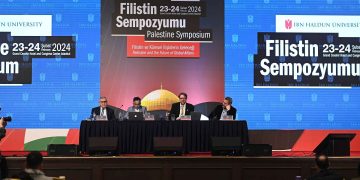
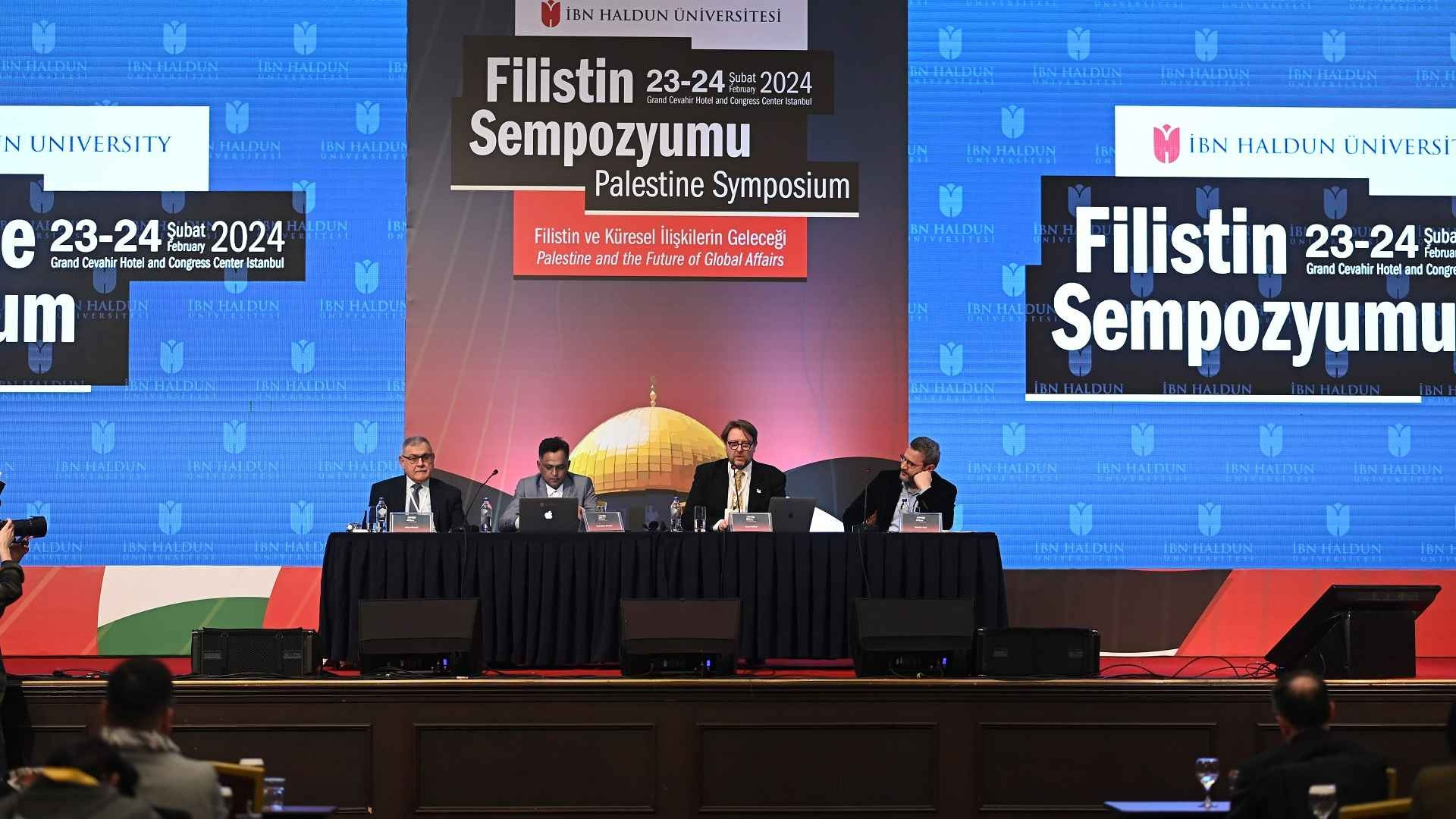
Ibn Haldun University organized the Palestine Symposium, themed Palestine and the Future of Global Affairs, on 23-24 February 2024 in Istanbul. Researchers, academics, journalists, and activists from all over the world came together at the symposium and raised their voices against the systematic genocide of Palestinians by the occupation forces for years. As can be understood from the theme of the symposium, the future of Palestine was evaluated in the context of global relations, and the participants sought answers to the long-term and forward-looking question of what should be done. In particular, they emphasized that the events in Gaza did not start on October 7 and that Israel has subjected Palestine to occupation for years through settler colonialism, ethnic cleansing, and violence. They also focused on the issue that Palestinians, deprived of the simplest humanitarian needs, have been living in an open-air prison and highlighted that October was a turning point in this struggle.

Norwegian doctor and activist Mads Gilbert, who has been working in Gaza since 2006, delivered a remarkable keynote speech. Gilberts, who worked for 16 years as a doctor at Shifa Hospital and knows personally what Israeli violence means for Gazans, emphasized that the occupation forces are directly targeting the Palestinian health system with their attacks and that Israel is committing severe humanitarian and moral crimes. He said that these attacks and genocide are openly supported by the US and some European states and that a “politics of elimination” is being pursued. Perhaps one of his most important points was the strict restrictions imposed by Israel on Palestinian access to health care. Gilberts defined this situation as “medical apartheid” and pointed out that there are serious differences between Palestine and Israel in terms of health. For example, the fact that the average life expectancy in Palestine is 9 years less than in Israel, the infant mortality rate is 4 times higher, the under-5 mortality rate is 3.5 times higher, and the maternal mortality rate is 9 times higher as a result of Israel’s conscious occupation policies. In this regard, emphasizing the importance of “medical solidarity,” Gilbert stressed that following a path of evidence-based practices and choosing the right side to fight shoulder to shoulder is the most effective way to defeat Israeli occupation in the Palestinian healthcare system.

After Mads Gilbert’s opening remarks, in the first panel titled “Safeguarding Academic Freedom and the Role of Public Intellectuals on Palestine,” Sociology Professor at Ibn Khaldun University, Irfan Ahmad, highlighted the academic isolation imposed on Palestine and argued that the Palestinian issue has been stripped not only of freedom of expression but also of discourse. Kamalain Shaath, who served as the rector of the Islamic University of Gaza between 2005 and 2015, highlighted what the Israeli occupation means in the field of academia and education itself and stated that academic freedom should be evaluated from both intellectual and physical perspectives. As an academic, Shaath argued that in order to talk about academic freedom, there should be free spaces where ideas can be discussed, and there should be no fear of punishment for expressing ideas. In addition, Shaath addressed the daily difficulties faced by students and academics in carrying out academic activities, as the Israeli occupation restricts access to higher education institutions in the Gaza territory. Finally, Shaath also emphasized the importance of academic boycotts, calling for a boycott of Israeli universities that support the occupation and of Israeli and pro-Israeli academics. On the other hand, Professor David, who was dismissed from his job at the University of Bristol for his anti-Zionist rhetoric, stated that Zionism is against academic freedom because any discussion or criticism related to Palestine is seen as a critique of the Zionist project. Miller also said that after October 7, the Israeli occupation forces deliberately destroyed the Islamic University of Gaza and targeted academics, just as they targeted doctors, teachers, and rescue workers.

Alongside academics, there was also significant participation from pro-Palestinian activists at the symposium. Shamim Hargovan, a human rights and social justice activist from South Africa, described Israel’s aggression as “the most barbaric, inhuman genocide and ethnic cleansing” and noted that the displacement of Gazans and the violence they have suffered was similar to what was happening in South Africa in the past. Shamim emphasized that it is very important that South Africa, which fought against the apartheid regime in the past, is now suing Israel, another apartheid regime. Another important activist was Jeff Halper, Director of the Israeli Committee Against Housing Demolitions. As an Israeli citizen, Halper has been advocating alongside Palestinians against the colonial settler colonialism of the occupying forces for years. Halper highlighted that the settlement of the Palestinian issue requires a political program and that the settler occupation is a colonial plan aimed at the destruction of the Palestinians. Additionally, Halper noted the significant Jewish population already present in Palestinian territories, suggesting that political solutions must take this reality into account.

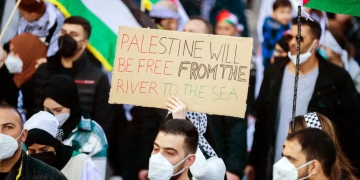
The closing speeches of the symposium were delivered by Talal Asad and Mahmoud Mamdani, two distinguished professors of Sociology and Anthropology. Emphasizing that language is not merely a tool for simple description but rather a complex method of action, Asad stated that language not only defines but also motivates and shapes experiences. He noted that the phrase “from the river to the sea,” used by Palestinians today, has been criminalized in America, yet it is part of the discourse advocating for the establishment of a “democratic” and “ethnic” Jewish state in Palestinian territories, regardless of the Palestinian population. Asad remarked that Israel’s state-building process is neither about exile nor related to the Torah but rather is a secular European action. Mamdani, on the other hand, noted the strong relationship between colonialism and nationalism, asserting that the establishment of nation-states often involves ethnic cleansing and extreme violence. In this context, Mamdani argued that Israel is the most extreme contemporary example of nation-state logic and stated that Israel, initially founded on liberal tendencies, has evolved towards an illiberal form of nationalism.

In the two-day Palestine Symposium organized by Ibn Haldun University, researchers, academics, journalists, and activists with different backgrounds from all over the world discussed the future of Palestine, especially the Israeli occupation, academic freedom, apartheid and Zionist occupation, settler-colonialist violence, the legal perspective of the Gaza genocide, global solidarity with Palestine and the role of media in the portrayal of Palestine. The ongoing Israeli occupation, which has resulted in the loss of thousands of civilian lives and the displacement of many from their homes, was particularly crucial to discuss in academic circles. The participants of the symposium, who shed light on how the Israeli occupation spreads to every aspect of human life, emphasized the urgent need for an immediate ceasefire, articulating this demand with resounding clarity.
Platform Editör

Platform Editör

Next Post
The Conference on Contemporary Muslim Thought

The Conference on Contemporary Muslim Thought

Leave a Reply Cancel reply

Your email address will not be published. Required fields are marked *

  • İsrail’in Somaliland’ı Tanıması: Afrika Boynuzu’nda İstikrarsızlaştırıcı Bir Hamle

    Israel’s Recognition of Somaliland: A Destabilizing Move in the Horn of Africa

    0 shares
    Share 0 Tweet 0
  • The Islamic Republic of Iran’s Tough Test Under Domestic and External Pressures

    0 shares
    Share 0 Tweet 0
  • The International System and the Future of the Middle East

    0 shares
    Share 0 Tweet 0
  • Debate of Peace Plan for Gaza: Aid, Security, and Law

    0 shares
    Share 0 Tweet 0

Platform: Agenda of the Muslim World was established within the İLKE Science Culture Education Foundation as a publication organ that aims to follow and analyze the intellectual, political, social, economic and cultural agendas of Muslim societies and to present current and original perspectives on the Muslim world.

  • ANALYSIS
  • NEWS
  • INTERVIEWS
  • VOICES
  • platform@ilke.org.tr
  • (0216) 310 43 18
  • Aziz Mahmut Hüdayi Mah. Türbe Kapısı Sk. No: 13 Üsküdar, İstanbul
Instagram X-twitter

2025 @ PLATFORM is an İLKE Foundation organization. All rights reserved.

No Result
View All Result
  • Issues
  • Platform English