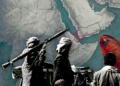











Operation Al-Aqsa Flood is a surprise military operation involving land, air, and sea elements, launched against Israel on October 7, 2023, by Hamas’s military wing, the Izz ad-Din al-Qassam Brigades, along with allied Palestinian groups.
Accompanied by thousands of rockets fired from the Gaza Strip on October 7, border barriers were breached, and infiltration into military bases and residential areas under Israeli control occurred via air using paramotors and via sea using boats. Catching Israel’s military and intelligence units off guard, this move resulted in one of the largest security crises in the country’s history.
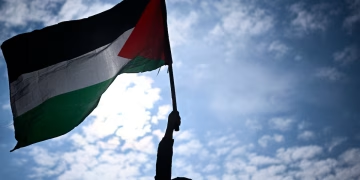
Hamas declared this operation as a response to the violations against the Al-Aqsa Mosque and holy sites in Jerusalem, expanding illegal settlement (occupation) activities in the West Bank, the condition of Palestinian prisoners in Israeli prisons, and the land, air, and sea blockade imposed on the Gaza Strip since 2006.
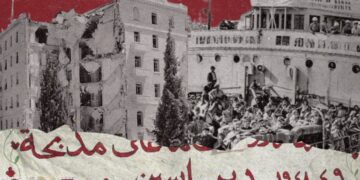
Immediately following the operation, the Israeli administration officially declared a state of war and launched one of the heaviest bombardment and ground campaigns in history against the Gaza Strip. This process, which quickly transformed into a massive humanitarian catastrophe and genocide, triggered regional conflicts across the Middle East. Furthermore, it created deep fractures in global politics through litigation initiated at the International Court of Justice and mass protests worldwide. The Republic of South Africa filed a case against Israel at the International Court of Justice (ICJ) for “Violation of the Genocide Convention.”
Worldwide Mass Protests and Global Transformation
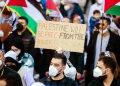
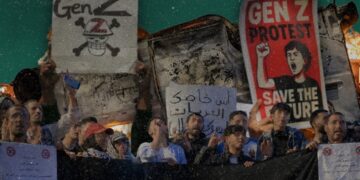
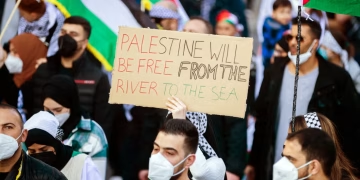
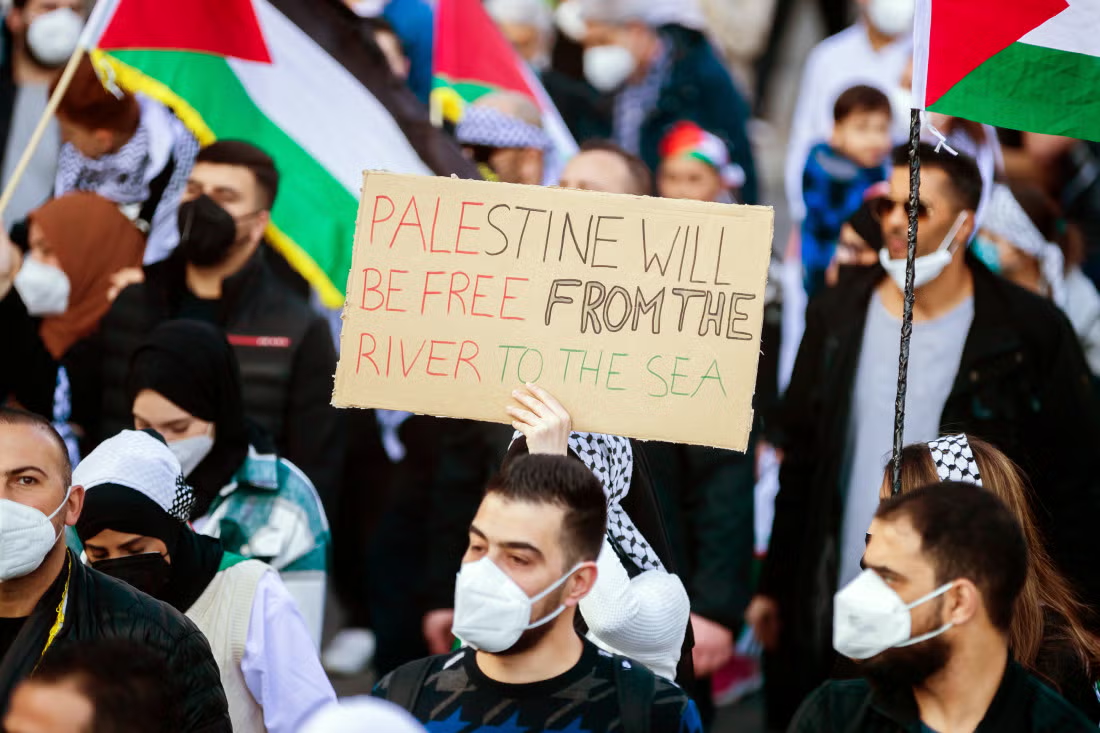
From the earliest days of the war, historic marches attended by hundreds of thousands of people were held in Western capitals such as London, Washington, Paris, and Berlin. The process evolved into mass student demonstrations and encampments at leading universities in the US and Europe (such as Columbia, Harvard, and Sorbonne). These protests:
- Shattered the traditional media narrative that had dominated Western public opinion for years.
- Radically altered the perception of the Palestinian issue, particularly among younger generations (Gen Z).
- Became a direct actor influencing electoral politics by increasing civil society’s pressure on their respective governments.
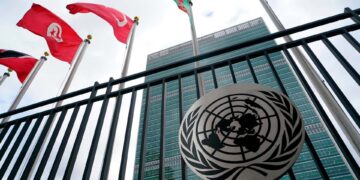
The process highlighted the moral and diplomatic divide between Western nations and the “Global South” (Latin American, African, and Asian countries). The deadlock of the UN Security Council (UNSC) in passing a ceasefire resolution due to US vetoes once again exposed the dysfunctionality of the United Nations system and the necessity for reform.
On the other hand, the official recognition of the State of Palestine by European countries such as Spain, Ireland, Norway, and Slovenia, along with decisions by some Western nations to restrict arms sales to Israel, deepened fissures within the traditional Western bloc and brought a new, multipolar balance of global diplomacy to the forefront.