














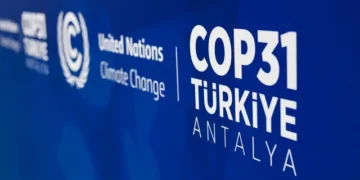





Türkiye will host the 31st Conference of the Parties to the United Nations Framework Convention on Climate Change (COP31) for the first time in Antalya on November 9–20, 2026. The summit will be presided over by Minister of Environment, Urbanization and Climate Change Murat Kurum.
A First in Diplomatic History: Two Partners, One Summit
COP31 brings together more than 190 countries party to the United Nations Framework Convention on Climate Change (UNFCCC). The most defining feature setting COP31 apart from previous summits is the diplomatic compromise behind its organization. A prolonged, competitive contest over hosting rights took place between Türkiye and Australia (alongside Pacific Island nations). The eventual consensus culminated in an unprecedented power-sharing arrangement in climate diplomacy: while Türkiye assumes physical hosting and the official presidency, Australia manages the negotiations and represents the Pacific Island nations.
This formula has forged a compelling geopolitical coalition, bringing together at the same table a nation facing severe drought and water scarcity in the Mediterranean basin and Pacific Island states confronted by the existential threat of rising sea levels as key actors.
Four Critical Deadlocks on the Table
Arriving in Antalya following milestones in Dubai (COP28), Baku (COP29), and Belém (COP30), negotiating delegations now face hard financial commitments and implementation mechanisms rather than mere “declarations of intent.” The primary issues set to determine the summit’s outcome are as follows:
What Is on the Summit’s Agenda?
The primary fault line in climate diplomacy has always been funding. The Global South is unwilling to unilaterally bear the costs of historical emissions driven by industrialized Western nations. The New Collective Quantified Goal on Climate Finance (NCQG), under discussion since Baku, must be anchored to concrete mechanisms in Antalya. While developing countries demand trillions of dollars in grants and direct funding, wealthier economies emphasize private-sector investments and loan mechanisms.
The budget for the Loss and Damage Fund, established for Small Island Developing States and Least Developed Countries that contributed least to the climate crisis yet bear its heaviest burden, remains largely symbolic. Australia’s Pacific-centric diplomatic leverage at the negotiating table will make operationalizing this fund one of COP31’s most contentious debates.
Current policies and announced national commitments continue to steer the planet toward catastrophic warming scenarios of 2.5°C to 2.8°C. The next generation of Nationally Determined Contributions (NDCs) presented at COP30 will be scrutinized in Antalya to evaluate the pace at which nations are phasing out coal, oil, and gas in measurable terms.
Another central issue is green energy. The war in Ukraine, instability in the Middle East, and logistical disruptions across the Red Sea and Strait of Hormuz corridors have driven many countries back toward fossil fuels and pragmatic energy arrangements. This rise in fossil fuel investments alongside ongoing climate pledges stands out as one of the summit’s starkest contradictions.
What Does It Mean for Türkiye and the Region?
Climate scientists designate the Mediterranean Basin as a global warming “hotspot.” Desiccated lakes, declining agricultural yields, wildfires, and water insecurity are present-day realities. Serving as host provides Türkiye with an opportunity to accelerate its own green transition roadmap. Türkiye aims to establish a climate bridge between developed and developing nations, notably sharing the Mediterranean Basin’s experience with climate risks with Pacific and African nations.