

İLKE Vakfı
Platform
tr Türkçe en English
No Result
View All Result
  • PLATFORM
  • NEWS
    İLKE Agenda: Muzzammil Ayyub Thakur ile Keşmir’in “Filistinleştirilmesi”

    Khaled Beydoun: “Islamophobia is a modern manifestation of the crusades”

    Filistin Sempozyumu: Filistin ve Küresel İlişkilerin Geleceği

    Exploring Islam’s View on Slavery and Blackness: Seminar by Jonathan A.C. Brown

    The Conference on Contemporary Muslim Thought

    The Conference on Contemporary Muslim Thought

    Filistin Sempozyumu: Filistin ve Küresel İlişkilerin Geleceği

    Palestine Symposium: Palestine and the Future of Global Affairs

    İLKE Agenda: Muzzammil Ayyub Thakur ile Keşmir’in “Filistinleştirilmesi”

    The Platform Talks: Palestine after October 7 with Azzam Tamimi

    İLKE Agenda: Muzzammil Ayyub Thakur ile Keşmir’in “Filistinleştirilmesi”

    The Palestine Talks: Syria after December 8 with Kinda Hawasli

    İLKE Agenda: Muzzammil Ayyub Thakur ile Keşmir’in “Filistinleştirilmesi”

    İLKE Agenda: The “Palestinization” of Kashmir with Muzzammil Ayyub Thakur

  • ANALYSIS
    • All
    • Culture, Arts and Media
    • Economy
    • Education
    • Energy and Environment
    • Fundamental Rights and Freedoms
    • Migration
    • Opinion
    • Social Issues
    11 Eylül Saldırılarının 25. Yılında Medyada Oryantalist Söylem

    Orientalist Discourse in the Media on the 25th Anniversary of the September 11 Attacks

    Why Do Military Developments in Bab al-Mandab Matter to the Region and the World?

    Why Do Military Developments in Bab al-Mandab Matter to the Region and the World?

    From Makkah to NATO: Is a Non-Western Security Order Possible in the Muslim World?

    From Makkah to NATO: Is a Non-Western Security Order Possible in the Muslim World?

    Teşhis ile Gelecek İnşası Arasında Malik b. Nebi’nin Sömürülebilirlik Olgusunu Anlamak

    Between Diagnosis and Building the Future: Understanding the Phenomenon of Colonizability in Malik Bennabi

    A New Wave of Youth Dissidence? Gen-Z Protests in Tunisia and Morocco

    A New Wave of Youth Dissidence? Gen-Z Protests in Tunisia and Morocco

    Siyonist Hareketin Terör Mirası

    The Terror Legacy of the Zionist Movement

  • INTERVIEWS
    A Conversation with Dr. Fadi Zatari on Zionist Terrorism and the Palestinian Resistance

    A Conversation with Dr. Fadi Zatari on Zionist Terrorism and the Palestinian Resistance

    Veri Sömürgeciliği, Yapay Zeka ve Dijital Geleceğimiz: Prof. Ulises Ali Mejias ile Söyleşi

    Data Colonialism, Artificial Intelligence, and Our Digital Future: An Interview with Prof. Ulises Ali Mejias

    Casir el-Bergusi ile Filistin Mücadelesi ve Esaret Yılları Üzerine Bir Röportaj

    An Interview with Jaser Albarghouthi on the Palestinian Struggle and the Years of Captivity

    The Decolonization of Knowledge: Interview with Professor Souleymane Bachir Diagne

    The Decolonization of Knowledge: Interview with Professor Souleymane Bachir Diagne

    A Possible New Breath in Regional Balances: The Alliance of Türkiye, Pakistan, Egypt, and Saudi Arabia

    A Possible New Breath in Regional Balances: The Alliance of Türkiye, Pakistan, Egypt, and Saudi Arabia

    From the Ballot Box to the Street: The Rising Social Wave in Tanzania After the Election

    From the Ballot Box to the Street: The Rising Social Wave in Tanzania After the Election

    Kafkasya’da Müslümanlar ve İslami Eğitim: TCDİB Kuzey Kafkasya Koordinatörü Selim Akburak ile Söyleşi

    Muslims and Islamic Education in the Caucasus: An Interview with Selim Burak North Caucasus Coordinator in Directorate of Religious Affairs

    Göçü Yönetmek: Dr. Mehmet Köse’yle Söyleşi

    Interview with Mehmet Köse

    Gurbet Hikayeleri

    Interview on Gurbet Hikayeleri

  • VOICES
    Anas Altikriti | Voices from the Muslim World | Türkçe Altyazılı

    Anas Altikriti | Voices from the Muslim World | Türkçe Altyazılı

    Basil Mustafa (Oxford) | Voices from the Muslim World | with Turkish subtitles

    Basil Mustafa (Oxford) | Voices from the Muslim World | with Turkish subtitles

    OMAR SULEIMAN | VOICES FROM THE MUSLIM WORLD

    OMAR SULEIMAN | VOICES FROM THE MUSLIM WORLD

    Paul Williams | Voices from the Muslim World

    Paul Williams | Voices from the Muslim World

  • DATABASE
    • All
    • Institutions
    • Movements
    • People
    • Q-A
    7 Ekim Aksa Tufanı Operasyonu Nedir?

    What is Operation Al-Aqsa Flood?

    Şevket Ali Han

    Shaukat Ali Khan

    Mekke Ortak Savunma Anlaşması Nedir?

    What is Makkah Joint Defence Agreement?

    Husiler Kimdir?

    Who are the Houthis?

    Afrika Haritalarda Neden Küçük Görünüyor?

    Why Does Africa Appear Smaller on Maps?

    Salman Sayyid

    Salman Sayyid

    Muhammed Abdullah Draz

    Muhammad Abdullah Draz

    Nurettin Topçu

    Nurettin Topçu

    Taha Abdurrahman

    Taha Abdurrahman

  • DISCOVER
  • AUTHORS
No Result
View All Result
Platform
No Result
View All Result
tr Türkçe en English
Home Analyses

Orientalist Discourse in the Media on the 25th Anniversary of the September 11 Attacks

İpek YILDIRIM ELTOKHY by İpek YILDIRIM ELTOKHY
19 October 2026
in Analyses, Culture, Arts and Media, Opinion
11 Eylül Saldırılarının 25. Yılında Medyada Oryantalist Söylem

platform gönderi 2026 Kopyası Kopyası Kopyası - 7

Share on FacebookShare on Twitter

(The original Turkish version of this article was published by the Platform: Current Muslim Affairs on October 19, 2026)

Orientalism, that is, the study of the Orient, examines the cultures, histories, languages, and religions of Eastern peoples while taking the West as its fundamental point of reference (Said, 1994: 2). According to this field of study, which emerged in the nineteenth century, the West distinguishes itself from the East and, in doing so, produces the East as a narrative.

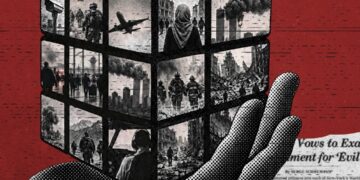
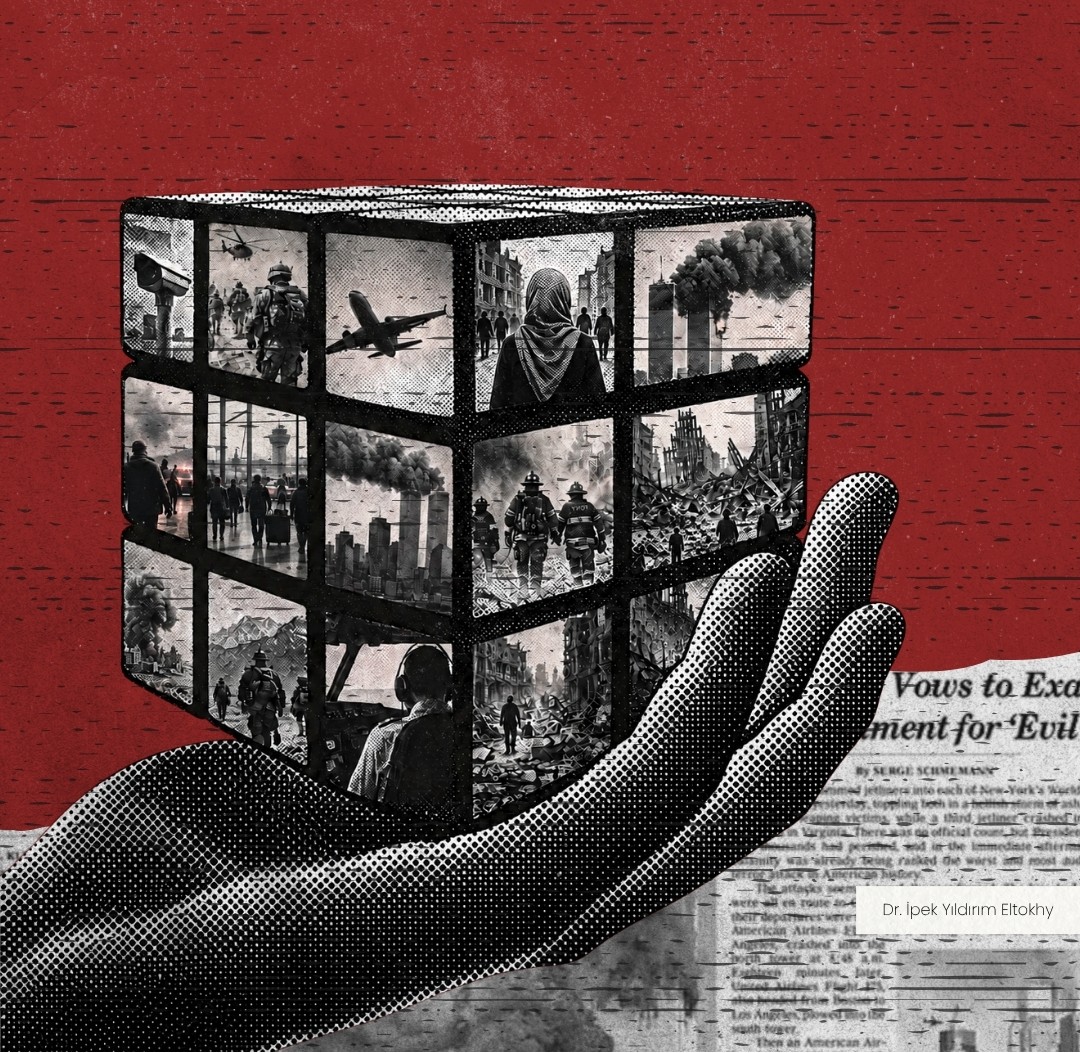
At the very beginning of the twenty-first century, the September 11 attacks carried out by al-Qaeda in the United States are also regarded as a development that propelled Orientalist narratives to a new prominence in the modern era. In addition to the 2,977 victims who lost their lives in the attacks, the 19 al-Qaeda members who carried them out also died, and in the aftermath of this large-scale massacre, the then President of the United States, George W. Bush, launched the Global War on Terror (GWOT) campaign.

The aforementioned war on terror campaign gave rise to the military operations in Afghanistan in October 2001 and in Iraq in March 2003. It also resulted in the revocation of visas held by Muslims and individuals of Eastern origin residing in the United States, subjected them to various forms of investigation, and contributed to a rise in Islamophobia.

This prevailing political atmosphere severely shook the social order of the United States, a country regarded as a superpower, which had been idealized throughout the 1990s within the framework of the American Dream. Following the end of the Cold War, and particularly in the 1990s, the United States became an attractive destination for immigrants, offering opportunities for employment, education, and economic mobility thanks to its neoliberal economic policies and its central position in the global economy. However, in the aftermath of the September 11 attacks, the United States adopted a more cautious and exclusionary approach toward immigrants and Muslims in both its domestic and international policies, while also producing propaganda discourses that associated these groups with security threats.

So much so that a succession of films were produced that either dramatized September 11 or explored themes suggesting that Muslims could be terrorists. United 93 (2006), World Trade Center (2006), The Kingdom (2007), Syriana (2005), and Rendition (2007) can be given as examples of such films (Uluç, 2009: 396).

One of these films, United 93 (2006), addresses the events aboard one of the hijacked aircraft during the September 11 attacks, as well as the context of the attacks on the World Trade Center. While the victimhood of the passengers is reinforced through depictions of their everyday lives and their family and friendship ties, the film foregrounds the attackers’ inhumane and merciless behavior, their lack of rational thought, and their resort to radical acts by taking refuge in their religious beliefs (Yıldırım, 2024). This contrast reproduces the dichotomy of the “civilized West” and the “barbaric East” found in Orientalist discourse, by representing the Western passengers as victims and the Eastern Muslim attackers as barbaric and removed from civilization. The film thus associates Eastern Muslims with irrationality and violence while highlighting the victimhood of its Western characters, thereby reinforcing Orientalist patterns of representation.

The Hurt Locker (2008) and Lone Survivor (2013) are also among the films in which Islamophobia is reproduced. In these films, the idea that Muslims could be potential terrorists, or that there are hardly any good Muslims, is conveyed to the audience through visual and auditory codes (Türkmen & Özçınar, 2020: 1323). These examples show that Muslim characters are represented in exaggerated ways and that an Orientalist perspective prevails in the films’ subtext.

At this point, it should be noted that these films emerged particularly in the years following the attacks. One reason for this is that the event was still fresh in public memory; another is the policies of the Bush administration, which remained in office in the United States between 2001 and 2009 and was determined to continue the global war on terror. Indeed, during this period, propaganda activities were deliberately conducted around the attacks.

In this regard, it should be noted that Netflix has also produced documentaries on the subject on the 20th anniversary of the attacks (2021) and on the 25th anniversary (2026). The September 11 attacks, which have taken hold in the collective memory of the United States as both a trauma and a security threat, are regularly commemorated in the media, and efforts are made to ensure that they are not forgotten by the new generation of Americans.

Indeed, it is significant that these documentaries, which have been released only in recent years, represent both groups of victims. On the one hand, there are thousands of Americans who lost their spouses, parents, children, and friends in the September 11 attacks; on the other, there are Muslims who were marginalized in the United States after the attacks, as well as the soldiers and civilians who lost their lives in the wars in Afghanistan and Iraq. The visibility of both forms of victimhood within the same media narrative is important because it indicates that September 11 is no longer treated solely as a trauma experienced by American society, and that the Orientalist discourse that gained strength after the attacks has begun to be questioned.

In the documentary Turning Point: 9/11 and the War on Terror (2021), a Black Muslim man, describing this experience of othering in the United States, emphasized that while Black people were already treated as second-class citizens because of their race, after the attacks they began to be treated as third-class citizens. This statement is significant because it shows that the othering of Muslims after the September 11 attacks turned into a more layered form of exclusion for Black Muslims, who were already subject to racial discrimination in the United States. It thus becomes clear that the security discourse deepened existing inequalities by intersecting not only with religious identity but also with racial identity.

The documentary Turning Point: Generation 9/11 (2026) addresses the place of the September 11 attacks in individual and collective memory, the wars waged in their aftermath, and the diverse experiences that emerged in the process. At the opening of the documentary, Michael Smoak states that he was five years old when the attacks occurred, which draws attention to the impact of the event on the generation that witnessed it at a young age. Keeping the attacks alive in collective memory, teaching them in educational settings, and transmitting them to subsequent generations are also among the prominent dimensions of the documentary. In addition, accounts such as those of women who had to descend hundreds of stairs in high-heeled shoes during the attack on the World Trade Center, and of rescue workers who thought they might not survive as they climbed the building, underscore the human dimension of the attacks and the suffering of the victims. This narrative reinforces the remembrance of September 11 in American society as an experience of trauma and victimhood.

The documentary also includes self-critical assessments of the military interventions launched after the attacks. Statements suggesting that the decision to go to war was implemented without sufficient deliberation present a narrative that questions the justifications for, and the consequences of, the United States’ interventions. At the same time, accounts of some individuals in Afghanistan who expressed discontent with the Taliban and satisfaction with the U.S. intervention in the region highlight instances in which the military intervention received local support. Such statements can also be interpreted as a discourse that legitimizes the U.S. intervention and presents the American military presence in a positive light. The remark by the son of Khang Nguyen, who was killed in the Pentagon attack on September 11, that his father found opportunities in the United States that he could not find in Vietnam, indicates that the documentary also engages the theme of the “American Dream.”

On the other hand, the documentary also brings to the fore experiences of prejudice and discrimination directed at Muslims and immigrants after September 11. According to the account of a Pakistani store owner, the FBI knocked on his family’s door for a week after the attacks; during this period, his daughter was pushed down the stairs, and her headscarf was pulled off. This account lays bare the practices of discrimination and othering to which Muslims were subjected in the aftermath of the attacks. The generalizing question “Muslims, why did you carry out this attack?” also indicates that responsibility for the attacks could be transferred from the individual perpetrators to an entire religious community. Thus, while the documentary foregrounds the trauma, losses, and victimhood experienced by American society, it also renders visible the practices of othering that Muslims encountered after September 11. This two-sided narrative demonstrates that collective memory is shaped not only by the experiences of the direct victims of the attacks but also by the social and political relations that took shape in the aftermath of the event.

In conclusion, even twenty-five years after the September 11 attacks, the media continue to shape how the distinction between East and West is constructed and how Muslims are perceived. The films produced in the years following the attacks strengthened Orientalist discourse by associating Eastern Muslims with violence and irrationality. More recent documentaries, by contrast, have opened this one-sided narrative to questioning by giving space not only to the suffering of American society but also to the discrimination faced by Muslims and the human losses caused by the wars.

However, the coexistence of critical assessments of the United States’ military interventions and narratives that portray these interventions positively from the perspective of certain groups shows that the documentaries also carry different and at times contradictory perspectives. Accordingly, the representation of September 11 in the media points not to a transformation in which Orientalist discourse has disappeared entirely, but to a process in which this discourse is questioned while its traces persist. For this reason, examining how the September 11 attacks are represented in the media remains important even twenty-five years later. After all, through the way it treats the attacks and the parties with whom it associates responsibility, the media can either perpetuate the identification of Eastern Muslims with violence and threat or contribute to the questioning of such prejudices.

References

Knappenberger, B. (Director). (2021). Turning point: 9/11 and the war on terror [Documentary series]. Luminant Media.

Knappenberger, B. (Director). (2026). Turning point: Generation 9/11 [Documentary film]. Luminant Media.

Said, E. W. (1994). Orientalism. Vintage Books.

Türkmen, M. Y., & Özçınar, M. (2020). 11 Eylül sonrası Hollywood sinemasında İslamofobinin yeniden üretimi [The reproduction of Islamophobia in Hollywood cinema after 9/11]. Journal of Erciyes Communication, 7(2), 1321-1343.

Uluç, G. (2009). Medya ve oryantalizm: Yabancı, farklı ve garip… öteki [Media and Orientalism: The foreign, the different, and the strange… the other]. Anahtar Kitaplar Yayınevi.

Yıldırım, İ. (2024). A deconstructive analysis of orientalist representations in the film United 93. RumeliDE Journal of Language and Literature Studies, (42), 322-339.

*Opinions expressed in this article are the author’s own and do not necessarily reflect Platform: Current Muslim Affairs’ editorial policy.
Tags: OrientalismUS
Previous Post

Why Do Military Developments in Bab al-Mandab Matter to the Region and the World?

Popüler Seçkiler

11 Eylül Saldırılarının 25. Yılında Medyada Oryantalist Söylem

Orientalist Discourse in the Media on the 25th Anniversary of the September 11 Attacks

19 October 2026
Why Do Military Developments in Bab al-Mandab Matter to the Region and the World?

Why Do Military Developments in Bab al-Mandab Matter to the Region and the World?

13 October 2026
7 Ekim Aksa Tufanı Operasyonu Nedir?

What is Operation Al-Aqsa Flood?

6 October 2026
From Makkah to NATO: Is a Non-Western Security Order Possible in the Muslim World?

From Makkah to NATO: Is a Non-Western Security Order Possible in the Muslim World?

5 October 2026
Şevket Ali Han

Shaukat Ali Khan

5 October 2026
Teşhis ile Gelecek İnşası Arasında Malik b. Nebi’nin Sömürülebilirlik Olgusunu Anlamak

Between Diagnosis and Building the Future: Understanding the Phenomenon of Colonizability in Malik Bennabi

30 September 2026
A New Wave of Youth Dissidence? Gen-Z Protests in Tunisia and Morocco

A New Wave of Youth Dissidence? Gen-Z Protests in Tunisia and Morocco

21 September 2026
Mekke Ortak Savunma Anlaşması Nedir?

What is Makkah Joint Defence Agreement?

17 September 2026
Siyonist Hareketin Terör Mirası

The Terror Legacy of the Zionist Movement

15 September 2026

 Platform: Current Muslim Affairs was established under the İLKE Foundation for Science, Culture and Education as a publication aimed at following and analyzing the intellectual, political, social, economic, and cultural agendas of Muslim societies, while offering original perspectives on the Muslim world.

  • ANALYSIS
  • NEWS
  • INTERVIEWS
  • VOICES
  • platform@ilke.org.tr
  • (0216) 310 43 18
  • Aziz Mahmut Hüdayi Mah. Türbe Kapısı Sk. No: 13 Üsküdar, İstanbul
Instagram X-twitter

2025 @ PLATFORM is an İLKE Foundation organization. All rights reserved.

No Result
View All Result
  • Analyses
  • Interviews
  • Database
    • Q-A
    • People
    • Institutions
    • Movements
  • Voices
  • News
  • DISCOVER
  • Authors