





















(The original Turkish version of this article was published by the Platform: Current Muslim Affairs on November 10, 2026)
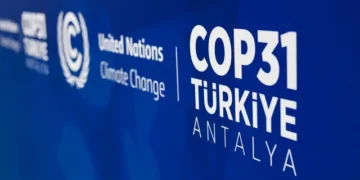
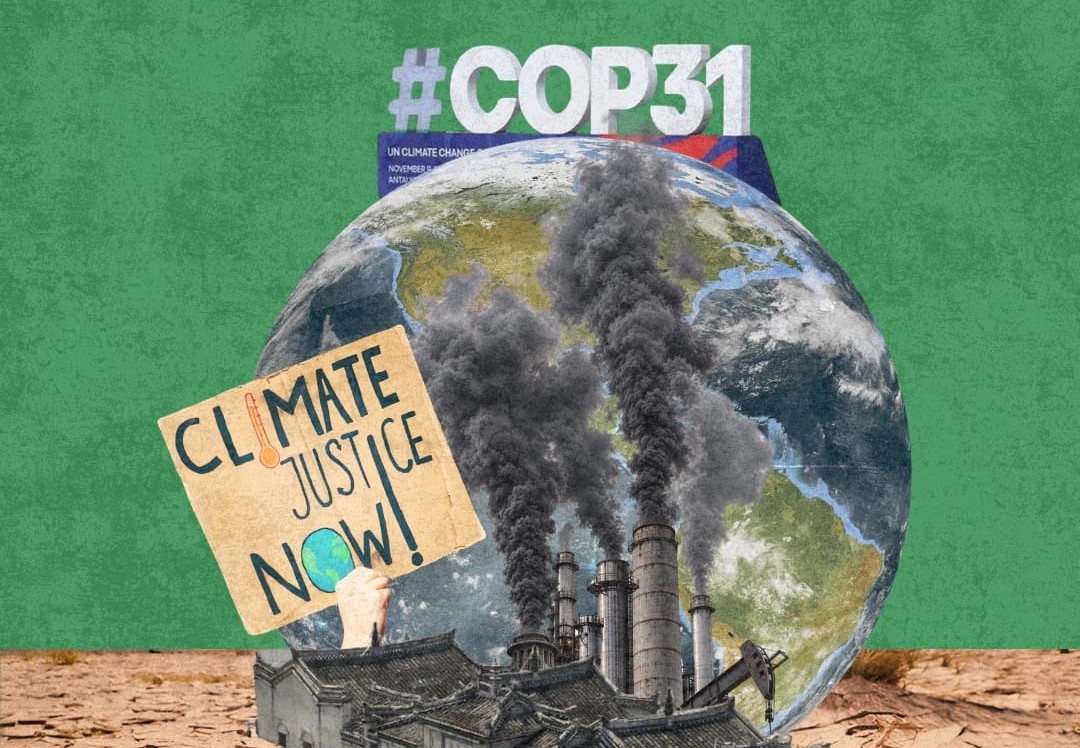
The agenda of COP31 (COP31 Türkiye, 2026), held in Antalya from 9 to 20 November 2026 and hosting the Leaders’ Summit on 11–12 November, includes updated nationally determined contributions, the tripling of adaptation finance, a just transition, and facilitated access to finance for vulnerable countries. The prominence of the just transition on the agenda, in particular, is being closely followed by the Least Developed Countries (LDC) Group on Climate Change (IISD, 2026; Tatoli, 2026). This attention is significant in light of the warning in UNEP’s (2026a) Emissions Gap Report that, should current policies continue, global temperature rise could reach approximately 2.8°C by the end of the century, and that the risk of temporarily overshooting the goal of limiting global warming to 1.5°C will grow steadily. This renders salient not only the reduction of emissions but also the question of how responsibilities and costs are to be distributed among countries in the fight against climate change. After all, countries differ in their historical contributions to the climate crisis, their economic resources, and their vulnerability to climate impacts. This makes the question of burden-sharing all the more urgent.
The Paris Agreement provides that it is to be implemented so as to reflect equity and the principle of “common but differentiated responsibilities and respective capabilities, in the light of different national circumstances” (United Nations, 2015, Art. 2.2). This principle establishes that all countries bear responsibility for addressing climate change, yet that these responsibilities are not identical with respect to historical contributions, economic capacity, and national circumstances. According to the 2023 Synthesis Report of the Intergovernmental Panel on Climate Change (IPCC), per capita greenhouse gas emissions in 2019, excluding net CO₂ emissions from land use, land-use change and forestry, stood at 1.7 tonnes of CO₂-equivalent in the least developed countries and 4.6 tonnes in small island developing states, compared with a global average of 6.9 tonnes. At the same time, approximately 3.3–3.6 billion people worldwide live in contexts that are highly vulnerable to climate change (IPCC, 2023). These data point to an inequality between contribution to the climate crisis, on the one hand, and exposure to its impacts and the capacity to cope with them, on the other. For countries where access to energy remains limited and development needs persist, the central question is how low-carbon development can be financed without abandoning the goals of poverty reduction and expanded energy access. The tension between development needs and emissions reduction constitutes one of the core areas of debate on climate justice.
Climate justice articulates a fundamental injustice: those who bear the least responsibility for climate change are, and will continue to be, the first and most severely affected by its consequences (Kaya, 2017). The impacts of the climate crisis are felt most acutely in developing countries, least developed countries, and small island states, all of which are highly vulnerable to climate change and possess limited adaptive capacity (Kaya, 2017). This brings the concept of the “Global South” to the fore in debates on climate justice. The concept denotes not merely a geographical division but the economic and political inequalities and power relations that structure the global system.
As clarified by Dados and Connell (2012), the notion of the Global South marks a shift away from a focus on development or cultural difference towards an emphasis on geopolitical relations of power. Within this framework, the concept belongs to a family of terms, such as “Third World” and “Periphery,” that denote low-income and often politically or culturally marginalized regions. Because the concept is built around the theme of inequality (Mahler, 2017), it approaches the Global South not as a fixed list of countries but in the context of historical inequalities and global power relations.
The framework of climate injustice can be examined through specific institutional negotiating groups, namely the Group of 77 and China (G77+China), the Least Developed Countries Group (LDC Group), the Alliance of Small Island States (AOSIS), and the African Group. The LDC Group brings together 44 countries, while AOSIS unites 39 small, low-lying coastal and island states (LDC Climate, 2026; UNFCCC, 2026). Although these groups are able to formulate common demands on issues such as climate finance, adaptation, loss and damage, and the energy transition, they may differ from one another in their membership, development priorities, and negotiating interests (İSO Yeşil Blog, 2024; UNEP, 2026b). The Global South is therefore not a single, homogeneous actor in climate negotiations, but rather a broad constellation of countries and negotiating coalitions that at times unite around shared demands and at other times act on divergent priorities.
The position of the Global South in climate negotiations can be assessed along three dimensions: emerging powers, coalition dynamics, and the representational capacity of vulnerable countries. First, although the BASIC group, comprising Brazil, South Africa, India, and China, remains a significant actor at the negotiating table, its capacity to set the agenda is limited (Hurrell & Sengupta, 2012). Second, the participation of developing countries in multiple coalitions creates opportunities for bridge-building between North and South, yet divergent priorities also make collective action more difficult (Castro & Klöck, 2020). Third, countries disproportionately affected by climate change, such as small island states, seek to offset their limited economic and political power through moral leadership (Corneloup & Mol, 2014). The negotiating capacity of these countries, however, is not confined to political representation alone. According to Klöck et al. (2025), effective participation in the negotiations requires approximately 15 delegates, a threshold that many countries fail to reach.
In this context, Türkiye, which holds the COP31 Presidency, occupies a distinctive position. Listed among the Annex I Parties under the UNFCCC, Türkiye has emphasized throughout the hosting process that it is an actor capable of building bridges between industrialized and developing countries (New Straits Times, 2026). One of the most important tests COP31 faces from a climate justice perspective is finance. According to UNEP’s (2025) Adaptation Gap Report, developing countries will require USD 310–365 billion per year in adaptation finance by 2035. By contrast, international public adaptation finance declined from USD 28 billion in 2022 to USD 26 billion in 2023. Existing finance thus falls far short of what is needed. Even the target set in Glasgow of raising adaptation finance to approximately USD 40 billion by 2025 is insufficient to close this gap. At COP30, a call was made to triple adaptation finance by 2035 and to raise total annual climate finance to at least USD 1.3 trillion (UN News, 2025). However, the failure to translate these targets into a binding implementation timeline raises a problem of trust, rooted in previously unfulfilled commitments (SEI, 2025). Indeed, the new collective quantified goal of USD 300 billion per year is likewise regarded as inadequate to meet the adaptation needs of developing countries (Intellinews, 2025; UNEP, 2025).
Nor can the energy transition be considered in isolation from financial justice. Small island states highlight the economic burden of their dependence on fossil fuel imports and argue that a rapid energy transition is possible only with adequate financial support (SEforALL, 2025). The failure of COP30 to put forward a new roadmap for the transition away from fossil fuels, however, illustrates the persistent gap between climate targets and their implementation (Intellinews, 2025).
Priorities also diverge within the Global South itself. Whereas the Alliance of Small Island States (AOSIS) prioritizes 2030 and 2035 emission reduction targets aligned with the 1.5°C goal and a transition away from fossil fuel dependence, the Least Developed Countries (LDC) Group emphasizes grant-based finance, simplified access to resources, and ensuring that trade measures do not impose additional burdens on developing countries (IISD, 2026; Carbon Pulse, 2026; Tatoli, 2026).
The success of COP31 should be judged less by new financial pledges than by the concrete change these pledges bring about in the lives of vulnerable countries. In this regard, four key criteria stand out. First, the accessibility of climate finance should be monitored: the balance between grants and loans, application and approval times, and the resources actually disbursed should be reported on a regular basis. Second, the adaptation indicators adopted at COP30 should be linked to the goal of tripling adaptation finance, and a clear baseline year and an equitable sharing of contributions among countries should be established for this goal. Third, technology transfer and capacity-building should be operationalized, particularly in line with the priorities of the LDC Group (LDC Climate Change, 2026). Finally, procedural equity in negotiation processes should be strengthened. In light of the delegation capacity problem highlighted by Klöck et al. (2025), representational support should be extended to vulnerable countries, and the effective participation of small delegations in agenda-setting and in the drafting of decision texts should be guaranteed.
The emphasis placed by COP President Murat Kurum on improving access to finance for small island states and least developed countries is significant in this respect (IISD, 2026). However, the meaningfulness of Türkiye’s bridging role depends not merely on fostering dialogue between developed and developing countries, but on bringing the priorities of the various Southern coalitions together within a common implementation agenda. Given the North–South power asymmetry and the fragmentation within the South identified by Hurrell and Sengupta (2012), Türkiye’s diplomatic success will be measured by its contribution to establishing concrete financing and implementation timelines.
COP31’s Pacific-centered approach has the potential to open up greater institutional space, particularly for the demands of small island states. The real test, however, lies in translating the finance and adaptation targets raised at COP30 into actionable commitments in Antalya. For Türkiye, hosting the conference entails the responsibility of strengthening the coherence of its own climate policies and of bringing the priorities of the most vulnerable countries onto the negotiating agenda.
References
Carbon Pulse. (2026). UN LDC group calls for Article 6 funding, ambition, and cooperation in pre-COP31 declaration. Retrieved October 26, 2026, from https://carbon-pulse.com/547344/
Castro, P., & Klöck, C. (2020). Fragmentation in the climate change negotiations: Taking stock of the evolving coalition dynamics. In C. Klöck, P. Castro, F. Weiler, & L. Ø. Blaxekjær (Eds.), Coalitions in the climate change negotiations (pp. 17–34). Routledge.
COP31 Türkiye. (2026). COP31 Konferans Programı [COP31 conference programme]. Retrieved October 24, 2026, from https://cop31.tr/tr/cop31-konferans-programi
Corneloup, I. A., & Mol, A. P. J. (2014). Small island developing states and international climate change negotiations: The power of moral “leadership”. International Environmental Agreements: Politics, Law and Economics, 14(3), 281–297. https://doi.org/10.1007/s10784-013-9227-0
Dados, N., & Connell, R. (2012). The Global South. Contexts, 11(1), 12–13. https://doi.org/10.1177/1536504212436479
Hurrell, A., & Sengupta, S. (2012). Emerging powers, North–South relations and global climate politics. International Affairs, 88(3), 463–484. https://doi.org/10.1111/j.1468-2346.2012.01084.x
IISD. (2026). Daily report for 8 June 2026. Earth Negotiations Bulletin. Retrieved October 24, 2026, from https://enb.iisd.org/bonn-climate-change-conference-sb64-sbi64-sbsta64-daily-report-8jun2026
Intellinews. (2025). COP30 didn’t go far enough to address the climate crisis. Retrieved October 26, 2026, from https://www.intellinews.com/cop30-didn-t-go-far-enough-to-address-the-climes-crisis-carbon-brief-413396/
IPCC. (2023). Climate change 2023: Synthesis report. Contribution of Working Groups I, II and III to the Sixth Assessment Report of the Intergovernmental Panel on Climate Change (H. Lee & J. Romero, Eds.). IPCC. https://doi.org/10.59327/IPCC/AR6-9789291691647
İSO Yeşil Blog. (2024). COP29 zirvesinde uyum eylemleri ve iklim finansmanı gündemde olacak [Adaptation action and climate finance to be on the agenda at the COP29 summit]. Retrieved October 30, 2026, from https://www.isoyesilblog.com/cop29-zirvesinde-uyum-eylemleri-ve-iklim-finansmani-gundemde-olacak/
Kaya, Y. (2017). Paris Anlaşması’nı iklim adaleti perspektifinden değerlendirmek [Evaluating the Paris Agreement from a climate justice perspective]. Uluslararası İlişkiler, 14(54), 87–106.
Klöck, C., Baatz, C., & Wendler, N. (2025). Procedural justice and (in)equitable participation in climate negotiations. UCL Open: Environment, 7(1). https://journals.uclpress.co.uk/ucloe/article/id/3116/
LDC Climate. (2026). LDC at IPCC 65th plenary session. Retrieved October 26, 2026, from https://www.ldc-climate.org/
LDC Climate Change. (2026). The 2026 Dili ministerial declaration on climate change. Retrieved October 26, 2026, from https://www.tralac.org/documents/resources/external-relations/united-nations/7996-the-dili-ldc-group-ministerial-declaration-on-climate-change-3-september-2026.html
Mahler, A. G. (2017). What/where is the Global South? In E. O’Brien (Ed.), Oxford bibliographies in literary and critical theory. Oxford University Press. https://doi.org/10.1093/obo/9780190221911-0055
New Straits Times. (2026). Who holds the gavel? COP31’s unusual Australia-Türkiye deal. Retrieved October 30, 2026, from https://www.nst.com.my/amp/opinion/columnists/2026/10/1550866/who-holds-gavel-cop31s-unusual-australia-t%C3%BCrkiye-deal
SEforALL. (2025). Small islands, big solutions: Accelerating sustainable energy transitions. Sustainable Energy for All. Retrieved October 26, 2026, from https://www.seforall.org/system/files/2025-03/SEforALL-SIDS-2025.pdf
SEI. (2025). COP30 in Belém: Collective effort, constrained ambition. Stockholm Environment Institute. Retrieved October 26, 2026, from https://www.sei.org/perspectives/cop30-collective-effort-constrained-ambition/
Tatoli. (2026). LDC Group reflects on SB64 outcomes as expectations for COP31 grow. Retrieved October 24, 2026, from https://en.tatoli.tl/2026/06/23/ldc-group-reflects-on-sb64-outcomes-as-expectations-for-cop31-grow/15/
UN News. (2025). Belém COP30 delivers climate finance boost and a pledge to plan fossil fuel transition. Retrieved October 26, 2026, from https://news.un.org/en/story/2025/11/1166433
UNEP. (2025). Adaptation gap report 2025: Running on empty. United Nations Environment Programme. Retrieved October 26, 2026, from https://www.unep.org/en/publications/report/adaptation-gap-report-2025
UNEP. (2026a). Emissions gap report 2026: The point of return. United Nations Environment Programme. Retrieved October 26, 2026, from https://unep.org/resources/emissions-gap-report
UNEP. (2026b). About loss and damage. United Nations Environment Programme. Retrieved October 30, 2026, from https://www.unep.org/en/what-we-do/climate-action/loss-and-damage/about-loss-and-damage
United Nations. (2015). Paris Agreement. Retrieved October 26, 2026, from https://iklim.gov.tr/db/turkce/dokumanlar/paris-anlasmasi-13-20220808231948.pdf
*Opinions expressed in this article are the author’s own and do not necessarily reflect Platform: Current Muslim Affairs’ editorial policy.