






(The original Turkish version of this article was published by the Platform: Current Muslim Affairs on November 16, 2026)
A review of the evidence on how Muslim intellectuals have reconstructed the concept of the ummah reveals that globalisation, migration, transnational communication networks, and rapidly advancing technology have led Muslims to rethink their religious belonging. For Muslim communities, the concept of the ummah is also debated in terms of identity, belonging, ethics, and transnational solidarity. By virtue of these new positions, we observe that such communities are able to generate new forms of belonging independent of national origins, and that religious identity can give rise to a new sense of belonging to the “ummah”.
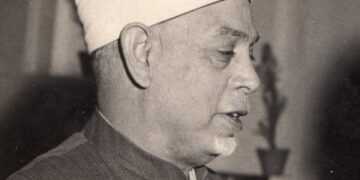
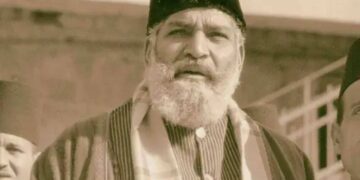
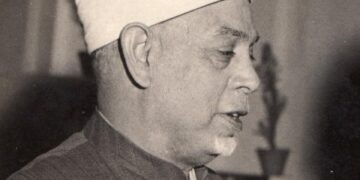
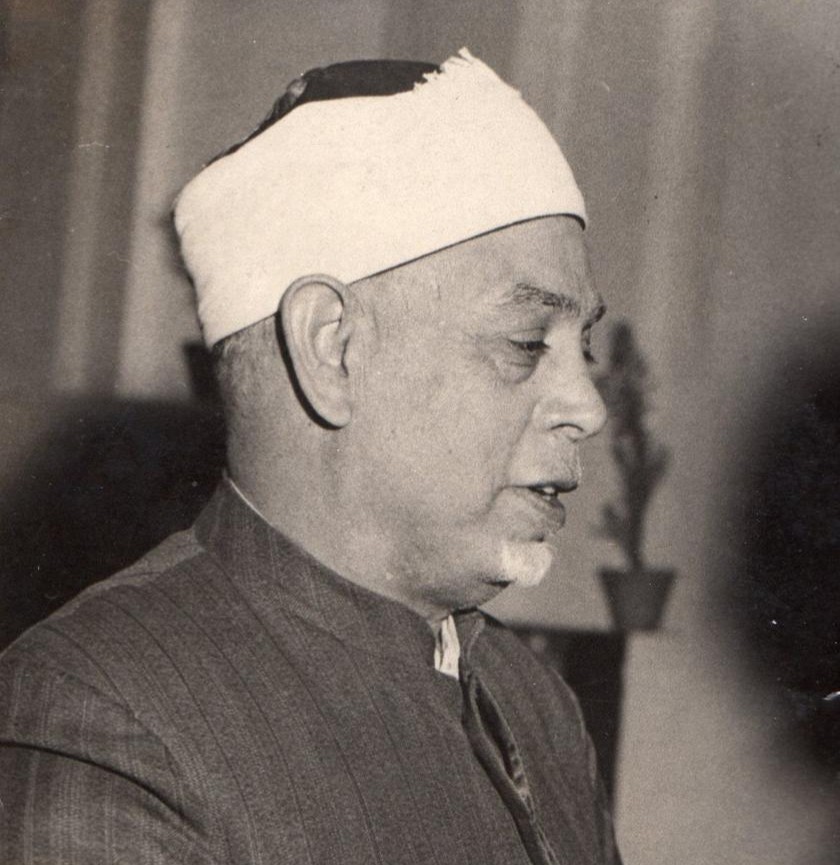
This transformation makes it meaningful to reassess the approach of the Egyptian scholar and thinker Muhammad Abdullah Draz (1894-1958). Draz was not a diaspora intellectual in the contemporary sense; however, his combination of the traditional Islamic education he received at al-Azhar with his academic experience in France turned his thought into a space of intellectual passage between East and West. While a member of al-Azhar’s teaching staff, Draz was sent to France at the head of a three-member delegation by none other than the Shaykh al-Azhar, Mustafa al-Maraghi (in office 1928-1929 and 1935-1945). The delegation also included ʿAbd al-Rahman Taj (in office 1954-1958) and Muhammad al-Fahham (in office 1969-1973), both of whom would later be appointed Shaykh al-Azhar. Draz should therefore be regarded as an important and exemplary figure for examining the intellectual antecedents of this field.
A Muslim Intellectual Between East and West
Although Draz’s intellectual position rests fundamentally on the combination of his experiences at al-Azhar and the Sorbonne, the disciplined upbringing he received at home under his father’s supervision was also decisive in its formation. Having studied the classical Islamic sciences at al-Azhar, Draz completed his secondary education there at the top of his class, while also learning French and several other Western languages at school and in evening courses. After serving for some time on al-Azhar’s teaching staff, he travelled in 1936 to Paris, where he had been sent to pursue doctoral studies, and conducted research at the Sorbonne in philosophy, the history of religions, psychology, and ethics. For his first four years at the Sorbonne, Draz studied these fields from their primary sources much like an undergraduate student. Having begun his doctoral studies in 1940, he defended his doctorate in 1947 on the basis of two works prepared in accordance with the procedure then followed at French universities. In his thesis, he examined the ethical structure of the Qur’an through the concepts and methods of the Western academic world. Consequently, rather than setting the Islamic heritage against modern Western thought, Draz’s thought establishes a relationship between these two intellectual domains. While demonstrating the superiority of the Qur’anic conception of ethics, Draz also critically examines the advantages that the West has gained through its progress.
In his work La Morale du Koran, Draz characterised the views of Kant and Frédéric Rauh, who represent two opposite poles, as instances of excess (ifrāṭ) and deficiency (tafrīṭ). The work is further distinguished by its comparison of the Qur’anic conception of ethics with the ideas of Western thinkers such as Henri Bergson, and by its examination of the full range of Islamic scholarly literature that brings together different traditions of knowledge, through which it underscores the superiority of the Qur’anic view. Thanks to this quality, Draz worked with seriousness while preserving his dignity as a Muslim; at the same time, drawing on his scholarly erudition, he embraced a modern outlook open to renewal in the line of al-Ghazali, citing examples from the Sufism of al-Hakim al-Tirmidhi on the one hand and from Ibn Taymiyya on the other. As a result, he became a figure studied with keen interest by Western orientalists, foremost among them Louis Massignon. In this context, Draz’s significance lies in demonstrating that Islamic thought can participate in modern academic debate while preserving its own normative sources.
The Unity of the Ummah Rests on a Strong and Unshakeable Moral Foundation
Draz’s most important contribution to the understanding of the ummah does not lie in having articulated an explicit “theory of the ummah”. Indeed, it cannot be said that he systematically defined the concept of the ummah within an independent political theory in his works. Rather, the ideas he developed on the Qur’an, ethics, and human responsibility make it possible to reinterpret the concept of the ummah as a moral community.
In Draz’s approach to Qur’anic ethics, elements such as obligation, responsibility, intention, and sanction, in the form of reward or punishment, are interconnected. This interconnection shows that the moral philosophy he derived from the Qur’an is a comprehensive structure that brings together reason and revelation.
The Ummah and Moral Responsibility in Draz’s Thought
In the thought of Muhammad Abdullah Draz, the ummah is not merely a social structure formed by Muslims living under the same political authority. It is, first and foremost, a religious and moral community shaped around a shared faith, shared values, and shared moral responsibilities. In this respect, what fundamentally determines the existence of the ummah is not residence within a particular geography or political boundaries, but the common system of beliefs and values that binds its members to one another.
In Draz’s approach to the Qur’an, ethics is not a domain confined to individual conduct. It is also a fundamental principle that regulates social life and shapes Muslims’ relations with one another. The moral principles set forth by the Qur’an thus create a unity between the individual and society, and the ummah represents the manifestation of this unity at the social level. As a reflection of this view, Draz took part in gatherings of Algerian intellectuals in Paris and at times hosted them in his home for these meetings. As the preface he wrote for Le Phénomène coranique (translated into Turkish as Kur’an Fenomeni) makes clear, his close ties with Malek Bennabi show that, although their methods differed, their concerns were similar.
Muslims living in different parts of the world belong to the same ummah by virtue of their shared faith and moral principles. This unity is not merely a theoretical or symbolic form of belonging, for the idea of the ummah possesses a normative structure that places specific responsibilities upon its members. In other words, the ummah is not simply a concept that determines “who belongs to the same community”; it is also a framework that sets out “how the members of this community ought to behave” towards one another and towards society.
Accordingly, the concept of the ummah in Draz’s thought should be understood within the unity he establishes among faith, ethics, and social responsibility. The foundation of the ummah is a unity of values that precedes political unity. Political or geographical unity may change; by contrast, shared faith and a consciousness of moral responsibility constitute a more fundamental element that ensures the continuity of the idea of the ummah. When this is realised as a requirement of the principle of divine unity (tawḥīd), the common goal will have been brought within reach.
This approach reflects the Qur’an-centred conception of ethics in Draz’s thought. Draz’s close engagement with the Qur’an as a whole aims at principles that were realised in the Age of Bliss (ʿAṣr al-Saʿāda), the era of the Prophet, principles that shape the character of the individual while also giving rise to a social order grounded in justice, solidarity, responsibility, and mutual assistance. For Draz, who approaches Qur’anic ethics as an integrated system encompassing both theoretical and practical dimensions, the ummah may be regarded not merely as a historical community or a political ideal, but as a religious community shaped around shared moral responsibilities. This approach makes it possible to conceive of the ummah as a normative community bearing common moral obligations. The condition for the ummah’s existence can thus always be tied to a shared faith, shared values, and shared responsibility, rather than to geographical unity.
When considered alongside Draz’s thought, an important theoretical connection emerges. Once the defining element of the ummah is carried beyond political boundaries, it becomes possible for Muslims of different national origins to come together around a shared moral and religious identity. Nevertheless, it would be incomplete to regard the contemporary concept of the ummah solely as an inclusive and moral form of solidarity. The current literature shows that the discourse of the ummah can also be employed by states and political actors for the purpose of constructing a transnational political identity.
The contemporary concept of the ummah therefore has two distinct dimensions. On the one hand, there is the moral and solidaristic ummah that transcends national boundaries; on the other, there is the politicised ummah redefined by political actors. Draz’s ethics-centred approach can provide a normative basis for assessing the difference between these two usages.
Conclusion
The thought of Muhammad Abdullah Draz does not constitute a theory that directly explains how contemporary diaspora Muslims understand the ummah. However, his intellectual position, which brought together the classical tradition of al-Azhar and the academic world of the Sorbonne, and his treatment of Qur’anic ethics as a universal normative system offer an important intellectual resource for reinterpreting the concept of the ummah. Recent diaspora studies show that Muslims in Europe have been able to reconstruct the concept of the ummah within new forms of belonging independent of national origins. In this new understanding, the ummah is shaped not merely by political unity but by belonging, moral responsibility, solidarity, and transnational connections.
Draz’s ethics-centred interpretation of the Qur’an should be read as offering a conceptual possibility for rethinking the ummah today on the basis of shared values and responsibility rather than mere political geography. Such a reading preserves Draz’s historical context while relating his thought to current diaspora debates, and it makes it possible to assess the transformation of the concept of the ummah in the modern world in its sociological, theological, and political dimensions alike. Draz’s Qur’an-centred ethical thought enables us to conceive of the ummah, at all times, not merely as a political union but as a community bearing a shared normative responsibility.
References
Abū Zahra, M. (1958). al-Ustādh al-duktūr Muḥammad ʿAbd Allāh Drāz [Professor Dr. Muhammad Abdullah Draz]. Liwāʾ al-Islām, (11).
Draz, M. A. (1977). İslam hakkında bazı görüşler [Some views on Islam] (A. Özek, Trans.). Hüsnü Hayat Matbaası.
Draz, M. A. (1999). Understanding the Qur’an: Themes and styles. I. B. Tauris.
Draz, M. A. (2000). Kur’an’a giriş [Introduction to the Qur’an] (S. Akdemir, Trans.). Kitabiyat.
Draz, M. A. (2004). Ḥaṣād al-qalam [Harvest of the pen] (A. M. Faḍliyya, Ed.). Dār al-Qalam.
Dr. Mohammad Abdullah Draz. (n.d.). [Website dedicated to M. A. Draz]. Retrieved from https://drmdraz.com/
Faḍliyya, A. M. (2010). Muḥammad ʿAbd Allāh Drāz: Sīra wa-fikr [Muhammad Abdullah Draz: His life and thought]. Maktabat al-Īmān.
Gür, M. S. (2021). Muhammed Abdullah Draz ve Fatiha tefsiri [Muhammad Abdullah Draz and his exegesis of al-Fātiḥa]. Akademik-Us, 5(1), 37–60. https://izlik.org/JA88HL46NA
*Opinions expressed in this article are the author’s own and do not necessarily reflect Platform: Current Muslim Affairs’ editorial policy.