





























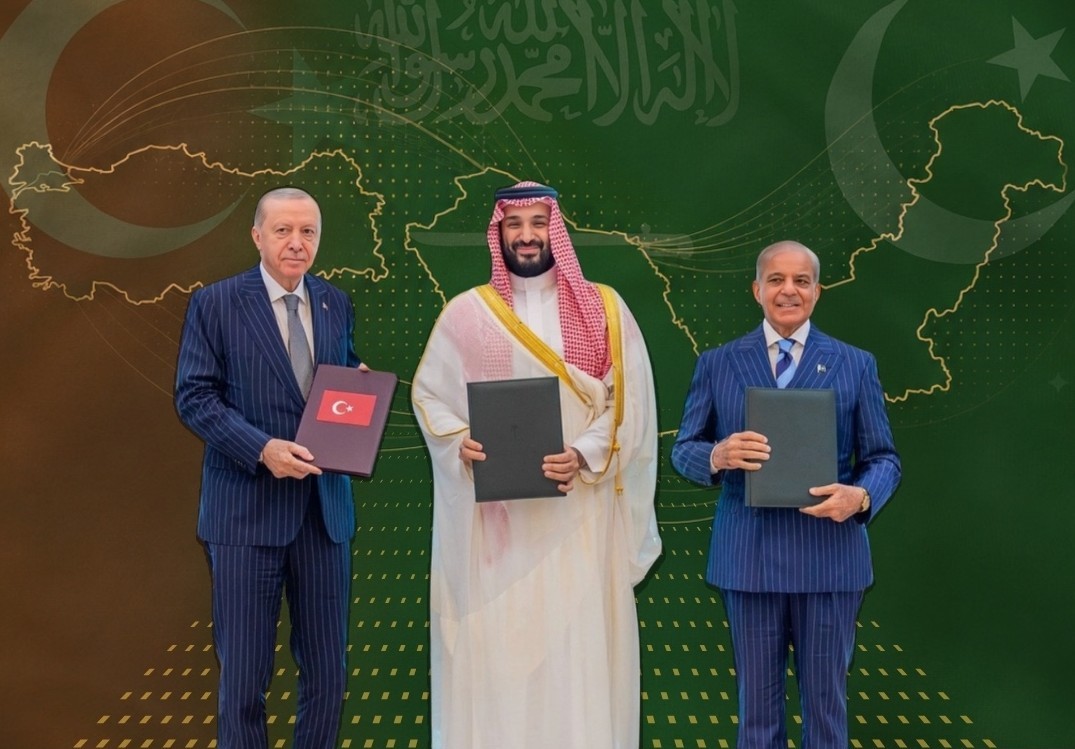
This article argues that the Makkah Joint Defence Agreement represents an important step toward a non-Western security order, but its evolution into a credible “Muslim NATO” is constrained by divergent threat perceptions, competing geopolitical interests, limited institutionalization, and uncertain membership expansion.
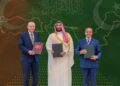
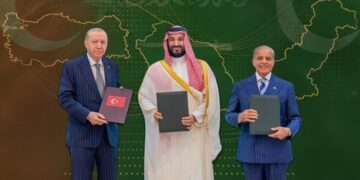
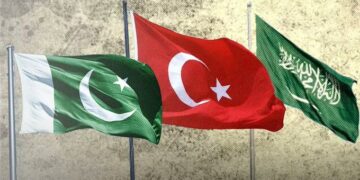
The Makkah Joint Defence Agreement, signed by Pakistan, Saudi Arabia, and Türkiye on 7 August 2026, represents the most ambitious recent effort to transform Islamic solidarity into collective security. Its principal provision resembles NATO’s Article 5: an attack against one signatory is to be considered an attack against all three. Pakistani and Turkish officials nevertheless describe the agreement as “purely defensive in nature” and not directed against any country.
Institutionalization has proceeded relatively quickly. The parties established a Strategic Political and Defence Committee involving their foreign ministers, defence ministers, defence-force commanders, and chiefs of general staff. A subsequent meeting, in September 2026, of the three countries’ military chiefs addressed intelligence sharing, military coordination, and capability integration. They also agreed to create a permanent secretariat in Saudi Arabia, initially headed for three years by a Pakistani secretary-general. Retired Lieutenant General Nauman Mahmood was appointed to this position.
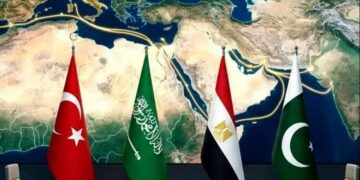
The pact combines complementary resources. Saudi Arabia contributes financial capacity and strategic geography; Türkiye provides a large, operationally experienced military and a rapidly expanding defence industry; and Pakistan contributes professional armed forces, nuclear status, and decades of security engagement with Gulf monarchies. In terms of military power, Pakistan and Türkiye are ranked among the top 15 in the Global Firepower Index. These assets explain why the agreement is sometimes characterized as an embryonic “Muslim NATO.” Yet the analogy remains premature.
NATO’s collective-defence system rests on much more than a treaty clause. It possesses an integrated command structure, common operational standards, interoperable forces, established burden-sharing arrangements, permanent institutions, and decades of joint planning. NATO calls collective defence its “most fundamental principle,” but Article 5 is credible because sustained military preparation supports the political promise. The Makkah Pact’s activation procedures, command arrangements, financing model, deployment rules, and geographical scope remain under development, but it has gained significant momentum since the signing.
A prospective Muslim NATO also requires more members. Three states, despite their capabilities, cannot plausibly represent the security interests of the ummah. Pakistan has developed substantial defence cooperation with Kuwait. Under the Pakistan–Kuwait Protocol Agreement 2026, Pakistani forces will assist Kuwait in training, capacity-building, border management, and other mutually agreed areas, expanding the framework created by their 2023 Defence Cooperation Agreement. Kuwait has also congratulated Pakistan on the trilateral Makkah pact, but bilateral military cooperation and diplomatic approval do not constitute a commitment to collective defence.
Türkiye possesses an even deeper defence relationship with Qatar. Ankara maintains a military base in Qatar, while the two governments have institutionalized joint exercises, training, armaments cooperation, logistical support, and defence-industrial projects. Their 2025 Supreme Strategic Committee communiqué committed both sides to further military programmes, while the Qatari Amiri Diwan confirmed an additional memorandum on defence-industry cooperation. Their strategic relationship continued through high-level military discussions in 2026.
Qatar therefore appears to be a plausible candidate for future membership. Indeed, Pakistan previously identified Türkiye and Qatar as possible participants in an expanded defence framework. Nevertheless, Doha has not publicly committed itself to the Makkah alliance. Reports concerning its possible accession indicate that Qatari officials considered membership discussions premature, despite acknowledging close relations with all three founding members. Kuwait’s position is similarly cautious. The central question is not whether these states maintain bilateral military ties, but whether they are prepared to accept an open-ended obligation to participate in conflicts generated by the threat perceptions of Pakistan, Saudi Arabia, or Türkiye.
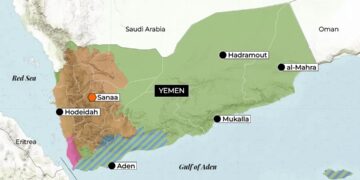
The absence of a common external threat remains the alliance’s greatest structural weakness. Saudi Arabia’s immediate concerns arise from Iranian missiles, drones, and Iran-aligned groups. Following the expansion of the Iran war in early 2026, Iranian missiles and drones targeted Gulf states, while Iran-backed Houthis intensified attacks on Saudi territory and maritime routes. Pakistan has promised to defend Saudi Arabia using “whatever means are available,” but it also maintains diplomatic relations with Iran and has supported negotiations. Direct involvement in an anti-Iranian campaign could aggravate Pakistan’s domestic sectarian tensions, which is a major concern for decision-makers in Islamabad.
Pakistan’s principal conventional-security concern remains India. Türkiye has supported Pakistan on Kashmir and developed extensive defence-industrial cooperation with Islamabad. Saudi Arabia, however, has simultaneously strengthened relations with New Delhi. India and Saudi Arabia created a Ministerial Committee on Defence Cooperation, conducted inaugural army and naval staff talks, and maintained senior military exchanges. Riyadh would therefore be reluctant to jeopardize its economic and strategic partnership with India by automatically entering a Pakistan–India conflict. India–Türkiye relations are more strained. Ankara’s political support and military cooperation with Pakistan produced diplomatic, commercial, and institutional tensions with New Delhi following the 2025 India–Pakistan confrontation. Moreover, Türkiye remains a NATO member and already benefits from a far stronger system of collective planning and deterrence. The Makkah pact may expand Turkish strategic autonomy, but it cannot presently replace NATO as Türkiye’s primary institutional security guarantee.
A non-Western security order in the Islamic world is therefore possible, but more plausibly as a layered coalition than as a replica of NATO. The Makkah pact could produce meaningful cooperation in intelligence, air defence, cybersecurity, maritime security, training, counterterrorism, and weapons production. To evolve into a wider NATO-like alliance, however, it must attract additional members such as Qatar and Kuwait without forcing them to inherit every bilateral rivalry of the founders. Its durability will depend on precise activation rules, limited objectives, equitable burden-sharing, civilian oversight, and mechanisms for managing disagreements over Iran and India. Without broader membership and convergent threat perceptions, “Muslim NATO” will remain an evocative political aspiration rather than a credible collective-security order.
*Opinions expressed in this article are the author’s own and do not necessarily reflect Platform: Current Muslim Affairs’ editorial policy.