




İLKE Vakfı
Platform
  • Türkçe
No Result
View All Result
  • PLATFORM
  • NEWS
    Filistin Sempozyumu: Filistin ve Küresel İlişkilerin Geleceği

    Exploring Islam’s View on Slavery and Blackness: Seminar by Jonathan A.C. Brown

    The Conference on Contemporary Muslim Thought

    The Conference on Contemporary Muslim Thought

    Filistin Sempozyumu: Filistin ve Küresel İlişkilerin Geleceği

    Palestine Symposium: Palestine and the Future of Global Affairs

    İLKE Agenda: Muzzammil Ayyub Thakur ile Keşmir’in “Filistinleştirilmesi”

    The Platform Talks: Palestine after October 7 with Azzam Tamimi

    İLKE Agenda: Muzzammil Ayyub Thakur ile Keşmir’in “Filistinleştirilmesi”

    The Palestine Talks: Syria after December 8 with Kinda Hawasli

    İLKE Agenda: Muzzammil Ayyub Thakur ile Keşmir’in “Filistinleştirilmesi”

    İLKE Agenda: The “Palestinization” of Kashmir with Muzzammil Ayyub Thakur

    İLKE Agenda: Muzzammil Ayyub Thakur ile Keşmir’in “Filistinleştirilmesi”

    Khaled Beydoun: “Islamophobia is a modern manifestation of the crusades”

  • ANALYSIS
    • All
    • Culture, Arts and Media
    • Economy
    • Education
    • Energy and Environment
    • Fundamental Rights and Freedoms
    • Migration
    • Opinion
    • Social Issues
    Possible Scenarios Regarding Iran’s Nuclear Negotiations

    Possible Scenarios Regarding Iran’s Nuclear Negotiations

    Katliamların Gölgesinde Sudan

    In the Shadow of Massacres: Sudan

    Syrian Druze from December 8th to the Present, Between Sectarian, Social, and Political Identity Crises

    Syrian Druze from December 8th to the Present, Between Sectarian, Social, and Political Identity Crises

    Religion and Identity in the Crossfire of Sahelian Awakening

    Religion and Identity in the Crossfire of Sahelian Awakening

    The Land Burns Twice: Ecocide and the Colonial War on Nature in South Lebanon and Palestine

    The Land Burns Twice: Ecocide and the Colonial War on Nature in South Lebanon and Palestine

    India: Targeting ‘Infiltrators’ or Only Muslims?

    India: Targeting ‘Infiltrators’ or Only Muslims?

  • INTERVIEWS
    From the Ballot Box to the Street: The Rising Social Wave in Tanzania After the Election

    From the Ballot Box to the Street: The Rising Social Wave in Tanzania After the Election

    Kafkasya’da Müslümanlar ve İslami Eğitim: TCDİB Kuzey Kafkasya Koordinatörü Selim Akburak ile Söyleşi

    Muslims and Islamic Education in the Caucasus: An Interview with Selim Burak North Caucasus Coordinator in Directorate of Religious Affairs

    Göçü Yönetmek: Dr. Mehmet Köse’yle Söyleşi

    Interview with Mehmet Köse

    Gurbet Hikayeleri

    Interview on Gurbet Hikayeleri

    İstanbul’daki Uluslararası Öğrencilerle Söyleşi

    Interview with International Students in Istanbul

    Gazze’den Bir Ses

    A Voice from Gaza: Sarah al-Najjar

    Filistinli Kadınları Anlamak: Yıldız Ramazanoğlu

    Understanding Palestinian Women: Interview with Yıldız Ramazanoğlu

    Filistinli Yönetmen Nevres Salih’le Söyleşi

    Interview with Palestinian Director Nawras Abu Saleh

    Çin’de Bir Hattat: Haji Noor Deen

    A Calligrapher in China: Haji Noor Deen

  • VOICES
    Anas Altikriti | Voices from the Muslim World | Türkçe Altyazılı

    Anas Altikriti | Voices from the Muslim World | Türkçe Altyazılı

    Basil Mustafa (Oxford) | Voices from the Muslim World | with Turkish subtitles

    Basil Mustafa (Oxford) | Voices from the Muslim World | with Turkish subtitles

    OMAR SULEIMAN | VOICES FROM THE MUSLIM WORLD

    OMAR SULEIMAN | VOICES FROM THE MUSLIM WORLD

    Paul Williams | Voices from the Muslim World

    Paul Williams | Voices from the Muslim World

  • DATABASE
    • All
    • Institutions
    • Movements
    • People
    Afganistan Araştırma ve Değerlendirme Birimi

    Afghanistan Research and Evaluation Unit

    Afgan Stratejik Çalışmalar Merkezi

    Afghan Institute for Strategic Studies

    Abaad Araştırma Merkezi

    Abaad Studies & Research Center

    Adil Bir Dünya İçin Uluslararası Hareket

    International Movement For A Just World

    Adalet ve Kalkınma Partisi

    Justice and Development Party – Hizb al-Adale wa’t-Tenmiye-Justice and Development Party

    Adalet ve İhsan Hareketi

    Justice and Ihsan Movement

    Açe Özgürlük Hareketi

    Aceh Freedom Movement

    Hamid Dabashi

    Hamid Dabashi

    Fuad Sezgin

    Fuad Sezgin

  • PLATFORM
  • NEWS
    Filistin Sempozyumu: Filistin ve Küresel İlişkilerin Geleceği

    Exploring Islam’s View on Slavery and Blackness: Seminar by Jonathan A.C. Brown

    The Conference on Contemporary Muslim Thought

    The Conference on Contemporary Muslim Thought

    Filistin Sempozyumu: Filistin ve Küresel İlişkilerin Geleceği

    Palestine Symposium: Palestine and the Future of Global Affairs

    İLKE Agenda: Muzzammil Ayyub Thakur ile Keşmir’in “Filistinleştirilmesi”

    The Platform Talks: Palestine after October 7 with Azzam Tamimi

    İLKE Agenda: Muzzammil Ayyub Thakur ile Keşmir’in “Filistinleştirilmesi”

    The Palestine Talks: Syria after December 8 with Kinda Hawasli

    İLKE Agenda: Muzzammil Ayyub Thakur ile Keşmir’in “Filistinleştirilmesi”

    İLKE Agenda: The “Palestinization” of Kashmir with Muzzammil Ayyub Thakur

    İLKE Agenda: Muzzammil Ayyub Thakur ile Keşmir’in “Filistinleştirilmesi”

    Khaled Beydoun: “Islamophobia is a modern manifestation of the crusades”

  • ANALYSIS
    • All
    • Culture, Arts and Media
    • Economy
    • Education
    • Energy and Environment
    • Fundamental Rights and Freedoms
    • Migration
    • Opinion
    • Social Issues
    Possible Scenarios Regarding Iran’s Nuclear Negotiations

    Possible Scenarios Regarding Iran’s Nuclear Negotiations

    Katliamların Gölgesinde Sudan

    In the Shadow of Massacres: Sudan

    Syrian Druze from December 8th to the Present, Between Sectarian, Social, and Political Identity Crises

    Syrian Druze from December 8th to the Present, Between Sectarian, Social, and Political Identity Crises

    Religion and Identity in the Crossfire of Sahelian Awakening

    Religion and Identity in the Crossfire of Sahelian Awakening

    The Land Burns Twice: Ecocide and the Colonial War on Nature in South Lebanon and Palestine

    The Land Burns Twice: Ecocide and the Colonial War on Nature in South Lebanon and Palestine

    India: Targeting ‘Infiltrators’ or Only Muslims?

    India: Targeting ‘Infiltrators’ or Only Muslims?

  • INTERVIEWS
    From the Ballot Box to the Street: The Rising Social Wave in Tanzania After the Election

    From the Ballot Box to the Street: The Rising Social Wave in Tanzania After the Election

    Kafkasya’da Müslümanlar ve İslami Eğitim: TCDİB Kuzey Kafkasya Koordinatörü Selim Akburak ile Söyleşi

    Muslims and Islamic Education in the Caucasus: An Interview with Selim Burak North Caucasus Coordinator in Directorate of Religious Affairs

    Göçü Yönetmek: Dr. Mehmet Köse’yle Söyleşi

    Interview with Mehmet Köse

    Gurbet Hikayeleri

    Interview on Gurbet Hikayeleri

    İstanbul’daki Uluslararası Öğrencilerle Söyleşi

    Interview with International Students in Istanbul

    Gazze’den Bir Ses

    A Voice from Gaza: Sarah al-Najjar

    Filistinli Kadınları Anlamak: Yıldız Ramazanoğlu

    Understanding Palestinian Women: Interview with Yıldız Ramazanoğlu

    Filistinli Yönetmen Nevres Salih’le Söyleşi

    Interview with Palestinian Director Nawras Abu Saleh

    Çin’de Bir Hattat: Haji Noor Deen

    A Calligrapher in China: Haji Noor Deen

  • VOICES
    Anas Altikriti | Voices from the Muslim World | Türkçe Altyazılı

    Anas Altikriti | Voices from the Muslim World | Türkçe Altyazılı

    Basil Mustafa (Oxford) | Voices from the Muslim World | with Turkish subtitles

    Basil Mustafa (Oxford) | Voices from the Muslim World | with Turkish subtitles

    OMAR SULEIMAN | VOICES FROM THE MUSLIM WORLD

    OMAR SULEIMAN | VOICES FROM THE MUSLIM WORLD

    Paul Williams | Voices from the Muslim World

    Paul Williams | Voices from the Muslim World

  • DATABASE
    • All
    • Institutions
    • Movements
    • People
    Afganistan Araştırma ve Değerlendirme Birimi

    Afghanistan Research and Evaluation Unit

    Afgan Stratejik Çalışmalar Merkezi

    Afghan Institute for Strategic Studies

    Abaad Araştırma Merkezi

    Abaad Studies & Research Center

    Adil Bir Dünya İçin Uluslararası Hareket

    International Movement For A Just World

    Adalet ve Kalkınma Partisi

    Justice and Development Party – Hizb al-Adale wa’t-Tenmiye-Justice and Development Party

    Adalet ve İhsan Hareketi

    Justice and Ihsan Movement

    Açe Özgürlük Hareketi

    Aceh Freedom Movement

    Hamid Dabashi

    Hamid Dabashi

    Fuad Sezgin

    Fuad Sezgin

No Result
View All Result
Platform
No Result
View All Result
Home Analyses

Resistance as a Way of Life in Palestine

Zahide Tuba Kor by Zahide Tuba Kor
16 September 2024
in Analyses
A A
0
Anadolu Ajansı, 2019

Anadolu Ajansı, 2019

Share on FacebookShare on Twitter

“We must do everything to ensure they (the Palestinians) never do return… The old will die, and the young will forget.”

…writes David Ben-Gurion, Israel’s first prime minister, in his memoirs. During his 14-year term as prime minister, he not only denied the existence and right of return of Palestinian refugees but also made life difficult for Palestinians who remained in the lands Israel occupied in 1948, whom he saw as “unwanted guests” by declaring a state of emergency and military rule. Through assimilation policies, he also sought to sever them from their roots and prevent the formation of a Palestinian identity. This model, which was implemented against Palestinians in Israel from 1949 to 1966, was later applied in the West Bank and Gaza Strip after the 1967 occupation.

Today, neither those who were displaced by the 1948 and 1967 wars and became refugees nor those who remained in their lands and continued their lives under the physical, economic, and psychological oppression of the occupier forget and let others forget their past. Many of the grandchildren of those who lived through the 1948 Nakba (the Catastrophe) live with the memories of their grandparents. For this reason, many Palestinians continue their resistance in different ways, even though some succumb to or are forced to comply with Israel’s assimilation policies.

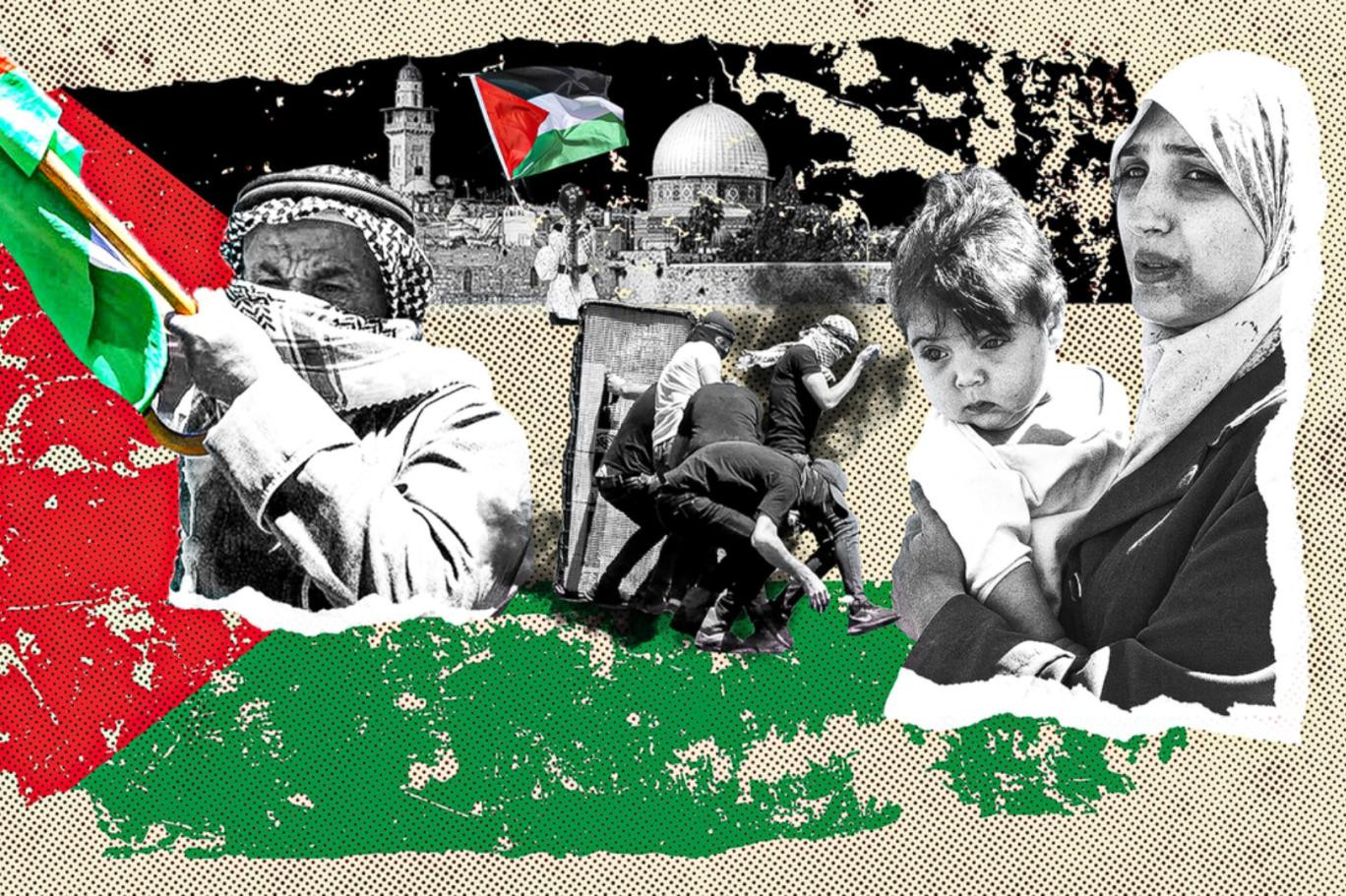
When one thinks of Palestinian resistance, armed struggle may be the first thing that comes to mind, but resistance is multi-dimensional. In an environment where Israel’s occupation authorities brutally suppress all forms of armed resistance and make life unbearable, forcing people to leave, even the effort of Palestinians to endure whatever comes their way and continue their daily lives with resilience is a form of resistance in itself, which is known as “sumud.” Throughout history, passive resistance in Palestine has been far more widespread than armed resistance, with women leading the way.

Remaining Palestinian

The resistance of Palestinians begins even before they are born, starting in the womb; they experience the physical and psychological pressures imposed by Israel at a very early age. However, their mothers play the most critical role in instilling the spirit of active or passive resistance in the new generations. Palestinian women are strong, brave, and selfless. Nearly every aspect of their lives is a part of the resistance: having multiple children (i.e., waging a demographic war against the Judaization of Palestine) and educating them as well as possible; struggling with policies aimed at impoverishing Palestinians; resisting physical and psychological violence and humiliation by the occupier; fighting against restrictions on movement; preserving the Palestinian identity that Israel denies and establishing a strong sense of belonging to the land; preserving Palestinian culture and passing it on to the new generations; keeping the spirit and memory of resistance alive and instilling them in their children; and teaching their children not to fear, not to appear helpless and not to succumb to sorrow and to be brave against the constant intimidation of the occupier… Gazans, in particular, live side by side with death; thus, children are raised with an awareness of not fearing death. Even though they are isolated from the world and abandoned to their fate, they grow up hearing words from their mothers like “Allah is sufficient for us.” While there is a martyr, a disabled person, a detainee, or a missing person in almost every family, and the constant pressure and violence in daily life serve as a reminder of the occupation, the main actor that keeps the spirit and memory of resistance alive is Israel itself.

The hardships and violence experienced under occupation make Palestinians stronger and deepen their connection to their homeland. Yet, the greatest source of strength and resistance for Palestinians is the presence of Jerusalem and Al-Aqsa Mosque. No matter what they endure, they are patient and act according to the mindset that “We will be the guardians and protectors of these holy lands until our last breath.” They consider this a duty written in their destiny. Parents often say, “May my children be sacrificed for the sake of Al-Aqsa.” Jerusalem is the unifying symbol for all Palestinians, whether Muslim or Christian, religious or secular, and even atheist. Living in East Jerusalem is quite challenging and requires paying a heavy price.

Education is also very important for both male and female Palestinians. The opportunities for young people in Palestine to find good jobs that match their education are quite limited. Nevertheless, they view education as the most important tool of resistance and their greatest weapon against Israel. Likewise, Palestinian refugees who have lost their homeland also seek to be well-educated to receive decent treatment in the countries where they have taken refuge. This is precisely why, when Israel imposes curfews or uses other methods to disrupt education, Palestinians turn their homes into schools and continue learning regardless, similar to how tents were turned into schools in Gaza after October 7th.

The Fortress of Resistance: Gaza

Gaza is a bit different from other regions in Palestine. Living under blockade and cut off from the comforts of a consumer society, Gazans are highly devoted to their religion thanks to the activities of Sheikh Ahmed Yassin and his companions since 1978. They aspire to live closely connected to the Quran and hadiths and to draw inspiration from seerah [the life of the Prophet] and the history of other prophets. Memorizing the Quran is widespread, and families encourage their children to pursue both traditional education and Quranic memorization.

Situated on a critical point along the Mediterranean coast, Gazans have historically been resilient and resistant. Gaza has always been the place where resistance against Israel first flares up, where it is violently suppressed, and where huge sacrifices are made. Although Gaza is often recognized for its suffering, Gazans—much like other Palestinians—do not succumb to sorrow and instead seek reasons for joy. Despite war and the blockade, they celebrate Eids with great enthusiasm, attach great importance to the continuity of their lineage, host large and joyful weddings, celebrate special occasions, and, even if they are poor, borrow from other neighbors to offer the best hospitality to their guests. Rather than lamenting, they often share their struggles with a touch of humor… The Mediterranean is their only refuge under the blockade, where they swim freely and organize different activities for fun along the shore. All these are different forms of resistance since human beings cannot live under stress, anxiety, and pain continuously; otherwise, they would lose their mental and emotional well-being. That’s why Gazans fight with all their might when resistance is necessary, but as soon as the clashes end, they return to everyday life as if nothing happened, they even play and celebrate. In this sense, they refuse to be defeated by pain and try to recover while avoiding giving the occupier the satisfaction of seeing them in despair. Even as Israel makes plans to wipe Gaza off the map, Gazans’ determination to survive is unyielding. They seek ease in every hardship and alternatives in every scarcity. When Israel closes one path, Gazans find a way to open another. As early as 2014, the United Nations and World Bank reports warned that Gaza would become uninhabitable by 2020, and although the situation in Gaza reached this point long before the al-Aqsa Flood, they continued to sustain their lives through their productivity—and still do. One of the most striking examples of their productivity and creativity is the underground tunnel network, used for both civilian and military purposes, which Israel has been unable to destroy for ten months.

Though their lives are difficult, Gazans do everything they can to make their lives better. The hadith, “Indeed Allah loves that when one of you does something, he perfects it.” is the guiding philosophy for the lives of the Gazans. They value and cherish life as much as they aspire to martyrdom; they want both their lives and their deaths to be meaningful. Perhaps as a result of this desire, while tens of thousands in Gaza have been brutally killed for the sake of Jerusalem and Al-Aqsa Mosque over the past ten months, Gazans breathe new life into people across the world who are spiritually dormant by connecting them with Islam.
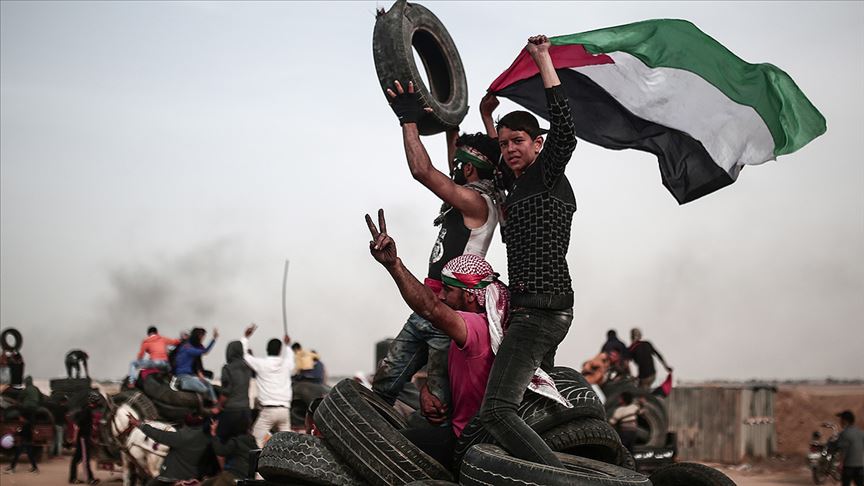
Anadolu Agency, 2019

Hopes that Do Not Yield to Oppression

Each policy enforced by Israel on Palestinians is designed with a psychological aspect to wear down their resilience. It treats Palestinian lands like a laboratory and Palestinians as guinea pigs—not just for testing newly developed technologies and weapons but also to test how much pressure and oppression they can endure. For this reason, Israel’s actions are often arbitrary and unpredictable. Since Palestinians never know what might happen next, making long-term plans is almost impossible; they live by doing whatever the moment requires and almost savor the present. They do not postpone life; even during war, they marry, have children, write their theses, and continue their education. All of these are forms of passive resistance.

Despite being exposed to traumatic events that would be unbearable for most people in other parts of the world, Gazans display resilience against trauma and depression. They remain steadfast through their faith and trust in God. The ability of Gazans to return to “normal” the day after a war ends, to continue life as if nothing happened, and to quickly heal their wounds are among the qualities that Israelis struggle to overcome.

The most striking aspect of Palestinian resistance is that many young prisoners who have been sentenced by Israel to multiple life sentences or decades in prison do not lose hope. Instead, in prison, they learn different foreign languages, complete high school and university through distance learning, and some even pursue master’s and PhD degrees. A notable example is Yahya Sinwar, the new leader of Hamas. Despite being sentenced to life imprisonment four times, Sinwar learned advanced Hebrew, completed his undergraduate and graduate education while in prison, did not give in to brain cancer, and had a deep understanding of Israeli society and its military-security bureaucracy. Even though they did not have the possibility of being released, Sinwar and many other prisoners turned the prison into a place of learning through their unwavering faith and trust in God. They did not succumb to the hardships of the moment but focused on the future. After being released in hostage exchanges decades later, they were prepared with the know-how to start anew in life.

When we analyze who Israel has targeted in assassinations over the past 70-plus years beyond armed groups, we see the multifaceted nature of Palestinian resistance. For instance, notable figures such as the Palestinian novelist and journalist Ghassan Kanafani, cartoonist Naji al-Ali, who created the Hanzala character, and important Palestinian engineers; hundreds of journalists, doctors, healthcare workers, ambulance drivers, search and rescue workers, academics, teachers, scholars, artists, engineers, humanitarian workers after October 7… Tens of thousands of women and children who have been massacred… Each of these individuals is a part of resistance in different forms.

In conclusion, simply continuing to live in Palestine is, in itself, an act of resistance.

Cover: newarab.com
Zahide Tuba Kor

Zahide Tuba Kor

He completed his bachelor’s degree (2003) in Political Science and International Relations at Marmara University, and his master’s degree (2007) with a thesis on Türkiye-Syria relations. He worked as a writer and editor at Anlayış magazine (2004–2010) and as an assistant coordinator at the Center for Global Studies of BİSAV (2010–2014). Between 2015 and 2021, he translated articles from foreign media and think tanks on Türkiye, the Middle East, and world politics. He is currently giving seminars and organizing reading groups on the Middle East at various NGOs.

Related Articles

Possible Scenarios Regarding Iran’s Nuclear Negotiations
Analyses

Possible Scenarios Regarding Iran’s Nuclear Negotiations

1 December 2025
Katliamların Gölgesinde Sudan
Analyses

In the Shadow of Massacres: Sudan

27 November 2025
Syrian Druze from December 8th to the Present, Between Sectarian, Social, and Political Identity Crises
Analyses

Syrian Druze from December 8th to the Present, Between Sectarian, Social, and Political Identity Crises

11 November 2025
Religion and Identity in the Crossfire of Sahelian Awakening
Analyses

Religion and Identity in the Crossfire of Sahelian Awakening

4 November 2025
The Land Burns Twice: Ecocide and the Colonial War on Nature in South Lebanon and Palestine
Analyses

The Land Burns Twice: Ecocide and the Colonial War on Nature in South Lebanon and Palestine

4 November 2025
India: Targeting ‘Infiltrators’ or Only Muslims?
Analyses

India: Targeting ‘Infiltrators’ or Only Muslims?

4 November 2025
  • Possible Scenarios Regarding Iran’s Nuclear Negotiations

    Possible Scenarios Regarding Iran’s Nuclear Negotiations

    0 shares
    Share 0 Tweet 0
  • In the Shadow of Massacres: Sudan

    0 shares
    Share 0 Tweet 0
  • In the Shadow of Massacres: Sudan

    0 shares
    Share 0 Tweet 0
  • Islam, Ethnic Conflicts, and Social Peace in the Horn of Africa

    0 shares
    Share 0 Tweet 0
  • Digital Colonialism: The Evolution of Colonialism and The New Generation Imperialism

    0 shares
    Share 0 Tweet 0
  • Return Dynamics in the Context of Syria’s Reconstruction

    0 shares
    Share 0 Tweet 0
  • Islamic Cities and Modern Urbanization

    0 shares
    Share 0 Tweet 0
  • Syrian Druze from December 8th to the Present, Between Sectarian, Social, and Political Identity Crises

    0 shares
    Share 0 Tweet 0

Platform: Agenda of the Muslim World was established within the İLKE Science Culture Education Foundation as a publication organ that aims to follow and analyze the intellectual, political, social, economic and cultural agendas of Muslim societies and to present current and original perspectives on the Muslim world.

  • ANALYSIS
  • NEWS
  • INTERVIEWS
  • VOICES
  • platform@ilke.org.tr
  • (0216) 310 43 18
  • Aziz Mahmut Hüdayi Mah. Türbe Kapısı Sk. No: 13 Üsküdar, İstanbul
Instagram X-twitter

2025 @ PLATFORM is an İLKE Foundation organization. All rights reserved.

No Result
View All Result
  • Home
  • Analyses
  • Infographic
  • Interviews
  • News
  • Database
  • Voices
İLKE Vakfı
  • Türkçe