










İLKE Vakfı
Platform
  • Türkçe
No Result
View All Result
  • PLATFORM
  • NEWS
    Filistin Sempozyumu: Filistin ve Küresel İlişkilerin Geleceği

    Exploring Islam’s View on Slavery and Blackness: Seminar by Jonathan A.C. Brown

    The Conference on Contemporary Muslim Thought

    The Conference on Contemporary Muslim Thought

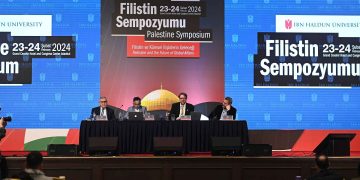
    Filistin Sempozyumu: Filistin ve Küresel İlişkilerin Geleceği

    Palestine Symposium: Palestine and the Future of Global Affairs

    İLKE Agenda: Muzzammil Ayyub Thakur ile Keşmir’in “Filistinleştirilmesi”

    The Platform Talks: Palestine after October 7 with Azzam Tamimi

    İLKE Agenda: Muzzammil Ayyub Thakur ile Keşmir’in “Filistinleştirilmesi”

    The Palestine Talks: Syria after December 8 with Kinda Hawasli

    İLKE Agenda: Muzzammil Ayyub Thakur ile Keşmir’in “Filistinleştirilmesi”

    İLKE Agenda: The “Palestinization” of Kashmir with Muzzammil Ayyub Thakur

    İLKE Agenda: Muzzammil Ayyub Thakur ile Keşmir’in “Filistinleştirilmesi”

    Khaled Beydoun: “Islamophobia is a modern manifestation of the crusades”

  • ANALYSIS
    • All
    • Culture, Arts and Media
    • Economy
    • Education
    • Energy and Environment
    • Fundamental Rights and Freedoms
    • Migration
    • Opinion
    • Social Issues
    Rethinking Urban Space: Spacio-Cide, Collective Memory, and Resistance

    Rethinking Urban Space: Spacio-Cide, Collective Memory, and Resistance

    Gazze’de Barış Planı Tartışması: Yardım, Güvenlik ve Hukuk

    Debate of Peace Plan for Gaza: Aid, Security, and Law

    Uluslararası Sistem ve Ortadoğu’nun Geleceği

    The International System and the Future of the Middle East

    Suriye’de DAEŞ ile Mücadele’de Yeni Dönemin Getirdikleri ve Olası Tehditler

    The Implications of the New Phase in the Fight Against ISIS in Syria and Possible Threats

    İç ve Dış Baskılar Altında İran İslam Cumhuriyeti’nin Zor Sınavı

    The Islamic Republic of Iran’s Tough Test Under Domestic and External Pressures

    İsrail’in Somaliland’ı Tanıması: Afrika Boynuzu’nda İstikrarsızlaştırıcı Bir Hamle

    Israel’s Recognition of Somaliland: A Destabilizing Move in the Horn of Africa

  • INTERVIEWS
    From the Ballot Box to the Street: The Rising Social Wave in Tanzania After the Election

    From the Ballot Box to the Street: The Rising Social Wave in Tanzania After the Election

    Kafkasya’da Müslümanlar ve İslami Eğitim: TCDİB Kuzey Kafkasya Koordinatörü Selim Akburak ile Söyleşi

    Muslims and Islamic Education in the Caucasus: An Interview with Selim Burak North Caucasus Coordinator in Directorate of Religious Affairs

    Göçü Yönetmek: Dr. Mehmet Köse’yle Söyleşi

    Interview with Mehmet Köse

    Gurbet Hikayeleri

    Interview on Gurbet Hikayeleri

    İstanbul’daki Uluslararası Öğrencilerle Söyleşi

    Interview with International Students in Istanbul

    Gazze’den Bir Ses

    A Voice from Gaza: Sarah al-Najjar

    Filistinli Kadınları Anlamak: Yıldız Ramazanoğlu

    Understanding Palestinian Women: Interview with Yıldız Ramazanoğlu

    Filistinli Yönetmen Nevres Salih’le Söyleşi

    Interview with Palestinian Director Nawras Abu Saleh

    Çin’de Bir Hattat: Haji Noor Deen

    A Calligrapher in China: Haji Noor Deen

  • VOICES
    Anas Altikriti | Voices from the Muslim World | Türkçe Altyazılı

    Anas Altikriti | Voices from the Muslim World | Türkçe Altyazılı

    Basil Mustafa (Oxford) | Voices from the Muslim World | with Turkish subtitles

    Basil Mustafa (Oxford) | Voices from the Muslim World | with Turkish subtitles

    OMAR SULEIMAN | VOICES FROM THE MUSLIM WORLD

    OMAR SULEIMAN | VOICES FROM THE MUSLIM WORLD

    Paul Williams | Voices from the Muslim World

    Paul Williams | Voices from the Muslim World

  • DATABASE
    • All
    • Institutions
    • Movements
    • People
    Afganistan Araştırma ve Değerlendirme Birimi

    Afghanistan Research and Evaluation Unit

    Afgan Stratejik Çalışmalar Merkezi

    Afghan Institute for Strategic Studies

    Abaad Araştırma Merkezi

    Abaad Studies & Research Center

    Hamid Dabashi

    Hamid Dabashi

    Fuad Sezgin

    Fuad Sezgin

    Fikret Karcic

    Fikret Karcic

    Fatıma Mernissi

    Fatıma Mernissi

    Farid Hafez

    Farid Hafez

    Enes Karic

    Enes Karic

  • PLATFORM
  • NEWS
    Filistin Sempozyumu: Filistin ve Küresel İlişkilerin Geleceği

    Exploring Islam’s View on Slavery and Blackness: Seminar by Jonathan A.C. Brown

    The Conference on Contemporary Muslim Thought

    The Conference on Contemporary Muslim Thought

    Filistin Sempozyumu: Filistin ve Küresel İlişkilerin Geleceği

    Palestine Symposium: Palestine and the Future of Global Affairs

    İLKE Agenda: Muzzammil Ayyub Thakur ile Keşmir’in “Filistinleştirilmesi”

    The Platform Talks: Palestine after October 7 with Azzam Tamimi

    İLKE Agenda: Muzzammil Ayyub Thakur ile Keşmir’in “Filistinleştirilmesi”

    The Palestine Talks: Syria after December 8 with Kinda Hawasli

    İLKE Agenda: Muzzammil Ayyub Thakur ile Keşmir’in “Filistinleştirilmesi”

    İLKE Agenda: The “Palestinization” of Kashmir with Muzzammil Ayyub Thakur

    İLKE Agenda: Muzzammil Ayyub Thakur ile Keşmir’in “Filistinleştirilmesi”

    Khaled Beydoun: “Islamophobia is a modern manifestation of the crusades”

  • ANALYSIS
    • All
    • Culture, Arts and Media
    • Economy
    • Education
    • Energy and Environment
    • Fundamental Rights and Freedoms
    • Migration
    • Opinion
    • Social Issues
    Rethinking Urban Space: Spacio-Cide, Collective Memory, and Resistance

    Rethinking Urban Space: Spacio-Cide, Collective Memory, and Resistance

    Gazze’de Barış Planı Tartışması: Yardım, Güvenlik ve Hukuk

    Debate of Peace Plan for Gaza: Aid, Security, and Law

    Uluslararası Sistem ve Ortadoğu’nun Geleceği

    The International System and the Future of the Middle East

    Suriye’de DAEŞ ile Mücadele’de Yeni Dönemin Getirdikleri ve Olası Tehditler

    The Implications of the New Phase in the Fight Against ISIS in Syria and Possible Threats

    İç ve Dış Baskılar Altında İran İslam Cumhuriyeti’nin Zor Sınavı

    The Islamic Republic of Iran’s Tough Test Under Domestic and External Pressures

    İsrail’in Somaliland’ı Tanıması: Afrika Boynuzu’nda İstikrarsızlaştırıcı Bir Hamle

    Israel’s Recognition of Somaliland: A Destabilizing Move in the Horn of Africa

  • INTERVIEWS
    From the Ballot Box to the Street: The Rising Social Wave in Tanzania After the Election

    From the Ballot Box to the Street: The Rising Social Wave in Tanzania After the Election

    Kafkasya’da Müslümanlar ve İslami Eğitim: TCDİB Kuzey Kafkasya Koordinatörü Selim Akburak ile Söyleşi

    Muslims and Islamic Education in the Caucasus: An Interview with Selim Burak North Caucasus Coordinator in Directorate of Religious Affairs

    Göçü Yönetmek: Dr. Mehmet Köse’yle Söyleşi

    Interview with Mehmet Köse

    Gurbet Hikayeleri

    Interview on Gurbet Hikayeleri

    İstanbul’daki Uluslararası Öğrencilerle Söyleşi

    Interview with International Students in Istanbul

    Gazze’den Bir Ses

    A Voice from Gaza: Sarah al-Najjar

    Filistinli Kadınları Anlamak: Yıldız Ramazanoğlu

    Understanding Palestinian Women: Interview with Yıldız Ramazanoğlu

    Filistinli Yönetmen Nevres Salih’le Söyleşi

    Interview with Palestinian Director Nawras Abu Saleh

    Çin’de Bir Hattat: Haji Noor Deen

    A Calligrapher in China: Haji Noor Deen

  • VOICES
    Anas Altikriti | Voices from the Muslim World | Türkçe Altyazılı

    Anas Altikriti | Voices from the Muslim World | Türkçe Altyazılı

    Basil Mustafa (Oxford) | Voices from the Muslim World | with Turkish subtitles

    Basil Mustafa (Oxford) | Voices from the Muslim World | with Turkish subtitles

    OMAR SULEIMAN | VOICES FROM THE MUSLIM WORLD

    OMAR SULEIMAN | VOICES FROM THE MUSLIM WORLD

    Paul Williams | Voices from the Muslim World

    Paul Williams | Voices from the Muslim World

  • DATABASE
    • All
    • Institutions
    • Movements
    • People
    Afganistan Araştırma ve Değerlendirme Birimi

    Afghanistan Research and Evaluation Unit

    Afgan Stratejik Çalışmalar Merkezi

    Afghan Institute for Strategic Studies

    Abaad Araştırma Merkezi

    Abaad Studies & Research Center

    Hamid Dabashi

    Hamid Dabashi

    Fuad Sezgin

    Fuad Sezgin

    Fikret Karcic

    Fikret Karcic

    Fatıma Mernissi

    Fatıma Mernissi

    Farid Hafez

    Farid Hafez

    Enes Karic

    Enes Karic

No Result
View All Result
Platform
No Result
View All Result
Home Analyses

Sumud from the Perspective of International Law Scholars

Platform Editör by Platform Editör
1 October 2025
in Analyses, Fundamental Rights and Freedoms
A A
0
Sumud from the Perspective of International Law Scholars
FacebookX/Twitter

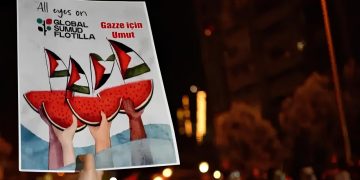
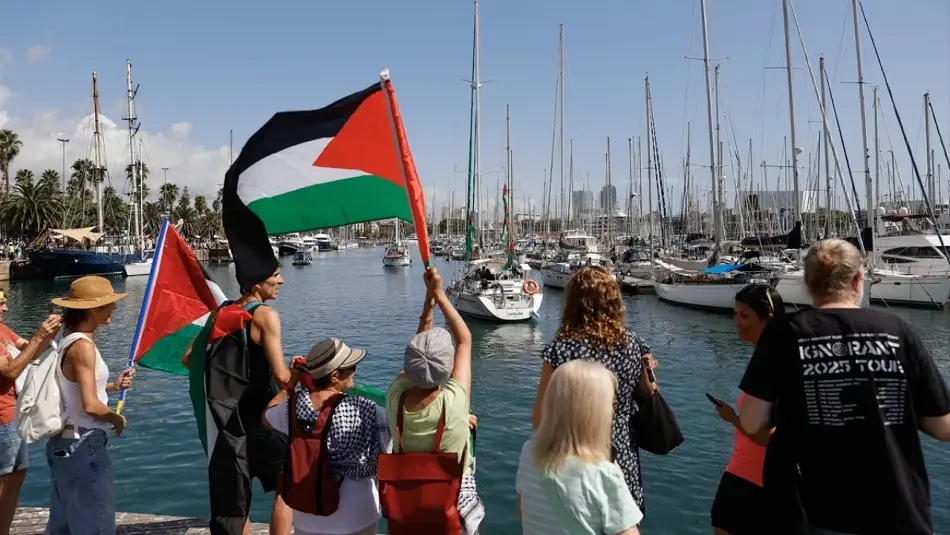
The Global Sumud Flotilla, which seeks to overcome Israel’s blockade of Palestine, aims to establish a secure and sustainable maritime corridor to enable the delivery of humanitarian aid to Gaza. As the ILKE Foundation’s “Platform Project: The Agenda of the Muslim World” team, we present excerpts from interviews conducted with scholars to understand this initiative’s on-the-ground dynamics, sources of motivation, and position within the framework of international law.

Professor Berdal Aral shared his insights with Platform:

Where does the Sumud Flotilla’s attempt to reach Gaza stand in the context of international law? What is the legal basis of this initiative in light of the principles of naval blockade, humanitarian aid, and international humanitarian law?

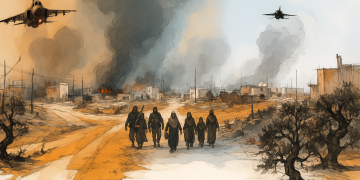
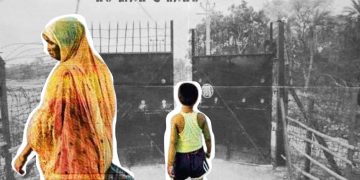
Israel’s military siege and lethal blockade of Gaza, in place since 2007, constitute both a crime against humanity in the form of collective punishment and a significant pillar of the ongoing Gaza genocide since 7 October 2023. Under the 1948 Convention on the Prevention and Punishment of the Crime of Genocide, the States Parties have an obligation to prevent this genocide. However, these obligations have neither halted Israel’s genocidal aggression nor brought an end to the blockade. In its order on provisional measures in January 2024, the International Court of Justice characterized the situation in Gaza in terms of genocide and called for the urgent provision of humanitarian assistance to the territory.

Under international law, the right of navigation on the high seas—which belong to no state—is recognized for all states and their nationals. Non-state actors likewise possess the freedom to navigate the high seas with ships or other seafaring vessels. Absent involvement in unlawful activities such as piracy or drug trafficking, no state’s ships or aircraft may interfere with vessels transiting the high seas. Any such interference would constitute illegal use of force and could even amount to piracy.

Should seafaring vessels owned by non-state actors engaged in efforts to deliver humanitarian aid to Gaza be subjected to Israeli intervention within Gaza’s territorial waters, this would amount to a grave breach of international law on at least two grounds: first, as the United Nations has repeatedly affirmed, Gaza is a territory belonging to the Palestinians, and Israel is an occupying power there; second, genocide and blockade constitute international crimes. These are breaches of erga omnes obligations—violations owed to the global community as a whole.

Where states have manifested incapacity or unwillingness, the intervention of civil society—an integral component of the international community—to deliver necessities to Gaza, thereby breaching this horrific blockade and potentially contributing to its complete removal, is in every respect entirely consistent with international law.

Assoc. Prof. Dr. Ali Osman Karaoğlu shared his insights with Platform:,

What does the statement issued via the Foreign Ministries of 16 countries regarding the security of the Sumud Flotilla guarantee? What are its legal and diplomatic consequences?


The statement by 16 countries, including Türkiye, regarding the Global Sumud Flotilla essentially aims to underscore an existing right of states under international law: the right to protect their nationals through diplomatic protection. In international law, a state’s nationals are considered an extension of that state; harm inflicted on a national is thus treated as harm inflicted upon the state itself.

That said, the exercise of this right is subject to the discretion of the states concerned. If it so chooses, a state may pursue the harm done to its national by invoking the law of state responsibility. Such pursuit may take the form of litigation, sanctions, or other diplomatic measures. Indeed, in the Mavi Marmara incident, proceedings against Israel culminated in a responsibility agreement, and Israel paid compensation. In this sense, every state with nationals aboard the Sumud Flotilla possesses the right to invoke and pursue state responsibility.

It is also possible to provide diplomatic protection preemptively, before harm occurs. Indeed, Spain—one of the 16 states in question—has announced that it will dispatch a warship to protect the Sumud Flotilla. It should be noted that, in the specific circumstances at hand, this is consistent with international law. First, under international law, both civilian and military vessels are entitled to freedom of navigation on the high seas. Second, the Sumud Flotilla is proceeding from the high seas toward the territorial waters of Palestine (Gaza); in this sense, it is not entering Israel’s territorial waters. Israel’s unlawful assertion of that area as part of its maritime jurisdiction does not alter this legal assessment. Third, the naval zone generated by Gaza’s coastline—belonging to Palestine—is under Israeli occupation and blockade. The illegality of this occupation and blockade has been recognized in decisions of both the United Nations Security Council (UNSC) and the International Court of Justice (ICJ). Accordingly, any Israeli intervention under the pretext of the blockade would amount to an armed attack, in which case Spain’s right of self-defense would arise.


Platform Editör

Platform Editör

Related Articles

Rethinking Urban Space: Spacio-Cide, Collective Memory, and Resistance
Analyses

Rethinking Urban Space: Spacio-Cide, Collective Memory, and Resistance

4 March 2026
Gazze’de Barış Planı Tartışması: Yardım, Güvenlik ve Hukuk
Analyses

Debate of Peace Plan for Gaza: Aid, Security, and Law

2 March 2026
Uluslararası Sistem ve Ortadoğu’nun Geleceği
Analyses

The International System and the Future of the Middle East

23 February 2026
Suriye’de DAEŞ ile Mücadele’de Yeni Dönemin Getirdikleri ve Olası Tehditler
Analyses

The Implications of the New Phase in the Fight Against ISIS in Syria and Possible Threats

18 February 2026
İç ve Dış Baskılar Altında İran İslam Cumhuriyeti’nin Zor Sınavı
Analyses

The Islamic Republic of Iran’s Tough Test Under Domestic and External Pressures

11 February 2026
İsrail’in Somaliland’ı Tanıması: Afrika Boynuzu’nda İstikrarsızlaştırıcı Bir Hamle
Analyses

Israel’s Recognition of Somaliland: A Destabilizing Move in the Horn of Africa

11 February 2026
  • Rethinking Urban Space: Spacio-Cide, Collective Memory, and Resistance

    Rethinking Urban Space: Spacio-Cide, Collective Memory, and Resistance

    0 shares
    Share 0 Tweet 0
  • Debate of Peace Plan for Gaza: Aid, Security, and Law

    0 shares
    Share 0 Tweet 0
  • The International System and the Future of the Middle East

    0 shares
    Share 0 Tweet 0
  • The Implications of the New Phase in the Fight Against ISIS in Syria and Possible Threats

    0 shares
    Share 0 Tweet 0
Rethinking Urban Space: Spacio-Cide, Collective Memory, and Resistance
Analyses

Rethinking Urban Space: Spacio-Cide, Collective Memory, and Resistance

by Ayşenur Ergin
4 March 2026
0

In the literature of urban sociology and urbanism, the transformation of space is generally analyzed through regimes of capital accumulation...

Read moreDetails
Gazze’de Barış Planı Tartışması: Yardım, Güvenlik ve Hukuk

Debate of Peace Plan for Gaza: Aid, Security, and Law

2 March 2026
Uluslararası Sistem ve Ortadoğu’nun Geleceği

The International System and the Future of the Middle East

23 February 2026
Suriye’de DAEŞ ile Mücadele’de Yeni Dönemin Getirdikleri ve Olası Tehditler

The Implications of the New Phase in the Fight Against ISIS in Syria and Possible Threats

18 February 2026
İç ve Dış Baskılar Altında İran İslam Cumhuriyeti’nin Zor Sınavı

The Islamic Republic of Iran’s Tough Test Under Domestic and External Pressures

11 February 2026

Platform: Agenda of the Muslim World was established within the İLKE Science Culture Education Foundation as a publication organ that aims to follow and analyze the intellectual, political, social, economic and cultural agendas of Muslim societies and to present current and original perspectives on the Muslim world.

  • ANALYSIS
  • NEWS
  • INTERVIEWS
  • VOICES
  • platform@ilke.org.tr
  • (0216) 310 43 18
  • Aziz Mahmut Hüdayi Mah. Türbe Kapısı Sk. No: 13 Üsküdar, İstanbul
Instagram X-twitter

2025 @ PLATFORM is an İLKE Foundation organization. All rights reserved.

No Result
View All Result
  • Home
  • Analyses
  • Infographic
  • Interviews
  • News
  • Database
  • Voices
İLKE Vakfı
  • Türkçe