







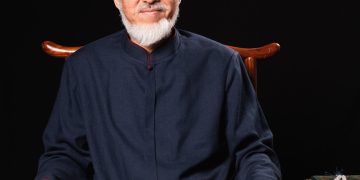








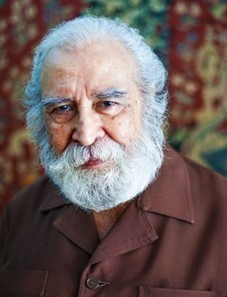
Syed Muhammad Naquib Al-Attas, one of the leading figures of contemporary Islamic thought, accentuates the need of the Islamic society for its conceptualizations, making a new call to the Muslim world with the discourse of “expected Muslims,” is a thinker from Far Asia. Naquib Al-Attas, who dedicated himself to the development of Islamic thought, conducted studies to revive the tradition in the scientific direction in a way that puts Islamic thought at the centre of his works. Therefore, he founded the International Institute of Islamic Thought and Civilization (ISTAC) and continued his studies without interruption despite his advancing age. In particular, he made an effort to establish a civilization with the meaning he brought to the concept of religion and sought ways to build self-confidence in the ulema who did not know what to do with the progress of the West. In addition, Al-Attas, who made a new proposal to the Muslim world with the discourse of Islamization, expressed his thoughts on how we should position ourselves resistant to secularization. In this paper, first and foremost, I will examine Attas’s definition of religion; thereafter, I will track the connection he established between religion and freedom, the traces of secularization, and what this concept corresponds to in the Qur’an.
The Concept of Religion and its Inclusivity According to Al-Attas
According to al-Attas, religion (ٱلدِّينَ) originated from the word ” dana,” which means to be in debt. At this point, the person who believes in religion is also expressed with the word that means “da’in,” which is the name of the active participle. Although Attas accepts that the word “dâin” means to find oneself in debt, he takes us from the word religion to a state and from there to a fair administration with his various conjugations with the verb “dane.” According to him, a related word conjugated with the verb dane is “medina.” Stating that the word Medina means town or city, Attas stated that every city needs a ruler, that is to say, a “deyyan.” In this respect, he stated that the word dane means justice, organization, and authority, which corresponds to a social framework. Stating that socialization is close to the verb “meddene.” “Meddene” means to establish cities, to become civilized, to become human, and the word “religion” derives from the term “tameddun,” which means civilization and social and cultural purification. In this context, the word religion is essential to create a humane society stated that it indicates the existence of a natural tendency to obey the law and desire a fair administration (Attas, 2016, p. 79).
There is a parallelism between Al-Attas’s definition of the concept of the “din” and his discourses on knowledge. According to him, knowledge is of two types: One is the knowledge given to man by God, and the other is the knowledge obtained through rational research activities based on experimentation and observation by man. Stating that the first knowledge opens the mystery of Being and its existence, he stated that as a result, the man reveals the proper relationship between his soul and his Lord. Expressing that this knowledge is man’s ultimate purpose, Al-Attas thinks that it is also the basis of rational research activities, which is the second type of knowledge. Furthermore, according to him, the fundamental difference between the Westerner’s search for knowledge and the Muslim’s search for knowledge emerges (Attas, 2016, p. 101). For the Westerner, the purpose of seeking knowledge is to make the seeker a good citizen, while for the Muslim, the purpose of seeking knowledge is to make the seeker a good person. In this respect, if we keep in mind that the principal intention of religion is a humane society, parallelism will emerge between Al-Attas’s definition of religion and the purpose of knowledge. Consequently, it is understood that seeking genuine knowledge is seeking religious knowledge for Al-Attas.
Fitrah[1] and Freedom in the Context of the Inclusiveness of Religion
Attas, who stated that there is a resemblance between fitrah and freedom, defined religion as the inherent natural state of the Being, called fitrah. Moreover, he regards fitra as a model and a method according to which Allah has created everything and states that this is a Sunnah of Allah. Besides, he states that freedom means acting according to the demands of man’s true inherent nature, based on the fact that the true innate nature of man is conformity to the creation, in other words, the building of religious life. He argued that this would only be possible with devotion, stating that an unconscious acquiescence cannot be genuine and invites people to contemplate (Attas, 2016, p. 82). According to Attas, realizing the truth is also within the limits of the mind. According to him, “aql(عقل – intellect)” is a spiritual or that exists in the spiritual essence, a spiritual comprehension organ known as “el-qalb (قلب – heart)” in Islamic terminology. From this point of view, Al-Attas points out that the understanding of spiritual truths is also within the limits of the mind; he believes that truths should not be separated from consciousness and intellect.
Secularization Process and Ways of Islamization
The word secularism is explained by the word “secular,” which derives from the root “seaculum.” In this sense, the word secular contains the connotations of time and place. According to Al-Attas, the word seaculum is used to describe the facts that exist on earth in “this age” and “this time” (Attas, 2016, p. 40). In this context, it is avowable that while the secularization in the Islamic world is related to Western belief systems, it also causes some confusion among Muslims. For Al-Attas, at this point, the technological and scientific progress of the secularized West intimidated the scholars and intellectuals; in consequence of this influence, the adventure of imitating the West began. Hence, severe perplexity and turmoil have appeared in Islamic societies. Stating that some Muslims, especially some scholars with modernist tendencies, were bewildered by the achievements in the Western world, Al-Attas supposed that some Muslim thinkers came up with concepts like “Islamic socialism” and “Islamic liberalism” in this regard. He emphasized that both socialism and liberalism are secular ideologies, and therefore secularism or liberalism is not possible in reality (Attas, 2016, p. 67). He submitted the concept of Islamization, considering that progress would not be possible by following in the footsteps of inherited ideologies in the West. According to him, Islamization is a revert to the original nature rather than an evolution in the context in which it is understood in the secular world. The Islamization process that will take place will be possible with the Islamization of the language used first. Stating that language, thought, and logic is closely related to each other, he reckons that the Islamization of language and thought will intrinsically be Islamized (Attas, 1999, p. 8).
Besides, he established a connection between the Islamization of the language and the alienation from religion. According to him, the fundamental motive for the ignorance and confusion in Muslim societies stems from people’s alienation from Islam. He proffered the significance of Islamization of the language and the construction of a thought system by connecting the alienation from Islam to the fact that one starts thinking with non-Islamic concepts rather than committing a sin (Attas, 2016, p. 71).
In addition, Attas gave the meaning of secularization as “firstly the liberation of man from religious, and metaphysical control over his mind and language” thus, man’s gaze will be turned entirely from the other world to this world (Attas, 2016, p. 41). Defining that secularism is “the loss of the religious determination of cultural integration symbols (Attas, 2016, p. 42)”, Attas uttered that in this context, a person who throws off religious life would ignore religious approaches in the political arena. As a result of the secularization process, the human being has been elevated to the position of the preacher, and man has cut off his connection with the transcendent being. At this point, as stated by Attas, secularization has three complementary parts: the disenchantment of nature, the desecration of politics, and an end to the sanctification of values. Here, it is vital to mention the distinction between secularism and secularization. Secularism emerges as an ideology that, rather than eliminating the sanctification of values, secularism definitively and ultimately replaces its own set of values with the sacred.
Conversely, secularization relativizes all values and offers the necessary aperture and liberty for human action and history. As a matter of fact, secularization expresses a constant forward movement like an evolution scheme (Kutay, 2020). The concept of tradition used by Muslims as opposed to this progress was created with the revelation and instructions of Allah, referring to the religious ways and methods of the prophet of the Abrahamic tradition rather than stagnation. This represents continuous development. However, the development here is, as Elmalılı Hamdi Yazır quoted, “the things that lead to progress in Fadail[1] and Hasanat[2] are genuine progress or development” (Yazır, 2011, p. 262) rather than a sustained forward positivist development that arose with secularization.
Secularization in the Qur’an
According to Al-Attas, the closest concept to the word secular in the Qur’an is “al-Hayat al-Dunya (الحَيٰوةُ الدُّنْيَا).”[3] Stating that this concept means worldly life or world life, He explains that the word ‘Dunya’ is derivative of the root from “dana” and corresponds to the meaning of something brought closer. In other words, Dunya conveys something that is brought closer to the human mind and comprehension experience and consciousness. It surrounds and affects us, so to speak, diverts our consciousness from our final destination, the hereafter. At this point, the Qur’an does not apprise us against turning away from worldly life; on the contrary, it warns us against its shifting nature. Thus, it is seen that the word Dunya does not exactly oppose secularism. As a matter of fact, the Qur’an has brought it closer to us by using the word Dunya, which is intertwined with religious life. However, secularization has wholly cut off worldly life from this spiritual life.
Further, according to Al-Attas, secularism can also be considered progress. However, it is necessary to understand what progress corresponds to here. Indeed, according to the Islamic view, the concepts of change, development, and progress refer to the return of the soul to its true nature and religion, to the true Islam, expressed and practiced by the Honorable Prophet (sav), his companions and their followers, and later sincere Muslims (with Ikhlas).[4] The purpose inherent in the concept of progress carries its true meaning when it refers only to what is clear, always firm, and already exists (Rahman, 2013, p. 58). Therefore, what is established, obvious, and existing cannot be subject to change. Progressive western understanding cannot create a new horizon on a religion whose ultimate goals are determined.
Conclusion
Nakib al-Attas, who tries to find a way to the intellectual dilemmas of the Muslim world with the discourse of Islamization, is one of the critical living figures of contemporary Islamic thought. His Islamization projection should not be understood as expressing the existing Islamic concepts. Islamization will only be possible with a return to the original form, that is, to the original creative- Centred state. Moreover, it is pretty interesting that he asserted that the Dunya is a place brought closer to Muslims with the meaning he brought to the concept of the Dunya. As a matter of fact, while the world is a place to be turned away for Muslims due to the conditions of the period in which he lived, Dunya is an opportunity in Attas’s thought. At this point, Attas, in terms of the world of ideas he built on Islamization, concludes that an ontological, excellent correlation – which is a righteous deed (عَمِلُوا۟ ٱلصَّـٰلِحَـٰتِ) – should be established with this converged world. Stating that he wrote all of these thoughts for “The Expected Muslims,” Al-Attas paved the way for new discourses in Islamic thought with the ideas he developed.
References
Attas, M. N. al-. (1999). The Concept of Education In Islam: A Framework for an Islamic Philosophy of Education (3rd Ed.). Kuala Lumpur: ISTAC.
Attas, M. N. al-. (2016). İslâm, Sekülerizm ve Geleceğin Felsefesi (4th Ed.). M. E. Kılıç, Trans.) Istanbul: İnsan Publications.
Kutay, M. T. (2020). Sekülerleşme ve Sekülarizasyon Kavramlarının Birbirinden Ayrıştırılması Kavramların Ortaya Çıkışı ve Tarihsel Dönüşümü. Yıldız Social Sciences Institute Journal, 4(2), 180-192.
Yazır, M. Hamdi (2011). Meşrutiyetten Cumhuriyete: Makaleler; Din Felsefe Siyaset Hukuk. A. Cüneyd Köksal and Murat Kaya (Eds.). İstanbul: Klasik Publications.
Rahman, A. (2013). Seyyid Muhammed Nakib el-Attas’ın Din ve Toplum Görüşü. (Master Thesesis, Marmara University, Istanbul). Retrieved from https://tez.yok.gov.tr/UlusalTezMerkezi/tezDetay.jsp?id=zIXC5PqQ0vdVORoLkJ-Lfw&no=_d72fp5nZ3CFk4SZuFde5Q
[1] Good deeds and actions that religion recommends to be done
[2] الحسنات, the plural form of good
[3] See also this paper: http://isamveri.org/pdfdrg/D03844/2014_7/2014_7_AYDARH_ATALAYM.pdf
[4] The sincerity, in other words, someone intends to devote his worship to Allah and reach out His heaven
[1] The inherent nature (فطرة)