





























(The original Arabic version of this article was published by the Mokha Center for Strategic Studies on January 6, 2026)
The developments witnessed in Hadhramaut Governorate in late 2025 and early 2026 constituted a pivotal turning point in the trajectory of the Yemeni conflict and the nature of regional interactions within the Arab Coalition. The governorate transitioned from an arena of managed competition to a theater of decisive field action that reshaped the balance of power and imposed new security equations. In this context, this research paper examines the transformations in eastern Yemen—particularly in Hadhramaut and Al-Mahrah—as the product of a complex interaction between Saudi-Emirati competition, the trajectories of the Yemeni conflict, and regional security considerations. The paper focuses on the transition from competition to the moment of Emirati withdrawal, the accompanying field escalation, and the decisive Saudi responses that contributed to redrawing the balance of power, paving the way for a phase characterized by military decisiveness, attempts to restore state authority, and the reduction of margins for separatist projects.
This paper seeks to address a central inquiry: How does the transformation in the nature of the Saudi-Emirati relationship contribute to reshaping the balance of power in Yemen, and what are its implications for Saudi national security, the restoration and building of the Yemeni state, and the trajectories of conflict and peace? The study employs a composite analytical methodology that integrates conflict analysis with the analysis of regional security policies, while utilizing tools of geopolitical analysis and actor analysis. This approach aims to comprehend the interplay between local and regional levels and to trace the dynamics of the transition from managing competition to imposing decisive outcomes. Furthermore, the paper outlines three potential post-withdrawal scenarios in light of Saudi national security considerations, the balance of power, and the imperatives of Yemeni state-building.
From Alliance to Competition
The Arab Coalition was formed in March 2015, led by the Kingdom of Saudi Arabia with the participation of the United Arab Emirates, with the objective of ending the Houthi coup and restoring legitimate authority. However, the operational trajectory—particularly following the liberation of Aden and southern Yemen—revealed a growing divergence within the Coalition. The UAE moved to entrench its presence in the liberated territories by establishing military formations and political entities affiliated with it. This reflected a gradual departure from the Coalition’s declared objectives and an increasing contradiction with the Saudi approach toward ending the coup and restoring the state.
Hadhramaut Governorate represented the primary arena for this shift. According to a research paper titled “Allies’ Competition: A Study of Saudi and Emirati Policies in Hadhramaut,” the relationship between Riyadh and Abu Dhabi transitioned from an operational alliance governed by the imperatives of the war against the Houthis to a pattern of competition characterized by divergent security conceptions and instruments of local influence. As Emirati influence expanded through bolstering the presence of the Southern Transitional Council (STC) and adopting policies aimed at total control over the governorate, Riyadh implemented a policy package designed to curtail Emirati influence. These measures included sponsoring Hadhrami consultations that led to the formation of the Hadhramaut National Council, alongside extensive political and developmental arrangements. These moves were met with rejection and escalation by the STC, reflecting the intensification of political competition between the two allied nations.
Militarily, competition persisted over the theater of force deployment, characterized by a division between the control exerted by Southern Transitional Council (STC) forces over the city of Mukalla and the Second Military Region, and the deployment of the government’s First Military Region forces alongside the Nation’s Shield Forces (Dar’ al-Watan) in the Wadi and border areas. In several instances, tensions escalated to the brink of direct armed confrontation between these forces.
From Competition to Preparation for Combat
In the context of geopolitical shifts in the Red Sea and the Gulf of Aden, the UAE moved to accelerate the Southern Transitional Council’s aspirations toward a separatist trajectory from the Republic of Yemen. Preparations for field escalation reached an advanced stage in August 2025 with the emergence of Saleh Ali Hussein Al-Sheikh Abu Bakr—known as “Abu Ali Al-Hadhrami,” who has prior links to Iran and Hezbollah—at the helm of the Security Support Forces, a component of the Hadhrami Elite Forces established by the UAE. The force under his command was composed of fighters predominantly from Al-Dhale, Lahj, and Aden, and received direct Emirati sponsorship and support.
On the ground, Al-Hadhrami adopted a confrontational trajectory, maneuvering his forces into friction with the Hadhramaut Tribal Alliance forces led by Sheikh Ali bin Habrish. This occurred in parallel with a political and media escalation led by the Southern Transitional Council (STC) against opposing Hadhrami factions. These movements were accompanied by general mobilization measures, which included the deployment of an advanced squadron of combat and reconnaissance unmanned aerial vehicles (UAVs).
In the parallel political framework, on November 15, 2025, Major General Faraj Al-Bahsani, a member of the Presidential Leadership Council (PLC) and Vice President of the Southern Transitional Council (STC), provided direct cover for these movements. He accused the PLC Chairman, Rashad Al-Alimi, of obstructing decisions aimed at normalizing conditions in Hadhramaut and threatened to impose unilateral decisions. The scene culminated on the morning of November 30, 2025, with the organization of a large-scale military parade at Parade Square in Aden, attended by STC President Aidarus Al-Zubaidi. During the event, military units designated as the ‘Southern Army’ were reviewed, sending a message confirming the transition from mobilization to operational readiness.
The Emirati Arm on the Saudi Border
By the end of November 2025, the Southern Transitional Council (STC) deployed more than 13 brigades and several combat battalions—estimated at approximately 15,000 fighters—transferring them from Aden, Lahj, Abyan, Al-Dhale, and Shabwa to Hadhramaut and Al-Mahrah. These forces were supported by heavy equipment, artillery, unmanned aerial vehicles (UAVs), and anti-armor missiles. The deployment included Support and Reinforcement Brigades, Infantry and Thunderbolt (Sa’iqa) Brigades, as well as the Security Support Brigades led by Al-Hadhrami. These synchronized movements reflected the completion of field preparations for escalation, aimed at imposing new realities by force in the eastern governorates.
On the morning of December 3, 2025, Southern Transitional Council (STC) forces swept through Wadi Hadhramaut. Following limited confrontations with units from the First Military Region and the Hadhramaut Tribal Alliance, they succeeded in establishing full control over eastern Yemen (the governorates of Hadhramaut and Al-Mahrah). The operations resulted in the seizure of command headquarters in Seiyun, Al-Qatn, Shibam, Tarim, and Sah, as well as heavy materiel, airports, military sites, and bases. It appears that the UAE pressured STC forces to expand their theater of deployment to the fringes of the Saudi border along the Thamud and Rumah axes, reaching as far as Al-Abr, Al-Wadiah, and Al-Mahrah Governorate. The arrival of this Emirati proxy at the direct point of contact with the Saudi border carries profound security implications and represents a transgression of red lines that necessitates a decisive Saudi response.
Red Lines and Airstrikes
The control exerted by Southern Transitional Council (STC) forces over Hadhramaut and their encroachment upon the fringes of the Saudi border have triggered profoundly sensitive security concerns. According to security studies expert Dr. Hesham Al-Ghannam, Supervisor General of the Security Research Center at Naif Arab University for Security Sciences, Hadhramaut represents an existential issue within the Saudi strategic mindset. It constitutes the Kingdom’s most critical southern depth, sharing a long and open land border exceeding 600 kilometers. Historically, Hadhramaut has functioned as a buffer zone, absorbing disturbances before they reach the Saudi interior, with its vast deserts forming a natural security barrier. The control of this geography by an entity misaligned with Riyadh signifies the shattering of this barrier, opening the door to multiple threats—including arms smuggling and the infiltration of armed and terrorist groups—thereby transforming the southern border from a primary line of defense into a chronic vulnerability that drains Saudi security and military resources.
Furthermore, escalating regional tensions and the growing capabilities to threaten energy corridors render Hadhramaut a strategic location and an alternative maritime outlet, reducing reliance on fragile choke points such as the Strait of Hormuz. Moreover, the core of Saudi anxiety lies in permitting the existence of a southern state that is nominally independent but practically mortgaged—in security and military terms—to other nations that do not share direct borders with Yemen. Such a state would be integrated into a maritime and commercial interest network led by the ports of Dubai and Fujairah, objectively intersecting with the projects of the ports of Haifa and Piraeus within the India-Middle East-Europe Economic Corridor (IMEC) trajectory, and open to an Israeli intelligence and technical presence.
Al-Ghannam elucidates that in this scenario, the South would transform into a functional entity used to pressure Saudi Arabia by encircling it with a belt of maritime, economic, and security influence extending from the Bab al-Mandab to the Arabian Sea. Riyadh is unprepared to accept the prospect of an Israeli military and intelligence base on its borders within an aggressive regional system managed outside Riyadh’s will and fundamentally directed against it. This entails direct risks to energy security and extends to the potential imposition of a strategic siege on the largest state in the Arabian Peninsula. Consequently, current developments make the battle for Hadhramaut a fateful struggle for Saudi Arabia, one that brooks no complacency, regardless of the magnitude of the pressures.
Within this context of heightened security apprehension, the Saudi airstrike targeting an unauthorized Emirati arms shipment at the Port of Mukalla in Hadhramaut served as a decisive message of deterrence and a declaration of national security red lines that allow for no transgression.
Withdrawal or Redeployment?
In the aftermath of the Southern Transitional Council (STC) forces’ sweep through Hadhramaut, the President of the Presidential Leadership Council (PLC), Dr. Rashad Al-Alimi, submitted a formal request to the United Arab Emirates demanding its departure from Yemen within a 24-hour timeframe. This request was bolstered by explicit Saudi support, articulated in a statement by the Saudi Ministry of Foreign Affairs, which called upon the UAE to execute the withdrawal within 24 hours and to cease any military or financial support to any party within Yemen. This stance was further reinforced by a more significant statement issued by the Saudi Council of Ministers, chaired by King Salman bin Abdulaziz, which reaffirmed the same position.
It appears that the UAE was taken by surprise by the strength and decisiveness of the Saudi stance, concluding that a confrontation—even if intended to be political—would be costly and entail unfavorable consequences. Consequently, the UAE Ministry of Defense announced the withdrawal of its remaining forces from Yemen, followed by a statement from its Ministry of Foreign Affairs. The language of both statements reflected a clear intent to frame the move within the context of respecting Yemeni sovereignty and a commitment to the security and stability of Saudi Arabia.
However, the Emirati move appears to represent a redeployment rather than a definitive withdrawal. The UAE had previously announced the departure of its forces from Yemen in 2019. It is anticipated that the current withdrawal announcement will be accompanied by the consolidation of indirect influence through military formations established over the past years (the Southern Transitional Council forces, the National Resistance forces led by Lt. Gen. Tariq Saleh, and the Giants Brigades led by Abu Zara’a Al-Mahrami). Notably, all commanders of these formations are members of the Yemeni Presidential Leadership Council. This is in addition to political, security, and economic instruments that remain active on the ground.
Abu Dhabi likely adopts this composite approach to secure a wide margin of maneuverability, allowing it to safeguard the maritime, economic, and security interests it has built in Yemen over the past decade, without being drawn into a direct confrontation with Saudi Arabia or bearing a high political and security cost. In this sense, the Emirati withdrawal should not be understood as a final exit, but rather as a calculated strategic redeployment.
Decisive Field Action with Air Cover
On January 2, 2026, the President of the Presidential Leadership Council launched decisive field operations in Hadhramaut and Al-Mahrah by commissioning the Governor of Hadhramaut, Salem Al-Khanbashi, with the general command of the Nation’s Shield Forces (Dar’ al-Watan) and granting him full authority. Saudi Arabia provided focused air support and auxiliary measures, which included the complete deployment of the Royal Saudi Naval Forces in the Arabian Sea to enhance surveillance and combat smuggling. This reflected an integrated operational approach aimed at achieving decisiveness across land, sea, and air domains.
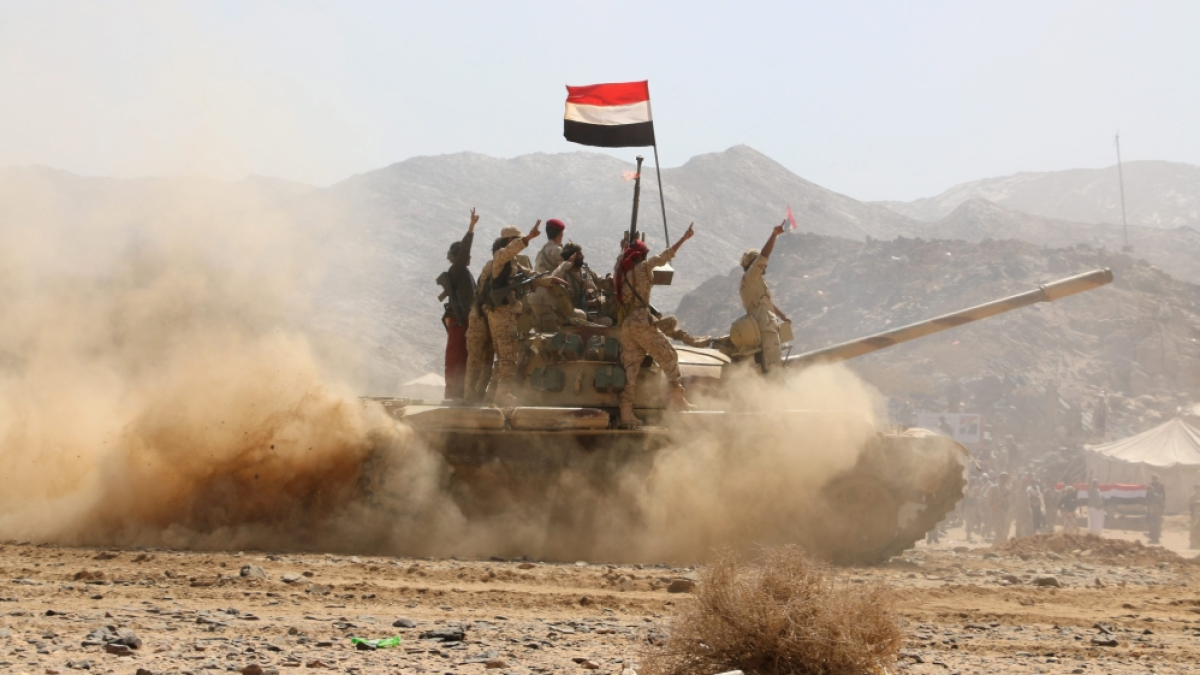
Within a few days, the Nation’s Shield Forces (Dar’ al-Watan) succeeded in establishing tight control over Hadhramaut and Al-Mahrah, securing the districts of the Wadi and the Desert, the city of Mukalla, and vital sovereign sites, including Seiyun and Al-Riyan airports. The confrontations revealed the Southern Transitional Council forces’ lack of a popular incubator, which accelerated their collapse and facilitated the government forces’ imposition of control and restoration of the initiative.
The East Narrows the Margin for Secession
In a broader framework, it appears that the transformations resulting from the events in eastern Yemen will narrow the margin for secession, a project the UAE has been advancing and viewing as a component of its policy of strategic deployment beyond borders. Over the past decade, the UAE succeeded in establishing direct and indirect control—through affiliated local forces—over the Yemeni coast, stretching from Hadhramaut in the east to the Bab al-Mandab in the west. This was driven by the objective of leveraging Yemen’s maritime location to reshape international trade routes in the region. Control over ports, oil and gas fields, export facilities, and maritime infrastructure constituted a primary motivation. According to international analyses, since 2018, these assets have transformed into a UAE national interest, with southern Yemen becoming a platform to bolster its policy of “pivoting to the East” within the framework of its Asian partnerships. Within this separatist trajectory, the President of the Southern Transitional Council announced “Self-Administration for the South” from Abu Dhabi in April 2020, only to retract it later under Saudi pressure.
Conversely, Saudi Arabia views the unity of Yemen as a vital security necessity to protect its borders and prevent the emergence of an opportunistic, functional entity on its periphery that serves hostile regional and international agendas. It is perhaps fortunate for a divided Yemen that Saudi Arabia’s rejection of the secessionist project intersects with considerations of its own national interest and security. Based on the conception that Yemeni unity represents the most significant guarantor of long-term stability, Riyadh posits that secession would lead to new waves of chaos and infighting, threatening to fragment southern Yemen into warring entities that undermine regional stability. Furthermore, the Kingdom fears that secession would tip the military and strategic balance in favor of the Houthis, thereby threatening Saudi national security. Moreover, secession contradicts a firmly established principle of Saudi foreign policy based on respect for the territorial integrity and sovereignty of states.
Gradual Return of Sovereignty
It appears that the decisive victory of the Yemeni government forces in eastern Yemen, coupled with the termination of the Emirati presence, will generate significant shifts in the balance of power. This marks a transition from managing fragile equilibria to imposing binding rules governing the relationship between the legitimate authority and the military formations and components operating within its framework. This development will embolden the government to exercise its sovereign functions more confidently and consolidate respect for the legal status of the President of the Presidential Leadership Council, the government, and state institutions. Thus far, manifestations of this transformation have been reflected in the nature of the relationship with local actors, particularly in Hadhramaut, where the legitimate government has reasserted itself as the sovereign reference for administration, security, and resources. This coincided with the cessation of the Emirati political cover that had enabled the Southern Transitional Council (STC) to impose near-total control for years.
Operationally, the shift in the balance of power has led to the ascendancy of official institutions, foremost among them the local authority in Hadhramaut. This authority has served as a sovereign instrument for recalibrating the military sphere, taking over military camps, regulating armaments, and consolidating the principle of the state’s monopoly on the use of force. In Al-Mahrah, the expulsion of Southern Transitional Council (STC) forces has bolstered the state’s presence and restored order to the security and institutional landscape. Furthermore, control over ports, airports, and sovereign facilities in Hadhramaut—including oil fields, export terminals, and the PetroMasila company—has contributed to the restoration of authority over the state’s sovereign resources and assets.
These transformations are supposed to form a cumulative path for the Yemeni state to restore its sovereignty throughout Yemen, starting with unifying the forces and military formations under the leadership of the Ministry of Defense and the Chief of Staff, and obligating all components of the legitimate government to the sovereign framework, leading to ending the coup, building the Yemeni state, and achieving sustainable peace and stability.
Post-Withdrawal Scenarios
The Emirati withdrawal and the shift in the local and regional balance of power represent the beginning of profound transformations involving considerations of national security, national interest, and the potential for restoring the Yemeni state and establishing peace. Based on current data, three main scenarios can be envisioned in the foreseeable future:
Scenario One: Consolidating State Sovereignty and Achieving Peace
This scenario is predicated on Saudi Arabia’s success, as the sole leader of the Coalition to Support Legitimacy, in transforming the Emirati withdrawal into an opportunity to consolidate Yemeni state sovereignty across all territories outside Houthi control. It presupposes the accelerated integration of military forces and formations belonging to the legitimacy components, in implementation of the stipulations of the Riyadh Agreement of November 2019. Furthermore, it assumes the return of the Presidential Leadership Council, the government, and state officials to the Yemeni interior.
Optimistic indicators for this scenario include Saudi Arabia’s favorable response to the request by the President of the Presidential Leadership Council to sponsor a Southern Dialogue Conference aimed at resolving the Southern Issue with the participation of all factions, alongside broad international endorsement and the acceptance of southern components—including the Southern Transitional Council (STC)—to participate. This scenario grants Saudi Arabia the role of a regional guarantor, rather than a custodian, aligning with its long-term security interests, particularly regarding border security, preventing the expansion of non-state actors, and securing maritime corridors. It also envisions developing a pathway to establish a comprehensive peace involving the Houthis. However, the success of these transformations remains contingent upon decisive and sustained Saudi support, as well as the ability of the legitimate Yemeni authority to capitalize on this momentum, rather than entrenching divisions or building personal, partisan, and regional loyalties.
Scenario Two: Consolidating the Status Quo
This scenario assumes the persistence of the status quo as it stands, wherein Saudi Arabia succeeds in curbing the potential for Emirati redeployment and preventing the extension of military engagement across Yemeni geography. In this case, Yemeni state institutions would continue to exercise a nominal presence, while influence is redistributed among local actors with multiple loyalties, within the framework of undeclared understandings governed more by regional interests than by the imperatives of state-building.
This scenario opens the door to the return of low-intensity regional competition, manifesting in security, economic, and media forms without sliding into direct confrontation. However, it undermines the opportunities for building the Yemeni state and achieving peace and stability.
Scenario Three: Setback and the Recycling of Conflict
This scenario stems from the potential failure of the Southern Dialogue, coupled with an adventurous Emirati inclination—possibly backed by Israel and supported by the forces and components established over previous years. This would be accompanied by a relaxation in the Saudi stance and the failure of the legitimate Yemeni authority to capitalize on current transformations and build upon them. In this eventuality, southern and eastern Yemen—and indeed Yemen as a whole—could once again transform into an arena of open conflict, whether through direct confrontations or through fragmentation and security chaos that weaken the state’s presence, institutions, and capacity to impose law and order.
This scenario represents a dual threat to both Yemen and Saudi Arabia. On one hand, it endangers Saudi national security and compels regional actors to engage in the Yemeni conflict using potentially more robust instruments. On the other hand, it recycles the Yemeni conflict and may undermine the very concept of the Yemeni state itself.
Conclusion
The transformations in eastern Yemen have engendered a distinct reconfiguration of the balance of power, characterized by a shift in the regional center of gravity toward Saudi Arabia as the most prominent and influential actor. To date, this shift—manifested in the realization of the Emirati withdrawal and robust military and political support for the Yemeni government’s stance—has contributed to preventing Yemen from sliding toward a disintegrative trajectory and renewed chaos. It appears that these transformations will extend to terminate the state of acute discord and unregulated plurality among the components operating within the framework of the Yemeni Presidential Leadership Council.
In this context, Saudi Arabia has also succeeded in consolidating its leadership position, predicated on three interrelated elements: decisiveness and an uncompromising stance regarding its national security issues; a high degree of alignment with the legitimate Yemeni authority; and substantial regional and international political endorsement. This enables the Kingdom to transition from the role of a partner within a multi-role coalition to the position of sole leadership of the Coalition to Support Legitimacy and Restore the Yemeni State. This does not signify the definitive termination of regional competition, but rather indicates its transition from the arena of field confrontation to a sphere of long-term political and military regulation and deterrence. Thus, the transformations in eastern Yemen do not close the chapter on regional competition so much as they redefine it, rendering Yemen’s future contingent upon the ability of the Yemeni legitimacy to translate this moment of decisiveness into a trajectory that achieves sustainable peace and stability within Yemen, and with the region and the world.
*Opinions expressed in this article are the author’s own and do not necessarily reflect Platform: Current Muslim Affairs’ editorial policy.