

By observing the general structure of our societies and its function, we’ll notice that the roles of social movements in political and social changes have increased as a result of the failure or weakness of the governmental and national institutions in addressing the risks and opportunities towards developments that faced these societies. These movements strongly depended on social media to communicate among their local and international networks and disseminating a unified model for demands and mechanisms for societal change, especially about women.
Thus, women became a central and urgent issue for all international foundations, and all United Nations bodies focused their efforts and programs on empowering and leading women and girls to match the 2030 Agenda for Sustainable Development, especially in the regions of the Middle East. Almost all local or international conferences or forums are considering these goals, especially in terms of its political and social participation.
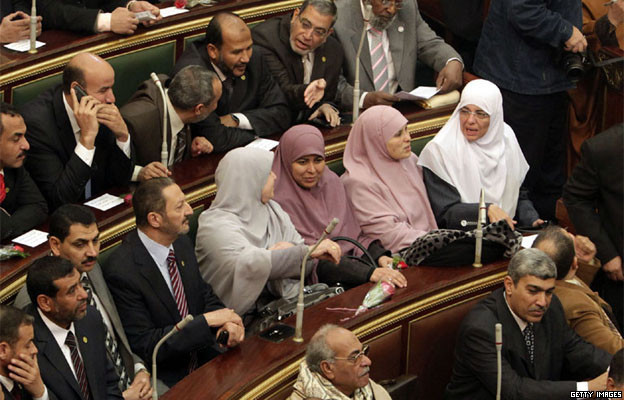
However, for accurate women’s socio-political participation assessment in the Middle East, unfortunately, it is very difficult to identify indicators that the whole region shares, given the political, cultural, religious and economic diversity of its countries. We can find Islamic countries that followed the principles of Islamic law and gave women their role and right in many fields, like Iran and Iraq, which is ranking as of 4th Arab countries in parliaments participation for women. And secular countries that adopted civil standards, for example Turkey that shares 17.3% of Parliaments seats for women. And countries that can be classified as politically and socially unstable, such as, Syria, Palestine, and Lebanon that since 1943, out of 76 governments formed only 8 included women.
Therefore, women lead contributions and create success, with multi visions and sometimes contradictious, even with the endeavors of the United Nations bodies within their programs with governments and civil society to empower women within national consultations, conferences and meetings with experts, trainings for peace initiatives, and women’s rights protocols to redesign the local laws, policies and programs to ensure international charters. However, what women in these countries have carried out, is the use of unified concepts with contents that do not match the environment of these societies or the actual needs and priority of women in each country.
This led to, most of the women in political and social positions they reach, worked against changing stereotypical cultural legacies, towards the new roles of men and women, as a new thought of societal change. Some of them worked on parties’ program that implemented as previously, with no new ideas of innovation related to the new member. Thus, the real case we must discuss is, that women in their new positions don’t have the opportunities to reform policies due to the lack of independence, or analysis of the variance. Their work programs were exclusively voting and proposals for laws that might not be taken into consideration most of the times especially implementing women’s quota in parliaments and equality in all institutions and at all levels.
So where is the reformist role that they should practice?
The closest example of this, is Lebanon, where as in the government of Hassan Diab in 2021, 6 women ministers were appointed, but his government lasted only 7 months, because of the unstable conditions due to Beirut Port Explosion, and nothing changed or presented. Also, During the rule of President Michel Aoun in 2016, the first veiled Muslim woman belonging to a political party was appointed, in addition to 27 female ambassadors, 3 women out of 10 in the Supreme Commission supervising the elections, and 12 women out of 70 members of the Economic and Social Council. Today, women hold six out of 128 parliamentary seats.
All that is being worked on to progress strategy to implement equality (50/50 model) in all institutions and at all levels, abolish all discriminatory laws against women and enforce equality in the law: nationality, gender-based violation (GBV), unified personal status, and endorse a law for violence against women in politics to protect women and give them freedom of expression. All these with international assistance, that it could rather helped women to contribute in solving the economic and social crisis that Lebanon has been suffering since 2019, which was classified as multidimensional poverty, with a very high rate of unemployment for both men and women, and a lack of needed equipment for schools and universities teaching.
“The real problem is not women’s sociopolitical participation in the countries of the Middle East, but rather the feasibility and visibility of this participation.”
A Muslim woman has many societal roles in protecting and empowering society according to her capabilities and interests, and most importantly, her innated and acquired duty. Therefore, our youth with their high level and distinct degrees and majors, must be collaborate within a national social intervention plan that studies the privacy and needs of each community within a specialized scientific program that adopts systematic studies and comprehensive development applications.
This requires rethinking about “new approaches to empowering women” within national strategic plans that benefit from the experiences of similar societies only. And “new concept of sociopolitical participation” which considers the specific conditions of each region and possibilities available for development. And “re-considering the concept of women’s quota” to understand the dynamics of its approval and the necessity of adopting it with sustainable and early rehabilitation that takes into consider individual differences and diverse interests.
By reformulating these, as Islamic societies, it matches our values, which respect and protect women, and prioritize them to facilitate their participation in society, full-filling their role, especially their major one in protecting and raising healthy families that leads to a flourishing society. Here, we must work on creating “role models”, which in turn can formulate a “new feminist” to face “violent extremism” against our Islamic social system, especially towards problematic topics that touch human dignity, such as homosexuality and its accompanying concepts.
Women nowadays are facing very dangerous challenges. This needs accurate and conscious decisions and movements. We are losing our youth, our children, our families, and our homes. Let us begin a new chapter, with fresh, real thoughts.
“Together, Women and Men, for Integration not Equality”