











İLKE Vakfı
Platform
  • Türkçe
No Result
View All Result
  • PLATFORM
  • NEWS
    Filistin Sempozyumu: Filistin ve Küresel İlişkilerin Geleceği

    Exploring Islam’s View on Slavery and Blackness: Seminar by Jonathan A.C. Brown

    The Conference on Contemporary Muslim Thought

    The Conference on Contemporary Muslim Thought

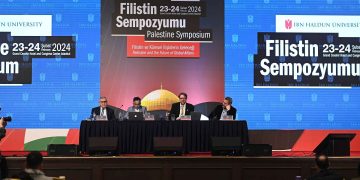
    Filistin Sempozyumu: Filistin ve Küresel İlişkilerin Geleceği

    Palestine Symposium: Palestine and the Future of Global Affairs

    İLKE Agenda: Muzzammil Ayyub Thakur ile Keşmir’in “Filistinleştirilmesi”

    The Platform Talks: Palestine after October 7 with Azzam Tamimi

    İLKE Agenda: Muzzammil Ayyub Thakur ile Keşmir’in “Filistinleştirilmesi”

    The Palestine Talks: Syria after December 8 with Kinda Hawasli

    İLKE Agenda: Muzzammil Ayyub Thakur ile Keşmir’in “Filistinleştirilmesi”

    İLKE Agenda: The “Palestinization” of Kashmir with Muzzammil Ayyub Thakur

    İLKE Agenda: Muzzammil Ayyub Thakur ile Keşmir’in “Filistinleştirilmesi”

    Khaled Beydoun: “Islamophobia is a modern manifestation of the crusades”

  • ANALYSIS
    • All
    • Culture, Arts and Media
    • Economy
    • Education
    • Energy and Environment
    • Fundamental Rights and Freedoms
    • Migration
    • Opinion
    • Social Issues
    İç ve Dış Baskılar Altında İran İslam Cumhuriyeti’nin Zor Sınavı

    The Islamic Republic of Iran’s Tough Test Under Domestic and External Pressures

    İsrail’in Somaliland’ı Tanıması: Afrika Boynuzu’nda İstikrarsızlaştırıcı Bir Hamle

    Israel’s Recognition of Somaliland: A Destabilizing Move in the Horn of Africa

    From the Logic of Eating to the Logic of Display: The Transformation of the Table

    From the Logic of Eating to the Logic of Display: The Transformation of the Table

    Medrese Neden Üniversite Değildir?

    Why Is the Madrasa Not a University?

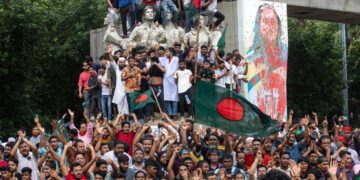
    Sharif Osman Hadi and the Politics of Insāf: Youth Mobilization and the Unfinished Revolution in Bangladesh

    Sharif Osman Hadi and the Politics of Insāf: Youth Mobilization and the Unfinished Revolution in Bangladesh

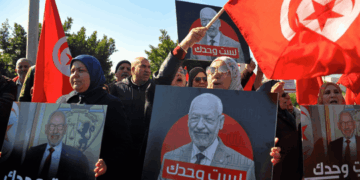
    What Does Ghannouchi’s Hunger Strike Say About Tunisian Politics?

    What Does Ghannouchi’s Hunger Strike Say About Tunisian Politics?

  • INTERVIEWS
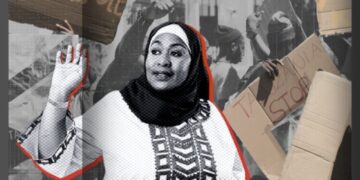
    From the Ballot Box to the Street: The Rising Social Wave in Tanzania After the Election

    From the Ballot Box to the Street: The Rising Social Wave in Tanzania After the Election

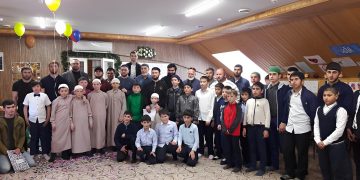
    Kafkasya’da Müslümanlar ve İslami Eğitim: TCDİB Kuzey Kafkasya Koordinatörü Selim Akburak ile Söyleşi

    Muslims and Islamic Education in the Caucasus: An Interview with Selim Burak North Caucasus Coordinator in Directorate of Religious Affairs

    Göçü Yönetmek: Dr. Mehmet Köse’yle Söyleşi

    Interview with Mehmet Köse

    Gurbet Hikayeleri

    Interview on Gurbet Hikayeleri

    İstanbul’daki Uluslararası Öğrencilerle Söyleşi

    Interview with International Students in Istanbul

    Gazze’den Bir Ses

    A Voice from Gaza: Sarah al-Najjar

    Filistinli Kadınları Anlamak: Yıldız Ramazanoğlu

    Understanding Palestinian Women: Interview with Yıldız Ramazanoğlu

    Filistinli Yönetmen Nevres Salih’le Söyleşi

    Interview with Palestinian Director Nawras Abu Saleh

    Çin’de Bir Hattat: Haji Noor Deen

    A Calligrapher in China: Haji Noor Deen

  • VOICES
    Anas Altikriti | Voices from the Muslim World | Türkçe Altyazılı

    Anas Altikriti | Voices from the Muslim World | Türkçe Altyazılı

    Basil Mustafa (Oxford) | Voices from the Muslim World | with Turkish subtitles

    Basil Mustafa (Oxford) | Voices from the Muslim World | with Turkish subtitles

    OMAR SULEIMAN | VOICES FROM THE MUSLIM WORLD

    OMAR SULEIMAN | VOICES FROM THE MUSLIM WORLD

    Paul Williams | Voices from the Muslim World

    Paul Williams | Voices from the Muslim World

  • DATABASE
    • All
    • Institutions
    • Movements
    • People
    Afganistan Araştırma ve Değerlendirme Birimi

    Afghanistan Research and Evaluation Unit

    Afgan Stratejik Çalışmalar Merkezi

    Afghan Institute for Strategic Studies

    Abaad Araştırma Merkezi

    Abaad Studies & Research Center

    Hamid Dabashi

    Hamid Dabashi

    Fuad Sezgin

    Fuad Sezgin

    Fikret Karcic

    Fikret Karcic

    Fatıma Mernissi

    Fatıma Mernissi

    Farid Hafez

    Farid Hafez

    Enes Karic

    Enes Karic

  • PLATFORM
  • NEWS
    Filistin Sempozyumu: Filistin ve Küresel İlişkilerin Geleceği

    Exploring Islam’s View on Slavery and Blackness: Seminar by Jonathan A.C. Brown

    The Conference on Contemporary Muslim Thought

    The Conference on Contemporary Muslim Thought

    Filistin Sempozyumu: Filistin ve Küresel İlişkilerin Geleceği

    Palestine Symposium: Palestine and the Future of Global Affairs

    İLKE Agenda: Muzzammil Ayyub Thakur ile Keşmir’in “Filistinleştirilmesi”

    The Platform Talks: Palestine after October 7 with Azzam Tamimi

    İLKE Agenda: Muzzammil Ayyub Thakur ile Keşmir’in “Filistinleştirilmesi”

    The Palestine Talks: Syria after December 8 with Kinda Hawasli

    İLKE Agenda: Muzzammil Ayyub Thakur ile Keşmir’in “Filistinleştirilmesi”

    İLKE Agenda: The “Palestinization” of Kashmir with Muzzammil Ayyub Thakur

    İLKE Agenda: Muzzammil Ayyub Thakur ile Keşmir’in “Filistinleştirilmesi”

    Khaled Beydoun: “Islamophobia is a modern manifestation of the crusades”

  • ANALYSIS
    • All
    • Culture, Arts and Media
    • Economy
    • Education
    • Energy and Environment
    • Fundamental Rights and Freedoms
    • Migration
    • Opinion
    • Social Issues
    İç ve Dış Baskılar Altında İran İslam Cumhuriyeti’nin Zor Sınavı

    The Islamic Republic of Iran’s Tough Test Under Domestic and External Pressures

    İsrail’in Somaliland’ı Tanıması: Afrika Boynuzu’nda İstikrarsızlaştırıcı Bir Hamle

    Israel’s Recognition of Somaliland: A Destabilizing Move in the Horn of Africa

    From the Logic of Eating to the Logic of Display: The Transformation of the Table

    From the Logic of Eating to the Logic of Display: The Transformation of the Table

    Medrese Neden Üniversite Değildir?

    Why Is the Madrasa Not a University?

    Sharif Osman Hadi and the Politics of Insāf: Youth Mobilization and the Unfinished Revolution in Bangladesh

    Sharif Osman Hadi and the Politics of Insāf: Youth Mobilization and the Unfinished Revolution in Bangladesh

    What Does Ghannouchi’s Hunger Strike Say About Tunisian Politics?

    What Does Ghannouchi’s Hunger Strike Say About Tunisian Politics?

  • INTERVIEWS
    From the Ballot Box to the Street: The Rising Social Wave in Tanzania After the Election

    From the Ballot Box to the Street: The Rising Social Wave in Tanzania After the Election

    Kafkasya’da Müslümanlar ve İslami Eğitim: TCDİB Kuzey Kafkasya Koordinatörü Selim Akburak ile Söyleşi

    Muslims and Islamic Education in the Caucasus: An Interview with Selim Burak North Caucasus Coordinator in Directorate of Religious Affairs

    Göçü Yönetmek: Dr. Mehmet Köse’yle Söyleşi

    Interview with Mehmet Köse

    Gurbet Hikayeleri

    Interview on Gurbet Hikayeleri

    İstanbul’daki Uluslararası Öğrencilerle Söyleşi

    Interview with International Students in Istanbul

    Gazze’den Bir Ses

    A Voice from Gaza: Sarah al-Najjar

    Filistinli Kadınları Anlamak: Yıldız Ramazanoğlu

    Understanding Palestinian Women: Interview with Yıldız Ramazanoğlu

    Filistinli Yönetmen Nevres Salih’le Söyleşi

    Interview with Palestinian Director Nawras Abu Saleh

    Çin’de Bir Hattat: Haji Noor Deen

    A Calligrapher in China: Haji Noor Deen

  • VOICES
    Anas Altikriti | Voices from the Muslim World | Türkçe Altyazılı

    Anas Altikriti | Voices from the Muslim World | Türkçe Altyazılı

    Basil Mustafa (Oxford) | Voices from the Muslim World | with Turkish subtitles

    Basil Mustafa (Oxford) | Voices from the Muslim World | with Turkish subtitles

    OMAR SULEIMAN | VOICES FROM THE MUSLIM WORLD

    OMAR SULEIMAN | VOICES FROM THE MUSLIM WORLD

    Paul Williams | Voices from the Muslim World

    Paul Williams | Voices from the Muslim World

  • DATABASE
    • All
    • Institutions
    • Movements
    • People
    Afganistan Araştırma ve Değerlendirme Birimi

    Afghanistan Research and Evaluation Unit

    Afgan Stratejik Çalışmalar Merkezi

    Afghan Institute for Strategic Studies

    Abaad Araştırma Merkezi

    Abaad Studies & Research Center

    Hamid Dabashi

    Hamid Dabashi

    Fuad Sezgin

    Fuad Sezgin

    Fikret Karcic

    Fikret Karcic

    Fatıma Mernissi

    Fatıma Mernissi

    Farid Hafez

    Farid Hafez

    Enes Karic

    Enes Karic

No Result
View All Result
Platform
No Result
View All Result
Home Analyses

The Islamic Republic of Iran’s Tough Test Under Domestic and External Pressures

Mustafa Caner by Mustafa Caner
11 February 2026
in Analyses, Opinion, Social Issues
A A
0
İç ve Dış Baskılar Altında İran İslam Cumhuriyeti’nin Zor Sınavı
FacebookX/Twitter

(The original Turkish version of this article was published by the Platform: Current Muslim Affairs on February 5, 2026)

In recent days, the Islamic Republic of Iran (IRI) has been facing one of the most severe trials since its founding (1979) and may be preparing for a final war that could determine its existential fate. This difficult crossroads, where domestic and external pressures intersect and where the country’s destiny is being decided, alarms not only Iran but the entire region. Regional states increasingly find themselves drawn into the “Iran question.” From protests inside Iran to the possibility of a U.S.–Iran war, developments have prompted regional countries to turn their attention to Iran with great caution and sensitivity. The main reason is that any major transformation in Iran would create a rupture across the region that would be difficult, if not impossible, to contain.

Following the end of last year’s 12-Day War between Iran and Israel on 27 June, the region is once again facing the risk of a major interstate war. The 12-Day War was initiated by Israel and concluded with the U.S. strike on Iran’s nuclear facilities. This time, however, there is a risk that the United States could directly target Iran, potentially triggering a large-scale regional conflict.

Although even last June’s war required viewing Israel not in isolation but together with the United States, the situation is different now. In the previous war, Trump was the actor who set the boundaries of the conflict and ultimately brought it to an end. This time, he appears to be the actor poised to initiate a chain of developments whose trajectory is unclear. Unlike last time, Iran and the United States now seem on the verge of confronting each other directly as parties to a long, comprehensive war. For this reason, the likely scale, intensity, and impact capacity of the conflict are markedly different. Moreover, the drums of war have begun to beat at a time when state–society relations in Iran have become highly fragile and increasingly problematized through protests.

Iranian decision-makers do not treat these two processes as separate. In their view, the unprecedented atmosphere of violence revealed through protests is merely one stage in a long-term plan by the “enemy” to destroy and subdue Iran. Hence, they feel compelled to treat both domestic and foreign policy as elements of a single function that transforms and reshapes the other.

The Political Impact of Economic and Social Erosion in Iran

Iran’s economy has been in steady decline since Donald Trump took office in 2017. In fact, intensifying sanctions pressure during Mahmoud Ahmadinejad’s second term had already affected the Iranian economy severely through key macroeconomic indicators such as inflation and unemployment. Yet the opportunity created during Hassan Rouhani’s presidency, namely the nuclear deal, briefly generated a partial economic recovery, both due to the expectations surrounding the agreement and thanks to roughly one year of implementation. When the United States unilaterally withdrew from the deal in 2018, and when European parties proved unwilling to sustain the agreement without U.S. support, Iran’s economy once again deteriorated under heavy sanctions pressure.

As economic vulnerability increased, the pandemic, as it did worldwide, shook Iran deeply, especially given its sensitive internal balances. In addition, international crises such as the downing of the Ukrainian passenger plane further heightened domestic social pressures. Factors such as Israel’s covert operations on Iranian soil, the losses suffered by proxy forces in the region after 7 October, and the erosion of Iran’s influence in Syria weakened Tehran’s regional posture and left the country exposed both in foreign policy and in internal economic balances. The weakening of reformist and moderate politics, and the shift toward a more monochromatic political structure, seriously damaged state–society relations. As the public ceased to view politics as a vehicle for change or a source of hope, large protest waves began erupting nearly every two years.

Although they may begin for different reasons, recent protests have increasingly taken on an anti-system character, directly targeting the political order. The most recent major wave, according to official figures, began on 28 December at Tehran’s Grand Bazaar due to economic grievances, but quickly turned into a spiral of violence in which more than three thousand people reportedly lost their lives. This brought the bond between state and society close to a breaking point. The violence witnessed during this period, and fears of foreign intervention, led the regime to code protests as an existential security issue. As a result, basic public demands, such as the high cost of living and economic deterioration, remained unmet, overshadowed by security policies. Widespread internet shutdowns inflicted additional damage on the economy while further inflaming public discontent. At this stage, even figures such as Mir-Hossein Mousavi and Mehdi Karroubi—long associated with advocating reform within the system—have almost shifted toward an extra-systemic line, indicating that reformist politics has lost its mediating function between society and the governing order.

Iranian politics is now defined by a much deeper structural crisis than the traditional reformist–conservative divide. Yet Iran is no longer an issue that can be discussed only with reference to domestic balances. Regional countries closely monitor all developments due to the potential spillover effects and take precautions accordingly.

Regional States’ Positions

The domestic and external challenges Iran faces have been read by regional countries as sources of risks and threats that could spill over onto them. For this reason, even the most limited to the most extreme forms of instability that protests could generate in Iran have triggered anxiety across the region. Among these states, Saudi Arabia, Qatar, and Türkiye have stood out.

Since the normalization agreement signed in 2023, Saudi Arabia has sought to keep relations with Iran on good terms. Qatar, meanwhile, has not traditionally had a problematic relationship with Iran. Still, instability in Iran affects Qatar directly—as seen last year when Iran struck the Al Udeid base in Qatar in retaliation against the United States. For this reason, Qatar is highly sensitive to any Iran-origin instability.

Regional countries have treated protests in Iran, particularly in conjunction with the rising risk of U.S. intervention, and have mobilized against a potential destabilization. Avoiding direct commentary on Iran’s internal political affairs, they nonetheless maintained diplomatic engagement with Tehran and signaled that they favored the restoration of order as soon as possible in the face of protests. Saudi Foreign Minister Faisal bin Farhan remained in contact with his Iranian counterpart. Qatar’s Foreign Ministry spokesperson Majed al-Ansari stated that a military conflict between Iran and the United States would have a “devastating” impact on the region.

Türkiye, through statements by Foreign Minister Hakan Fidan, also underscored its preference for stability; yet, unlike the Gulf states, it also noted Iran’s internal problems. Fidan stated, “We are against a military intervention against Iran; Iran needs to resolve its own authentic internal problems itself.”

Just as regional states quietly supported the Iranian state in the face of protests, they adopted a more visible and vocal position against a possible U.S. intervention. Gulf countries, in particular—through Saudi Arabia’s efforts—undertook intensive diplomatic initiatives to deter the United States from launching a military operation against Iran. These states remained in contact with Iran and also served as intermediaries for exchanges of messages between Washington and Tehran. Some regional countries announced that they would not allow their airspace to be used in the event of a possible strike on Iran. The UAE, Saudi Arabia, and Jordan are among them. Oman has long been known for conducting diplomatic efforts to reduce Iran–U.S. tensions. At the same time, Iran reportedly favored Oman as the venue for the Iran–U.S. negotiations planned for 6 February.

Türkiye’s stance appears to have been decisive in persuading the U.S. administration toward negotiations. Alongside Foreign Minister Hakan Fidan’s shuttle diplomacy, it was reported that President Erdoğan, in a phone call with U.S. President Donald Trump, proposed diplomatic solutions and that Trump responded positively. Abbas Araghchi’s visit to Istanbul on 30 January and the statements made on that date also indicated that Türkiye has come to the fore in mediation efforts.

Conclusion

It is reported that talks between Iranian and U.S. delegations will take place in Muscat, the capital of Oman, on Friday, 6 February. Some reports, however, claim that the talks will not take place. Even if they do, there is little optimism that they will result in a comprehensive agreement or open the path toward one. There is a difficult-to-bridge mismatch between the parties’ expectations and demands. Negotiations, of course, occur between actors in opposing positions; yet even a common ground on the subjects of negotiation has not been established. While Iran insists that negotiations must be limited to the nuclear issue, the United States insists that other topics—foremost ballistic missiles—must also be put on the table.

The U.S. military presence in the Gulf is the clearest indicator of how seriously Trump is taking the option of an attack. Regional actors working to de-escalate tensions and reach an agreement are being kept outside the negotiation process by Iran. Consequently, we are facing a repetition of the unproductive format that preceded the 12-Day War. There is no compelling reason to expect a different outcome this time, other than assuming that Iran will not step back despite U.S. threats and that the U.S. side will conclude that threats will not produce results. Yet it remains unlikely that Trump will be persuaded of that.

*Opinions expressed in this article are the author’s own and do not necessarily reflect Platform: Current Muslim Affairs’ editorial policy.

Mustafa Caner

Mustafa Caner

Dr. Mustafa Caner serves as an Assistant Professor at the Middle East Institute (ORMER) of Sakarya University. He is also a foreign policy researcher at the Foundation for Political, Economic and Social Research (SETA) and acts as the publication coordinator of Kriter magazine. He completed his undergraduate studies in Public Administration at Uludağ University and earned his master’s degree in Political Science and Social Sciences at the same institution. He received his PhD from the Middle East Studies program at Sakarya University. His academic work focuses on Iranian politics, Iran–Turkey relations, and regional dynamics in the Middle East. He has published articles in national and international journals, as well as books and book chapters on these topics. In addition, he has presented papers at various conferences and symposia and has taken part in several research projects, including those supported by TÜBİTAK.

Related Articles

İsrail’in Somaliland’ı Tanıması: Afrika Boynuzu’nda İstikrarsızlaştırıcı Bir Hamle
Analyses

Israel’s Recognition of Somaliland: A Destabilizing Move in the Horn of Africa

11 February 2026
From the Logic of Eating to the Logic of Display: The Transformation of the Table
Analyses

From the Logic of Eating to the Logic of Display: The Transformation of the Table

11 February 2026
Medrese Neden Üniversite Değildir?
Analyses

Why Is the Madrasa Not a University?

30 January 2026
Sharif Osman Hadi and the Politics of Insāf: Youth Mobilization and the Unfinished Revolution in Bangladesh
Analyses

Sharif Osman Hadi and the Politics of Insāf: Youth Mobilization and the Unfinished Revolution in Bangladesh

21 January 2026
What Does Ghannouchi’s Hunger Strike Say About Tunisian Politics?
Analyses

What Does Ghannouchi’s Hunger Strike Say About Tunisian Politics?

15 January 2026
The End of Gray Balances: Eastern Yemen, Saudi Security Imperatives, and Yemeni Unity
Analyses

The End of Gray Balances: Eastern Yemen, Saudi Security Imperatives, and Yemeni Unity

9 January 2026
  • İç ve Dış Baskılar Altında İran İslam Cumhuriyeti’nin Zor Sınavı

    The Islamic Republic of Iran’s Tough Test Under Domestic and External Pressures

    0 shares
    Share 0 Tweet 0
  • Israel’s Recognition of Somaliland: A Destabilizing Move in the Horn of Africa

    0 shares
    Share 0 Tweet 0
  • From the Logic of Eating to the Logic of Display: The Transformation of the Table

    0 shares
    Share 0 Tweet 0
  • Why Is the Madrasa Not a University?

    0 shares
    Share 0 Tweet 0
İç ve Dış Baskılar Altında İran İslam Cumhuriyeti’nin Zor Sınavı
Analyses

The Islamic Republic of Iran’s Tough Test Under Domestic and External Pressures

by Mustafa Caner
11 February 2026
0

(The original Turkish version of this article was published by the Platform: Current Muslim Affairs on February 5, 2026) In recent days,...

Read moreDetails
İsrail’in Somaliland’ı Tanıması: Afrika Boynuzu’nda İstikrarsızlaştırıcı Bir Hamle

Israel’s Recognition of Somaliland: A Destabilizing Move in the Horn of Africa

11 February 2026
From the Logic of Eating to the Logic of Display: The Transformation of the Table

From the Logic of Eating to the Logic of Display: The Transformation of the Table

11 February 2026
Medrese Neden Üniversite Değildir?

Why Is the Madrasa Not a University?

30 January 2026
Sharif Osman Hadi and the Politics of Insāf: Youth Mobilization and the Unfinished Revolution in Bangladesh

Sharif Osman Hadi and the Politics of Insāf: Youth Mobilization and the Unfinished Revolution in Bangladesh

21 January 2026

Platform: Agenda of the Muslim World was established within the İLKE Science Culture Education Foundation as a publication organ that aims to follow and analyze the intellectual, political, social, economic and cultural agendas of Muslim societies and to present current and original perspectives on the Muslim world.

  • ANALYSIS
  • NEWS
  • INTERVIEWS
  • VOICES
  • platform@ilke.org.tr
  • (0216) 310 43 18
  • Aziz Mahmut Hüdayi Mah. Türbe Kapısı Sk. No: 13 Üsküdar, İstanbul
Instagram X-twitter

2025 @ PLATFORM is an İLKE Foundation organization. All rights reserved.

No Result
View All Result
  • Home
  • Analyses
  • Infographic
  • Interviews
  • News
  • Database
  • Voices
İLKE Vakfı
  • Türkçe