























(The original Turkish version of this article was published by the Platform: Current Muslim Affairs on March 30, 2026)
The war that began on February 28, 2026, with US-Israeli attacks on Iran and subsequently spread across the region with Iran targeting Gulf countries, shattered a fundamental assumption that the Gulf had carefully built over the past two decades: that the Gulf is secure. The assumption that small Gulf states such as the United Arab Emirates (UAE), Kuwait, Bahrain, and Qatar could remain outside regional turmoil by maintaining close relations with major powers has proven to be flawed. Recent weeks have shown that this is not always the case and have once again reminded us that the Gulf is ultimately part of the Middle East.
The war not only escalated military tensions between Iran and the US-Israel axis but also deeply shook the political, economic, and psychological order that the Gulf had constructed over the past twenty years. One of the most striking consequences of the conflict was that Iran targeted all Gulf countries without exception, even those not directly at war with it. The fact that the UAE, Kuwait, Bahrain, Qatar, Oman, and Saudi Arabia were subjected to missile and UAV attacks at varying intensities demonstrated that “remaining neutral” or “not being a party to the war” no longer provides sufficient protection in regional conflicts.
At first glance, Iran’s direct targeting of these countries may be interpreted as part of a punitive and deterrent strategy. From Tehran’s perspective, even if Gulf countries were not directly involved in the war, they were part of the US regional military architecture, hosting American bases, maintaining security ties with Washington, and therefore could not be entirely excluded from the logistical or intelligence dimensions of the conflict. Through these attacks, Iran conveyed not only a military but also a political message: the cost of a regional war will not be limited to the direct belligerents. This approach reminded Gulf monarchies of the reality imposed by geography.
What is particularly noteworthy is that Iran targeted not only countries that had maintained a clear distance from it but also those that had sought to keep channels of dialogue open in recent years. The fact that even an actor like Oman, which has long maintained balanced relations with Iran, was not fully spared from attacks revealed the limits of the recent policy of de-escalation in the Gulf. Since 2019, particularly Saudi Arabia and the UAE had adopted a more cautious approach, seeking to reduce direct confrontation with Iran, increase dialogue, and lower regional tensions. However, the recent war demonstrated that this approach was not sufficient to shield the Gulf from Iranian retaliation.
A Blow to the “Safe Region” Image
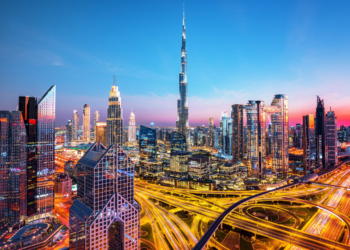
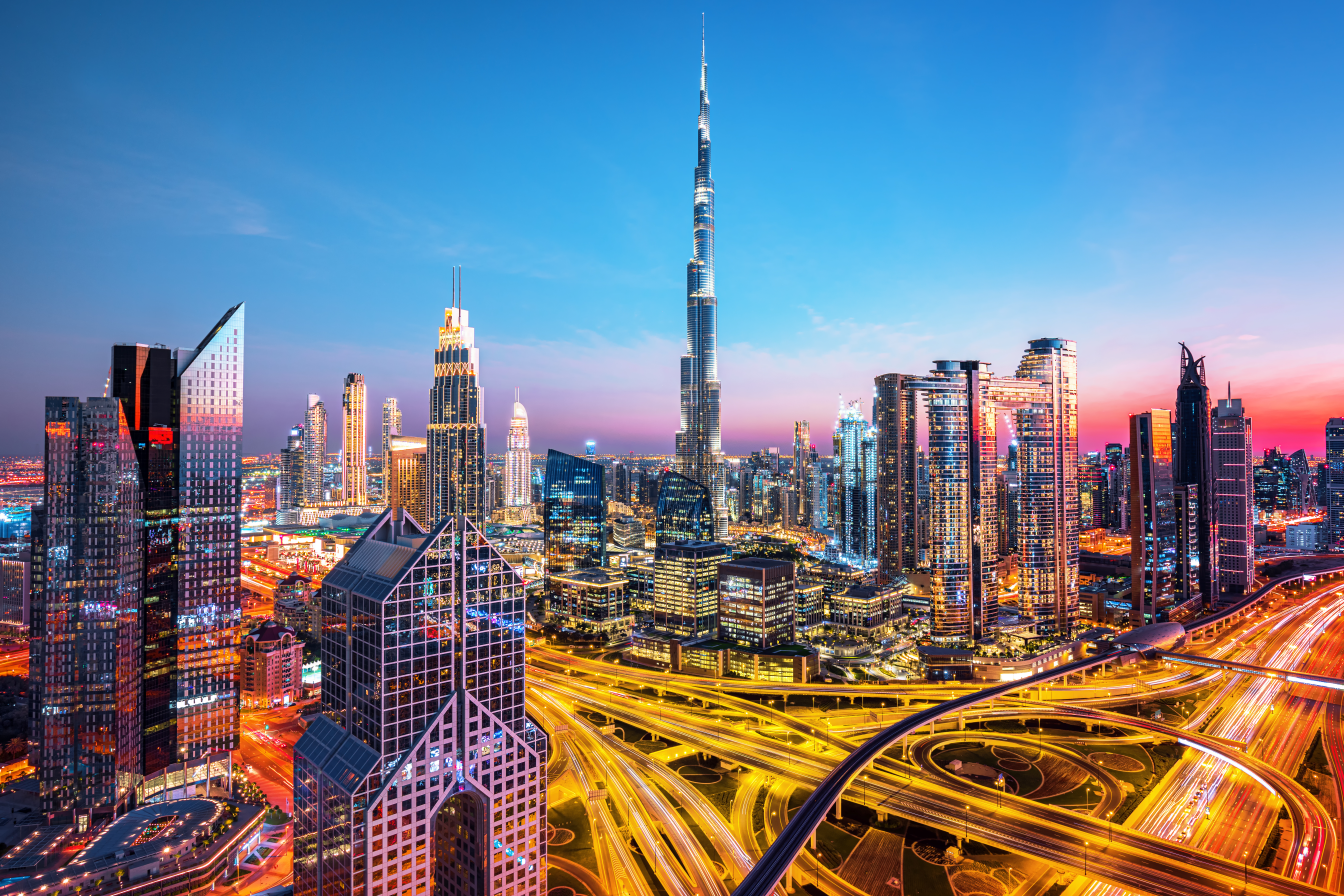
The most significant consequence of these developments has been the serious damage inflicted on the Gulf’s long-promoted image as a “safe region.” Gulf countries—particularly Dubai, Abu Dhabi, Doha, and Riyadh—had positioned themselves as islands of stability, prosperity, and predictability in a turbulent Middle East. This image served as the foundation for tourism, global capital flows, logistics networks, air transportation, multinational corporate headquarters, and large-scale investment projects. With the Iranian attacks, the most critical pillar of this model—security perception—has been shaken.
For a country or region to function as an economic hub, it requires not only infrastructure, capital, and vision, but also a perception of security. The Gulf’s success thus far has been based precisely on its ability to make this sense of security purchasable, sustainable, and manageable. Now, however, the targeting of oil and natural gas facilities, the effective closure of the Strait of Hormuz, threats to civilian infrastructure, and explosions in urban centers have made the fragility of Gulf economies more visible than ever before. This is not merely a short-term security issue but a structural challenge that could directly affect ambitious transformation projects such as Saudi Arabia’s Vision 2030, the UAE’s ambition to become a global financial and logistics hub, and the Gulf’s broader diversification strategies.
How Will the Attacks Transform the Gulf?
The transformation awaiting Gulf countries will primarily take place in their understanding of security. It is likely that increased defense spending, stronger protection of critical infrastructure, expansion of air defense systems, fortification of energy facilities, and the integration of cyber and physical security will come to the forefront. However, this transformation will not be limited to technical or military dimensions. Gulf capitals will increasingly recognize that security cannot be guaranteed solely through externally imported protection umbrellas. This realization will push them to diversify their external partnerships and reconsider security coordination among themselves.
At this point, the question of whether a common security mechanism can be established for the Gulf region gains importance. In theory, the fact that the Iranian threat has targeted all Gulf countries creates a strong incentive for building a shared security architecture. A common perception of threat could encourage the development of joint early warning systems, coordinated air defense, maritime security cooperation, and political-military platforms capable of acting collectively in times of crisis. Until now, Gulf countries have not had identical threat perceptions regarding Iran. However, the fact that all countries have been affected by recent attacks has turned the Iranian threat into a shared and concrete reality. While a fully integrated Gulf security architecture may be difficult to achieve in the short term, closer cooperation among Gulf countries can be expected in the coming period.
The main challenge facing Gulf countries is not only Iran. This war has also further eroded already declining trust in the United States. Although Gulf monarchies have long operated under the American security umbrella, recent developments have reinforced the perception that Washington is no longer a force that ensures stability but rather one that contributes to insecurity and instability. For the Gulf, the question is no longer only “how do we protect ourselves from Iran?” but also “how do we manage the costs of conflicts driven by the United States?” Therefore, while Gulf countries are unlikely to break away from the US, they will increasingly take into account the risks of overreliance on it. The long-standing strategy of diversifying defense partnerships is likely to gain further momentum, although a complete rupture with the US remains unrealistic.
Possible Scenarios
Within this context, several possible scenarios emerge for the Gulf. The first scenario is the emergence of a weakened but more hardened, angrier, and more unpredictable Iran after the war. In such a case, Gulf countries may have to coexist with an Iran whose capabilities are diminished but whose desire for retaliation is stronger, potentially closer to the nuclear threshold and more inclined toward proxy or direct attacks. This scenario would create a prolonged, low-intensity but persistent threat environment for the region.
The second scenario is the internal disintegration of Iran and the country’s descent into severe instability. While this may appear as an opportunity to some observers, it could represent the most dangerous scenario for the Gulf. An Iran that has lost state capacity, fragmented along ethnic fault lines, and exporting weapons, militias, refugees, and instability across its borders would create a far more difficult security environment for the Gulf to manage. There is no clear answer as to whether a strong but hostile Iran or a fragmented and chaotic Iran poses the greater threat; however, neither option is reassuring.
The third and relatively more likely scenario is that Gulf countries will attempt to establish a necessary balance with Iran while simultaneously deepening multi-dimensional foreign policy and defense partnerships. Expanding relations with actors such as China, Russia, Türkiye, France, and others could provide greater room for maneuver. However, this may not necessarily lead to a truly collective and stable security order in the region. Rather, it may result in a more multipolar, transactional, fragmented, and uncertain order.
In conclusion, the war that began on February 28 represents a critical turning point for the Gulf. Iran’s targeting of neighboring states that were not directly at war demonstrates that regional conflicts no longer leave space for neutrality. The Gulf’s narrative as an “island of stability” has been severely damaged. From now on, the region is likely to enter a more cautious, more defensive, more multi-directional, and more insecure period.
The key question is whether the Gulf can transform this rupture into a shared security vision. For now, it appears that the region will have to adapt not to a more orderly but to a more fragile, not to a more secure but to a more unpredictable Middle East—one from which no actor can remain insulated.
*Opinions expressed in this article are the author’s own and do not necessarily reflect Platform: Current Muslim Affairs’ editorial policy.