





Platform
  • Türkçe
No Result
View All Result
  • PLATFORM
  • NEWS
    İLKE Agenda: Muzzammil Ayyub Thakur ile Keşmir’in “Filistinleştirilmesi”

    Khaled Beydoun: “Islamophobia is a modern manifestation of the crusades”

    Filistin Sempozyumu: Filistin ve Küresel İlişkilerin Geleceği

    Exploring Islam’s View on Slavery and Blackness: Seminar by Jonathan A.C. Brown

    The Conference on Contemporary Muslim Thought

    The Conference on Contemporary Muslim Thought

    Filistin Sempozyumu: Filistin ve Küresel İlişkilerin Geleceği

    Palestine Symposium: Palestine and the Future of Global Affairs

    İLKE Agenda: Muzzammil Ayyub Thakur ile Keşmir’in “Filistinleştirilmesi”

    The Platform Talks: Palestine after October 7 with Azzam Tamimi

    İLKE Agenda: Muzzammil Ayyub Thakur ile Keşmir’in “Filistinleştirilmesi”

    The Palestine Talks: Syria after December 8 with Kinda Hawasli

    İLKE Agenda: Muzzammil Ayyub Thakur ile Keşmir’in “Filistinleştirilmesi”

    İLKE Agenda: The “Palestinization” of Kashmir with Muzzammil Ayyub Thakur

  • ANALYSIS
    • All
    • Culture, Arts and Media
    • Economy
    • Education
    • Energy and Environment
    • Fundamental Rights and Freedoms
    • Migration
    • Opinion
    • Social Issues
    Bangladeş’te 2026 Seçimleri Sonrası Siyasi Tartışmalar

    Political Debates Post-2026 Elections in Bangladesh

    Filistin’de Çocuk Olmak: 5 Nisan Filistinli Çocuklar Günü

    April 5: Palestinian Children’s Day

    Security, Fragility, and the Search for a New Equilibrium in the Gulf Following the Iranian Attacks

    Security, Fragility, and the Search for a New Equilibrium in the Gulf Following the Iranian Attacks

    İran’ın Savaştaki Hedefi Zafer mi, Hayatta Kalmak mı?

    Iran’s Objective in the War: Victory or Survival?

    Digital Ummah and Muslim Identity: Dr. Sahar Khamis Interview

    Digital Ummah and Muslim Identity: Dr. Sahar Khamis Interview

    Rethinking Urban Space: Spacio-Cide, Collective Memory, and Resistance

    Rethinking Urban Space: Spacio-Cide, Collective Memory, and Resistance

  • INTERVIEWS
    A Possible New Breath in Regional Balances: The Alliance of Türkiye, Pakistan, Egypt, and Saudi Arabia

    A Possible New Breath in Regional Balances: The Alliance of Türkiye, Pakistan, Egypt, and Saudi Arabia

    From the Ballot Box to the Street: The Rising Social Wave in Tanzania After the Election

    From the Ballot Box to the Street: The Rising Social Wave in Tanzania After the Election

    Kafkasya’da Müslümanlar ve İslami Eğitim: TCDİB Kuzey Kafkasya Koordinatörü Selim Akburak ile Söyleşi

    Muslims and Islamic Education in the Caucasus: An Interview with Selim Burak North Caucasus Coordinator in Directorate of Religious Affairs

    Göçü Yönetmek: Dr. Mehmet Köse’yle Söyleşi

    Interview with Mehmet Köse

    Gurbet Hikayeleri

    Interview on Gurbet Hikayeleri

    İstanbul’daki Uluslararası Öğrencilerle Söyleşi

    Interview with International Students in Istanbul

    Zaytuna College Lisansüstü Eğitim Dekanı Maşuk Yamaç’la Söyleşi

    Interview with Mahsuk Yamac, Dean of Graduate Studies at Zaytuna College

    Gazze’den Bir Ses

    A Voice from Gaza: Sarah al-Najjar

    Filistinli Kadınları Anlamak: Yıldız Ramazanoğlu

    Understanding Palestinian Women: Interview with Yıldız Ramazanoğlu

  • VOICES
    Anas Altikriti | Voices from the Muslim World | Türkçe Altyazılı

    Anas Altikriti | Voices from the Muslim World | Türkçe Altyazılı

    Basil Mustafa (Oxford) | Voices from the Muslim World | with Turkish subtitles

    Basil Mustafa (Oxford) | Voices from the Muslim World | with Turkish subtitles

    OMAR SULEIMAN | VOICES FROM THE MUSLIM WORLD

    OMAR SULEIMAN | VOICES FROM THE MUSLIM WORLD

    Paul Williams | Voices from the Muslim World

    Paul Williams | Voices from the Muslim World

  • DATABASE
    • All
    • Institutions
    • Movements
    • People
    Afganistan Araştırma ve Değerlendirme Birimi

    Afghanistan Research and Evaluation Unit

    Afgan Stratejik Çalışmalar Merkezi

    Afghan Institute for Strategic Studies

    Abaad Araştırma Merkezi

    Abaad Studies & Research Center

    Adil Bir Dünya İçin Uluslararası Hareket

    International Movement For A Just World

    Adalet ve Kalkınma Partisi

    Justice and Development Party – Hizb al-Adale wa’t-Tenmiye-Justice and Development Party

    Adalet ve İhsan Hareketi

    Justice and Ihsan Movement

    Açe Özgürlük Hareketi

    Aceh Freedom Movement

    Hamid Dabashi

    Hamid Dabashi

    Fuad Sezgin

    Fuad Sezgin

  • PLATFORM
  • NEWS
    İLKE Agenda: Muzzammil Ayyub Thakur ile Keşmir’in “Filistinleştirilmesi”

    Khaled Beydoun: “Islamophobia is a modern manifestation of the crusades”

    Filistin Sempozyumu: Filistin ve Küresel İlişkilerin Geleceği

    Exploring Islam’s View on Slavery and Blackness: Seminar by Jonathan A.C. Brown

    The Conference on Contemporary Muslim Thought

    The Conference on Contemporary Muslim Thought

    Filistin Sempozyumu: Filistin ve Küresel İlişkilerin Geleceği

    Palestine Symposium: Palestine and the Future of Global Affairs

    İLKE Agenda: Muzzammil Ayyub Thakur ile Keşmir’in “Filistinleştirilmesi”

    The Platform Talks: Palestine after October 7 with Azzam Tamimi

    İLKE Agenda: Muzzammil Ayyub Thakur ile Keşmir’in “Filistinleştirilmesi”

    The Palestine Talks: Syria after December 8 with Kinda Hawasli

    İLKE Agenda: Muzzammil Ayyub Thakur ile Keşmir’in “Filistinleştirilmesi”

    İLKE Agenda: The “Palestinization” of Kashmir with Muzzammil Ayyub Thakur

  • ANALYSIS
    • All
    • Culture, Arts and Media
    • Economy
    • Education
    • Energy and Environment
    • Fundamental Rights and Freedoms
    • Migration
    • Opinion
    • Social Issues
    Bangladeş’te 2026 Seçimleri Sonrası Siyasi Tartışmalar

    Political Debates Post-2026 Elections in Bangladesh

    Filistin’de Çocuk Olmak: 5 Nisan Filistinli Çocuklar Günü

    April 5: Palestinian Children’s Day

    Security, Fragility, and the Search for a New Equilibrium in the Gulf Following the Iranian Attacks

    Security, Fragility, and the Search for a New Equilibrium in the Gulf Following the Iranian Attacks

    İran’ın Savaştaki Hedefi Zafer mi, Hayatta Kalmak mı?

    Iran’s Objective in the War: Victory or Survival?

    Digital Ummah and Muslim Identity: Dr. Sahar Khamis Interview

    Digital Ummah and Muslim Identity: Dr. Sahar Khamis Interview

    Rethinking Urban Space: Spacio-Cide, Collective Memory, and Resistance

    Rethinking Urban Space: Spacio-Cide, Collective Memory, and Resistance

  • INTERVIEWS
    A Possible New Breath in Regional Balances: The Alliance of Türkiye, Pakistan, Egypt, and Saudi Arabia

    A Possible New Breath in Regional Balances: The Alliance of Türkiye, Pakistan, Egypt, and Saudi Arabia

    From the Ballot Box to the Street: The Rising Social Wave in Tanzania After the Election

    From the Ballot Box to the Street: The Rising Social Wave in Tanzania After the Election

    Kafkasya’da Müslümanlar ve İslami Eğitim: TCDİB Kuzey Kafkasya Koordinatörü Selim Akburak ile Söyleşi

    Muslims and Islamic Education in the Caucasus: An Interview with Selim Burak North Caucasus Coordinator in Directorate of Religious Affairs

    Göçü Yönetmek: Dr. Mehmet Köse’yle Söyleşi

    Interview with Mehmet Köse

    Gurbet Hikayeleri

    Interview on Gurbet Hikayeleri

    İstanbul’daki Uluslararası Öğrencilerle Söyleşi

    Interview with International Students in Istanbul

    Zaytuna College Lisansüstü Eğitim Dekanı Maşuk Yamaç’la Söyleşi

    Interview with Mahsuk Yamac, Dean of Graduate Studies at Zaytuna College

    Gazze’den Bir Ses

    A Voice from Gaza: Sarah al-Najjar

    Filistinli Kadınları Anlamak: Yıldız Ramazanoğlu

    Understanding Palestinian Women: Interview with Yıldız Ramazanoğlu

  • VOICES
    Anas Altikriti | Voices from the Muslim World | Türkçe Altyazılı

    Anas Altikriti | Voices from the Muslim World | Türkçe Altyazılı

    Basil Mustafa (Oxford) | Voices from the Muslim World | with Turkish subtitles

    Basil Mustafa (Oxford) | Voices from the Muslim World | with Turkish subtitles

    OMAR SULEIMAN | VOICES FROM THE MUSLIM WORLD

    OMAR SULEIMAN | VOICES FROM THE MUSLIM WORLD

    Paul Williams | Voices from the Muslim World

    Paul Williams | Voices from the Muslim World

  • DATABASE
    • All
    • Institutions
    • Movements
    • People
    Afganistan Araştırma ve Değerlendirme Birimi

    Afghanistan Research and Evaluation Unit

    Afgan Stratejik Çalışmalar Merkezi

    Afghan Institute for Strategic Studies

    Abaad Araştırma Merkezi

    Abaad Studies & Research Center

    Adil Bir Dünya İçin Uluslararası Hareket

    International Movement For A Just World

    Adalet ve Kalkınma Partisi

    Justice and Development Party – Hizb al-Adale wa’t-Tenmiye-Justice and Development Party

    Adalet ve İhsan Hareketi

    Justice and Ihsan Movement

    Açe Özgürlük Hareketi

    Aceh Freedom Movement

    Hamid Dabashi

    Hamid Dabashi

    Fuad Sezgin

    Fuad Sezgin

No Result
View All Result
Platform
No Result
View All Result
Home Analyses

The Implications of the New Phase in the Fight Against ISIS in Syria and Possible Threats

Ömer Behram Özdemir by Ömer Behram Özdemir
10 February 2026
in Analyses, Opinion
A A
Suriye’de DAEŞ ile Mücadelede Yeni Dönemin Getirdikleri ve Olası Tehditler
Share on FacebookShare on Twitter

(The original Turkish version of this article was published by the Platform: Current Muslim Affairs on February 10, 2026)

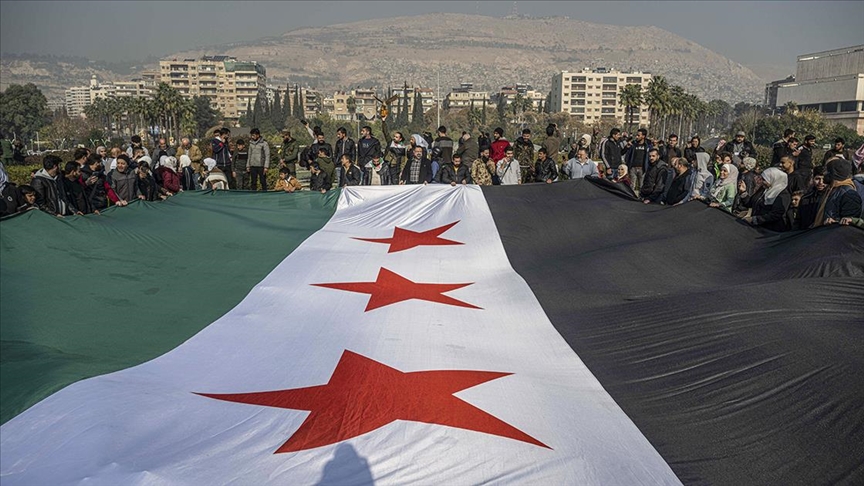
The “fight against ISIS” file, which has been used by the United States and many international actors as a legitimate basis or facilitating justification for their involvement in Syria, has entered a new phase with the fall of the Assad regime and the process of building a new administration. The experience gained by Hayat Tahrir al-Sham (HTS) and the Syrian National Army (SNA)—which form the core of the new administration in Damascus—from their past battles against ISIS, along with the presence in Damascus of a governing cadre recognized by the international community rather than an incapable and illegitimate government, has led to the shelving of strategies based on “direct intervention” and “using non-state actors (YPG/SDF)” in the fight against ISIS. After more than a year since the revolution, the fight against ISIS has become, for the United States and other international actors, an issue that the Syrian government itself must handle—one in which the legitimate government should be supported. Compared to the unpredictable nature of non-state actors and the diplomatic costs their support can generate in the medium and long term, supporting a government whose international legitimacy is steadily increasing entails lower cost and lower risk.

During the transitional period, the rapid integration of Syria’s former armed opposition forces—especially HTS and the SNA—into the Syrian Army structure, along with the reconstruction of police and intelligence institutions, has meant substantial investment in Damascus’s security apparatus and prevented a major power vacuum from emerging in the region following the collapse of the Baath–Iran–Russia alliance. Uprisings by remnants of the former regime along the coastal belt of Latakia–Tartus–Homs and in Suwayda posed major challenges for the new Syrian army. Despite high casualties along the coastal line, the uprising was suppressed, and through increased cooperation with local populations, various cells linked to former regime militias were identified and neutralized. In Suwayda, although intense Israeli airstrikes hindered the Syrian army’s advance, it was also observed that these Israel-backed remnants of the former regime lacked the capacity to defeat the Syrian army in ground combat. The experience gained by Damascus in suppressing these uprisings, together with simultaneous investments in intelligence structures, has also strengthened the fight against ISIS. The military intervention against the YPG/SDF between December 2025 and January 2026 likewise demonstrates growing capacity within the framework of counter-ISIS efforts. Damascus is not only building a strong intelligence network but also engaging with Bedouin tribes in eastern Syria and elevating cooperation between the tribes and the state to higher levels. This development is bad news for ISIS cells that in recent years have operated and hidden mainly in desert areas, since the regions opening onto the desert are dominated by tribal elements, and stronger tribal ties with Damascus reduce the likelihood that ISIS will find social space to infiltrate these areas.

Looking at the Sharaa government’s counter-ISIS approach, it is clear that the new period benefits from the Syrian opposition’s motivation and experience in fighting ISIS (HTS, SNA, and previously Ahrar al-Sham, Jaysh al-Islam, and various Free Syrian Army factions). Although bloody attacks—such as the assault on the Mar Elias Church in Damascus carried out by the ISIS-linked Ansar al-Sunna group—and smaller-scale armed incidents have occurred, government forces have prevented many ISIS attacks over the past year and conducted major operations against ISIS cells. ISIS plans targeting symbolically significant locations capable of triggering social fault lines—such as the Sayyida Zaynab area—were thwarted, while successful targeted operations were conducted against cell structures around the capital and against the cell that attacked U.S. forces in Tadmur. Following a series of successful diplomatic engagements with the United States, the Sharaa government formally joined the international anti-ISIS coalition and became the principal local partner in U.S. military operations against ISIS. This rapprochement did not remain merely on paper; U.S. and Syrian forces conducted numerous joint operations against ISIS within the country. HTS’s experience resulted in the eradication of ISIS cells in northwestern Syria, while the same cadres—through military and intelligence investments during the state-building process—have significantly reduced the impact of ISIS attacks.

During negotiations between the YPG and Damascus throughout 2025, it became known that the YPG put the future of prisons and camps under its control on the agenda in order to avoid making concessions and to preserve international support. These camps, where ISIS militants and their families are held under supervision, had long been used as leverage against pressure from Damascus and Ankara. Eventually, the YPG came under military pressure from Damascus and, following battlefield losses and rapid withdrawals, allowed some ISIS militants and sympathizers to escape in certain locations. Syrian security forces reacted quickly and re-detained the majority of the escapees. According to data from the Syrian Ministry of Interior, 81 of the 120 ISIS-linked individuals released by the YPG were recaptured within a short period. The YPG’s move failed to generate the chaos it had envisioned and was also viewed by the United States as a misguided step that helped push the YPG toward an agreement with Damascus. The United States both pressured the YPG to transfer the camps it controlled to Damascus and played an active role in transferring thousands of Iraqi nationals held in the camps back to Iraq.

Ultimately, when considering ISIS’s future in Syria, there is currently no power vacuum in which the organization could re-emerge. Given the steadily increasing international legitimacy of Syria’s governing authority and ongoing investments in the region, the likelihood of a renewed authority vacuum in the near term is low. Sociologically, during its active years in Syria, ISIS relied heavily on foreign fighters, while secondarily recruiting militias from Bedouin tribal elements. As of 2026, the strong reconstruction of relations between the tribes and Damascus—especially their active cooperation in the YPG issue and the Suwayda clashes—has significantly narrowed the space within Syrian society from which ISIS can draw support. Foreign fighters, meanwhile, are no longer a human resource capable of shifting the balance on the ground in a Syria where the civil war has ended. In a context where both the geopolitical environment and social dynamics deny ISIS room to operate, a major resurgence of the organization in a post-civil-war setting appears unlikely. However, this does not mean that the ISIS threat has disappeared entirely. Radical elements that do not align with the new government’s political orientation may emerge, seeking to gain followers through attacks targeting the country’s social fault lines. Sharaa had a successful track record in Idlib in neutralizing such deviant radical structures. In this respect, the Sharaa government can be considered experienced in dealing with “unruly radical uprisings.” Nevertheless, decades of Baathist rule and fourteen years of bloody civil war have made the country’s ethnic and sectarian sensitivities extremely fragile. Religious minorities—especially Christians—as well as Sufi and Salafi communities known for their anti-ISIS stance are likely to become targets of possible future ISIS cell operations. However, the experience of 2025 shows that Syrian intelligence capabilities in detecting and neutralizing ISIS cells are steadily improving, with intelligence support from Türkiye and the United States.

*Opinions expressed in this article are the author’s own and do not necessarily reflect Platform: Current Muslim Affairs’ editorial policy.

Ömer Behram Özdemir

Ömer Behram Özdemir

Ömer Behram Özdemir has written numerous articles, reports, analyses, and book chapters focusing on Middle Eastern politics, non-state actors in the Middle East, and the Syrian civil war. Having worked for many years at the Sakarya University Middle East Institute and ORSAM, Özdemir is currently a lecturer in the Department of Political Science and International Relations at Ibn Haldun University.

  • Muslim Culture and Watch Consumption Trends Amidst Cultural Fusion

    Muslim Culture and Watch Consumption Trends Amidst Cultural Fusion

    0 shares
    Share 0 Tweet 0
  • What Does Ghannouchi’s Hunger Strike Reveal About Tunisian Politics?

    0 shares
    Share 0 Tweet 0
  • Why Is the Madrasa Not a University?

    0 shares
    Share 0 Tweet 0
  • Iran’s Objective in the War: Victory or Survival?

    0 shares
    Share 0 Tweet 0
  • Security, Fragility, and the Search for a New Equilibrium in the Gulf Following the Iranian Attacks

    0 shares
    Share 0 Tweet 0

Platform: Agenda of the Muslim World was established within the İLKE Science Culture Education Foundation as a publication organ that aims to follow and analyze the intellectual, political, social, economic and cultural agendas of Muslim societies and to present current and original perspectives on the Muslim world.

  • ANALYSIS
  • NEWS
  • INTERVIEWS
  • VOICES
  • platform@ilke.org.tr
  • (0216) 310 43 18
  • Aziz Mahmut Hüdayi Mah. Türbe Kapısı Sk. No: 13 Üsküdar, İstanbul
Instagram X-twitter

2025 @ PLATFORM is an İLKE Foundation organization. All rights reserved.

No Result
View All Result
  • Issues
  • Platform English