










(The original Turkish version of this article was published by the Platform: Current Muslim Affairs on January 15, 2026)
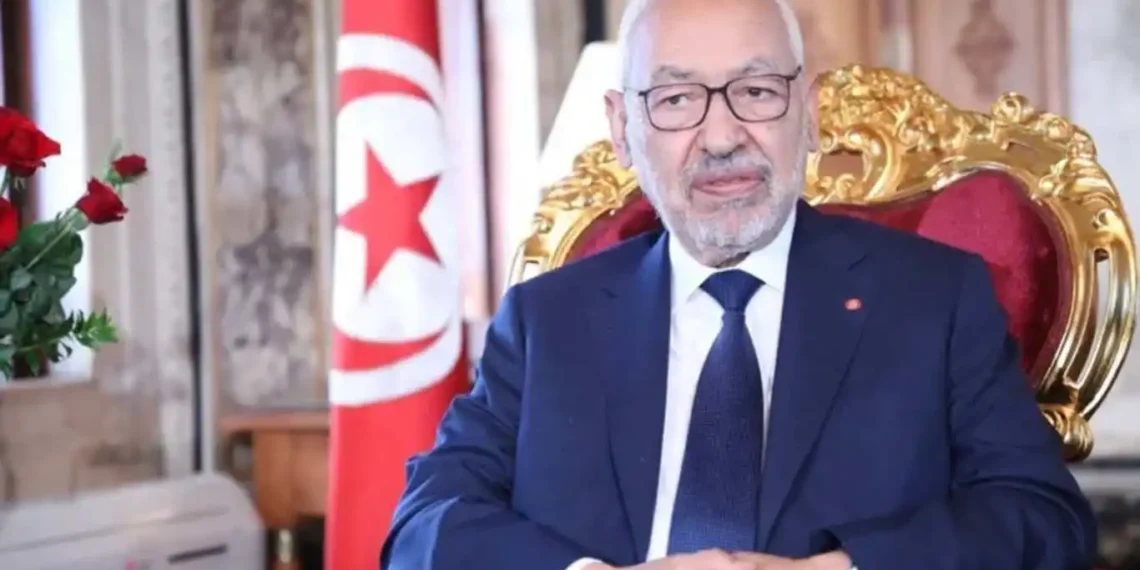
Rached Ghannouchi, the former Speaker of the Tunisian Parliament and leader of the Ennahda Party, one of the country’s most prominent political actors, announced last month that he had commenced a hunger strike in the prison where he is currently detained. Arrested in April 2023, Ghannouchi was sentenced to a total of 37 years in prison on charges including “conspiracy against the state,” “providing illegal financing,” and “inciting terrorism.” Ghannouchi had refused to attend the proceedings, asserting that the trials were conducted under the direct influence of President Kais Saied. This protest against the erosion of judicial independence- a trend observed across numerous democratic institutions under Saied’s autocratic rule- has further intensified with his decision to go on a hunger strike.
Considering Ghannouchi’s hunger strike and the political conjuncture that prompted this decision, it is possible to make three fundamental observations regarding Tunisia’s current political conditions. First, the fact that Ghannouchi has embarked on a hunger strike despite his advanced age (84) should be understood not only as an individual protest but also as an indicator that the institutional and legal avenues for political struggle have significantly narrowed under President Saied’s administration. Saied, who assumed the presidency in 2019 by positioning himself as an independent actor “from outside the system” and gained broad social support with the promise of restoring the “spirit of the revolution,” is seen today to be dragging Tunisia into the shadow of pre-revolutionary authoritarian regimes. Capitalizing on widespread distrust of political parties and coalition governments, as well as the accumulated social frustration over the failure to resolve chronic issues such as corruption and unemployment, Saied has transformed public dissatisfaction with the existing political system into the primary source of legitimacy for his own rule. However, this discourse of legitimacy has, over time, opened the door to an authoritarian governance where the civil sphere is constricted, freedom of expression is suppressed, and judicial independence is eliminated. In this context, Ghannouchi’s hunger strike should be evaluated beyond an individual reaction as a form of political objection developed against the closure of institutional and legal opposition channels under the Saied administration. The hunger strike points to a significant practice of resistance employed by the opposition to gain visibility and expose mechanisms of oppression in an environment where the civil sphere has been narrowed and freedom of expression severely limited.
Secondly, when Ghannouchi’s decision to strike is considered alongside the arrest of numerous key figures from Ennahda and the nationwide closure of party offices, it necessitates a reconsideration of Ennahda’s political journey as it has unfolded since 2011. Examining the path adopted by Ghannouchi and the Ennahda Party post-2011, it is possible to assert that they maintained a consistent political stance centered on national dialogue and consensus. Ennahda’s withdrawal from power during the 2013 political crisis, on the grounds that “the nation is more important than the party,” its continuous search for compromise with elements of the former regime and diverse ideological factions, and its prioritization of coalition politics over seeking unilateral power can be regarded as critical steps toward the institutionalization of democracy and pluralism in Tunisia.
Undoubtedly, interpreting these choices merely as products of political pragmatism would mean overlooking Ghannouchi’s fundamental approach to democracy and liberties. Indeed, for Ghannouchi, who defines dictatorship as the most destructive political malady of the Arab world, the primary motivation was for Tunisia to present a vibrant model of democracy to the Arab and Islamic worlds, nourished by its own social dynamics. However, at the current juncture, despite this stance prioritizing consensus and dialogue, the identification of Ennahda with the unresolved structural problems accumulated since 2011 has both eroded the party’s social legitimacy and produced a political ground that facilitated the Saied administration’s labeling of the party as the “founding enemy.” In this context, Ghannouchi’s hunger strike serves not only as an objection to the current repressive regime but also as an illustration of how the conciliatory politics pursued by Ennahda after 2011 have been reversed, resulting in the party being pushed outside the political system.
Finally, it can be observed that the atmosphere of repression resulting from Saied’s deepening authoritarian tendencies has increasingly blurred ideological distinctions within the opposition. In his campaign of arrests against opponents, President Saied appears to label individuals or groups as “traitors,” “terrorists,” or “conspirators” through open-ended discourse, without regard for ideological affiliations—whether Islamist, leftist, liberal, secular, or independent. On the opposing side, within the resistance front, there is a burgeoning solidarity that transcends these ideological divides. Ghannouchi’s hunger strike serves as one of the most striking examples of this transformation. Indeed, Ghannouchi announced that he commenced his strike in solidarity with Jawhar bin Mubarak, a figure prominent for his secular identity who was sentenced to 18 years in prison on charges such as “conspiracy against state security and membership in a terrorist group.” He justified this decision by stating, “there is currently a cause greater than ideological divisions, and that is freedom, which concerns everyone in Tunisia.”
Similar to Ghannouchi’s message, bin Mubarak released a statement expressing gratitude to the opposition figures who joined the hunger strike in solidarity with him- namely, Issam Chebbi, Secretary-General of the Republican Party; Rached Ghannouchi; politician Abdelhamid Jelassi; and Ridha Belhaj, a leader of the National Salvation Front. This phenomenon is further reinforced by the message Ghannouchi sent from prison in April 2025, on the occasion of the second anniversary of his conviction, in which he emphasized that political prisoners representing diverse segments of Tunisia have formed a united front against Saied’s authoritarian rule:
“Within Mornaguia Prison, there are Jawhar bin Mubarak, Ridha Belhaj, Ghazi Chaouachi, Khayam Turki, Issam Chebbi, Abdelhamid Jelassi, Lotfi Mraihi, Habib Ellouz, Bechir Akremi, and others. They all come from diverse backgrounds, yet they are united in their resistance against oppression. Politics divided them, and ideologies alienated them from one another; however, dictatorship and repression have brought them together.”
As can be observed, one of the distinguishing characteristics of the current political environment in Tunisia is that the repression and arrests targeting actors opposed to President Saied are not selective, but rather inclusive and general in nature. Consequently, the opposition to Saied is characterized not by its ideological differences or social representations, but by its shared labeling as “traitors” or “terrorists” within the President’s discourse. In response, it is evident that the opposition has moved away from a fragmented political struggle based on ideological divisions, instead developing a common line of resistance as a relatively homogeneous collective of actors confronting a regime they define as a “dictatorship.”
In conclusion, Ghannouchi’s hunger strike can be evaluated as both a consequence of the political transformation taking shape under the Saied administration in Tunisia and a significant threshold that renders this transformation visible. The strike vividly demonstrates the limits within which the right to political objection remains possible in an environment where institutional and legal channels of opposition have been constricted. Furthermore, it reveals how the consensus- and dialogue-centered political trajectory adopted by Ennahda after 2011 has been reversed. Finally, Saied’s process of authoritarianization relies not on selective repression targeting specific ideological actors, but on an inclusive and generalizing discourse that criminalizes the opposition regardless of ideological differences. While this situation serves the regime by suppressing ideological plurality, it simultaneously fosters a ground for resistance within the opposition front, crystallized around the shared experience of oppression.
*Opinions expressed in this article are the author’s own and do not necessarily reflect Platform: Current Muslim Affairs’ editorial policy.