

Platform
  • Türkçe
No Result
View All Result
  • PLATFORM
  • NEWS
    İLKE Agenda: Muzzammil Ayyub Thakur ile Keşmir’in “Filistinleştirilmesi”

    Khaled Beydoun: “Islamophobia is a modern manifestation of the crusades”

    Filistin Sempozyumu: Filistin ve Küresel İlişkilerin Geleceği

    Exploring Islam’s View on Slavery and Blackness: Seminar by Jonathan A.C. Brown

    The Conference on Contemporary Muslim Thought

    The Conference on Contemporary Muslim Thought

    Filistin Sempozyumu: Filistin ve Küresel İlişkilerin Geleceği

    Palestine Symposium: Palestine and the Future of Global Affairs

    İLKE Agenda: Muzzammil Ayyub Thakur ile Keşmir’in “Filistinleştirilmesi”

    The Platform Talks: Palestine after October 7 with Azzam Tamimi

    İLKE Agenda: Muzzammil Ayyub Thakur ile Keşmir’in “Filistinleştirilmesi”

    The Palestine Talks: Syria after December 8 with Kinda Hawasli

    İLKE Agenda: Muzzammil Ayyub Thakur ile Keşmir’in “Filistinleştirilmesi”

    İLKE Agenda: The “Palestinization” of Kashmir with Muzzammil Ayyub Thakur

  • ANALYSIS
    • All
    • Culture, Arts and Media
    • Economy
    • Education
    • Energy and Environment
    • Fundamental Rights and Freedoms
    • Migration
    • Opinion
    • Social Issues
    Bangladeş’te 2026 Seçimleri Sonrası Siyasi Tartışmalar

    Political Debates Post-2026 Elections in Bangladesh

    Filistin’de Çocuk Olmak: 5 Nisan Filistinli Çocuklar Günü

    April 5: Palestinian Children’s Day

    Security, Fragility, and the Search for a New Equilibrium in the Gulf Following the Iranian Attacks

    Security, Fragility, and the Search for a New Equilibrium in the Gulf Following the Iranian Attacks

    İran’ın Savaştaki Hedefi Zafer mi, Hayatta Kalmak mı?

    Iran’s Objective in the War: Victory or Survival?

    Digital Ummah and Muslim Identity: Dr. Sahar Khamis Interview

    Digital Ummah and Muslim Identity: Dr. Sahar Khamis Interview

    Rethinking Urban Space: Spacio-Cide, Collective Memory, and Resistance

    Rethinking Urban Space: Spacio-Cide, Collective Memory, and Resistance

  • INTERVIEWS
    A Possible New Breath in Regional Balances: The Alliance of Türkiye, Pakistan, Egypt, and Saudi Arabia

    A Possible New Breath in Regional Balances: The Alliance of Türkiye, Pakistan, Egypt, and Saudi Arabia

    From the Ballot Box to the Street: The Rising Social Wave in Tanzania After the Election

    From the Ballot Box to the Street: The Rising Social Wave in Tanzania After the Election

    Kafkasya’da Müslümanlar ve İslami Eğitim: TCDİB Kuzey Kafkasya Koordinatörü Selim Akburak ile Söyleşi

    Muslims and Islamic Education in the Caucasus: An Interview with Selim Burak North Caucasus Coordinator in Directorate of Religious Affairs

    Göçü Yönetmek: Dr. Mehmet Köse’yle Söyleşi

    Interview with Mehmet Köse

    Gurbet Hikayeleri

    Interview on Gurbet Hikayeleri

    İstanbul’daki Uluslararası Öğrencilerle Söyleşi

    Interview with International Students in Istanbul

    Zaytuna College Lisansüstü Eğitim Dekanı Maşuk Yamaç’la Söyleşi

    Interview with Mahsuk Yamac, Dean of Graduate Studies at Zaytuna College

    Gazze’den Bir Ses

    A Voice from Gaza: Sarah al-Najjar

    Filistinli Kadınları Anlamak: Yıldız Ramazanoğlu

    Understanding Palestinian Women: Interview with Yıldız Ramazanoğlu

  • VOICES
    Anas Altikriti | Voices from the Muslim World | Türkçe Altyazılı

    Anas Altikriti | Voices from the Muslim World | Türkçe Altyazılı

    Basil Mustafa (Oxford) | Voices from the Muslim World | with Turkish subtitles

    Basil Mustafa (Oxford) | Voices from the Muslim World | with Turkish subtitles

    OMAR SULEIMAN | VOICES FROM THE MUSLIM WORLD

    OMAR SULEIMAN | VOICES FROM THE MUSLIM WORLD

    Paul Williams | Voices from the Muslim World

    Paul Williams | Voices from the Muslim World

  • DATABASE
    • All
    • Institutions
    • Movements
    • People
    Afganistan Araştırma ve Değerlendirme Birimi

    Afghanistan Research and Evaluation Unit

    Afgan Stratejik Çalışmalar Merkezi

    Afghan Institute for Strategic Studies

    Abaad Araştırma Merkezi

    Abaad Studies & Research Center

    Adil Bir Dünya İçin Uluslararası Hareket

    International Movement For A Just World

    Adalet ve Kalkınma Partisi

    Justice and Development Party – Hizb al-Adale wa’t-Tenmiye-Justice and Development Party

    Adalet ve İhsan Hareketi

    Justice and Ihsan Movement

    Açe Özgürlük Hareketi

    Aceh Freedom Movement

    Hamid Dabashi

    Hamid Dabashi

    Fuad Sezgin

    Fuad Sezgin

  • PLATFORM
  • NEWS
    İLKE Agenda: Muzzammil Ayyub Thakur ile Keşmir’in “Filistinleştirilmesi”

    Khaled Beydoun: “Islamophobia is a modern manifestation of the crusades”

    Filistin Sempozyumu: Filistin ve Küresel İlişkilerin Geleceği

    Exploring Islam’s View on Slavery and Blackness: Seminar by Jonathan A.C. Brown

    The Conference on Contemporary Muslim Thought

    The Conference on Contemporary Muslim Thought

    Filistin Sempozyumu: Filistin ve Küresel İlişkilerin Geleceği

    Palestine Symposium: Palestine and the Future of Global Affairs

    İLKE Agenda: Muzzammil Ayyub Thakur ile Keşmir’in “Filistinleştirilmesi”

    The Platform Talks: Palestine after October 7 with Azzam Tamimi

    İLKE Agenda: Muzzammil Ayyub Thakur ile Keşmir’in “Filistinleştirilmesi”

    The Palestine Talks: Syria after December 8 with Kinda Hawasli

    İLKE Agenda: Muzzammil Ayyub Thakur ile Keşmir’in “Filistinleştirilmesi”

    İLKE Agenda: The “Palestinization” of Kashmir with Muzzammil Ayyub Thakur

  • ANALYSIS
    • All
    • Culture, Arts and Media
    • Economy
    • Education
    • Energy and Environment
    • Fundamental Rights and Freedoms
    • Migration
    • Opinion
    • Social Issues
    Bangladeş’te 2026 Seçimleri Sonrası Siyasi Tartışmalar

    Political Debates Post-2026 Elections in Bangladesh

    Filistin’de Çocuk Olmak: 5 Nisan Filistinli Çocuklar Günü

    April 5: Palestinian Children’s Day

    Security, Fragility, and the Search for a New Equilibrium in the Gulf Following the Iranian Attacks

    Security, Fragility, and the Search for a New Equilibrium in the Gulf Following the Iranian Attacks

    İran’ın Savaştaki Hedefi Zafer mi, Hayatta Kalmak mı?

    Iran’s Objective in the War: Victory or Survival?

    Digital Ummah and Muslim Identity: Dr. Sahar Khamis Interview

    Digital Ummah and Muslim Identity: Dr. Sahar Khamis Interview

    Rethinking Urban Space: Spacio-Cide, Collective Memory, and Resistance

    Rethinking Urban Space: Spacio-Cide, Collective Memory, and Resistance

  • INTERVIEWS
    A Possible New Breath in Regional Balances: The Alliance of Türkiye, Pakistan, Egypt, and Saudi Arabia

    A Possible New Breath in Regional Balances: The Alliance of Türkiye, Pakistan, Egypt, and Saudi Arabia

    From the Ballot Box to the Street: The Rising Social Wave in Tanzania After the Election

    From the Ballot Box to the Street: The Rising Social Wave in Tanzania After the Election

    Kafkasya’da Müslümanlar ve İslami Eğitim: TCDİB Kuzey Kafkasya Koordinatörü Selim Akburak ile Söyleşi

    Muslims and Islamic Education in the Caucasus: An Interview with Selim Burak North Caucasus Coordinator in Directorate of Religious Affairs

    Göçü Yönetmek: Dr. Mehmet Köse’yle Söyleşi

    Interview with Mehmet Köse

    Gurbet Hikayeleri

    Interview on Gurbet Hikayeleri

    İstanbul’daki Uluslararası Öğrencilerle Söyleşi

    Interview with International Students in Istanbul

    Zaytuna College Lisansüstü Eğitim Dekanı Maşuk Yamaç’la Söyleşi

    Interview with Mahsuk Yamac, Dean of Graduate Studies at Zaytuna College

    Gazze’den Bir Ses

    A Voice from Gaza: Sarah al-Najjar

    Filistinli Kadınları Anlamak: Yıldız Ramazanoğlu

    Understanding Palestinian Women: Interview with Yıldız Ramazanoğlu

  • VOICES
    Anas Altikriti | Voices from the Muslim World | Türkçe Altyazılı

    Anas Altikriti | Voices from the Muslim World | Türkçe Altyazılı

    Basil Mustafa (Oxford) | Voices from the Muslim World | with Turkish subtitles

    Basil Mustafa (Oxford) | Voices from the Muslim World | with Turkish subtitles

    OMAR SULEIMAN | VOICES FROM THE MUSLIM WORLD

    OMAR SULEIMAN | VOICES FROM THE MUSLIM WORLD

    Paul Williams | Voices from the Muslim World

    Paul Williams | Voices from the Muslim World

  • DATABASE
    • All
    • Institutions
    • Movements
    • People
    Afganistan Araştırma ve Değerlendirme Birimi

    Afghanistan Research and Evaluation Unit

    Afgan Stratejik Çalışmalar Merkezi

    Afghan Institute for Strategic Studies

    Abaad Araştırma Merkezi

    Abaad Studies & Research Center

    Adil Bir Dünya İçin Uluslararası Hareket

    International Movement For A Just World

    Adalet ve Kalkınma Partisi

    Justice and Development Party – Hizb al-Adale wa’t-Tenmiye-Justice and Development Party

    Adalet ve İhsan Hareketi

    Justice and Ihsan Movement

    Açe Özgürlük Hareketi

    Aceh Freedom Movement

    Hamid Dabashi

    Hamid Dabashi

    Fuad Sezgin

    Fuad Sezgin

No Result
View All Result
Platform
No Result
View All Result
Home Analyses

April 5: Palestinian Children’s Day

Ahmet Hüsrev Çelik by Ahmet Hüsrev Çelik
5 April 2026
in Analyses, Opinion
A A
0
Filistin’de Çocuk Olmak: 5 Nisan Filistinli Çocuklar Günü
0
SHARES
3
VIEWS
Share on FacebookShare on Twitter

(The original Turkish version of this article was published by the Platform: Current Muslim Affairs on April 5, 2026)

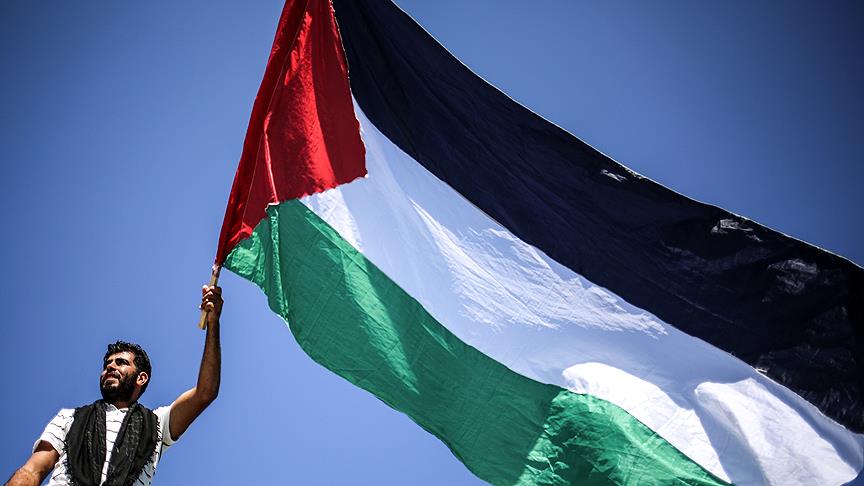
In 1995, Yasser Arafat, the former President of Palestine and leader of the Palestinian cause, officially designated April 5 as “Palestinian Children’s Day.” For Palestinian children, this date does not represent a festive holiday or a celebration; rather, it serves as a day of commemoration. A significant portion of those who bear the burden of the struggle for Palestine and Al-Aqsa Mosque, and who suffer the consequences of this conflict, are children.

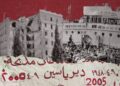
Violence and massacres targeting children in Palestine predated the formal establishment of the State of Israel. On April 9, 1948, during the event known to history as the Deir Yassin Massacre, 52 children were killed in the village of Deir Yassin in front of their families. Menachem Begin, the leader of the Irgun, one of the paramilitary organizations responsible for the massacre, who later served as the 6th Prime Minister of Israel between 1977 and 1983, characterized the incident as a victory, stating, “Unless this act had been carried out, the State of Israel would not have existed.”

The date of the establishment of the State of Israel, May 15, is commemorated as the “Nakba” or the “Day of Catastrophe.” On this day, approximately 900,000 people, including women and children, were displaced and forced into refugee status without being able to take any of their belongings. Today, there are approximately 5 million Palestinian refugees worldwide, a significant number of whom are children. Over the following decades, a tragic process has unfolded for Palestinian children both within Palestine and abroad, a process that continues to persist today.

Arafat’s Little Generals

While Palestinian children endure profound suffering, tragedy, and hardship, they have simultaneously undertaken pivotal and historic roles in the struggle for Palestine and the Al-Aqsa Mosque. Children were the primary protagonists in both the initiation and the sustenance of the First Intifada, a process that serves as a turning point in Palestinian history.

The First Intifada, which began on December 9, 1987, and became known as the “Stone Intifada,” saw its first stone cast against Israeli soldiers by a child. Following this initial act, other children followed suit, evolving into a daily movement where two-thirds of the participants were children. This mode of resistance persisted from 1987 until 1993. Among the most symbolic and harrowing images of the First Intifada were those of Israeli soldiers systematically breaking the arms of captured children at the elbows using stones. During this period, the application of such physical violence became a formalized policy.

Of the 1,162 individuals killed during the First Intifada, 241 were children. According to data from Save the Children, in the first two years of the Intifada alone, approximately 29,000 children, one-third of whom were under the age of ten, required medical treatment due to beatings and injuries.

Undaunted and fearless, these children stood before tanks with only stones in their hands, becoming beacons of hope for the State of Palestine’s independence process. Yasser Arafat famously referred to these children as “my little generals.” Ultimately, it was this struggle, largely involving children, that compelled Israel to engage in diplomatic negotiations.

Dimensions of Violence Against Palestinian Children

During the Second Intifada, also known as the Al-Aqsa Intifada (September 28, 2000 – February 8, 2005), more than 800 of the 4,000 civilians killed were children. Once again, children became the symbolic figures of this period. One such symbol was 14-year-old Faris Odeh, who was famously photographed throwing stones at Israeli tanks; unfortunately, Odeh was killed by Israeli forces on November 8, 2000. Another symbolic figure was 12-year-old Muhammad al-Durrah, who was killed on September 30 while seeking refuge behind his father, an event captured on camera before the eyes of the world.

The Palestinian Ministry of Information reported that from the end of the Second Intifada in 2005 until October 2019, 3,097 Palestinian children were killed through intentional targeting, with tens of thousands more injured. Between 2015 and 2019, more than 7,000 children were detained by Israel, with some receiving ten-year sentences and others sentenced to life imprisonment.

In the attacks known as Operation Cast Lead (December 2008 – January 2009), 355 of the 1,400 Palestinians who lost their lives were children. Similarly, during the 50-day offensive in 2014, which Israel dubbed “Operation Protective Edge,” 2,158 Palestinians were killed, including 551 children. The killing of four children, aged 9 to 11, while they were playing football on a beach, became the tragic symbol of these attacks.

Following the events of October 7, 2023, the number of Palestinians killed has exceeded 75,000. In a statement made in October 2024, a UNICEF spokesperson remarked, “Gaza is a real-world embodiment of hell on earth for its one million children.” In May 2025, Edouard Beigbeder, UNICEF Regional Director for the Middle East and North Africa, described the situation as an “unfathomable horror,” stating that more than 50,000 children in Gaza had been either killed or injured.

In 1982, the United Nations (UN) designated June 4 as the “International Day of Innocent Children Victims of Aggression” in recognition of Palestinian and Lebanese children affected by Israeli attacks. This “unfathomable horror” for children has persisted for decades. Since October 7, children in Gaza have been losing their lives not only under bombardment but also due to starvation and exposure to extreme cold.

The Brutality Behind the Statistics

Behind the “macro-brutality” expressed through mass figures such as thousands and tens of thousands lies a micro-background of individual tragedies. Every single digit in these statistics corresponds to the stolen life of a child and a unique instance of violence.

Ten-year-old Maryam Nizar Rayan, killed on January 1, 2009; seven-year-old Zakariya Hamed Khamis, killed by helicopter fire on January 4, 2009; three-year-old Emin Ömer, struck by artillery fire on his own doorstep; eight-year-old Mohanned Amer, killed on January 16, 2009; and eight-year-old Ali Munir Dardouna, killed on February 28, 2008; these are but a few of the symbolic names representing the violence Palestinian children endure.

Furthermore, four-month-old Iman Hijo, killed by tank fire on May 7, 2001; eleven-month-old Huda Shaluf, whose home was struck by tank fire in 2002; five-year-old Salih Abu Muattak, killed by tank fire while having breakfast at home on April 28, 2008; twenty-two-month-old Hassan Atta Azam, targeted by tank fire in his home on January 6, 2009; two-year-old Bara Ramiz Al-Deya, killed by an aerial missile in his home in Zeitun on January 6, 2009; eleven-year-old Hussein Iyad, shot in the back by sniper fire in front of his home in Tulkarm, West Bank, in January 2025; and Hind Rajab, who was killed in Gaza in January 2024 by 335 bullets for these and countless other children, April 5 is not yet a festival of celebration, but a day of solemn commemoration.

*Opinions expressed in this article are the author’s own and do not necessarily reflect Platform: Current Muslim Affairs’ editorial policy.
Ahmet Hüsrev Çelik

Ahmet Hüsrev Çelik

He earned his Bachelor’s degree in Public Administration from the Selçuk University Faculty of Economics and Administrative Sciences, followed by a Master’s degree in International Relations from the same university. He completed his Ph.D. in the Department of Middle East Political Economy at the Marmara University Institute of Middle East and Islamic Countries Studies. He currently continues his academic career with the title of Associate Professor. Previously, he served as a specialist in the Foreign Trade Department at Kuveyt Türk Participation Bank's Headquarters, and as an assistant specialist, specialist, and chief at the Turkish Exporters Assembly (TIM) Exporters' Associations. Since 2015, he has been a faculty member in the Department of International Relations at Düzce University, Akçakoca Bey Faculty of Political Sciences. He has held several administrative positions, including Founding Vice Dean of the Akçakoca Bey Faculty of Political Sciences, Director of the Akçakoca Vocational School, Founding Director of the Düzce University Center for Middle East and African Studies (ORAFMER), and Head of the Department of International Relations.

  • What Does Ghannouchi’s Hunger Strike Reveal About Tunisian Politics?

    What Does Ghannouchi’s Hunger Strike Reveal About Tunisian Politics?

    0 shares
    Share 0 Tweet 0
  • Why Is the Madrasa Not a University?

    0 shares
    Share 0 Tweet 0
  • Iran’s Objective in the War: Victory or Survival?

    0 shares
    Share 0 Tweet 0
  • Security, Fragility, and the Search for a New Equilibrium in the Gulf Following the Iranian Attacks

    0 shares
    Share 0 Tweet 0
  • Digital Colonialism: The Evolution of Colonialism and the New Generation of Imperialism

    0 shares
    Share 0 Tweet 0

Platform: Agenda of the Muslim World was established within the İLKE Science Culture Education Foundation as a publication organ that aims to follow and analyze the intellectual, political, social, economic and cultural agendas of Muslim societies and to present current and original perspectives on the Muslim world.

  • ANALYSIS
  • NEWS
  • INTERVIEWS
  • VOICES
  • platform@ilke.org.tr
  • (0216) 310 43 18
  • Aziz Mahmut Hüdayi Mah. Türbe Kapısı Sk. No: 13 Üsküdar, İstanbul
Instagram X-twitter

2025 @ PLATFORM is an İLKE Foundation organization. All rights reserved.

No Result
View All Result
  • Issues
  • Platform English