













(The original Turkish version of this article was published by the Platform: Current Muslim Affairs on May 4, 2026)
The inclusion of social media in debates regarding the public sphere has been shaped by a specific set of normative expectations since its inception. It was anticipated that digital networks would democratize access to information, erode intermediary hierarchies, and foster a participatory environment for discourse. This expectation relied on the belief that Habermas’s model of the bourgeois public sphere would naturally be transposed into the digital realm. According to Habermas, the public sphere is a space where private individuals subject state authority to rational and critical debate, where participation is independent of status, and where secularized, rational communication prevails (Habermas, 1991). However, the current landscape has long since surpassed this prediction. Instead of strengthening a secular and deliberative public reason, social media generates epistemically isolated discourse spaces in which each community transforms its own internal world into a “public.” Among these spaces, the most populated and least analyzed is the Islamist-conservative form of publicness.
The normative framework of the Habermasian model has faced severe criticism from the very beginning. Fraser asserts that this seemingly universal public sphere actually excludes certain social strata and reproduces power relations. According to Fraser, the public sphere is neither singular nor homogeneous; instead, counter-publics existing in parallel with the dominant publicness in society also constitute genuine spaces for deliberation (Fraser, 2014). This observation acquires a particular significance regarding Islamist-conservative digital discourse. Social media enables this segment to construct its own unique counter-public, thereby creating an authentic sphere of circulation for voices that remain outside the dominant discourse. This aforementioned sphere relies not on a universal reason in the Habermasian sense, but on a shared moral ground within the community.
The explanatory power of the public sphere theory regarding religion has become increasingly questioned alongside the global religious resurgence experienced since the 1980s. Casanova addresses this transformation through the concept of the “publicization of religion.” Accordingly, rather than retreating into the private sphere as predicted by the secularization thesis, religion is repositioning itself as a legitimate interlocutor within civil society (Casanova, 1994). This process of publicization has gained new momentum with the proliferation of social media. Digital platforms provide religious actors with the capacity to reach vast audiences and shape public opinion; thus, the boundary between religion and public discourse is becoming increasingly permeable. In the specific case of Türkiye, this permeability intertwines with the political climate, presenting a unique phenomenon.
The most comprehensive study addressing the re-emergence of religion within the public sphere in the Turkish context belongs to Göle. Through the practice of veiling, Göle demonstrates that Islamist subjects began to integrate into modernity by publicizing their private practices. The figure of the veiled university student became the symbol of this process; as a traditional practice gained visibility, it was transformed into an expression of identity and a public demand (Göle, 1996). This paradox—the transformation of the private into a public language—is being reproduced much more extensively on social media today. By sharing practices such as prayer, umrah, and fasting, as well as Islamic discourses or debates regarding daily life, Muslim individuals are transporting private piety into a public narrative. In this process, religiosity is transformed into a social experience that is both performative and circulatable.
The transformation of religious authority also occupies a decisive role in the functioning of this publicness. The interpretive tradition unique to the classical ulema began to erode with the proliferation of mass education; social media has moved this process into a qualitatively different dimension. The algorithmic structure ranks content based on engagement rates and emotional capacity, alongside theological consistency. This condition brings to the fore figures who can adapt to the platform’s visibility logic and transpose Islamic content into short-form video formats. Digital networks thus produce a leaderless, horizontal, and low-threshold environment for participation; while the speed of mobilization increases in this environment, organizational depth may erode over time (Tufekci, 2017). Consequently, the democratization of access to religious discourse and the subordination of this discourse to the conditions of the platform economy emerge not as sequential, but as simultaneous processes.
One of the most striking aspects of this publicness is the specific experience of “flow” created by the content produced by younger generations on platforms such as X. The practices of conservative and Islamist-leaning users following one another, re-circulating each other’s posts, and clustering around the same hashtags create a platform-specific “conservative time/timeline” over time. This time represents a fluid yet consistent discourse environment, the vast majority of whose participants are young. Issues concerning Muslims, devotional practices, moral debates, gender roles, and the political agenda circulate as mutually reinforcing themes within this flow. Young people are not merely consumers of this flow but also its active producers. Adding a religious perspective to a topic or spreading a popular post by reframing it defines this generation’s mode of participation in public discourse. This structure, in which content with high emotional intensity is rewarded by the algorithm in networked environments, reproduces Islamist dynamics through non-institutional channels and at a speed that often far exceeds them (Tufekci, 2017).
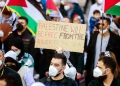
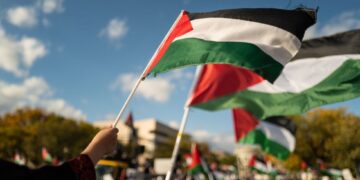
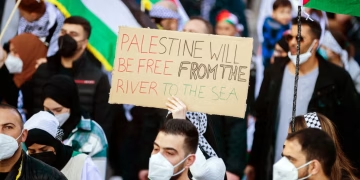
The transnational dimension of this publicness is shaped around the concept of the ummah. According to Roy, in the process of globalization, Islam is ceasing to be tied to a specific geography or culture and is increasingly transforming into a more abstract and portable identity reference. This transformation brings about the decoupling of religious identity from ethnic and cultural identities among young Muslims, leading to its articulation with a universal sense of belonging to the ummah (Roy, 2004). Mandaville, on the other hand, approaches this process through the lens of how transnational Muslim politics is fueled by a new “imaginary.” Digital communication tools enable Muslims to develop a sense of community that transcends geographical borders and to discuss common issues within a shared framework (Mandaville, 2003). In this context, issues such as Palestine, East Turkestan, Syria, Sudan, and Arakan acquire meaning; through content produced on social media, both a transnational believer identity is kept alive and a sense of local belonging is nurtured. This intertwining of nationalist and religious identities constitutes a unique line of tension within the digital public sphere.
The Islamist-conservative publicness shaped through digital platforms in Türkiye and the broader geography emerges as a complex field where contradictory dynamics operate simultaneously. Instead of the public sphere transforming into a secularized universal space of deliberation as envisioned by the Habermasian model, we see the proliferation of counter-publics as pointed out by Fraser, and the process of the publicization of religion identified by Casanova gaining momentum alongside digital infrastructure. When Göle’s paradoxical findings regarding Türkiye, Tufekci’s analysis of network dynamics, and Roy and Mandaville’s analyses placing the ummah imaginary into a global context are read together, it becomes clear that this publicness diverges from previous models in terms of both meaning and function. Access to religious discourse is expanding, communal belonging is being reproduced through platforms, and religious identity is acquiring a new form of public expression by integrating with visual culture and consumption practices. This publicness, with all its inherent tensions, is a social reality in transformation that demands analytical attention.
*Opinions expressed in this article are the author’s own and do not necessarily reflect Platform: Current Muslim Affairs’ editorial policy.