







Platform
  • Türkçe
No Result
View All Result
  • PLATFORM
  • NEWS
    İLKE Agenda: Muzzammil Ayyub Thakur ile Keşmir’in “Filistinleştirilmesi”

    Khaled Beydoun: “Islamophobia is a modern manifestation of the crusades”

    Filistin Sempozyumu: Filistin ve Küresel İlişkilerin Geleceği

    Exploring Islam’s View on Slavery and Blackness: Seminar by Jonathan A.C. Brown

    The Conference on Contemporary Muslim Thought

    The Conference on Contemporary Muslim Thought

    Filistin Sempozyumu: Filistin ve Küresel İlişkilerin Geleceği

    Palestine Symposium: Palestine and the Future of Global Affairs

    İLKE Agenda: Muzzammil Ayyub Thakur ile Keşmir’in “Filistinleştirilmesi”

    The Platform Talks: Palestine after October 7 with Azzam Tamimi

    İLKE Agenda: Muzzammil Ayyub Thakur ile Keşmir’in “Filistinleştirilmesi”

    The Palestine Talks: Syria after December 8 with Kinda Hawasli

    İLKE Agenda: Muzzammil Ayyub Thakur ile Keşmir’in “Filistinleştirilmesi”

    İLKE Agenda: The “Palestinization” of Kashmir with Muzzammil Ayyub Thakur

  • ANALYSIS
    • All
    • Culture, Arts and Media
    • Economy
    • Education
    • Energy and Environment
    • Fundamental Rights and Freedoms
    • Migration
    • Opinion
    • Social Issues
    Bangladeş’te 2026 Seçimleri Sonrası Siyasi Tartışmalar

    Political Debates Post-2026 Elections in Bangladesh

    Filistin’de Çocuk Olmak: 5 Nisan Filistinli Çocuklar Günü

    April 5: Palestinian Children’s Day

    Security, Fragility, and the Search for a New Equilibrium in the Gulf Following the Iranian Attacks

    Security, Fragility, and the Search for a New Equilibrium in the Gulf Following the Iranian Attacks

    İran’ın Savaştaki Hedefi Zafer mi, Hayatta Kalmak mı?

    Iran’s Objective in the War: Victory or Survival?

    Digital Ummah and Muslim Identity: Dr. Sahar Khamis Interview

    Digital Ummah and Muslim Identity: Dr. Sahar Khamis Interview

    Rethinking Urban Space: Spacio-Cide, Collective Memory, and Resistance

    Rethinking Urban Space: Spacio-Cide, Collective Memory, and Resistance

  • INTERVIEWS
    A Possible New Breath in Regional Balances: The Alliance of Türkiye, Pakistan, Egypt, and Saudi Arabia

    A Possible New Breath in Regional Balances: The Alliance of Türkiye, Pakistan, Egypt, and Saudi Arabia

    From the Ballot Box to the Street: The Rising Social Wave in Tanzania After the Election

    From the Ballot Box to the Street: The Rising Social Wave in Tanzania After the Election

    Kafkasya’da Müslümanlar ve İslami Eğitim: TCDİB Kuzey Kafkasya Koordinatörü Selim Akburak ile Söyleşi

    Muslims and Islamic Education in the Caucasus: An Interview with Selim Burak North Caucasus Coordinator in Directorate of Religious Affairs

    Göçü Yönetmek: Dr. Mehmet Köse’yle Söyleşi

    Interview with Mehmet Köse

    Gurbet Hikayeleri

    Interview on Gurbet Hikayeleri

    İstanbul’daki Uluslararası Öğrencilerle Söyleşi

    Interview with International Students in Istanbul

    Zaytuna College Lisansüstü Eğitim Dekanı Maşuk Yamaç’la Söyleşi

    Interview with Mahsuk Yamac, Dean of Graduate Studies at Zaytuna College

    Gazze’den Bir Ses

    A Voice from Gaza: Sarah al-Najjar

    Filistinli Kadınları Anlamak: Yıldız Ramazanoğlu

    Understanding Palestinian Women: Interview with Yıldız Ramazanoğlu

  • VOICES
    Anas Altikriti | Voices from the Muslim World | Türkçe Altyazılı

    Anas Altikriti | Voices from the Muslim World | Türkçe Altyazılı

    Basil Mustafa (Oxford) | Voices from the Muslim World | with Turkish subtitles

    Basil Mustafa (Oxford) | Voices from the Muslim World | with Turkish subtitles

    OMAR SULEIMAN | VOICES FROM THE MUSLIM WORLD

    OMAR SULEIMAN | VOICES FROM THE MUSLIM WORLD

    Paul Williams | Voices from the Muslim World

    Paul Williams | Voices from the Muslim World

  • DATABASE
    • All
    • Institutions
    • Movements
    • People
    Afganistan Araştırma ve Değerlendirme Birimi

    Afghanistan Research and Evaluation Unit

    Afgan Stratejik Çalışmalar Merkezi

    Afghan Institute for Strategic Studies

    Abaad Araştırma Merkezi

    Abaad Studies & Research Center

    Adil Bir Dünya İçin Uluslararası Hareket

    International Movement For A Just World

    Adalet ve Kalkınma Partisi

    Justice and Development Party – Hizb al-Adale wa’t-Tenmiye-Justice and Development Party

    Adalet ve İhsan Hareketi

    Justice and Ihsan Movement

    Açe Özgürlük Hareketi

    Aceh Freedom Movement

    Hamid Dabashi

    Hamid Dabashi

    Fuad Sezgin

    Fuad Sezgin

  • PLATFORM
  • NEWS
    İLKE Agenda: Muzzammil Ayyub Thakur ile Keşmir’in “Filistinleştirilmesi”

    Khaled Beydoun: “Islamophobia is a modern manifestation of the crusades”

    Filistin Sempozyumu: Filistin ve Küresel İlişkilerin Geleceği

    Exploring Islam’s View on Slavery and Blackness: Seminar by Jonathan A.C. Brown

    The Conference on Contemporary Muslim Thought

    The Conference on Contemporary Muslim Thought

    Filistin Sempozyumu: Filistin ve Küresel İlişkilerin Geleceği

    Palestine Symposium: Palestine and the Future of Global Affairs

    İLKE Agenda: Muzzammil Ayyub Thakur ile Keşmir’in “Filistinleştirilmesi”

    The Platform Talks: Palestine after October 7 with Azzam Tamimi

    İLKE Agenda: Muzzammil Ayyub Thakur ile Keşmir’in “Filistinleştirilmesi”

    The Palestine Talks: Syria after December 8 with Kinda Hawasli

    İLKE Agenda: Muzzammil Ayyub Thakur ile Keşmir’in “Filistinleştirilmesi”

    İLKE Agenda: The “Palestinization” of Kashmir with Muzzammil Ayyub Thakur

  • ANALYSIS
    • All
    • Culture, Arts and Media
    • Economy
    • Education
    • Energy and Environment
    • Fundamental Rights and Freedoms
    • Migration
    • Opinion
    • Social Issues
    Bangladeş’te 2026 Seçimleri Sonrası Siyasi Tartışmalar

    Political Debates Post-2026 Elections in Bangladesh

    Filistin’de Çocuk Olmak: 5 Nisan Filistinli Çocuklar Günü

    April 5: Palestinian Children’s Day

    Security, Fragility, and the Search for a New Equilibrium in the Gulf Following the Iranian Attacks

    Security, Fragility, and the Search for a New Equilibrium in the Gulf Following the Iranian Attacks

    İran’ın Savaştaki Hedefi Zafer mi, Hayatta Kalmak mı?

    Iran’s Objective in the War: Victory or Survival?

    Digital Ummah and Muslim Identity: Dr. Sahar Khamis Interview

    Digital Ummah and Muslim Identity: Dr. Sahar Khamis Interview

    Rethinking Urban Space: Spacio-Cide, Collective Memory, and Resistance

    Rethinking Urban Space: Spacio-Cide, Collective Memory, and Resistance

  • INTERVIEWS
    A Possible New Breath in Regional Balances: The Alliance of Türkiye, Pakistan, Egypt, and Saudi Arabia

    A Possible New Breath in Regional Balances: The Alliance of Türkiye, Pakistan, Egypt, and Saudi Arabia

    From the Ballot Box to the Street: The Rising Social Wave in Tanzania After the Election

    From the Ballot Box to the Street: The Rising Social Wave in Tanzania After the Election

    Kafkasya’da Müslümanlar ve İslami Eğitim: TCDİB Kuzey Kafkasya Koordinatörü Selim Akburak ile Söyleşi

    Muslims and Islamic Education in the Caucasus: An Interview with Selim Burak North Caucasus Coordinator in Directorate of Religious Affairs

    Göçü Yönetmek: Dr. Mehmet Köse’yle Söyleşi

    Interview with Mehmet Köse

    Gurbet Hikayeleri

    Interview on Gurbet Hikayeleri

    İstanbul’daki Uluslararası Öğrencilerle Söyleşi

    Interview with International Students in Istanbul

    Zaytuna College Lisansüstü Eğitim Dekanı Maşuk Yamaç’la Söyleşi

    Interview with Mahsuk Yamac, Dean of Graduate Studies at Zaytuna College

    Gazze’den Bir Ses

    A Voice from Gaza: Sarah al-Najjar

    Filistinli Kadınları Anlamak: Yıldız Ramazanoğlu

    Understanding Palestinian Women: Interview with Yıldız Ramazanoğlu

  • VOICES
    Anas Altikriti | Voices from the Muslim World | Türkçe Altyazılı

    Anas Altikriti | Voices from the Muslim World | Türkçe Altyazılı

    Basil Mustafa (Oxford) | Voices from the Muslim World | with Turkish subtitles

    Basil Mustafa (Oxford) | Voices from the Muslim World | with Turkish subtitles

    OMAR SULEIMAN | VOICES FROM THE MUSLIM WORLD

    OMAR SULEIMAN | VOICES FROM THE MUSLIM WORLD

    Paul Williams | Voices from the Muslim World

    Paul Williams | Voices from the Muslim World

  • DATABASE
    • All
    • Institutions
    • Movements
    • People
    Afganistan Araştırma ve Değerlendirme Birimi

    Afghanistan Research and Evaluation Unit

    Afgan Stratejik Çalışmalar Merkezi

    Afghan Institute for Strategic Studies

    Abaad Araştırma Merkezi

    Abaad Studies & Research Center

    Adil Bir Dünya İçin Uluslararası Hareket

    International Movement For A Just World

    Adalet ve Kalkınma Partisi

    Justice and Development Party – Hizb al-Adale wa’t-Tenmiye-Justice and Development Party

    Adalet ve İhsan Hareketi

    Justice and Ihsan Movement

    Açe Özgürlük Hareketi

    Aceh Freedom Movement

    Hamid Dabashi

    Hamid Dabashi

    Fuad Sezgin

    Fuad Sezgin

No Result
View All Result
Platform
No Result
View All Result
Home Analyses

Security, Fragility, and the Search for a New Equilibrium in the Gulf Following the Iranian Attacks

Feyza Gümüşlüoğlu by Feyza Gümüşlüoğlu
24 March 2026
in Analyses, Opinion
A A
0
Security, Fragility, and the Search for a New Equilibrium in the Gulf Following the Iranian Attacks
0
SHARES
4
VIEWS
Share on FacebookShare on Twitter

(The original Turkish version of this article was published by the Platform: Current Muslim Affairs on March 24, 2026)

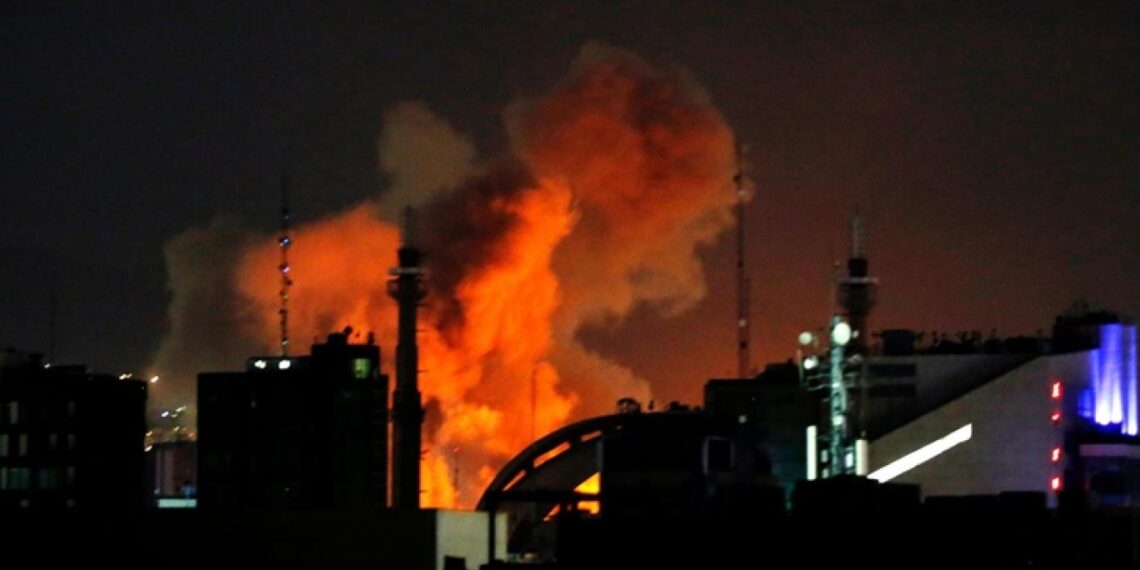
The war that began on 28 February 2026 with the United States–Israel attacks on Iran, and subsequently expanded across the region as Iran targeted Gulf countries, has shattered a foundational assumption that the Gulf had painstakingly constructed over the past two decades: that the Gulf is secure. Small Gulf states such as the United Arab Emirates (UAE), Kuwait, Bahrain, and Qatar had long operated under the premise that by cultivating close relations with major powers, they could insulate themselves from the region’s recurrent conflicts. However, recent weeks have demonstrated that this assumption does not always hold. The unfolding developments have once again underscored a fundamental reality: the Gulf remains an integral part of the Middle East and is, therefore, inevitably susceptible to its instabilities.

The war has not only intensified the military confrontation between Iran and the United States–Israel axis, but has also profoundly destabilized the political, economic, and psychological order that the Gulf has constructed over the past two decades. One of the most striking consequences of the conflict has been Iran’s targeting of all Gulf states without exception, including those not directly engaged in hostilities against it. The United Arab Emirates (UAE), Kuwait, Bahrain, Qatar, Oman, and Saudi Arabia have all been subjected—at varying levels of intensity—to missile and unmanned aerial vehicle (UAV) attacks. This development has revealed that, in the context of contemporary regional conflicts, maintaining neutrality or refraining from direct involvement in war no longer provides sufficient protection.

Iran’s direct targeting of these countries may, at first glance, be interpreted as part of a punitive and deterrent strategy. From Tehran’s perspective, even if the Gulf states were not formally engaged in the war, they nevertheless constituted integral components of the United States’ regional military architecture: hosting American bases, maintaining security partnerships with Washington, and occupying positions that could not be entirely excluded from the logistical or intelligence dimensions of the conflict. Through these attacks, Iran conveyed not only a military signal but also a political message: the costs of a regional war would not be confined to its principal belligerents. This approach has once again reminded the Gulf monarchies of the structural constraints imposed by geography.

A particularly notable aspect of this development is that Iran did not limit its strikes to countries openly aligned against it, but also targeted those that had, in recent years, sought to preserve channels of dialogue. The fact that even an actor such as Oman—long recognized for maintaining a balanced relationship with Iran—was not fully insulated from these attacks has exposed the limits of the recent policy of de-escalation and rapprochement in the Gulf. Since 2019, Saudi Arabia and the United Arab Emirates, in particular, have adopted a more cautious approach aimed at reducing confrontation with Iran, enhancing bilateral dialogue, and lowering regional tensions. However, the recent war has demonstrated that such a strategy has been insufficient to shield the Gulf from Iranian retaliation.

A Blow to the “Safe Haven” Image

One of the most significant consequences of these developments has been the severe erosion of the Gulf’s long-cultivated image as a “safe haven.” For years, Gulf states, particularly Dubai, Abu Dhabi, Doha, and Riyadh, have positioned themselves as islands of stability, prosperity, and predictability within an otherwise turbulent Middle East. This image has constituted a foundational pillar sustaining tourism, global capital inflows, logistics networks, air transportation, multinational corporate headquarters, and large-scale investment projects. In the wake of the Iranian attacks, however, the most critical underpinning of this model has been shaken: the perception of security.

For a country or region to function as an economic hub, it requires not only infrastructure, capital, and strategic vision, but also a credible sense of security. The Gulf’s success to date has been rooted precisely in its ability to render this sense of security purchasable, sustainable, and governable. Yet recent developments, such as the targeting of oil and natural gas facilities, the effective closure of the Strait of Hormuz, the vulnerability of civilian infrastructure, and explosions occurring in urban centers, have rendered the fragility of Gulf economies more visible than ever before. This situation does not merely represent a short-term security challenge; rather, it constitutes a structural test that may directly affect ambitious transformation initiatives such as Saudi Arabia’s Vision 2030, the United Arab Emirates’ aspiration to serve as a global financial and logistics hub, and, more broadly, the Gulf’s economic diversification strategies.

How Will the Attacks Transform the Gulf?

The transformation that lies ahead for the Gulf states will, above all, manifest in their understanding of security. It is highly likely that measures such as increased defense spending, enhanced protection of critical infrastructure, the expansion of air defense systems, the fortification of energy facilities, and the integrated management of cyber and physical security will move to the forefront of policy agendas. However, this transformation will not be confined to technical or military dimensions alone. Gulf capitals are now likely to recognize more clearly that security cannot be guaranteed solely through an externally provided protective umbrella. This realization may, in turn, compel them both to diversify their external partnerships and to reconsider and strengthen security coordination among themselves.

At this juncture, the question of whether it is feasible to establish a collective security mechanism for the Gulf region gains particular salience. In theory, the fact that the Iranian threat has targeted all Gulf states creates a compelling rationale for the construction of a shared security architecture. A converging threat perception could incentivize the development of joint early warning systems, coordinated air defense networks, maritime security cooperation, and political-military platforms capable of collective action in times of crisis. Historically, however, Gulf states have not maintained uniform threat perceptions with regard to Iran. The varying degrees of risk assessment have, at times, limited deeper security integration. Yet the recent attacks—affecting all countries without exception—have transformed the Iranian threat into a more concrete and collectively experienced reality than ever before. For this reason, although the emergence of a fully integrated Gulf security architecture in the short term appears unlikely, a significantly higher degree of coordination and cooperation among Gulf states can be expected in the period ahead.

The principal challenge facing the Gulf states is not limited to Iran alone. This war has also further eroded an already fragile trust in the United States. Although Gulf monarchies have long operated under the American security umbrella, recent developments have reinforced the perception that Washington is no longer a stabilizing force in the region, but rather one that contributes to insecurity and instability. From the Gulf perspective, the issue is no longer confined to the question of “how to protect ourselves from Iran,” but has expanded to include “how to manage the costs of conflicts driven or escalated by the United States.” Accordingly, while Gulf states are unlikely to disengage from the United States in the foreseeable future, they will increasingly factor in the risks of overreliance on Washington. The long-standing strategy of diversifying defense partnerships is therefore likely to gain further momentum. Nevertheless, a complete strategic rupture from the United States remains, at least for now, an unlikely scenario.

Possible Scenarios

Within this broader context, several possible scenarios emerge for the Gulf. The first scenario envisions the post-war emergence of an Iran that, while weakened, becomes more rigid, resentful, and unpredictable. Under such conditions, Gulf states may find themselves confronting an Iran whose capabilities have been degraded but whose sense of grievance is heightened, which is closer to the nuclear threshold, and more inclined toward both proxy and direct forms of aggression. This scenario would likely generate a prolonged environment of low-intensity yet persistent threat across the region.

The second scenario involves the internal unraveling of the Iranian state and its descent into a profound cycle of instability. While such an outcome might initially be perceived by some as an opportunity, it arguably represents one of the most perilous possibilities from the Gulf perspective. An Iran that has lost state capacity, fragmented along ethnic fault lines, and capable of exporting weapons, militias, refugees, and instability across its borders would create a far more complex and unmanageable security environment. For the Gulf states, there is no clear answer as to whether a strong but hostile Iran or a fragmented and chaos-producing Iran constitutes the greater threat; however, neither scenario offers a reassuring outlook.

The third, and comparatively more plausible, scenario is one in which Gulf states simultaneously seek to establish a compelled equilibrium with Iran while deepening their multi-vector foreign policy and defense partnerships. The expansion of relations with actors such as China, Russia, Türkiye, France, and others may provide the Gulf with greater strategic maneuverability. However, this diversification is unlikely to translate into a genuinely collective and stable regional security order. Instead, it may give rise to a more multipolar, increasingly transactional, fragmented, and fundamentally uncertain regional environment.

In sum, the post–28 February war represents a critical turning point for the Gulf. Iran’s targeting of neighboring states not directly involved in the conflict has demonstrated that modern regional wars no longer leave space for neutrality. The Gulf’s long-cultivated “islands of stability” narrative has suffered a significant blow. Going forward, the region is likely to enter a phase that is more defensive, more cautious, more multi-directional, and ultimately more insecure.

The central question is whether the Gulf can translate this rupture into a coherent shared security vision. For now, what appears more likely is not a more orderly regional environment, but rather one that is increasingly fragile and unpredictable—an evolving Middle East from which no actor can remain insulated.

*Opinions expressed in this article are the author’s own and do not necessarily reflect Platform: Current Muslim Affairs’ editorial policy.
Feyza Gümüşlüoğlu

Feyza Gümüşlüoğlu

Feyza Gümüşlüoğlu graduated from the Faculty of Economics at Istanbul University in 2009. In 2010, she began her master’s studies in the newly established Gulf Studies program at Qatar University. During this period, she started writing articles on the Gulf region for various Turkish-language platforms. From 2011 onward, she worked as Anadolu Agency’s first Gulf correspondent and Qatar correspondent. In 2013, she published her first book titled Being an Oppositionist in Syria, which focuses on the life stories of Syrian opposition figures. She also conducted weekly interviews for The Peninsula, a Qatari newspaper. She later worked for a period as a research assistant at the Middle East Institute, a think tank based in Washington, D.C. In 2017, she returned to Turkey. From 2018, she served as Foreign News Coordinator at EKOTÜRK TV. At the end of 2019, she published her second book titled Notes from the Gulf. In 2023, she was selected as one of ten journalists worldwide for the World Press Institute fellowship program and spent another period in the United States. Gümüşlüoğlu specializes in Gulf countries, particularly Qatar, and her writings have been published in Turkish, English, and Arabic across various newspapers, journals, and think tanks. From 2011 onward, she worked as Anadolu Agency’s first Gulf correspondent and Qatar correspondent. In 2013, she published her first book, *“Suriye’de Muhalif Olmak”* (“Being an Oppositionist in Syria”), which focuses on the life stories of Syrian opposition figures. She also conducted weekly interviews for *The Peninsula*, a Qatar-based newspaper. She later worked as a research assistant at the Middle East Institute, a think tank in Washington, D.C. In 2017, she returned to Turkey. Starting in 2018, she served as Foreign News Coordinator at EKOTÜRK TV. At the end of 2019, she published her second book, *“Körfez’den Notlar”* (“Notes from the Gulf”). In 2023, she was selected as one of ten journalists worldwide for the World Press Institute fellowship program and spent a period in the United States. Gümüşlüoğlu specializes in the Gulf region, particularly Qatar, and her writings have been published in Turkish, English, and Arabic across various newspapers, journals, and think tanks.

  • What Does Ghannouchi’s Hunger Strike Reveal About Tunisian Politics?

    What Does Ghannouchi’s Hunger Strike Reveal About Tunisian Politics?

    0 shares
    Share 0 Tweet 0
  • Why Is the Madrasa Not a University?

    0 shares
    Share 0 Tweet 0
  • Iran’s Objective in the War: Victory or Survival?

    0 shares
    Share 0 Tweet 0
  • Security, Fragility, and the Search for a New Equilibrium in the Gulf Following the Iranian Attacks

    0 shares
    Share 0 Tweet 0
  • Digital Colonialism: The Evolution of Colonialism and the New Generation of Imperialism

    0 shares
    Share 0 Tweet 0

Platform: Agenda of the Muslim World was established within the İLKE Science Culture Education Foundation as a publication organ that aims to follow and analyze the intellectual, political, social, economic and cultural agendas of Muslim societies and to present current and original perspectives on the Muslim world.

  • ANALYSIS
  • NEWS
  • INTERVIEWS
  • VOICES
  • platform@ilke.org.tr
  • (0216) 310 43 18
  • Aziz Mahmut Hüdayi Mah. Türbe Kapısı Sk. No: 13 Üsküdar, İstanbul
Instagram X-twitter

2025 @ PLATFORM is an İLKE Foundation organization. All rights reserved.

No Result
View All Result
  • Issues
  • Platform English