







İLKE Vakfı
Platform
No Result
View All Result
  • PLATFORM
  • HABERLER
    İLKE Agenda: Muzzammil Ayyub Thakur ile Keşmir’in “Filistinleştirilmesi”

    İLKE Agenda: Muzzammil Ayyub Thakur ile Keşmir’in “Filistinleştirilmesi”

    İLKE Agenda: Muzzammil Ayyub Thakur ile Keşmir’in “Filistinleştirilmesi”

    The Platform Talks: Kinda Hawasli ile 8 Aralık Sonrası Suriye

    İLKE Agenda: Muzzammil Ayyub Thakur ile Keşmir’in “Filistinleştirilmesi”

    The Platform Talks: Azzam Tamimi ile 7 Ekim Sonrası Filistin

    İLKE Agenda: Muzzammil Ayyub Thakur ile Keşmir’in “Filistinleştirilmesi”

    İLKE Agenda: Gazze Soykırımı Günlerinde Aktivizm ve İslamofobi

    Filistin Sempozyumu: Filistin ve Küresel İlişkilerin Geleceği

    Filistin Sempozyumu: Filistin ve Küresel İlişkilerin Geleceği

    Filistin Sempozyumu: Filistin ve Küresel İlişkilerin Geleceği

    Müslüman Dünyada Çağdaş Düşünce Konferansı’nda buluşuyoruz!

    Filistin Sempozyumu: Filistin ve Küresel İlişkilerin Geleceği

    Müslüman Dünyada Çağdaş Düşünce Konferansı

    Filistin Sempozyumu: Filistin ve Küresel İlişkilerin Geleceği

    Dr. Jonathan Brown “İslam’ın Siyahiliğe ve Köleliğe Yaklaşımı” adlı seminer gerçekleştirdi.

  • ANALİZLER
    • All
    • Düşünce
    • Eğitim
    • Ekonomi
    • Enerji ve Çevre
    • Göç
    • Medya, Kültür ve Sanat
    • Temel Hak ve Özgürlükler
    • Toplumsal Meseleler
    The Gravity of What Took Place at Al-Aqsa Mosque During Ramadan 2026

    Ramazan 2026’da Mescid-i Aksa’da Yaşananların Ciddiyeti

    AFP/GETTY IMAGES

    FLA-JNIM İş Birliği ve Mali’de Değişen Güvenlik Dinamikleri

    Sosyal Medyada İslamcı-Muhafazakâr Kamusallığın Dönüşümü Üzerine

    Sosyal Medyada İslamcı-Muhafazakâr Kamusallığın Dönüşümü Üzerine

    Bangladeş’te 2026 Seçimleri Sonrası Siyasi Tartışmalar

    Bangladeş’te 2026 Seçimleri Sonrası Siyasi Tartışmalar

    Filistin’de Çocuk Olmak: 5 Nisan Filistinli Çocuklar Günü

    Filistin’de Çocuk Olmak: 5 Nisan Filistinli Çocuklar Günü

    Security, Fragility, and the Search for a New Equilibrium in the Gulf Following the Iranian Attacks

    İran Saldırıları Sonrası Körfez’de Güvenlik, Kırılganlık ve Yeni Denge Arayışı

  • SÖYLEŞİLER
    The Decolonization of Knowledge: Interview with Professor Souleymane Bachir Diagne

    Bilginin Dekolonizasyonu: Profesör Souleymane Bachir Diagne ile Röportaj

    A Possible New Breath in Regional Balances: The Alliance of Türkiye, Pakistan, Egypt, and Saudi Arabia

    Bölgesel Dengelerde Olası Yeni Bir Soluk: Türkiye, Pakistan, Mısır ve Suudi Arabistan İttifakı

    Digital Ummah and Muslim Identity: Dr. Sahar Khamis Interview

    Dijital Ümmet ve Müslüman Kimliği: Dr. Sahar Khamis ile Röportaj

    From the Ballot Box to the Street: The Rising Social Wave in Tanzania After the Election

    Sandıktan Sokağa: Tanzanya’da Seçim Sonrası Yükselen Toplumsal Dalga

    Müslüman Nüfusa Karşı Güvenlikleştirme

    Müslüman Nüfusa Karşı Güvenlikleştirme

    Gurbet Hikayeleri

    Gurbet Hikayeleri

    Göçü Yönetmek: Dr. Mehmet Köse’yle Söyleşi

    Göçü Yönetmek: Dr. Mehmet Köse’yle Söyleşi

    İstanbul’daki Uluslararası Öğrencilerle Söyleşi

    İstanbul’daki Uluslararası Öğrencilerle Söyleşi

    Zaytuna College Lisansüstü Eğitim Dekanı Maşuk Yamaç’la Söyleşi

    Zaytuna College Lisansüstü Eğitim Dekanı Maşuk Yamaç’la Söyleşi

  • DÜNYADAN SESLER
    Voices from the Muslim World | Sari Hanafi (with Turkish subtitles)

    Voices from the Muslim World | Sari Hanafi (with Turkish subtitles)

    Voices from the Muslim World | Ovamir Anjum

    Voices from the Muslim World | Ovamir Anjum

    VOICES FROM THE MUSLIM WORLD | DR. YASIR QADHI

    VOICES FROM THE MUSLIM WORLD | DR. YASIR QADHI

    VOICES FROM THE MUSLIM WORLD | DR. ADEEL MALIK

    VOICES FROM THE MUSLIM WORLD | DR. ADEEL MALIK

  • SAYILAR
  • VERİTABANI
    • All
    • Hareketler
    • Kurumlar
    • Şahsiyetler
    Pak-Türk Maarif

    Pak-Türk Maarif

    İslam Vakfı

    İslam Vakfı

    Avrupa Fetva ve Araştırma Konseyi

    Avrupa Fetva ve Araştırma Konseyi

    Tokyo Camii ve Diyanet Türk Kültür Merkezi

    Tokyo Camii ve Diyanet Türk Kültür Merkezi

  • PLATFORM
  • HABERLER
    İLKE Agenda: Muzzammil Ayyub Thakur ile Keşmir’in “Filistinleştirilmesi”

    İLKE Agenda: Muzzammil Ayyub Thakur ile Keşmir’in “Filistinleştirilmesi”

    İLKE Agenda: Muzzammil Ayyub Thakur ile Keşmir’in “Filistinleştirilmesi”

    The Platform Talks: Kinda Hawasli ile 8 Aralık Sonrası Suriye

    İLKE Agenda: Muzzammil Ayyub Thakur ile Keşmir’in “Filistinleştirilmesi”

    The Platform Talks: Azzam Tamimi ile 7 Ekim Sonrası Filistin

    İLKE Agenda: Muzzammil Ayyub Thakur ile Keşmir’in “Filistinleştirilmesi”

    İLKE Agenda: Gazze Soykırımı Günlerinde Aktivizm ve İslamofobi

    Filistin Sempozyumu: Filistin ve Küresel İlişkilerin Geleceği

    Filistin Sempozyumu: Filistin ve Küresel İlişkilerin Geleceği

    Filistin Sempozyumu: Filistin ve Küresel İlişkilerin Geleceği

    Müslüman Dünyada Çağdaş Düşünce Konferansı’nda buluşuyoruz!

    Filistin Sempozyumu: Filistin ve Küresel İlişkilerin Geleceği

    Müslüman Dünyada Çağdaş Düşünce Konferansı

    Filistin Sempozyumu: Filistin ve Küresel İlişkilerin Geleceği

    Dr. Jonathan Brown “İslam’ın Siyahiliğe ve Köleliğe Yaklaşımı” adlı seminer gerçekleştirdi.

  • ANALİZLER
    • All
    • Düşünce
    • Eğitim
    • Ekonomi
    • Enerji ve Çevre
    • Göç
    • Medya, Kültür ve Sanat
    • Temel Hak ve Özgürlükler
    • Toplumsal Meseleler
    The Gravity of What Took Place at Al-Aqsa Mosque During Ramadan 2026

    Ramazan 2026’da Mescid-i Aksa’da Yaşananların Ciddiyeti

    AFP/GETTY IMAGES

    FLA-JNIM İş Birliği ve Mali’de Değişen Güvenlik Dinamikleri

    Sosyal Medyada İslamcı-Muhafazakâr Kamusallığın Dönüşümü Üzerine

    Sosyal Medyada İslamcı-Muhafazakâr Kamusallığın Dönüşümü Üzerine

    Bangladeş’te 2026 Seçimleri Sonrası Siyasi Tartışmalar

    Bangladeş’te 2026 Seçimleri Sonrası Siyasi Tartışmalar

    Filistin’de Çocuk Olmak: 5 Nisan Filistinli Çocuklar Günü

    Filistin’de Çocuk Olmak: 5 Nisan Filistinli Çocuklar Günü

    Security, Fragility, and the Search for a New Equilibrium in the Gulf Following the Iranian Attacks

    İran Saldırıları Sonrası Körfez’de Güvenlik, Kırılganlık ve Yeni Denge Arayışı

  • SÖYLEŞİLER
    The Decolonization of Knowledge: Interview with Professor Souleymane Bachir Diagne

    Bilginin Dekolonizasyonu: Profesör Souleymane Bachir Diagne ile Röportaj

    A Possible New Breath in Regional Balances: The Alliance of Türkiye, Pakistan, Egypt, and Saudi Arabia

    Bölgesel Dengelerde Olası Yeni Bir Soluk: Türkiye, Pakistan, Mısır ve Suudi Arabistan İttifakı

    Digital Ummah and Muslim Identity: Dr. Sahar Khamis Interview

    Dijital Ümmet ve Müslüman Kimliği: Dr. Sahar Khamis ile Röportaj

    From the Ballot Box to the Street: The Rising Social Wave in Tanzania After the Election

    Sandıktan Sokağa: Tanzanya’da Seçim Sonrası Yükselen Toplumsal Dalga

    Müslüman Nüfusa Karşı Güvenlikleştirme

    Müslüman Nüfusa Karşı Güvenlikleştirme

    Gurbet Hikayeleri

    Gurbet Hikayeleri

    Göçü Yönetmek: Dr. Mehmet Köse’yle Söyleşi

    Göçü Yönetmek: Dr. Mehmet Köse’yle Söyleşi

    İstanbul’daki Uluslararası Öğrencilerle Söyleşi

    İstanbul’daki Uluslararası Öğrencilerle Söyleşi

    Zaytuna College Lisansüstü Eğitim Dekanı Maşuk Yamaç’la Söyleşi

    Zaytuna College Lisansüstü Eğitim Dekanı Maşuk Yamaç’la Söyleşi

  • DÜNYADAN SESLER
    Voices from the Muslim World | Sari Hanafi (with Turkish subtitles)

    Voices from the Muslim World | Sari Hanafi (with Turkish subtitles)

    Voices from the Muslim World | Ovamir Anjum

    Voices from the Muslim World | Ovamir Anjum

    VOICES FROM THE MUSLIM WORLD | DR. YASIR QADHI

    VOICES FROM THE MUSLIM WORLD | DR. YASIR QADHI

    VOICES FROM THE MUSLIM WORLD | DR. ADEEL MALIK

    VOICES FROM THE MUSLIM WORLD | DR. ADEEL MALIK

  • SAYILAR
  • VERİTABANI
    • All
    • Hareketler
    • Kurumlar
    • Şahsiyetler
    Pak-Türk Maarif

    Pak-Türk Maarif

    İslam Vakfı

    İslam Vakfı

    Avrupa Fetva ve Araştırma Konseyi

    Avrupa Fetva ve Araştırma Konseyi

    Tokyo Camii ve Diyanet Türk Kültür Merkezi

    Tokyo Camii ve Diyanet Türk Kültür Merkezi

No Result
View All Result
Platform
No Result
View All Result
Home Analyses

A Life between Refugee Camp and Israeli Prisons: Yahya Sinwar

Kadriye Sınmaz by Kadriye Sınmaz
6 Kasım 2025
in Analyses, Fundamental Rights and Freedoms
0
A Life between Refugee Camp and Israeli Prisons: Yahya Sinwar
0
SHARES
9
VIEWS
Share on FacebookShare on Twitter

After the assassination of Ismail Haniyeh, discussions began over who would be the new leader of Hamas. While public opinion largely centered on former leader Khaled Mashal, one of the leaders in the diaspora, the Shura [Advisory] Council of Hamas chose Yahya Sinwar. Sinwar’s years of imprisonment in Israeli jails, his rare public appearances, and most importantly, his leadership from within Gaza with close communication with the military wing have increased the mystery and curiosity surrounding him.

On the other hand, Sinwar’s defiant stance against Israel and his alleged role as the mastermind behind the Operation al-Aqsa Flood on October 7th has led to speculations that negotiations with Israel would come to an end, Israel would intensify its attacks, and Hamas would grow closer to Iran, so much so that it would become one of Iran’s proxy actors in the region under Sinwar’s leadership. However, it appears that some of these comments are part of allegations spread by Israel, while others stem from a lack of understanding of Sinwar and the internal structure of Hamas. This article will examine the life of Hamas’ new leader, Yahya Sinwar, in three phases and attempt to uncover the mindset that will influence the future of Palestine in the coming years.
From the Refugee Camp to the Prison Years (1962-1988)

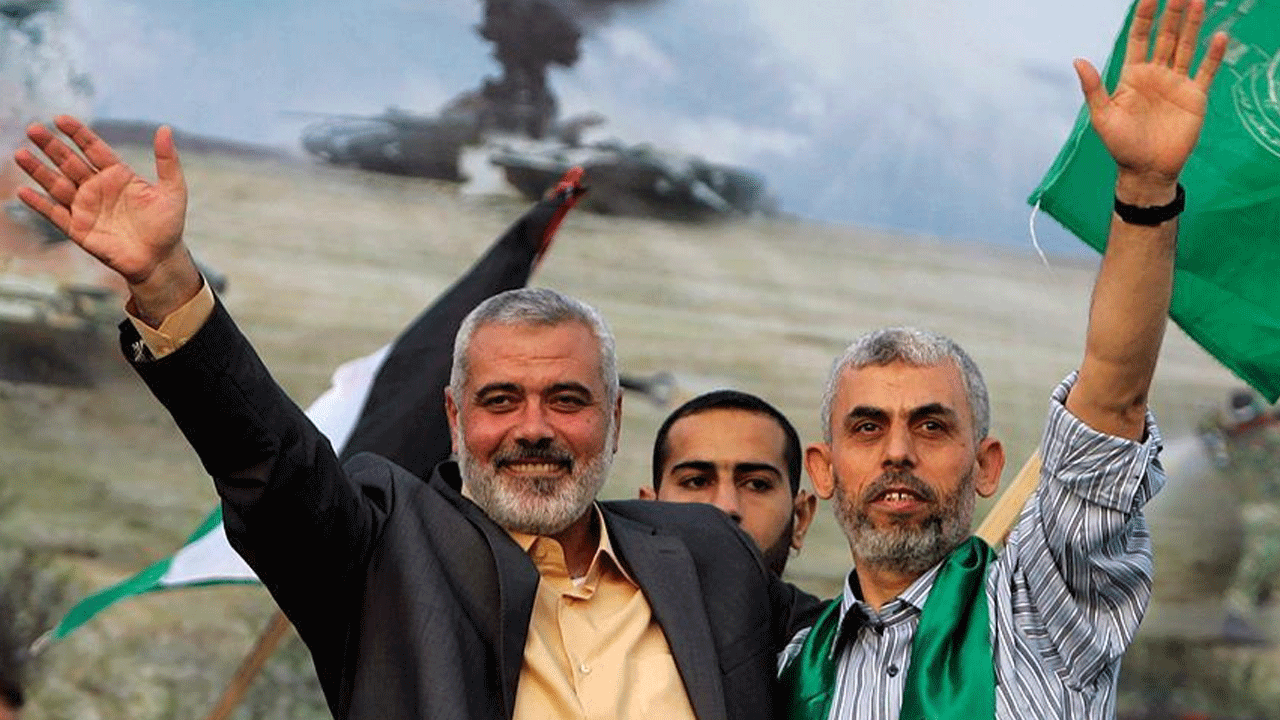
We can argue that three distinct periods have shaped the personality and perspective on resistance of Yahya Sinwar, also known as “Abu Ibrahim.” The first is when Sinwar was born and raised in a refugee camp. Fourteen years before he was born, his family was forcibly displaced by Israel during the Nakba from the area known today as Ashkelon, then called al-Majdal, to Gaza. Sinwar was born on October 29, 1962, in the Khan Younis refugee camp in southern Gaza.

Refugee camps are places where people, who were forced to leave their lands because of the looting activities of Zionist gangs starting in the 1920s and suffered the consequences of this displacement for generations, live. Issues like irregular/disorganized structuring, poverty, dependency on aid from UNRWA, and being subjected to the violence and harassment of occupying forces are daily realities for camp residents. The psychological state and consciousness that these conditions created led to an environment where the resistance was constantly alive. Many uprisings began in these camps, which gave rise to several leaders such as Sheikh Ahmed Yassin, Ismail Haniyeh, and Sinwar himself.

Yahya Sinwar’s autobiographical novel, The Thorn and the Carnation, written while he was imprisoned by Israel and published in 2004, provides a detailed account of the camp environment in which he grew up and the events that shaped the worldview of Palestinians. The book opens with the disappointment following the defeat in the Six-Day War of 1967 and highlights how the expansion of Israeli occupation caused enduring divisions in both Sinwar’s family and Palestinian society. Tensions in Lebanon, the West Bank or other regions where Palestinians lived directly affected the camp residents, and they struggled to get news from their relatives and families. Throughout the book, Sinwar describes arrests, torture, hunger strikes, “martyrdom operations” that target occupation forces, mass executions, clashes, sieges, and debates between factions within the Palestine Liberation Organization and Islamist groups. The author’s sensitivity toward spies collaborating with Israeli forces is especially noteworthy, as he views them as corrupt elements that undermine society in every sense and against whom Sinwar would dedicate his life to fighting.

Sinwar, who did not want to stay away from his birthplace for long, completed his education in schools at the refugee camps and later graduated from the Department of Arabic Language at the Islamic University of Gaza. During his university years, he actively participated in the Muslim Brotherhood’s activities alongside Sheikh Ahmed Yassin. Due to these activities, he was first arrested in 1982 at the age of 20 and released four months later. He was arrested several more times until 1988. During this period, he established a unit called “al-Majd” and carried out intelligence activities such as tracking and interrogating spies. Following the First Intifada, Sinwar was arrested in 1988 and sentenced to four life sentences for the murder of 12 Palestinians who had collaborated with Israel.

From Prison to Hamas Leadership (1988-2011)

Yahya Sinwar viewed prison as a school. Despite being sentenced to 426 years in prison, he dedicated his time to learning languages, writing books, translating, and educating other inmates. During his 23 years in prison, he became proficient in Hebrew and closely followed the Israeli press, newspapers, and radio channels in Hebrew. He also read books by Israeli leaders and biographies written about them from primary sources. Sinwar himself composed several works and translated Hebrew books into Arabic. Furthermore, he pursued higher education through distance learning with other inmates, paying significant fees in the process. He taught Hebrew, Arabic, and the Quran and organized security-related education programs for his inmates, providing them with educational opportunities.

While imprisoned, Sinwar became one of the leaders of Hamas members in prison. He organized strikes to improve the conditions of the inmates. He also built relationships with leaders of different factions. In 2017, the Yedioth Ahronoth newspaper published a prison photograph showing Sinwar alongside Marwan Barghouti, a prominent leader of the Fatah movement, and Abbas al-Sayed, a commander of the al-Qassam Brigades in the West Bank. 

During his time in prison, Yahya Sinwar had a serious health issue in 2004 and underwent brain surgery. It is believed that Israel allowed the operation out of concern that the death of a prisoner, who was already expected to spend all his life behind bars, due to medical neglect, could cause unrest. After the surgery, Sinwar gave an interview to Israeli journalist Yoram Binur, where he spoke fluent Hebrew and adopted a moderate tone. He acknowledged Israel’s military strength and suggested the possibility of a long-term ceasefire. The profile Sinwar presented in this interview gave the impression that his release might not pose a significant problem for Israel. Following the capture of Israeli soldier Gilad Shalit by Hamas in 2006, Sinwar became one of the negotiators representing Hamas. After 23 years in prison, he was released in 2011 as part of a prisoner exchange that freed 1027 Palestinian prisoners and returned to Gaza.
Rebirth: Release from Prison and a New Era for Hamas (Post-2011)

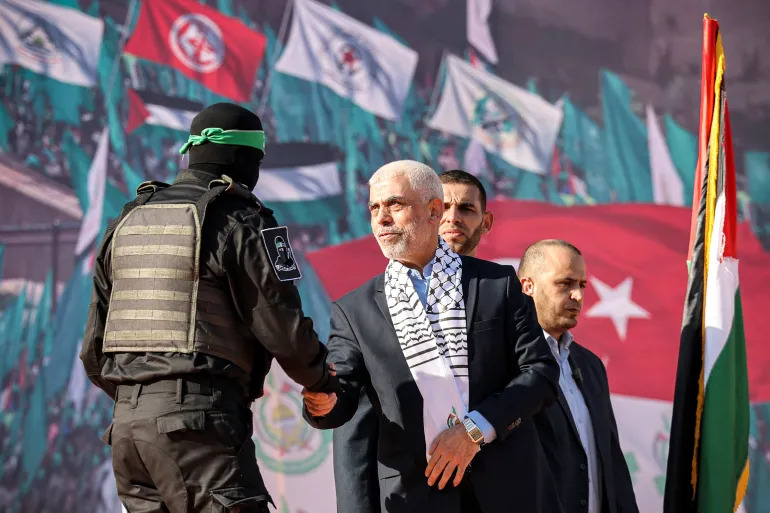
Gaining a deep understanding of Israeli politics and society, Sinwar was given significant roles within Hamas. In 2012, he was elected to the Hamas Political Bureau, and from then on, he served as a bridge between the political bureau and its military wing, Izz ad-Din al-Qassam Brigades. In 2015, he was tasked with handling Israeli hostages and led negotiations. The same year, the United States added him to the Specially Designated Global Terrorists (SDGTs) list. Sinwar became one of Israel’s most wanted men, along with Mohammed Deif. In 2017, Sinwar succeeded Ismail Haniyeh as head of the political bureau in Gaza. Finally, on August 6th, the Shura Council of Hamas unanimously elected him as the leader of the Hamas Political Bureau, replacing Haniyeh.

After taking office in 2017, Sinwar had meetings with different Palestinian factions to find ways to cooperate, yet these attempts were ultimately unsuccessful. Furthermore, he played a central role in negotiations with Israel. Until 2021, Hamas supported peaceful protests and pursued a more moderate policy, but Israel consistently responded with increasing violence. The assassination of Ismail Haniyeh, who had been leading negotiations on behalf of Hamas, made Israel’s approach very clear. Currently, the breakdown in ceasefire talks between Israel and Hamas is not because of Sinwar’s firm stance but is a result of Netanyahu’s desire to expand the conflict across the region. As long as Israel’s attacks on civilians continue, positive outcomes from negotiations remain unlikely. Although Hamas has prioritized diplomatic solutions, it is well known that Sinwar is not hesitant to respond with force when necessary.

It’s also worth noting that Sinwar has a pragmatic political stance. That is, he maintains relationships with other countries while focusing on Palestine and the resistance against the occupation forces, and keeps communication channels open. His close relationship with Iran can be viewed in this context. The fact that Hamas cannot get the support it needs from historically allied countries such as Saudi Arabia and Egypt and Iran’s political agenda in the region intersects with Hamas’ goals has facilitated the strengthening of ties between Hamas and Iran.

In conclusion, like millions of other Palestinians, Yahya Sinwar was born in a refugee camp, where the harsh living conditions, political debates, and constant threats from occupying forces shaped his early years. His awareness of the Palestinian cause developed in this environment, and he sought ways to fight the occupation under the guidance of Sheikh Ahmed Yassin. He followed Israel very closely for 23 years and had the opportunity to understand the structure of the society in the Israeli prisons he entered in 1988. He turned his imprisonment into an opportunity for both himself and other inmates. By the time of his release in 2011, Sinwar had become familiar with both his own society and Israel and took over significant responsibilities within Hamas. Therefore, he effectively carried out the operation on October 7, catching Israel off guard. Throughout his career, Sinwar has shown a willingness to negotiate, but he has also demonstrated his readiness to respond to Israeli aggression. Given his influence on Palestinian society, it is likely that he will continue to play a significant role in the future of the region. However, as Israel’s primary target in Gaza, Sinwar is expected to continue leading Hamas from behind the scenes for some time.

References

Al-Dwairi, I. (August, 2024). “خاوة” العالم كما يراه يحيى السنوار, Al Jazeera. https://www.aljazeera.net/politics/longform/2024/5/6 

Remnick, D. (August, 2024). Notes from Underground, The New Yorker. Retrieved from https://www.newyorker.com/magazine/2024/08/12/yahya-sinwar-profile-hamas-gaza-war-israel 

Sinvar, Y. (2024). Diken ve karanfil: filistin’in bilinmeyen hikayesi [The thorn and the carnation]. Istanbul: Ekin Publications.


Tags: GazaGaza StripIsraeli PrisonsRefugee CampsYahya Sİnwar
Previous Post

Müslüman Ülkeler Yeşilin Hangi Tonu?

Next Post

İstanbul ve Türkiye: Uluslararası STK’lar ve Sivil İnisiyatifler İçin Bir Merkez

Next Post
İstanbul ve Türkiye: Uluslararası STK’lar ve Sivil İnisiyatifler İçin Bir Merkez

İstanbul ve Türkiye: Uluslararası STK’lar ve Sivil İnisiyatifler İçin Bir Merkez

Bir yanıt yazın Yanıtı iptal et

E-posta adresiniz yayınlanmayacak. Gerekli alanlar * ile işaretlenmişlerdir

  • A Possible New Breath in Regional Balances: The Alliance of Türkiye, Pakistan, Egypt, and Saudi Arabia

    Bölgesel Dengelerde Olası Yeni Bir Soluk: Türkiye, Pakistan, Mısır ve Suudi Arabistan İttifakı

    0 shares
    Share 0 Tweet 0
  • Bilime Yön Verenler: Nobel Ödüllü Müslüman Bilim İnsanları

    0 shares
    Share 0 Tweet 0
  • Nakşibendi-Hakkani Tarikatı

    0 shares
    Share 0 Tweet 0
  • Fuad Sezgin

    0 shares
    Share 0 Tweet 0
  • Sosyal Medyada İslamcı-Muhafazakâr Kamusallığın Dönüşümü Üzerine

    0 shares
    Share 0 Tweet 0
  • The Gravity of What Took Place at Al-Aqsa Mosque During Ramadan 2026

    Ramazan 2026’da Mescid-i Aksa’da Yaşananların Ciddiyeti

    0 shares
    Share 0 Tweet 0
  • The Gravity of What Took Place at Al-Aqsa Mosque During Ramadan 2026

    0 shares
    Share 0 Tweet 0
  • FLA-JNIM Cooperation and Shifting Security Dynamics in Mali

    0 shares
    Share 0 Tweet 0
  • FLA-JNIM İş Birliği ve Mali’de Değişen Güvenlik Dinamikleri

    0 shares
    Share 0 Tweet 0
  • The Current State of Indonesia’s Luxury Industry and the Landscape of Independent Handcrafted Watchmaking

    0 shares
    Share 0 Tweet 0

Platform: Müslüman Dünyanın Gündemi, Müslüman toplumların fikrî, siyasi, sosyal, ekonomik ve kültürel gündemlerini takip ve tahlil edip Müslüman dünyaya dair güncel ve özgün perspektifler sunmayı amaçlayan bir yayın organı olarak İLKE İlim Kültür Eğitim Vakfı bünyesinde kurulmuştur.

  • SAYILAR
  • ANALİZLER
  • HABERLER
  • SÖYLEŞİLER
  • DÜNYADAN SESLER
  • platform@ilke.org.tr
  • (0216) 310 43 18
  • Aziz Mahmut Hüdayi Mah. Türbe Kapısı Sk. No: 13 Üsküdar, İstanbul

2025 @ PLATFORM bir İLKE Vakfı kuruluşudur. Tüm hakları saklıdır. 

No Result
View All Result
  • Home
  • Analizler
  • Haberler
  • Söyleşiler
  • Dünyadan Sesler