

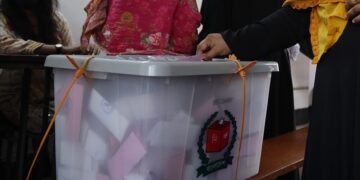



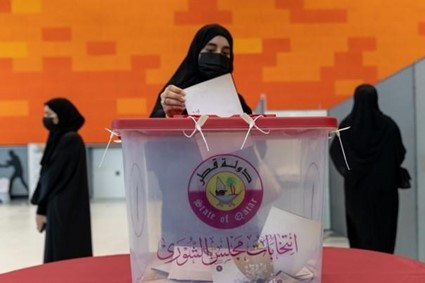
Political participation is divided into two types, conventional and alternative political participation. Voting in elections is called conventional. However, protests, boycotts, and political discussions on social media are called alternative political participation. Although political participation is often known as one with democracy, the behaviours of participation in political processes vary from society to society, especially as a result of the cultures of these societies. However, it would be more useful and beneficial to focus on “voting in the elections” and review it, since it is easily measurable. The region we refer to as the “Muslim World” in this analysis includes the countries where the Muslim population is concentrated, especially, the Middle East and North Africa, and South and Southeast Asian regions. The participation of women in political processes at different levels in the Muslim World and the important obstacles to this participation will be examined in this article. Although there has been a decline in political participation rates around the world, yet there has been progress in participation of women political processes. According to statistical data, women’s political participation in the Middle East and North Africa region has the lowest rate compared to other countries in the world. This is however higher in South and South-East Asian regions where some of political leaders are women.
Especially in the Middle East and North Africa region, with the exception of Tunisia, in non-democratic Muslim states, elections are seen as a factor that keeps authoritarianism alive and strengthens it. For this reason, there is an approach in these countries that reduces political participation, women’s political participation in a narrow sense, to a secondary position. However, in the light of the data presented by our Bulletin, we can see the occurance of various workshops, training programs and seminars that are organized in the said regions, and encourage women’s political participation. The text approves the conclusion that women’s political participation and their place in civil society has started to improve. Moreover, the purpose of the text is to analyse the status of women’s effectiveness in the political field, based on the data of V-Dem, The Economist, IPU Parline, and Women’s Power Index.
Political Participation of Women in the Middle East and North Africa Region
Political participation, defined as direct or indirect involvement in political processes and organs, has a wide meaning from voting in elections to protesting. If we look into the world’s trend of mainstream political participation, we see that participation in the elections was at its highest level after the Cold War. However, we observe that political participation, which is one of the bases of democracy, has gradually decreased from the 1990s to 2020 around the world, especially in the Western democracies (Solijonov, 2016, p. 23). When we analyse political participation by gender distribution, we see that men show much more active political participation than women, as a worldwide trend. Studies show that the gender gap in the field of political participation has narrowed in Western democracies.
Since 1990, the increase in the number of countries with elections and the world population, has resulted in an increase in political participation as well. The fact that all countries around the world, except Saudi Arabia, Brunei Darussalam, China, Eritrea and the Vatican, hold nation-wide elections, show the increasing trend of political participation. But the elections, which were regularly becoming more and more popular in the 1940s and 1980s, started to decline significantly since 1990 (Solijonov, 2016, p. 24). Despite this decrease, women’s political participation has increased worldwide. Looking at the world’s average data, we can see that there is equal participation of women and men in Argentina and Australia, while Pakistan has the lowest political participation of women. If we consider regionally, we see that the gender gap in political participation is high in the Middle East region (Solijonov, 2016, p. 31). Considering the representation of women in assemblies and senates, in Africa they have a 16.8% representation. This rate rises to 20.7% in Asia. In America, where there is highest women political participation, this rate is 33.9% (Global and regional averages of women in national parliaments, 2022).
According to Arab Barometer surveys, the opinion that women should have the same rights as men and that women should hold supported by 62% of the participants. The interest of women in politics is one of the key factors affecting political participation. At this point, it is observed that Palestinian women (37%) are the most interested ones in politics in the Middle East Region, followed by Tunisian women with 32% of the votes. The least political interest was observed in Algeria (17%) (Robbins and Thomas, 2018, p. 7). However, if we make a regional conclusion from the surveys, we come to the conclusion that more than half of the women in the region are not interested in politics. Since 2006, we see that women’s interest in political participation has decreased. However, this situation is due to the general political trend in the world rather than gender. The decline in participation in elections in the world, indirectly resulted in a decrease in the participation rate of women in the elections. In a survey on whether women can be president or prime minister in the Middle East and North Africa region, we see that the belief that women can be elected as presidents is highest (77%) in Lebanon, followed by Morocco. At this point, Tunisia remained at 63% and the lowest rate was in Algeria. When we look at the Arab Barometer data, we see that the participants who have a higher level of education follow a more egalitarian approach between men and women in almost all categories. At this point, we can state that the level of education has an impact on political participation, like many other areas as well (Robbins & Thomas, 2018, p. 15).
Although the representation of women as parliamentarians in elections is very low in Arab countries, there has been an increase in women’s participation in political positions as a result of the efforts of the states in this area (Sabbagh, 2007, p. 9). “State Feminism” studies suggest that state-appointed female politicians will undermine women’s movements. However, in the Middle East and North Africa region, this method is an important initiative that increases women’s political participation. The quota policy, which can be expressed as the number of seats reserved in the parliament for women only, was implemented in Jordan in 2003 and significantly increased the political participation of women. Bringing together 170 non-governmental organizations, the Lebanese Women’s Council is one of the most important institutions working to increase the role of women in civil society (Osseiran, 2007, p. 87). As the role of women in civil society rises, it is generally expected that their effectiveness in the political field will increase as well.
Political Participation of Women in South and Southeast Asia Region
South and Southeast Asia region is a geography where Muslim population is in dense majority and also has democratic countries such as Bangladesh, Pakistan, India, Malaysia, Indonesia. In this respect, it differs from the Middle East region. Although the opposite is possible, there is also the fact that political participation and democracy may closely be related. Considering this fact, we see that women’s political participation is higher in these regions. According to Inter-Parliamentary Union (IPU) data, we can see a 20.6% political participation of women in the Southeast Asian region. In South Asia, this rate is 17.8% (IPU Parline, 2022). All Muslim countries in the region have had a female president, prime minister or polit-ical party leader. At this point, the fact that women are directly involved in important political positions beyond voting in the elections, shows that the political participation of women in the region is considered important.
In the Southeast Asian region, we see that women mostly prefer voting among the political participation forms. Relatively high voting rates in the region are 82% in Malaysia and 71.9% in Indonesia. When we look at the positions of women in the cabinets in the Southeast Asian region, we see that the highest rate (22.22%) is in Timor Leste, while Indonesia has the second highest rate. Malaysia ranks 5th in this ranking with a rate of 12.5% (Welsh, 2020, p. 128). In the Southeast Asian region, we can say that the percentage of women taking part in parliaments (21.9%) is at a high level. Considering that the rate of participation is around 20% in the world, the region has a women’s political participation above the world’s average. The high political participation of women in countries such as Malaysia and Indonesia correlates with the regional trend. It is observed that the political participation of women in the region has increased between 2015 and 2020 (Welsh, 2020, p. 123). While statistical data show these, according to Asian Barometer survey results, the majority of citizens do not support women’s participation in political positions at the same rate as men (Welsh, 2020, p. 126). However, it is seen that most of the support for women comes from Malaysia.
Except for Nepal, Bhutan and Maldives, all other South Asian countries have had female prime ministers, presidents or political party leaders, similar to the Southeast Asian region. In the South Asian region, the proportion of women in national assemblies -except Pakistanis around 10%. In Bangladesh, Pakistan, Nepal and India, policy changes were made in the electoral system and more opportunities was opened for women’s political participation. Policies known as “quota policy” that increase women’s participation in local governments or “reserved seats” for women parliamentarians ultimately resulted in women having a better representation in the political arena. However, in discussions about the quota policy that is reducing the gender gap, one group sees the quota as a positive practice for increasing women’s political participation. However, the other group emphasizes the long-term negative impact of the quota, arguing that this positive discrimination essentially weakens competitive equality (Kumari, 2012, p. 87).
In the Asian region, the political participation rate and the role of women in politics are much higher. In Indonesia, which has the largest Muslim population in the world, the female leader Megawati Sukarnoputri rules the country. In 2018, Wan Azizah Wan Ismail became the Deputy Prime Minister of Malaysia. It is a remarkable fact that women occupy important political positions in political life in Indonesia and Malaysia. However, the factors behind this development are the participation of women in political life, which is expressed as the “women and daughters syndrome”, who replace their fathers or husbands in political life (Welsh, 2020, p. 121). At this point, since it is seen as a great possibility that women with strong political family ties will be elected, the activeness of women in political life is closely related to family ties. In the case of the South Asian region, we must remember that the caste system also has an impact on political participation. Kumari states that families with high caste levels have more limited political participation, while family members with low caste levels have more freedom of movement. Therefore, its political participation is higher (Kumari, 2012, p. 91).
In the Asian region, the women’s political participation rate and the role of women in politics are much higher. In Indonesia, which has the largest Muslim population in the world, the female leader Megawati Sukarnoputri ruled the country in the past. In 2018, Wan Azizah Wan Ismail became the Deputy Prime Minister of Malaysia. It is a fact worth mentioning that women hold important political positions in political life in Indonesia and Malaysia. However, the factor behind this development is the “women and girls syndrome”, which is expressed as the participation of women who replace their fathers or spouses more in political life (Welsh, 2020, p. 121). The election of women with strong political families is seen as a high probability. Therefore, the activeness of women in political life is closely related to family ties. In the case of the South Asian region, we must remember that the caste system also has an impact on political participation. Kumari states that families with high caste levels have more limited political participation, while surprisingly family members with low caste levels have more freedom of movement. Therefore, their political participation is higher (Kumari, 2012, p. 91).
Main Obstacles to Women’s Political Participation in the Muslim World
In countries with a large Muslim population, women’s political participation differs from regional to national levels. Studies are being carried out to increase the political participation of women in the Middle East and North Africa region. However, the problems of ethnic, political and military conflicts in the region are some of the important reasons that keep women away from the political arena. The patriarchal lifestyle prevailing in these societies is one of the main reasons for their low political participation. The fact that men have a say in outside-family topics and areas, including politics, is one of the reasons why women’s political participation is low. Another reason is that women have difficulty in seeking education compared to men, and as a result, women have lower literacy ratios. Although some policies try to improve the socioeconomic status of women, the literacy rate of women is clearly lower than that of men (Sabbagh, 2007, p. 13). Although this is how the current situation continues, socioeconomic developments in the Middle East and North Africa region women in political life is closely related to family ties. In the case of the South Asian region, we must remember that the caste system also has an impact on political participation. Kumari states that families with high caste levels have more limited political participation, while family members with low caste levels have more freedom of movement. Therefore, its political participation is higher (Kumari, 2012, p. 91).
In the Asian region, the women’s political participation rate and the role of women in politics are much higher. In Indonesia, which has the largest Muslim population in the world, the female leader Megawati Sukarnoputri ruled the country in the past. In 2018, Wan Azizah Wan Ismail became the Deputy Prime Minister of Malaysia. It is a fact worth mentioning that women hold important political positions in political life in Indonesia and Malaysia. However, the factor behind this development is the “women and girls syndrome”, which is expressed as the participation of women who replace their fathers or spouses more in political life (Welsh, 2020, p. 121). The election of women with strong political families is seen as a high probability. Therefore, the activeness of women in political life is closely related to family ties. In the case of the South Asian region, we must remember that the caste system also has an impact on political participation. Kumari states that families with high caste levels have more limited political participation, while surprisingly family members with low caste levels have more freedom of movement. Therefore, their political participation is higher (Kumari, 2012, p. 91).
References
هل تشكل املبادرة الخليجية الثانية مخرجاً من (2021). A. Aliba,
اليمن؟ يف الحرب مأزق https://acpss.ahram.org.eg/ News/17438.aspx#
Coffe, H., Dilli, S. (2015). The gender gap in political participation in Muslim-majority countries. International Political Science Review, 36(5), 526-544.
Global and regional averages of women in national parliaments. (2022, March 1). İPU Parline. https://data.ipu.org/women-averages
Kumari, R. (2012). Creating Political Space for Women in South Asia. In J. H. Bayes (Ed.), Gender and Politics: The State of the Discipline. Barbara Budrich.
Osseiran, L. (2007). The Political Participation of Women in Lebanon. In The Arab Quota Report: Selected Case Studies. International Institute for Democracy and Electoral Assistance.
Robbins, M., Thomas, K. (2018). Women in the Middle East and North Africa: A Divide between Rights and Roles (Arab Barometer – Wave IV). Arab Barometer.
Sabbagh, A. (2007). Overview of Women’s Political Representation in the Arab Region: Opportunities and Challenges. In The Arab Quota Report: Selected Case Studies. International Institute for Democracy and Electoral Assistance.
Solijonov, A. (2016). Voter Turnout Trends around the World. International Institute for Democracy and Electoral Assistance.
True, J., George, N., Niner, S., and Parashar, S. (2014). Women’s Political Participation in Asia and The Pacific (Vol. 3; Conflict Prevention And Peace Forum CPPF Working Papers on Women in Politics). Social Science Research Council.
Welsh, B. (2020). Worrying Flattening Curve: Women’s Political Participation in Southeast Asia. In C. Echle & M. Sarmah (Ed.), Women, Policy and Political Leadership Regional Perspectives (pp. 119-131). Konrad-Adenauer-Stiftung.