


















The 21st century has witnessed the rapid economic growth of the Global South and has brought with it the question of whether international politics has changed its axis. With its rapid economic development, the People’s Republic of China (PRC) stands out as an essential actor at the centre of this debate in context of global politics. The People’s Republic of China (WorldData.info, 2021), which is the second largest country in the world economy with a Gross Domestic Product (GDP) of 17,734 Billion Dollars, has sometimes maximized its economic and political power in the history while at several other times faced the risks of weakening and disappearing its power. The fact that the PRC, which has a deep-rooted imperial tradition, is an essential political power in East Asia is associated with its economic and military. In this context, the “existence” of the PRC at the regional and global level during the Imperial period was possibly shaped by the title of “son of the sky” and the meta-narratives that the Confucian tradition brought to the state (Ergenç, 2014). Positioning itself in the hierarchy, above any civilization in the world, China claimed to be the cultural centre of the world until it lost its self-image with its defeat in the Opium War and believed that it had the authority to dominate and assimilate the civilizations it accepted below in the hierarchy through this China-centred metanarrative. (Spencer, 2013). This “honourable” civilization, shaped by cyclical gains and significant historical breaks, Confucian narrative, and the Tributary System, was replaced by the period called “the century of humiliation” and identified with the feeling of “shame” in ontological security as a result of both the problematic relations with the colonial states and internal conflicts since the 19th century (Demirci, 2022).
This study deals with the economic policies implemented by the PRC, which has become a rapidly rising and elemental power in world politics today, within the framework of the Belt and Road Initiative, and the cultural diplomacy activities carried out through Confucius Institutes. In the study, the relevant policies are analysed against the concepts of “debt-trap diplomacy” and “cultural hegemony” in the literature. The implementation and returns of the said economic and cultural policies are discussed by limiting them to the Central Asian region.
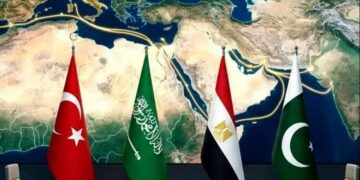
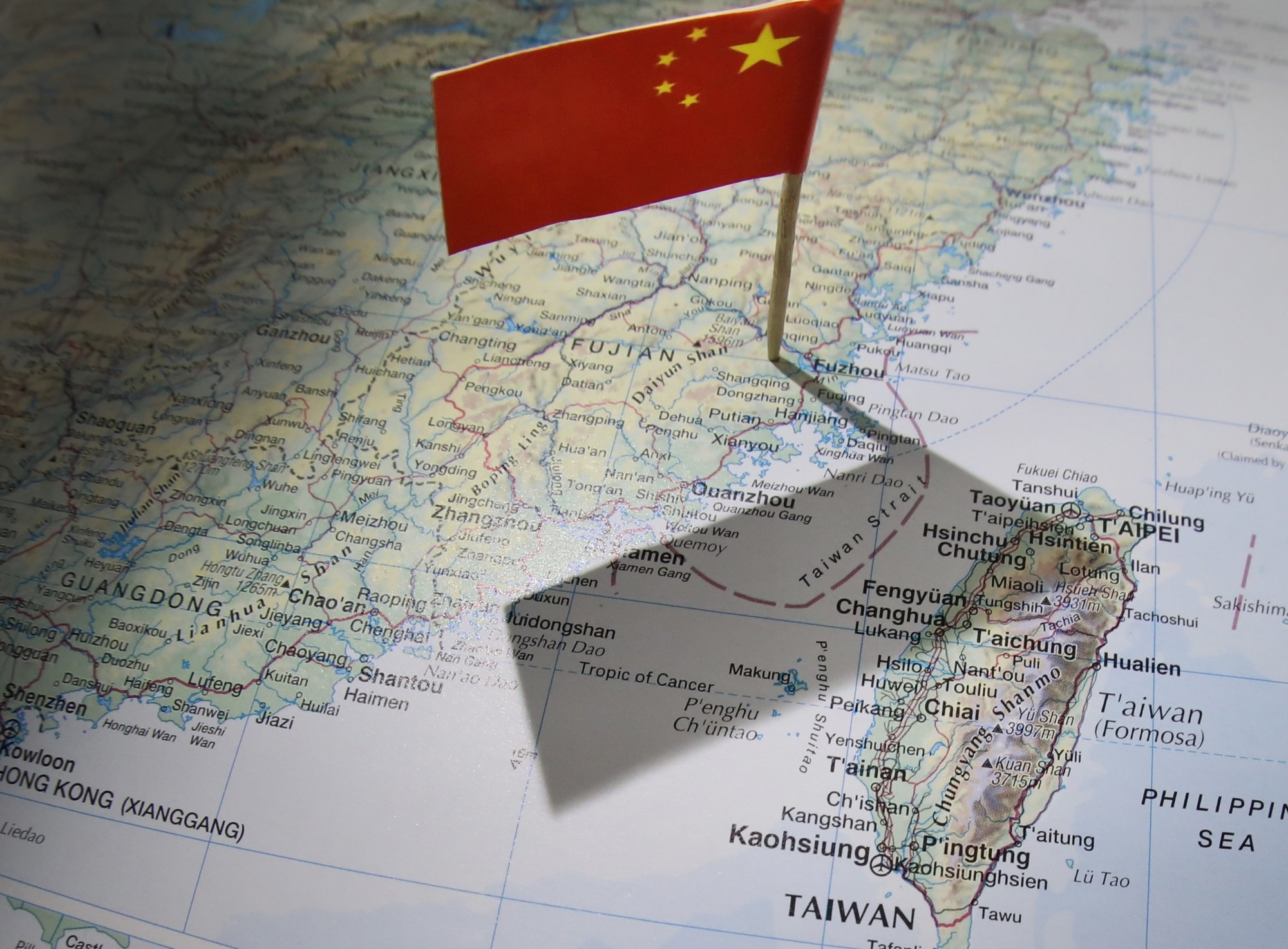
Photograph 1. Map of One Belt One Road Initiative
Background of Economic Aid: “Peaceful Rise” or “Debt Trap Diplomacy”
In the period known as the “century of humiliation” in the literature, the PRC continued its isolation policy for many years, taking a passive position in world politics until the death of its Chairman Mao Zedong in 1978. After Deng, Xiaoping came to power and accepted the free market economy as the country’s economic policy in the 1980s and the Chinese economy began to proliferate when the Cold War began to unravel. In a sense, the foundations of China’s current economic success were laid (Aydın & Vural, 2019). This is because, while China met a quarter of the world’s production in the 18th century (Deniz, 2014), the Chinese economy in the 21st century declined to a level that could meet only 13.2% of the world’s production (Maddison, 1988). The PRC, which has produced policies to realize its economic development as of the 2000s, has gained significant momentum in its development with the “Belt and Road Initiative” declared by President Xi Jinping in Kazakhstan in 2013. The initiative was announced to revive the historical Silk Road; China aimed to realize the “Silk Road Economic Belt” between China, Eurasia, and Europe through building infrastructure, finance, and trade links. In this context, China has two important connection points, namely the North and South routes. While the northern axis reaches Northern Europe via Kazakhstan and the Russian Federation; the southern axis reaches Southern Europe via Kyrgyzstan, Uzbekistan, Turkmenistan, Iran, and Turkey (Leverett, 2016). With six economic corridors built since 2013, along with various land and sea routes, China has established relations with 65 countries worldwide. Additionally, it has connected 4.4 billion people, more than 63% of the world’s population, and 30% of its GDP has been integrated into this economic network (Sarker, Yin, Sarkar, 2018).
The PRC realized its economic development to a great extent through the economic policies it implemented in the 2000s and started to compete with the United States of America (USA), the leading actor in the global system. Although the rapid rise of the PRC often took place in the state discourses in the first years of the 2000s as “peaceful rise”, this discourse began to evolve into expressions such as “Chinese century”, “Chinese dream”, “liberation from the century of humiliation” in the following years. Simultaneously, discussions have come to the fore in the literature within the framework of the problem of whether the US-China rivalry is a hegemonic rivalry beyond the economic dimension (Allison, 2015). One group of researchers discusses the rapid rise of the PRC with its economic dimension and questions the relationship between economic influence and “debt trap diplomacy” (Aydın & Vural, 2019). Another group examines the relationship between the initiative to introduce the Chinese language and culture to the world, especially with Confucius Institutes, and the “cultural hegemony” (Duran & Yılmaz, 2019).
Debt trap diplomacy means that if the instalment or interest on the debt becomes unpayable, the borrowing process is prolonged or not ended, and this situation is politically instrumentalized. Debt trap diplomacy has been defined as Chinese imperialism in the literature. It has been argued that China wants to establish influence on a regional and global scale, primarily through the infrastructure investments it provides to developing countries through the Belt and Road Initiative (Aydın & Vural, 2019). Central Asian countries are also crucial for China in terms of access to raw materials, natural resources needed for production, and geographical opportunities (Salman & Özbay, 2019). The economic relations developed by the Central Asian countries with China are as follows:
- China built a 1,800-kilometer natural gas pipeline with a loan of 8 billion dollars to Turkmenistan.
- The Chinese-origin CNPC state company carries out the oil and natural gas exploration work in Uzbekistan.
- Oil and natural gas are transported to China through pipelines built in Kazakhstan.
It becomes known that these states have received many infrastructure and superstructure development aids and loans, as well as their economic relations with China strengthened based on natural resource trade. This situation is a clear precedent in Kyrgyzstan and Tajikistan, which have weaker economies compared to other Central Asian countries. Although it is known that Tajikistan owes 1.5 billion dollars to China and 1.8 billion dollars to Kyrgyzstan, it is evident that these figures are increasing rapidly (Kerimoğlu, 2019).
The Importance of Confucius Institutes in Cultural Diplomacy
Considered an important soft power tool in the global hegemony race, non-state institutions fail to find the opportunity to operate under the state’s control due to China’s totalitarian political regime. In this context, Confucius Institutes operating in various parts of the world continue their activities under the umbrella and supervision of The Center for Language Education and Cooperation (CLEC), affiliated with the Ministry of Education (MOE) of China. The number of Confucius Institutes is more than one hundred and fifty around the world today. China uses these institutes as a cultural diplomacy tool to eliminate its negative image of Tibet, Taiwan, and other human rights violations (Önal, 2020). On the other hand, contemporary China is considered a continuation of its historical origins. It is assumed that Chinese teaching would be possible with the understanding of this historical heritage, and language learning is emphasized as very important for this transfer. In this context, the importance of Confucius Institutes has been accepted as essential for understanding the traditional Chinese narrative by introducing the Chinese language and culture to the world. As a matter of fact, the economic network created in the world with the Belt and Road Initiative has increased the interest in the Chinese language. Confucius Institutes try to respond to the need, and over thirty million people have learned Chinese in this way till date (Önal, 2020).
Although the cultural diplomacy activities of China in Central Asian countries, predominantly Muslim, Turkish, and Sunni, were first started with an institute established in Tashkent in 2004, it is obvious that they have increased, especially since the 2010s. Regarding the figures today, there are five institutes in Kazakhstan, four institutes in Kyrgyzstan, two institutes in Tajikistan, and two institutes in Uzbekistan (Dig Mandarin). As in many other parts of the world, the main motivation of Confucius Institutes in Central Asia is to teach the Chinese language through established institutes. On the other hand, there is a claim that the institutes established in this region are also involved in activities to accelerate language education in East Turkestan. China’s cultural diplomacy activities in Central Asia are not limited to Confucius Institutes. Various vocational schools, courses, and student exchange programs are also important tools in developing these activities. In this context, while approximately 3,000 Chinese students are studying in Central Asia, more than 30,000 students went to China from Central Asia to study. It is seen that students who study in China learn the Chinese language at a reasonable level and are generally engaged with Chinese companies or affiliated institutions after returning to their home countries (Kerimoğlu, 2019).
Conclusion
China, the rising actor in global power competition, uses various tools to increase its economic and cultural influence in the world. While these activities, which are discussed in the literature with all their positive and negative effects, sometimes offer the opportunity to reach financial resources to developing countries, sometimes they can have negative consequences for the relevant countries due to the continuity of debt and the tough stipulations in the agreements. It is visible that these activities, which are discussed in the literature as debt trap diplomacy, are pretty common in Central Asia as in many parts of the world. On the other hand, China’s relative dependence on the region in terms of natural resources limits China’s capacity to dominate the region.
Even though the global power competition is mainly handled in the context of economic and military capacity, the importance of cultural diplomacy and cultural hegemony in this competition is undeniable. However, it is explicit that civilizations with a deep-rooted historical heritage put the social memory into practice in their domestic and foreign policy routines. While past narratives and traumas are decisive in all these processes, in the 21st century, which is defined as the “Chinese century”, Confucius Institutes have been an important tool in realizing the desire of exporting the Chinese language and culture to various parts of the world through cultural diploma activities. In this context, it is observable that both economic and cultural activities have gained momentum in Central Asia, which has become a centre of attraction in terms of both its close geographical location and raw materials and natural resources.
References
About Us. Center for Language Education and Cooperation. Retrieved September 8, 2022, from http://www.chinese.cn/page/#/pcpage/publicinfodetail?id=164
Allison G. (2015). The Thucydides trap: Are the U.S. and China headed for ar? The Atlantic. Retrieved September 7, 2022, from https://www.hks.harvard.edu/publications/thucydides-trap-are-us-and-china-headed-war
Confucius Institutes Around the World (2021, 22 Şubat). Retrieved September 9, 2022, from https://www.digmandarin.com/confucius-institutes-around-the-world.html
Demirci H. (2022) Ontolojik güvenlik yaklaşımı kapsamında ABD dış politikasında Hint-Pasifik stratejisi.Master Thesis. National Defense University, Atatürk Institute of Strategic Studies.
Duran, H.& Yılmaz, K. K. (2020). Çin’in küresel hegemonya yarışında konfüçyüs enstitüsü ve küresel şirketlerin önemi. Strategic Public Management Journal. 6(11), 77-90.
Ergenç, C. (2014). Çin’in yükselişi.Ş. Kardaş & A. Balcı (Ed.) Uluslararası İlişkilere Giriş: Tarih, Teori, Kavram ve Konulariçinde (437-446. pp) İstanbul: Küre Publication.
Kerimoğlu Y. (2019). Çin’in Orta Asya politikaları. İNSAMER. Retrieved September 8, 2022, from https://insamer.com/tr/cinin-orta-asya-politikalari_1942.html
Leverett, F.& Bingbing, W. (2016). The new silk road and China’s evolving grand strategy. The China Journal. (77), 110-132.
Maddison, A. (1988). Chinese economic performance in the long run. Paris: Development Centre Studies.
Önal B. (2020) Çin’in kültürel diplomasisi: Konfüçyüs Enstitülerinin rolü ve eleştiriler. International Journal of Politics and Security (IJPS). 2(4), 217-245.
Sarker, M.N.I., Hossin, M.A., Yin, X.H. & Sarkar, M.K.(2018). One belt one road initiative of China: Implication for future of global development. Modern Economy. (9), 623-638.
Spencer, J. (2013). The search for modern China. New York: W.W. Norton&Company.
The World’s Largest Economies. WorldData info. Retrieved September 5, 2022, from https://bit.ly/3SfLnrn
Vural, C.& Aydın, H. (2019). Dolar diplomasisi ve borç tuzağı diplomasisi: ABD ve Çin örneklerinin karşılaştırılması. International Journel of Political Studies. 5(3), 175-194.