










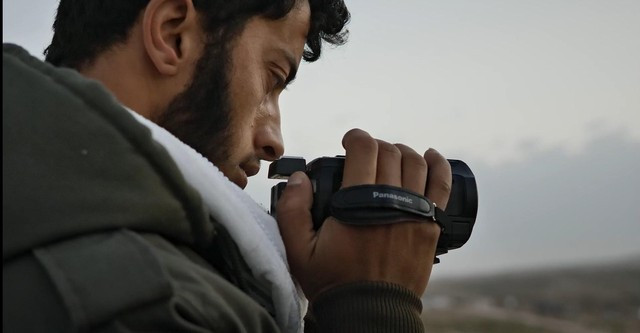
No Other Land is a 2024 documentary that follows the forced displacement of Palestinians in Masafer Yatta. While it doesn’t present anything new, what gives it significance, and perhaps made it worthy of an Oscar, is its collaboration between Palestinian and Israeli directors. However, this collaboration suggests that Palestinians need Israeli voices to be heard, ultimately reinforcing a narrative that upholds Zionist ideology rather than challenging it.
The 2024 Israeli-Palestinian documentary No Other Land records the ongoing events in Masafer Yatta, one of the twenty villages in the mountains of the occupied West Bank, through the eyes of one of its locals, Basel Adra. Born into a family of activists, Basel frames and narrates the documentary with archival footage of his earliest memories, having inherited the tradition of picking up a hand camera and documenting life in the village. Collaborating with Israeli journalist Yuval Abraham, together they seek to expose the ethnic cleansing taking place in the region and break the sound barrier, hoping to provoke international outrage over the forced displacement of Palestinians from their homes.
Filmed over five years, the documentary begins at the onset of the pandemic, following Israeli bulldozers as they demolish Palestinian homes by day while capturing the community rebuilding them at night. Violent clashes with the IDF and Hilltop Youth members (one of which leaves a local man, Harun Abu Aram, paralyzed, amongst countless other casualties) and the arrest of Basel’s father serve as evidence of the routine clampdown on the Indigenous Arab community. All of this unfolds under the pretext of expanding a military training zone, a measure aimed at curbing the Arab population’s growth. Those who stay face relentless harassment, attacks, and forced displacement. Nevertheless, for the locals, there is no question of leaving, for this is their land, and there is nowhere else to go.
Yuval arrives at the scene to document events from the other side of the wall, attempting to reason with Israeli soldiers to leave their homes alone. He debates conservative Zionists on Israeli television that what the government is doing is illegal under international law, writes articles about the forced displacement of Palestinian families, and follows Basel around as he guides him through the village. One local man teases Yuval: “You’ll go home today? Of course you’ll go,” as they sit amid the naked bricks of his new home, concrete drying on their bare hands.
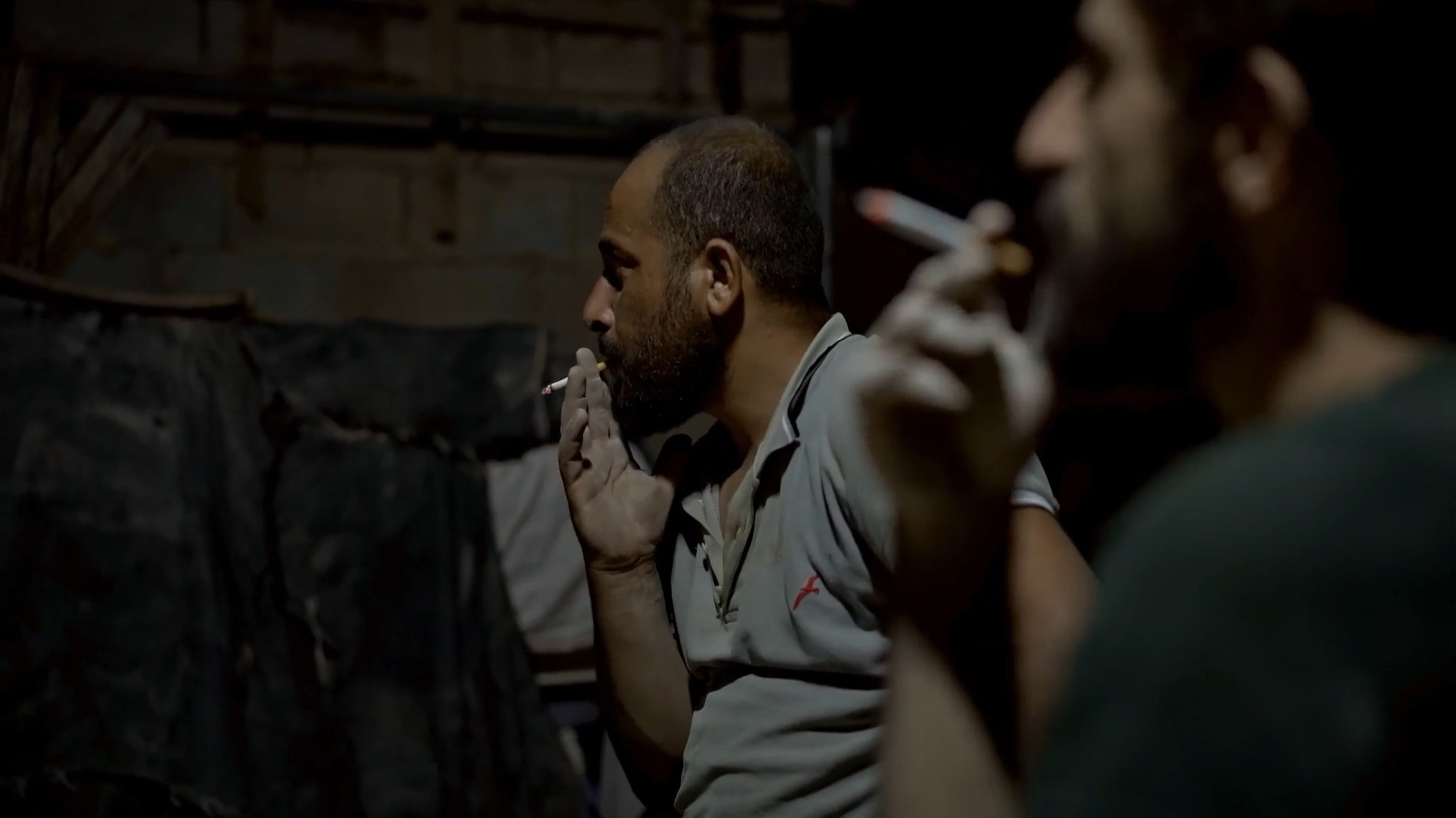
Yuval takes a rather idealistic approach to the situation, believing that the more articles he writes and the more views he gets, the greater the chance of securing Palestinians the equality they deserve in their own land.
“I feel like you’re a little enthusiastic,” Basel remarks. “You want everything to happen quickly as if you came to solve everything in 10 days and then go back home.” Taken aback, Yuval questions Basel about whether that is truly how he sees him. “It’s like the occupation can end in 10 days. When you say: ‘The article did not get enough views…’, you want it all fast.”
“So, what’s the problem?” asks Yuval.
“No problem, but you won’t succeed. It requires patience. Get used to failing, you’re a loser,” says Basel.
Basel begins the documentary at 22. Over time, he grows increasingly disconnected, numb, and burned out. Fearful of arrest and psychological torture, he expresses deep anxiety about building a career, starting a family, and, in his own words, becoming his father– afraid that he does not have the energy or the strength. These hopes and responsibilities overwhelm him, and when Yuval presses him with intrusive questions, Basel hesitates, responding only with uncertain “I don’t know”s. His silence reflects the profound instability Palestinians endure under ethnic cleansing, which is a constant state of limbo—suspended, stretched, and exhausted.
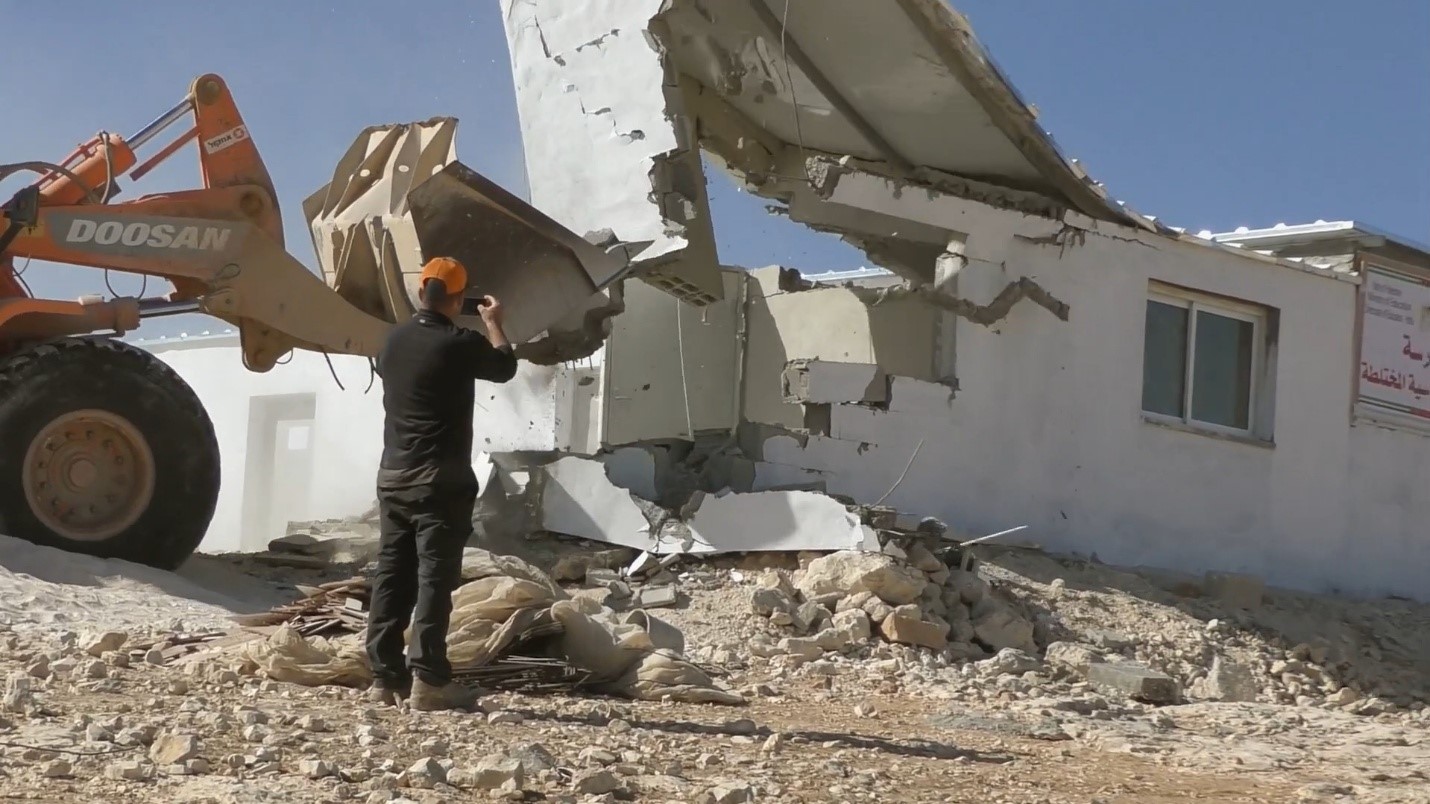
Families move into caves when their homes are demolished, rely on solar energy when their generators are confiscated and destroyed, and build new wells to access water when their pipes are burst and wells plugged with cement, often by Ilan, the official responsible for handing out eviction notices, who rolls up his car window when locals plead with him to listen. They rebuild their houses, playgrounds, and schools only at night while the tanks lie dormant and persist despite everything. Yet, alongside their resilience, the film also captures their hopelessness, frustration, and moments of existential and suicidal despair.
In reality, the documentary does not capture anything new. This documentary is not intended for those who already recognize the Palestinian struggle, but for those who refuse to.
In reality, the documentary does not capture anything new. These are scenes we have seen time and time again, whether through the eyes of Palestinians or those who visit Palestine to document the ongoing ethnic cleansing and genocide. Since October 7, the world has witnessed atrocities even more harrowing than the destruction caused by a bulldozer, events so devastating that they left us irreversibly changed. This documentary is not intended for those who already recognize the Palestinian struggle, but for those who refuse to. It is a plea to be acknowledged, to be seen. In her latest essay on the power of Palestinian narratives, Recognizing the Stranger, Isabella Hammad discusses how Israelis are conditioned not to see Palestinians as human beings, making it the sole responsibility of the Palestinians to portray themselves as such. She writes, “The pressure is again on Palestinians to tell the human story that will educate and enlighten others and so allow for the conversion of the repentant Westerner, who might then descend onto the stage if not as a hero then perhaps as some kind of deus ex machina.” (Hammad, 2024, p. 36).
Palestinians do not need Israeli validation or permission to narrate their own history. The film frames Yuval as a white savior, suggesting that only under his wing can evidence of segregation and oppression come to light. By collaborating with Israeli voices, the documentary implicitly accepts their laws and dominance, thereby legitimizing Israel as a state.
In the case of this documentary, Yuval is positioned in the role of “repentant Westerner”, in which he is an “awakened” Israeli placed on a pedestal, his voice seen as essential to uplifting and supporting Basel’s. Without him, the documentary likely would not have been possible. This dynamic casts the film in a different light, one that sparked significant criticism, particularly from Palestinians. It was even boycotted by the BDS movement for violating its anti-normalization guidelines, prompting a statement from the Palestinian Campaign for the Academic and Cultural Boycott of Israel (“PACBI’s Position”, 2025). The statement clarifies that the Israeli members of the No Other Land team failed to “acknowledge that Israel is perpetrating a genocide, or have even made extremely harmful, immoral statements drawing a false equivalence between the colonizer and the colonized that may be used to rationalize Israel’s genocide (“PACBI’s Position”, 2025). Moreover, the group stresses that Palestinians do not need Israeli validation or permission to narrate their own history. The film frames Yuval as a white savior, suggesting that only under his wing can evidence of segregation and oppression come to light. By collaborating with Israeli voices, the documentary implicitly accepts their laws and dominance, thereby legitimizing Israel as a state.
This criticism was exacerbated after the Oscars, when Yuval Abraham’s acceptance speech claimed that while Palestinians and Israelis were unequal as citizens, their suffering was two sides of the same coin. Acknowledging the propaganda spread after October 7th, he described Israeli hostages as having been “brutally taken” while simultaneously referring to the relentless shelling of Gaza happening just miles away. He asserted, “My people can be truly safe if Basel’s people are truly free and safe. There is no other way.” This sentiment reflects the same idealistic claims Yuval makes in the documentary: “If there’s stability and a democratic state, they’ll give you the permits you want. You will not need to ask for permits anymore,” to which Basel simply responds, “If.” Unfortunately, Yuval’s outlook remains disconnected from reality. It refuses to acknowledge the brutal truth: Israel does not operate as a legitimate state that abides by humane laws. His perspective, shaped by a Zionist upbringing that is deeply entrenched in both Israeli society and Western institutions, like Hollywood, ultimately prioritizes his own position within that system rather than challenging its foundational injustices that shun Palestinian voices, especially from the same industries he is very welcomed in.
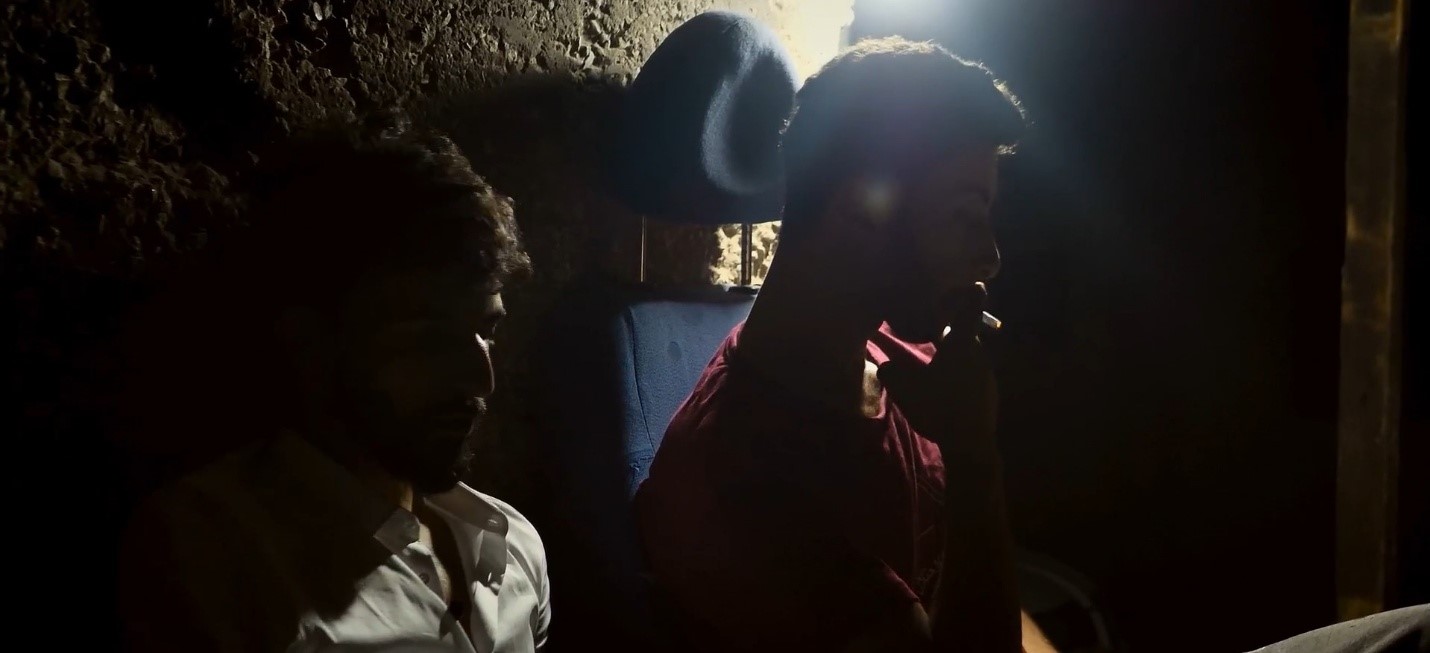
On the other hand, many progressive thinkers and peace activists claim this film is a win for the Palestinian struggle and the promotion of the two-state solution. Israeli Culture Minister, Miki Zohar, released a statement after the film won the Oscars, claiming the film slanders Israel’s image (Miki Zohar מיקי זוהר, 2025). Angering neo-Zionists and Israeli officials, the film nonetheless succeeded in breaking the sound barrier of Zionist propaganda, reaching an international audience and even earning an Oscar. Despite its Oscar win, No Other Land still lacks a U.S. distributor (Roxborough, 2025).
Mohammed el-Kurd, the Palestinian poet who documented the efforts to expel him and his family from Sheikh Jarrah in 2021, discusses Palestinian representation in his book Perfect Victims: And the Politics of Appeal. He critiques the way Palestinians are often stripped of their dignity and reduced to mere symbols of victimhood. He writes, “Some might argue that some proximity to the institution is better than none. There is truth in the claim that affiliations with respected publications or affluent organizations may afford us slightly more protection against persecution. But at what cost?” (2025, p. 174). This sentiment is echoed in the story of Harun Abu Aram, the man who became paralyzed because of an IDF bullet. As years passed, Harun had lost all hope to live, ultimately succumbing to his wounds by the documentary’s end. Despite visits from journalists and documentarians, including Israeli journalist Gideon Levy, no one could provide him with even a proper bed, leaving him to live out his days on a makeshift one in a cave.
In truth, what makes the documentary successful, and perhaps even Oscar-worthy, is not its devastating events, but rather the illusion of resolution it provides for viewers of an amicable collaboration between Israelis and Palestinians, or what el-Kurd describes as a “happy ending to an otherwise miserable story,” which gives us enough grounds to question the value of this Oscar. The reality of the matter is that this brand of liberal Zionism selectively whitewashes Israeli crimes.
El-Kurd critiques collaborations between Palestinian and Israeli filmmakers in the same book, stating, “What matters most is that the film was co-directed, a mode that satisfies a libidinal urge in the reviewers.” In truth, what makes the documentary successful, and perhaps even Oscar-worthy, is not its devastating events, but rather the illusion of resolution it provides for viewers of an amicable collaboration between Israelis and Palestinians, or what el-Kurd describes as a “happy ending to an otherwise miserable story,” (2025, p. 163) which gives us enough grounds to question the value of this Oscar. What did the recognition of the Academy Awards value— Palestinian perseverance, or Israeli progressiveness? The reality of the matter is that this brand of liberal Zionism selectively whitewashes Israeli crimes, consequently perpetuating a narrative that ultimately serves to reinforce Zionist ideology rather than challenge it.
It is undeniable that a Palestinian documentary winning an Oscar is cause for celebration. Perhaps it sets the scene for the day when Palestinians are no longer shunned from the industry but celebrated for their strength and resilience when they have the stage entirely to themselves. However, to reach that moment, should we normalize ties with progressive Israelis and allow their voices to advocate for the rights of Palestinians on the same stage?
As viewers, we have a responsibility to critically engage with narratives akin to this and ask: When will it no longer be the burden of Palestinians to constantly frame themselves in a familiar light just to be seen as human?
In the words of Dr. Sami Al-Arian, “By confronting Zionism everywhere we go, it means that everyone has a role to play to end injustice” (qtd. in Katie, 2024). As viewers, we have a responsibility to critically engage with narratives akin to this and ask: Who is it for? Is it meant to lull the compassionate yet powerless neighbors with a promise of peace that comes from within the occupied territories, or is it meant to provoke the indifferent strangers who are far from comprehending the Palestinian plight? When will it no longer be the burden of Palestinians to constantly frame themselves in a familiar light just to be seen as human? Suppose No Other Land had aimed to center on the Indigenous Arab community actively resisting or defending themselves against the systemic pillaging and violent settler gangs such as Hilltop Youth. What would happen when confrontation, rather than palatable grief, is at the forefront of the story? Would it have received the same accolades at the Academy Awards? Moreover, would Yuval Abraham use his voice to uplift a documentary of that kind?
References
El-Kurd, M. (2025). Perfect victims: And the politics of appeal. Haymarket Books.
Hammad, I. (2024). Recognizing the stranger: On Palestine and narrative. Vintage Publishing.
Katie, H. (2024, October 15). 6 pm EST Live Show! “Holy Redemption” Screening & Panel. YouTube. https://www.youtube.com/watch?v=N3QK0FTrJzA
Miki, Z. מיקי זוהר. (2025, March 3). X. https://x.com/zoharm7/status/1896456450932658584
PACBI’s Position on No Other Land. (2025, March 5). BDS Movement. https://bdsmovement.net/no-other-land
Roxborough, S. (2025, March 10). Palestinian Group Criticizes Oscar Best Doc “No Other Land” for “Normalization” of Israeli Occupation. The Hollywood Reporter. https://www.hollywoodreporter.com/movies/movie-news/palestinian-group-criticize-no-other-land-1236159238/