





















The development of artificial intelligence (AI) is increasingly recognized for its profound impact on humanity’s future. Public figures, business leaders, and scholars are deeply engaged in discussions about the potential consequences of AI, which is advancing at an unprecedented pace. ChatGPT, one of the most prominent AI tools, reached 200 million users despite being publicly launched only in 2022 (Reuters, 2024). Survey respondents reported using ChatGPT and other forms of AI because of the comfort, customization, and convenience they provide (Boston Consulting Group, 2023). While AI holds great potential for enhancing productivity, concerns about its impact persist, ranging from fears of students using ChatGPT to cheat on assignments to apocalyptic scenarios where AI surpasses human intelligence, threatening humanity’s future. Just two years after its launch, ChatGPT is assumed to have reached PhD-level intelligence in complex reasoning (OpenAI, 2024).
The general public also remains divided in its views on AI’s development. According to a 2023 survey by Boston Consulting Group (BCG), 40% of respondents express excitement about AI, 28% remain uncertain, and 29% are concerned (Boston Consulting Group, 2023). Anxieties surrounding AI development are often more pronounced among religious groups, particularly Muslims. As Wong-A-Foe, Barendregt, and Lamers (2023) argue, both AI and Islam operate on future-oriented codes that shape human behavior: the former through computational codes and the latter through social codes. However, Muslims are also deeply concerned with their “past-oriented codes,” striving to preserve and practice Islamic traditions. Many seek to implement the exact lifestyle of the Prophet Muhammad in contemporary times (Fealy & White, 2008; Sakai & Fauzia, 2014). As a result, technological advancements—often perceived as Western or non-Muslim products (Srinivasan, 2018)—are sometimes seen as misaligned with Islamic teachings. In some instances, they are viewed as disrupting traditional chains of religious authority, with algorithms playing an increasingly larger role in shaping religious authority and Muslims’ online engagement (Bunt, 2024). Consequently, Muslims often express ambivalence toward adopting and engaging with new technologies (Slama & Hoesterey, 2021).
Indonesia, the world’s second-largest Muslim-majority country, ranks sixth globally in ChatGPT usage and second in excitement over AI (Boston Consulting Group, 2024).
This ambivalence is particularly evident in Southeast Asia, a region with a large Muslim population eager to integrate the latest technologies into their daily lives, including religious affairs. Indonesia, the world’s second-largest Muslim-majority country, ranks sixth globally in ChatGPT usage and second in excitement over AI (Boston Consulting Group, 2024). Southeast Asian Muslims’ enthusiasm toward AI was reflected in the 48th Religious Council of Brunei Darussalam, Indonesia, Malaysia, and Singapore (MABIMS) Senior Officials’ Meeting in 2024, where the potential of AI to enhance religious services was discussed. Topics included improving zakat and waqaf systems and supporting religious education through AI. At the country level, the Department of Islamic Development Malaysia (JAKIM) is planning to use AI to streamline the halal certification process by analyzing hundreds of food menus and ingredients, a task that would be labor-intensive if done manually. In Singapore, the Mufti of the Islamic Religious Council of Singapore (MUIS) highlighted how AI could assist religious scholars, particularly in fatwa research and dissemination. In Indonesia, the Indonesian Ulama Council (MUI) is planning to employ AI to facilitate cross-border da’wa, overcome language barriers, and expand outreach. MUI has even created a Digital House (Rumah Digital) that produces AI-driven presenters with Islamic personas, named Fitria Aminah and Abdul Ghani, for their events. Nahdlatul Ulama (NU), one of Indonesia’s largest Muslim organizations, declared it a religious obligation (fardhu kifayah) for Muslims to learn AI. NU acknowledges the numerous benefits and conveniences that AI offers for da’wa, including the generation and dissemination of Islamic content on the Internet. Additionally, Muhammadiyah, another prominent Indonesian Muslim organization, emphasizes AI’s benefits in responding to community queries and analyzing data related to followers’ interests and needs. Therefore, preachers can tailor their da’wa content to the needs of the congregates.
Despite recognizing AI’s advantages, significant concerns exist about its impact on religious authority and authenticity. For instance, the Mufti of Wilayah Persekutuan in Malaysia addressed the issue of AI-generated images of deceased individuals, suggesting that such practices could be permissible for purposes like da’wa but forbidden without a clear and beneficial objective (Mufti WP, 2024). In Singapore, some religious scholars caution that while AI-generated outputs may serve as a starting point for religious analysis, they could also lead to misinformation and undermine traditional methods of knowledge verification (McGrail, 2024). Sheikh Fareez (2023) from MUIS draws from the concept of the ”death of the author,” highlighting how AI-generated content detaches religious knowledge from its original sources, complicating the verification of truth, which is a critical component of Islamic scholarship. In Indonesia, MUI expressed concerns over the accuracy of AI-generated religious information, with some religious leaders warning that AI could be misused for harmful purposes, such as spreading radicalization. Similarly, NU argues that AI tools like ChatGPT, which generate probabilistic and often unreliable responses, can create a false sense of knowledge among users, a phenomenon known as “AI hallucination.” Furthermore, NU asserts that AI is inherently biased, as it is developed by creators that potentially introduce foreign ideological influences that contradict Islamic teachings. While emphasizing the importance of personal interaction in da’wa, where Islamic messages are delivered with empathy and consideration of the followers’ context, Muhammadiyah preachers have also raised concerns that AI-generated content could misalign with Islamic principles, potentially leading to dehumanization in da’wa.
Malaysia’s Prime Minister, Anwar Ibrahim, emphasized that AI should be guided by turath Islam (Islamic heritage books) rather than being entirely based on the Western model.
In response to these challenges, Muslim leaders and organizations in Southeast Asia are taking proactive steps. Malaysia’s Prime Minister, Anwar Ibrahim, emphasized that AI should be guided by turath Islam (Islamic heritage books) rather than being entirely based on the Western model. In Singapore, MUIS created The Fatwa Lab to train large language models (LLMs) using Singapore’s fatwa methodologies to assist in their fatwa issuance. In Indonesia, Muhammadiyah developed ChatmuGPT, an AI designed to answer questions related to Islam and Muhammadiyah, based on 20 key Muhammadiyah books. For NU, there are plans to develop AI using content from authoritative religious figures, specifically adhering to the Ash’ariyah An-Nahdliyah school, to ensure the content remains free from external ideologies.
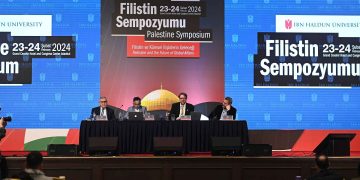
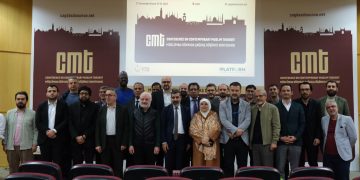
In conclusion, Muslim organizations have become increasingly aware of the challenges posed by AI development. According to the 2024 conference at Universitas Islam Internasional Indonesia (UIII) titled “The Future of Artificial Intelligence in/and of Islam: A View from Muslim Southeast Asia,” this awareness of not blindly accepting AI development is crucial to ensuring its ethical growth as the technology continues to advance (Anoraga, 2024). One way forward for these organizations is to collaborate with AI developers, as AI development is largely driven by business interests. With the growing competition between China and the US, both powers are eager to forge partnerships in Southeast Asia to secure their positions in the AI race (Zhang & Khanal, 2024). On one hand, this presents an opportunity for Muslim organizations and leaders in Southeast Asia to voice their concerns and influence AI development. On the other hand, the diversity within the Muslim community, coupled with differing priorities and digital illiteracy, may challenge efforts to unite and advocate for collective interests.
Nevertheless, the often-assumed existential threats posed by AI and its apocalyptic narratives might potentially unite religious communities and other frequently excluded groups—including women, disabled individuals, and indigenous communities (Mercer, Trothen & Cole-Turner, 2021; Strengers & Kennedy, 2020). AI’s apocalyptic narratives, which predict that AI will eventually surpass human intelligence (as seen in the development of ChatGPT) and dominate humanity, remain a central theme in discussions about AI (Anoraga, 2024). While it remains to be seen whether AI is truly headed in this dystopian direction, awareness of its potential drawbacks could serve as the impetus for a collective voice advocating for the ethical and inclusive development of AI, ensuring a just and sustainable future for humanity.
***
References
Anoraga, B. (2024). The future of Artificial Intelligence in/and of Islam: A view from Muslim Southeast Asia. Journal of Islamic and Muslim Studies, 9(1), 115–123.
Boston Consulting Group (BCG). (2024). Consumers know more about AI than businesses think. Boston Consulting Group. Retrieved from https://www.bcg.com/publications/2024/consumers-know-more-about-ai-than-businesses-think
Bunt, G. R. (2024). Islamic algorithms: Online influence in the Muslim metaverse. Bloomsbury Publishing.
Fareez, U. S. M. F. A. (2023, April). Chat-GPT, Muslim cyberspace and the construction of a critical Islamic epistemology (Part 1). Islamic Religious Council of Singapore (MUIS). Retrieved from https://www.muis.gov.sg/-/media/Files/OOM/RPCS/Insights-and-Perspectives/MUIS-RPCS-Insight-and-Perspective–Part-1-ChatGPT-Muslim-Cyberspace-and-the-Construction-of-a-Critic.ashx
Fealy, G., & White, S. (Eds.). (2008). Expressing Islam: Religious life and politics in Indonesia. Institute of Southeast Asian Studies.
McGrail, J. (2024). AI, authority, and intention in religious decision-making. Islamic Religious Council of Singapore (MUIS). Retrieved from https://www.muis.gov.sg/-/media/Files/OOM/RPCS/Insights-and-Perspectives/MUIS-RPCS-Insight-and-Perspective–AI-Authority-and-Intention-in-Religious-Decision-Making-James-McG.ashx
Mercer, C., Trothen, T. J., & Cole-Turner, R. (2021). Religion and the technological future. Springer International Publishing.
Mufti WP. (2024, December 10). Irsyad Fatwa Siri Ke-861: Hukum Menghasilkan Imej Orang yang Telah Meninggal Dunia dengan AI. Mufti WP. Retrieved from https://muftiwp.gov.my/en/artikel/irsyad-fatwa/irsyad-fatwa-umum-cat/5971-irsyad-hukum-siri-ke-861-hukum-menghasilkan-imej-orang-yang-telah-meninggal-dunia-dengan-ai
OpenAI. (2024). Learning to reason with LLMs. OpenAI. Retrieved from https://openai.com/index/learning-to-reason-with-llms/
Reuters. (2024, August 29). OpenAI says ChatGPT’s weekly users have grown to 200 million. Reuters. Retrieved from https://www.reuters.com/technology/artificial-intelligence/openai-says-chatgpts-weekly-users-have-grown-200-million-2024-08-29/
Sakai, M., & Fauzia, A. (2014). Islamic orientations in contemporary Indonesia: Islamism on the rise? Asian Ethnicity, 15(1), 41–61. https://doi.org/10.1080/14631369.2013.801325
Slama, M., & Hoesterey, J. B. (2021). Ambivalence, discontent, and divides in Southeast Asia’s Islamic digital realms: An introduction. CyberOrient, 15(1), 5–32. https://doi.org/10.3386/joit.15.1.5
Srinivasan, R. (2018). Whose global village?: Rethinking how technology shapes our world. NYU Press.
Strengers, Y., & Kennedy, J. (2020). The smart wife: Why Siri, Alexa, and other smart home devices need a feminist reboot. MIT Press.
Wong-A-Foe, D., Barendregt, B. A., & Lamers, M. H. (2023). Exploring AI and Islam in Indonesian education: An anthropological inquiry. 2023 International Conference on Electrical Engineering and Informatics, 1–5. https://doi.org/10.1109/ICEEI59426.2023.10346759
Zhang, H., & Khanal, S. (2024). To win the great AI race, China turns to Southeast Asia. Asia Policy, 19(1), 21–34.