















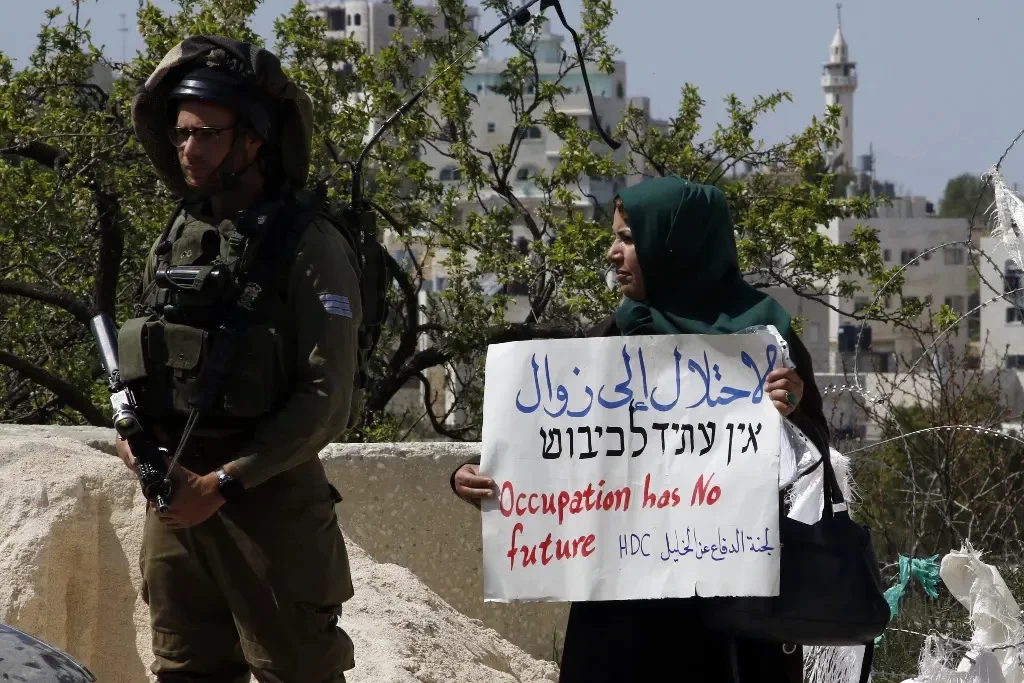
I know it is difficult, emotionally and mentally, to reflect when the voice of guns is louder than the voice of reason. I am a Palestinian who grew up in a refugee camp, and I live with the transgenerational trauma of Israeli atrocities committed against the Palestinian people. How can we elevate ourselves today to our moral and social responsibility to consider the current war? Some use the history of Israeli violence in the region to exonerate Hamas, others think asking the Palestinians today a balance of “morality” while their humanness or “human animal-ness” (as Israel’s defense minister called them) is at stake and unjust, and this balance is in a trial. I think that the reluctance among some of us to pass moral judgments on Hamas’ actions, even though they may ostensibly appear to be wrong or politically disastrous from some sort of detached observer position, is because we cannot know how we would act and react if we lived in an open-air prison and their same awful reality. For me, to reflect on the Palestinian-Israeli war, one should use the same yardstick to condemn any attack which does not discriminate between civilians and combatants, no matter what the context is.
However, I refused to reflect on this war, which started on October 7. This war can be read as a commemoration of the October 6 war in 1973 when Arab armies surprised Israel, but, for me, rather it comes 30 years exactly after the signing of the Oslo Peace Accords in 1993 between the Palestinian Liberation Organization (PLO) and Israel. I will reflect on these accords and their enduring legacy, which could explain at least partially how Israel has intensified its oppression, cruelly escalated by successive governments to complete the work of settler colonialism, Palestinian erasure, and stabilizing the apartheid regime.
The peace deal led to the creation of the Palestinian National Authority (PNA) in the Occupied Palestinian Territories (OPT), intended to provide interim self-government for just five years while negotiations solved outstanding core issues in the conflict. Today, three decades later, the PNA remains in place but is losing its legitimacy, with 60% of the West Bank under Israeli control and the siege of Gaza. These were 30 years of everyday violation of international laws by Israeli military forces and their armed settlers.
While I have been advocating for one (secular and democratic) state solution for a long time, I am not against a peace process per se, and I cannot say that, in principle, only a war can restore Palestinian just rights. Against the national sport of cursing the Oslo peace process considered as born dead, I have witnessed at a certain point the potentiality of creating a conducive dynamic for reaching painful compromises from both sides, at least for sharing territories. However, these accords were so bad in certain aspects that they created the worst imagined dynamics.
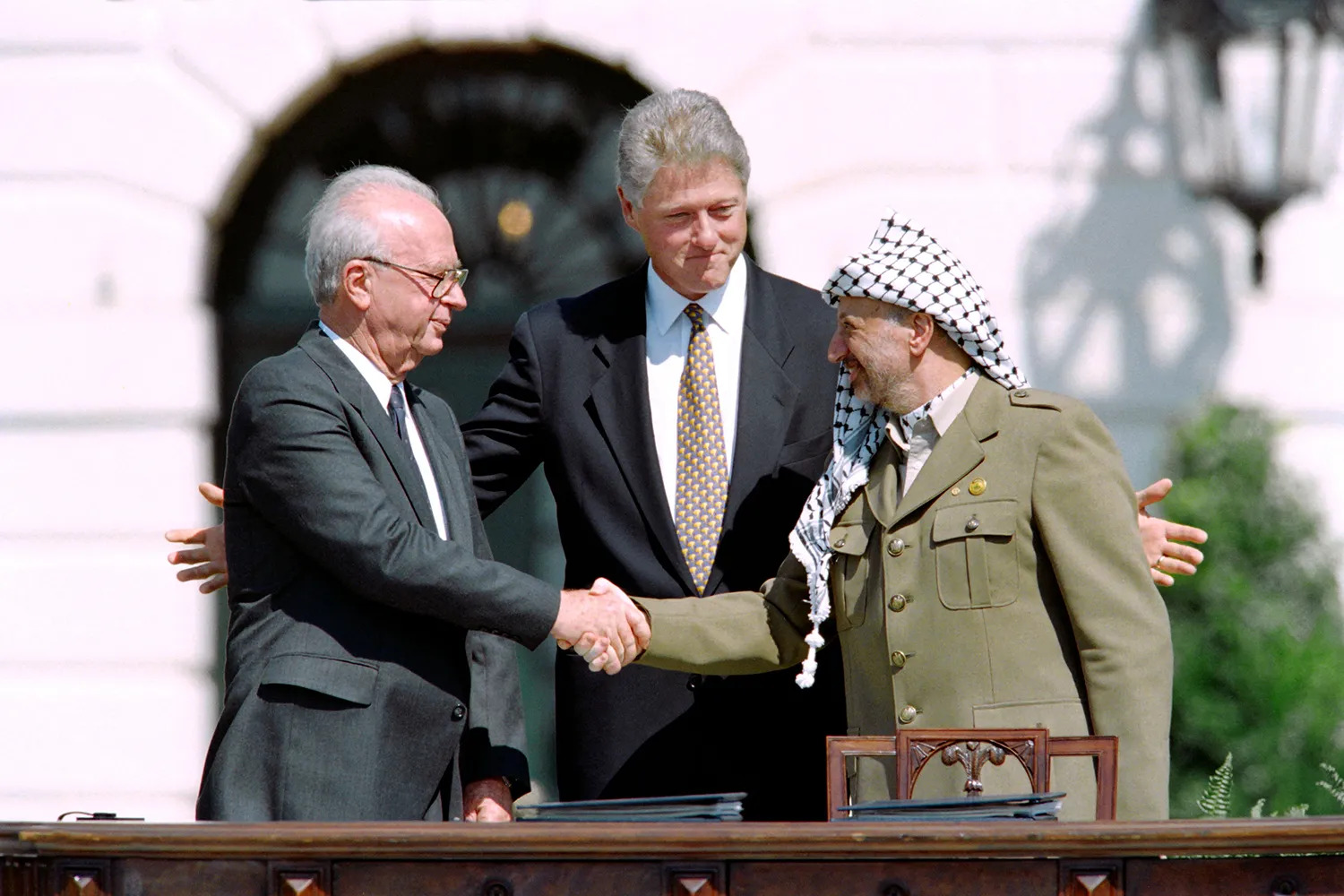
U.S. President Bill Clinton stands between Israeli Prime Minister Yitzhak Rabin (left) and Palestine Liberation Organization leader Yasser Arafat (right) after signing the Oslo Accords at the White House on September 13, 1993.
Source: J. David Ake, AFP
In 1998, when I lived in Ramallah, I had a long discussion about the absence of an item in the Oslo Accords to stop the Israeli settlements in the OPT with my dear late friend Ilan Halevi, an advisor by then of the Palestinian Foreign Minister, Nabil Shaath. He asked me to join him in a dinner with Shaath the following week. I went there very prepared with my criticism, particularly about the Israeli settlements in OPT. Shaath admits that this issue was THE major stumbling block in the negotiations and because of the power structure, there was no way that Israelis accepted to stop constructing the settlements, but he considered it a “big mistake” and that the agreed item in Oslo Accord “that no one can change the geography without the consent of the other party” was so broad that could be interpreted in all directions. In fact, the poor Palestinian negotiators have relied on trust in the international community to force Israel to stop constructing its illegal settlements. UN Statistics show that the number of settlements tripled in 2000 (from 110,000 to 450,000), i.e., after seven years. Now, we estimate them to be 700,000. In addition, Israel routinely siphons off water from Palestinian underground aquifers for the use of the settlers while depriving Palestinians of access to their own water.
From Spacio-cide to Geno-cide
Between 1999 and 2004, I lived in the occupied Palestinian territories at the heart of the Second Intifada. At that time, I was very interested in the question of Palestinian refugees, but also in the political sociology of this conflict, and that’s when I forged the concept of spacio-cide. For me, the Israeli settler colonial project is “spacio-cidal” (as opposed to genocidal) in that it targets land for the purpose of rendering the inevitable “voluntary” transfer of the Palestinian population primarily by targeting the space upon which the Palestinian people live. The spacio-cide is a deliberate ideology with a unified rational, albeit dynamic process because it is in constant interaction with the emerging context and the actions of the Palestinian resistance. By describing and questioning different aspects of the military-judicial-civil apparatuses, it was clear that the realization of the spacio-cidal project becomes possible through a regime that deploys three principles, namely: the principle of colonization, the principle of separation, and the state of exception that mediates between these two seemingly contradictory principles.
Israeli settler colonial project is “spacio-cidal” (as opposed to genocidal) in that it targets land for the purpose of rendering the inevitable “voluntary” transfer of the Palestinian population primarily by targeting the space upon which the Palestinian people live.
But since 2005, the Israeli violence become so cruelly challenging for all international, humanitarian and human rights laws. Pace Giorgio Agamben, the thick description of the occupation regime shows that the suspension of law and the forsaking of life do not completely overlap. The denial of Palestinian citizenship and the replacement of the rule of law by a tapestry of regulations, procedures, and decrees characterized the occupation regime from its inception and set the stage for its more active and violent abandonment of Palestinian life in recent years (Ophir, Givoni, and Hanafi 2009). Just to give an example of this Israeli brutality, according to UN statistics, from 2008 till the end of August 2023, 6407 were killed by the Israeli military machine and the settlers, against 308 Israelis (ratio 21 to 1), the same ratio for injured one (152,560 Palestinians against 7307 Israelis). So far, from January till September 2023 alone, over 223 Palestinians and nearly 30 Israelis have been killed with no serious coverage from Western media. Since 7 October, there have been 1400 Israelis (of which 22 children) killed against more than 11,000 Palestinians (of which 4670 children) from Gaza. Israel used to set the exchange rate between an Israeli human as much as 21 times more worth than a Palestinian “animal.” Even today, some Israeli ministries recommend expelling all Palestinians from Gaza (Abraham, 2023).
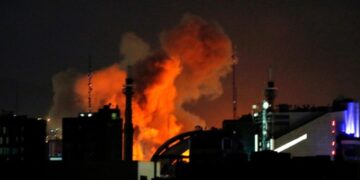
Hopelessness breeds nihilism: let us remember the maxim “Beware the man with nothing to lose.” They will resist while Israel is waging its second genocidal nakba against civilians in Gaza. All these casualties cannot be read as collateral damage, as the Israeli Army often declared. It is indeed legally a genocide as it is under international law defined by “the intent to destroy, in whole or in part, a national, ethnical, racial or religious group, as such.” This is the definition given by the December 1948 UN Convention on the Prevention and Punishment of the Crime of Genocide. Israeli Minister of Defense Yoav Gallant made this genocidal intent perfectly clear on October 9 when he declared: “We are imposing a complete siege on Gaza. No electricity, no food, no water, no fuel. Everything is closed. We are fighting human animals, and we will act accordingly.”[1] This ghetto has been under Israeli siege (with the complicity of Egypt) since 2007. There is no sanctuary with a tiny landmass, 40 kilometers long and only about 8 kilometers wide. Currently, Israel has cut off food, fuel, water, and electricity, provoking an appalling humanitarian crisis.
October 7: Was It a Strategic Blunder?
We see Israeli occupation has been so ugly in the West Bank as well as in Gazan open-air prison, so, sociologically, why does one expect resistance to be pretty? Historically, we have similar examples. Norman Finkelstein reminds us how ugly the slave revolts in the US are and how the Black American sociologist W.E.B. Du Bois and American social reformer and abolitionist Frederick Douglass have not even criticized their ugliness. David Rovics also resembles what happened on 7 October to the Warsaw Ghetto Uprising in the spring of 1943, when the Jewish Fighting Organization forced the German army to take troops away from the front line in the war with the USSR that they were losing, in order to deal with this group of half-starved civilians and their homemade weapons, where nobody expected a handful of Jews to defeat the German army. Thus, Palestinians who paid the heavy price have made it clear today that they would die quickly rather than slowly and rather fight on their feet for justice and freedom than die on their knees in humiliation.
Palestinians who paid the heavy price have made it clear today that they would die quickly rather than slowly and rather fight on their feet for justice and freedom than die on their knees in humiliation.
Western Political and Military Complicity
The Palestinians, after decades of Arab and international silence vis-à-vis the continuous Israeli settler colonial and apartheid project, act as a game changer. Hubris has finally caught up with Israel and some Arab countries and their arrogant leaders. The Israeli leaders long thought themselves invincible and repeatedly underestimated their enemies. We can talk roughly a division of the international community: almost the global North with Israel’s disproportional retaliation, while the global South, with a heavy weight of Iran, Russia and China, are in favor of a ceasefire and peace process. Despite some bans, the demonstrations were colossal in almost all major cities worldwide, including the West. In fact, the Israeli bombardment of al-Ahli Arab Hospital in Gaza, founded in 1882 and run by the Anglican church, killed nearly 500 Palestinians, triggering global outrage at the slaughter of people, many of whom were taking shelter from relentless Israeli bombing of the besieged enclave.
Despite independent verification, some Western media and politicians spoused the Israeli claim that this hospital was simply bombed. It is high time the Israelis, Americans, British, French, and Germans heeded the lessons of history. Their way of anonymizing the perpetrators makes them complicit. Their protracted refusal to mourn the Palestinian children and civilians who were killed violates the sheer liberal values that they advocated. How many times have we heard that Hamas wants to destroy Israel without asking the same question of how Israel is effectively destroying OPT?
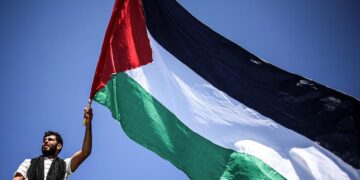
Some of these countries (particularly Germany and France) not only support the Israeli colonial project but also ban any demonstration or carrying a Palestinian flag or Kofiyya. They pretend that it is antisemitic to hold Israel to the same standards of international humanitarian law as we use while assessing Hamas’ operations. They accept that Israel’s right to exist is equal to Israel’s right to annihilate the Palestinian people (either en masse, as in Gaza, or slowly, as in the West Bank). Gaza remains an occupied territory under the 4th Geneva Convention, giving Israel a primary responsibility for protecting the occupied civilian population. This framing makes Israel’s “war” discourse and the “right of self-defense” inapplicable.
They pretend that it is antisemitic to hold Israel to the same standards of international humanitarian law as we use while assessing Hamas’ operations.
This situation does not concern only politicians who care about groups of interests necessary for their re-election but also many academics. Today, we can read criticism of the Israeli actions in Gaza in the Israeli newspaper Haaretz more than what we read in many European newspapers. Even the Israeli Sociological Association is more critical of the Israeli violation of international laws than other national associations in Europe. We all remember how Robert Badinter rightly enacted the abolition of the death penalty in France in 1981; here now, his wife, Élisabeth Badinter, philosopher and feminist, with her declaration, enacted the collective death penalty for the people of Gaza. Needless to say, in the West, there are honest scholars and human rights defenders like Craig Mokhiber, director of the New York Office of the UN High Commissioner for Human Rights. He resigned on October 31 with a scathing resignation letter blasting the UN and Western complicity in Israeli abuses. Yet, we witness a new phenomenon: for the first time, American universities have strong support for the struggle of the Palestinian people and the same support in Europe. There are so many petitions signed by hundreds, even thousands, of Western scholars against the war on Gaza and calling for the end of the occupation of OPT, despite the witch-hunting against professors and researchers in the UK, France and Germany because they simply post a post on Facebook and X, considered an “apology for terrorism.”
The Western political authorities today rely on so-called moderate Arab leaders to pacify the Palestinians while this everyday settler colonial project is going on. They relied on the Saudi-Israel deal, which would have dried funding that came from Saudi private and state sectors and put pressure on Palestinians to accept less than a fair solution to their plight. Just last month, U.S. National Security Advisor Jake Sullivan confidently said: “The Middle East region is quieter today than it has been in two decades”. One of the hard lessons of October 7 was the sense of sham stability in the Middle East, the failure of imagination and how the lack of a solution to the Palestinian cause could bring the region to the brink of an abyss.
One would wonder why the West is so complicit with the Israeli colonial project. Of course, there is the memory of the Holocaust, but also this kind of belief that Israel is a secular country that cannot do something wrong. If we look at one indicator of the extension of settlement in the OPT, one will find that the Israeli leaders on the left have done it more than on the right (Hanafi, 2013). I do remember a public talk of Alain Touraine at the School for Advanced Studies in the Social Sciences (EHESS) in Paris in 1993, where he evoked the Israeli “miracle” of absorbing 150,000 Russian Jews in a lapse of one year. When I contested this miracle as some of these migrants were settled illegally in the Occupied Palestinian Territories, he replied: “Those migrants will change the equation: grown up in the Soviet Union, they are secular, so, they will support the peace process.” He does not know that they established the ultra-right political party (Israel Our Home) and allied themselves with the religious settlers movement in the West Bank. The reading of the Arab-Israeli conflict remains dominated by an Islamophobic secularism that cannot be but against Hamas. By considering it as ISIS, Hamas has become the target to be eliminated and the Palestinian Gazans homo sacer (Agamben 1998) that can be killed without taking their killers accountable for their killings.
Who Represents the Palestinians?
Some contest that Hamas does represent an important portion of the Palestinian people. Hamas has indeed a very large support from the Palestinian people both in OPT and the diaspora. Hamas was elected by the Palestinian people in 2006, and they were clear in their ideology to those who elected them. I saw by then Christian friends cast their votes in their favor. They have still won the student body elections in Palestinian universities in the West Bank even in the last five years. Their popularity comes from the fact that there is no political solution with Israel and the necessity of making the ongoing Israeli settler colonial project costly for Israel. This leaves the Palestinians with Hamas as the only group actually working for their interests in any real way.
Those who contest the actions of Hamas should tell us why the “moderate” Palestinian authority was incapable of forcing Israel to give up on the West Bank and end the occupation. This authority had no cards in its hands after its leaders became dependent on their unconditional renunciation of violence against Israel in exchange for their livelihoods and aid from the Western and Arab countries.
Those who contest the actions of Hamas should tell us why the “moderate” Palestinian authority was incapable of forcing Israel to give up on the West Bank and end the occupation.
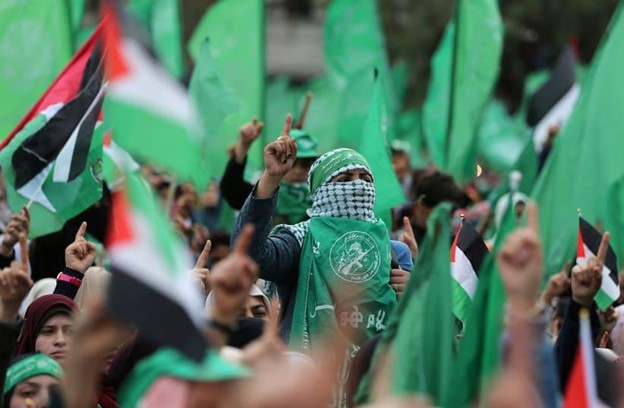
Palestinians take part in a rally marking the 31st anniversary of Hamas’ founding, in Gaza City. Source: Ibraheem Abu Mustafa, Reuters
Violence and Dialogue
I don’t see any settler colonial project that was evicted only through negotiation before establishing a certain balance of power, and this is often done by making this project so costly. Algeria succeeded in gaining its independence after 1.5 million martyrs. Palestinians tried Gandhian non-violence in India for at least 30 years since the Oslo process with no result.
History cannot be taken as isolated events but as movement and contingency. States and societies respect strong actors for a good or bad cause. We know many countries recognized Israel after the June 1967 War. Now, Iran was imposed as an important geopolitical actor. Hamas is the same. The people of my region have seen the Al-Aqsa Flood as restoring dignity for the Palestinians and those who believe in justice. This emotional or psychological side is essential for those who have been defending justice while seeing so many violations of humanitarian and human rights laws by Israel. It is a game changer, but we still don’t know which direction. I am still hoping that this war would force Israel and the international community to push for a fair political solution or at least to have a dialogue between equal partners, and this is consistent with my recent call for a dialogical liberal project (Hanafi 2023). I dread what seems certain to come to Gaza and perhaps to Lebanon.
[1] See “Israeli Defense Minister Announces Siege On Gaza To Fight ‘Human Animals,’” http://bit.ly/3RHx7Za
“’No Innocent Civilians in Gaza’, Israel President Says as Northern Gaza Struggles to Flee Israeli Bombs,” https://bit.ly/41WmwP2
“Public Statement: Scholars Warn of Potential Genocide in Gaza,” https://bit.ly/4aJEbgF
References
Abraham, Y. (2023). Expel all Palestinians from Gaza, recommends Israeli gov’t ministry. +972 Magazine. Retrieved from https://www.972mag.com/intelligence-ministry-gaza-population-transfer/
Adi, O., Givoni, M., and Hanafi, S. (Ed.) (2009). In The power of inclusive exclusion: Anatomy of Israeli rule in the Occupied Palestinian Territories, 15-32. New York: Zone Books.
Agamben, G. (1998). Homo sacer: Sovereign power and bare life. Stanford, CA: Stanford University Press.
Hanafi, S. (2013). Explaining spacio-cide in the Palestinian territory: Colonization, separation, and state of exception. Current Sociology, 61(2), 190-205.
Hanafi, S. (2023). Toward a dialogical sociology: Presidential address- XX ISA World Congress of Sociology 2023. International Sociology, 39(1).
Rovics, D. (2023). The Gaza ghetto uprising. Counter Punch. Retrieved from https://www.counterpunch.org/2023/10/09/the-gaza-ghetto-uprising/