























(The original Turkish version of this article was published by the Platform: Current Muslim Affairs on March 23, 2026)
The Outset of Conflict: Assumptions of Rapid Victory and the Initial Shock
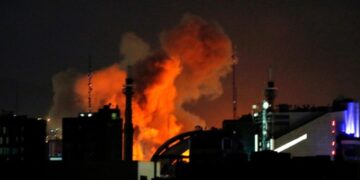
The conflict commenced with high-intensity strikes initiated by the United States and Israel, predicated on the assumption that Iran’s military capacity could be paralyzed within a short timeframe. The primary wave of attacks targeted missile bases, military production facilities, critical infrastructure belonging to the Islamic Revolutionary Guard Corps (IRGC), and command centers. These strikes were designed not only to degrade physical capabilities but also to eliminate Iran’s capacity to conduct warfare. Simultaneously, high-ranking commanders and key figures within the security bureaucracy were targeted, aiming to directly sever the chain of decision-making. However, the resistance encountered on the ground soon revealed that this initial premise was fundamentally flawed.
This preliminary phase induced a profound shock for the Iranian establishment. Vulnerabilities in air defense systems were exposed, the command-and-control apparatus was temporarily destabilized, and significant losses occurred among the elite echelons of the system. Nevertheless, Iran’s immediate reaction was not a centralized counter-offensive, but rather a rapid re-coordination effort to prevent systemic collapse. The IRGC, the security bureaucracy, and affiliated networks recovered swiftly; while the decision-making mechanism narrowed, it remained operational. Iran survived the initial shock not through a direct military retaliation, but by averting institutional disintegration. This reflex established the strategic foundation for the remainder of the conflict.
The fundamental reason behind the Iranian political system’s ability to absorb this shock lies in its structural character. The system is predicated on institutional continuity rather than individual charisma. Although the Office of the Supreme Leader plays a central role, the architecture is not dependent on a single individual. The IRGC, the security apparatus, religious institutions, and economic networks form a multi-layered order that functions in tandem, generating the flexibility required to swiftly compensate for emerging vacancies.
Consequently, the loss of key leaders has weakened the system but failed to precipitate its collapse. Iran’s capacity to withstand the initial shock—not through military retaliation, but by preventing institutional disintegration—is a direct result of this structural resilience. Nevertheless, it must be noted that should such losses become persistent, they harbor the potential to create a vulnerability that could erode institutional coordination in the long term.
Strategic Framework: Not Winning, But Avoiding Defeat
Iran’s fundamental strategy in the conflict was not to win a conventional pitched battle, but rather to sustain state capacity after absorbing the initial strike and to deny the adversary a decisive outcome. For Tehran, the objective from the outset has been not to achieve “victory,” but to avoid “defeat.” This is because, within the Iranian political mindset, the survival of the regime (baqa-ye nezam) takes precedence over all other considerations. This approach is a contemporary reflection of the principle of “preservation of the system,” which has remained at the core of the establishment since the era of Khomeini.
Consequently, from the very beginning of the war, Iran operated along two parallel axes. The first was to maintain asymmetric deterrence through ballistic missiles, unmanned aerial vehicles (UAVs), and dispersed strike capabilities. The second was to prevent internal regime disintegration. The coordination among the IRGC, Basij forces, the security bureaucracy, and religious institutions functioned as the primary safeguard preventing systemic collapse. Iran utilized its military capacity not merely as an offensive force, but as a balancing mechanism ensuring the continuity of the regime.
However, throughout this process, one of the most critical variables was the Iranian capacity, which could not be directly calculated. Iran’s mode of power generation differs fundamentally from that of conventional states. It operates through a semi-closed system functioning via the IRGC, Islamic foundations (bonyads), and economic networks directly subordinated to the Office of the Supreme Leader. This structure renders a significant portion of both economic and military capacity invisible. Consequently, all statistics regarding Iran’s missile stockpiles, production capabilities, and replacement capacities were inherently contentious. Iran’s actual power often eluded precise measurement; it operated through a distributed, flexible, and reproducible architecture. This dynamic enabled Tehran to generate a strategic advantage through calculated ambiguity throughout the conflict.
Nevertheless, it is difficult to assert that Iran was successful in absolute terms. The state faced severe military, political, and psychological pressure. High-ranking officials were targeted, and the chain of command was destabilized. However, the perspective shifts when evaluated against the primary objectives of the war.
If the objective was to paralyze the regime in the short term and induce internal disintegration by purging the security elite, this goal remained unfulfilled. The state apparatus did not dissolve, a societal explosion did not materialize, and the regime did not entirely lose its decision-making capacity. In this regard, Iran succeeded in averting a strategic defeat. In other words, Iran did not win the war; however, it prevented its adversary from achieving victory.
Geopolitical Expansion: The Gulf, Bases, and the Extension of War into Israeli Society
The war quickly surpassed Iran’s borders and underwent a geopolitical expansion. Iran’s mobilization of its strike capacity against military targets in the Gulf, particularly U.S. base structures, critically enlarged the scope of the conflict. This move was not merely a retaliation but a strategic step aimed at narrowing the opponent’s secure zones by expanding the geography of the war.
Iran’s targeting of bases in the Gulf clearly demonstrated that the conflict would not remain confined to Iranian territory. For the U.S. and its allies, this meant that the costs escalated to a regional level, obscuring the controllable limits of the conflict. Through this maneuver, Iran reestablished the strategic balance in its favor by widening the spatial dimension of the war.
Simultaneously, Iran sought to ensure that the impact of the war was not restricted solely to the military sphere. The pressure exerted deep into Israel via missile and UAV capabilities shifted the conflict to a level directly felt by Israeli society. This was not only a military response but a deliberate strategy of expansion intended to increase the psychological and social costs of the war. Consequently, Iran did not merely extend the front lines; it rendered the equation more complex and costly by carrying the effects of the war directly into the daily lives of the opposing society.
Controlled Retaliation and Strategic Threshold: Shift to the Energy Line
Iran’s retaliation strategy progressed along a controlled and gradual trajectory. Rather than delivering a direct and total response, Tehran established a continuous pressure through missile strikes, regional targets, and proxy elements. This approach, while wearing down the opposing side, simultaneously limited the uncontrolled escalation of the war. Iran’s avoidance of deploying its full capacity was a conscious choice aimed at preserving its power and extending the conflict over time.
The primary turning point that altered the course of the war was the shift of the conflict toward the energy line. Israel’s targeting of oil and gas fields in South Pars, coupled with Iran’s clear signaling in response, demonstrated that the war had reached a new threshold. From this stage onward, the issue became not only a matter of military superiority but also one of energy supply, pricing, and global economic balances.
U.S. Restraint and the Delineation of Conflict Limits
At this precise juncture, the United States’ perceived need to restrain Israel emerged as a critical development. Donald Trump’s warning to Netanyahu, which secured a guarantee that Iranian oil facilities would not be targeted again, clearly illustrated the strategic threshold the war had reached. This development demonstrated that Iran could define the boundaries of the conflict without necessarily establishing direct military superiority. From the outset, Tehran had explicitly stated that the war would not remain within regional borders if energy lines were compromised. At this stage, that message has effectively resonated. Consequently, by shifting the conflict into the realm of global economic costs, Iran succeeded in limiting the opponent’s room for maneuver and, in this sense, partially achieved its intended objective.
Conclusion: Iran Remains Resilient as the Conflict Deepens
In this war, Iran did not achieve a decisive military victory; however, it realized its most critical objective by remaining resilient. Its strategy was predicated on absorbing the initial strike, preventing internal collapse, and breaking the opponent’s capacity for rapid results by extending the conflict over time. While this strategy did not produce a victory in the classical sense, it rendered the opponent’s victory impossible.
The significance of this situation cannot be explained solely through military parity; in modern warfare, outcomes are determined not only by the distribution of power on the ground but also through time, cost, and sustainability. Although Iran could not establish direct superiority, it altered the equation by prolonging the war, shifting the conflict from the military sphere to a geopolitical and economic domain. This effectively invalidated the opponent’s initial assumption of a “rapid and decisive result.”
However, this outlook does not imply that the danger has subsided. On the contrary, the war has entered a deeper, more widespread, and riskier phase. The conflict’s impact on the Gulf, energy lines, and global economic balances holds the potential to carry this process beyond a regional war. From this stage forward, the issue is not merely Iran’s survival, but the extent to which this conflict will strain the international system and whether it will produce new systemic fractures.
The essence of Iran’s war strategy becomes clearer at this point: the primary objective was not to defeat the opponent directly, but to deprive them of a victory. At the current stage, Iran appears to have achieved a clear success in terms of this objective.
*Opinions expressed in this article are the author’s own and do not necessarily reflect Platform: Current Muslim Affairs’ editorial policy.