



İLKE Vakfı
Platform
No Result
View All Result
  • PLATFORM
  • HABERLER
    İLKE Agenda: Muzzammil Ayyub Thakur ile Keşmir’in “Filistinleştirilmesi”

    İLKE Agenda: Muzzammil Ayyub Thakur ile Keşmir’in “Filistinleştirilmesi”

    İLKE Agenda: Muzzammil Ayyub Thakur ile Keşmir’in “Filistinleştirilmesi”

    The Platform Talks: Kinda Hawasli ile 8 Aralık Sonrası Suriye

    İLKE Agenda: Muzzammil Ayyub Thakur ile Keşmir’in “Filistinleştirilmesi”

    The Platform Talks: Azzam Tamimi ile 7 Ekim Sonrası Filistin

    İLKE Agenda: Muzzammil Ayyub Thakur ile Keşmir’in “Filistinleştirilmesi”

    İLKE Agenda: Gazze Soykırımı Günlerinde Aktivizm ve İslamofobi

    Filistin Sempozyumu: Filistin ve Küresel İlişkilerin Geleceği

    Filistin Sempozyumu: Filistin ve Küresel İlişkilerin Geleceği

    Filistin Sempozyumu: Filistin ve Küresel İlişkilerin Geleceği

    Müslüman Dünyada Çağdaş Düşünce Konferansı’nda buluşuyoruz!

    Filistin Sempozyumu: Filistin ve Küresel İlişkilerin Geleceği

    Müslüman Dünyada Çağdaş Düşünce Konferansı

    Filistin Sempozyumu: Filistin ve Küresel İlişkilerin Geleceği

    Dr. Jonathan Brown “İslam’ın Siyahiliğe ve Köleliğe Yaklaşımı” adlı seminer gerçekleştirdi.

  • ANALİZLER
    • All
    • Düşünce
    • Eğitim
    • Ekonomi
    • Enerji ve Çevre
    • Göç
    • Medya, Kültür ve Sanat
    • Temel Hak ve Özgürlükler
    • Toplumsal Meseleler
    The Gravity of What Took Place at Al-Aqsa Mosque During Ramadan 2026

    Ramazan 2026’da Mescid-i Aksa’da Yaşananların Ciddiyeti

    AFP/GETTY IMAGES

    FLA-JNIM İş Birliği ve Mali’de Değişen Güvenlik Dinamikleri

    Sosyal Medyada İslamcı-Muhafazakâr Kamusallığın Dönüşümü Üzerine

    Sosyal Medyada İslamcı-Muhafazakâr Kamusallığın Dönüşümü Üzerine

    Bangladeş’te 2026 Seçimleri Sonrası Siyasi Tartışmalar

    Bangladeş’te 2026 Seçimleri Sonrası Siyasi Tartışmalar

    Filistin’de Çocuk Olmak: 5 Nisan Filistinli Çocuklar Günü

    Filistin’de Çocuk Olmak: 5 Nisan Filistinli Çocuklar Günü

    Security, Fragility, and the Search for a New Equilibrium in the Gulf Following the Iranian Attacks

    İran Saldırıları Sonrası Körfez’de Güvenlik, Kırılganlık ve Yeni Denge Arayışı

  • SÖYLEŞİLER
    The Decolonization of Knowledge: Interview with Professor Souleymane Bachir Diagne

    Bilginin Dekolonizasyonu: Profesör Souleymane Bachir Diagne ile Röportaj

    A Possible New Breath in Regional Balances: The Alliance of Türkiye, Pakistan, Egypt, and Saudi Arabia

    Bölgesel Dengelerde Olası Yeni Bir Soluk: Türkiye, Pakistan, Mısır ve Suudi Arabistan İttifakı

    Digital Ummah and Muslim Identity: Dr. Sahar Khamis Interview

    Dijital Ümmet ve Müslüman Kimliği: Dr. Sahar Khamis ile Röportaj

    From the Ballot Box to the Street: The Rising Social Wave in Tanzania After the Election

    Sandıktan Sokağa: Tanzanya’da Seçim Sonrası Yükselen Toplumsal Dalga

    Müslüman Nüfusa Karşı Güvenlikleştirme

    Müslüman Nüfusa Karşı Güvenlikleştirme

    Gurbet Hikayeleri

    Gurbet Hikayeleri

    Göçü Yönetmek: Dr. Mehmet Köse’yle Söyleşi

    Göçü Yönetmek: Dr. Mehmet Köse’yle Söyleşi

    İstanbul’daki Uluslararası Öğrencilerle Söyleşi

    İstanbul’daki Uluslararası Öğrencilerle Söyleşi

    Zaytuna College Lisansüstü Eğitim Dekanı Maşuk Yamaç’la Söyleşi

    Zaytuna College Lisansüstü Eğitim Dekanı Maşuk Yamaç’la Söyleşi

  • DÜNYADAN SESLER
    Voices from the Muslim World | Sari Hanafi (with Turkish subtitles)

    Voices from the Muslim World | Sari Hanafi (with Turkish subtitles)

    Voices from the Muslim World | Ovamir Anjum

    Voices from the Muslim World | Ovamir Anjum

    VOICES FROM THE MUSLIM WORLD | DR. YASIR QADHI

    VOICES FROM THE MUSLIM WORLD | DR. YASIR QADHI

    VOICES FROM THE MUSLIM WORLD | DR. ADEEL MALIK

    VOICES FROM THE MUSLIM WORLD | DR. ADEEL MALIK

  • SAYILAR
  • VERİTABANI
    • All
    • Hareketler
    • Kurumlar
    • Şahsiyetler
    Pak-Türk Maarif

    Pak-Türk Maarif

    İslam Vakfı

    İslam Vakfı

    Avrupa Fetva ve Araştırma Konseyi

    Avrupa Fetva ve Araştırma Konseyi

    Tokyo Camii ve Diyanet Türk Kültür Merkezi

    Tokyo Camii ve Diyanet Türk Kültür Merkezi

  • PLATFORM
  • HABERLER
    İLKE Agenda: Muzzammil Ayyub Thakur ile Keşmir’in “Filistinleştirilmesi”

    İLKE Agenda: Muzzammil Ayyub Thakur ile Keşmir’in “Filistinleştirilmesi”

    İLKE Agenda: Muzzammil Ayyub Thakur ile Keşmir’in “Filistinleştirilmesi”

    The Platform Talks: Kinda Hawasli ile 8 Aralık Sonrası Suriye

    İLKE Agenda: Muzzammil Ayyub Thakur ile Keşmir’in “Filistinleştirilmesi”

    The Platform Talks: Azzam Tamimi ile 7 Ekim Sonrası Filistin

    İLKE Agenda: Muzzammil Ayyub Thakur ile Keşmir’in “Filistinleştirilmesi”

    İLKE Agenda: Gazze Soykırımı Günlerinde Aktivizm ve İslamofobi

    Filistin Sempozyumu: Filistin ve Küresel İlişkilerin Geleceği

    Filistin Sempozyumu: Filistin ve Küresel İlişkilerin Geleceği

    Filistin Sempozyumu: Filistin ve Küresel İlişkilerin Geleceği

    Müslüman Dünyada Çağdaş Düşünce Konferansı’nda buluşuyoruz!

    Filistin Sempozyumu: Filistin ve Küresel İlişkilerin Geleceği

    Müslüman Dünyada Çağdaş Düşünce Konferansı

    Filistin Sempozyumu: Filistin ve Küresel İlişkilerin Geleceği

    Dr. Jonathan Brown “İslam’ın Siyahiliğe ve Köleliğe Yaklaşımı” adlı seminer gerçekleştirdi.

  • ANALİZLER
    • All
    • Düşünce
    • Eğitim
    • Ekonomi
    • Enerji ve Çevre
    • Göç
    • Medya, Kültür ve Sanat
    • Temel Hak ve Özgürlükler
    • Toplumsal Meseleler
    The Gravity of What Took Place at Al-Aqsa Mosque During Ramadan 2026

    Ramazan 2026’da Mescid-i Aksa’da Yaşananların Ciddiyeti

    AFP/GETTY IMAGES

    FLA-JNIM İş Birliği ve Mali’de Değişen Güvenlik Dinamikleri

    Sosyal Medyada İslamcı-Muhafazakâr Kamusallığın Dönüşümü Üzerine

    Sosyal Medyada İslamcı-Muhafazakâr Kamusallığın Dönüşümü Üzerine

    Bangladeş’te 2026 Seçimleri Sonrası Siyasi Tartışmalar

    Bangladeş’te 2026 Seçimleri Sonrası Siyasi Tartışmalar

    Filistin’de Çocuk Olmak: 5 Nisan Filistinli Çocuklar Günü

    Filistin’de Çocuk Olmak: 5 Nisan Filistinli Çocuklar Günü

    Security, Fragility, and the Search for a New Equilibrium in the Gulf Following the Iranian Attacks

    İran Saldırıları Sonrası Körfez’de Güvenlik, Kırılganlık ve Yeni Denge Arayışı

  • SÖYLEŞİLER
    The Decolonization of Knowledge: Interview with Professor Souleymane Bachir Diagne

    Bilginin Dekolonizasyonu: Profesör Souleymane Bachir Diagne ile Röportaj

    A Possible New Breath in Regional Balances: The Alliance of Türkiye, Pakistan, Egypt, and Saudi Arabia

    Bölgesel Dengelerde Olası Yeni Bir Soluk: Türkiye, Pakistan, Mısır ve Suudi Arabistan İttifakı

    Digital Ummah and Muslim Identity: Dr. Sahar Khamis Interview

    Dijital Ümmet ve Müslüman Kimliği: Dr. Sahar Khamis ile Röportaj

    From the Ballot Box to the Street: The Rising Social Wave in Tanzania After the Election

    Sandıktan Sokağa: Tanzanya’da Seçim Sonrası Yükselen Toplumsal Dalga

    Müslüman Nüfusa Karşı Güvenlikleştirme

    Müslüman Nüfusa Karşı Güvenlikleştirme

    Gurbet Hikayeleri

    Gurbet Hikayeleri

    Göçü Yönetmek: Dr. Mehmet Köse’yle Söyleşi

    Göçü Yönetmek: Dr. Mehmet Köse’yle Söyleşi

    İstanbul’daki Uluslararası Öğrencilerle Söyleşi

    İstanbul’daki Uluslararası Öğrencilerle Söyleşi

    Zaytuna College Lisansüstü Eğitim Dekanı Maşuk Yamaç’la Söyleşi

    Zaytuna College Lisansüstü Eğitim Dekanı Maşuk Yamaç’la Söyleşi

  • DÜNYADAN SESLER
    Voices from the Muslim World | Sari Hanafi (with Turkish subtitles)

    Voices from the Muslim World | Sari Hanafi (with Turkish subtitles)

    Voices from the Muslim World | Ovamir Anjum

    Voices from the Muslim World | Ovamir Anjum

    VOICES FROM THE MUSLIM WORLD | DR. YASIR QADHI

    VOICES FROM THE MUSLIM WORLD | DR. YASIR QADHI

    VOICES FROM THE MUSLIM WORLD | DR. ADEEL MALIK

    VOICES FROM THE MUSLIM WORLD | DR. ADEEL MALIK

  • SAYILAR
  • VERİTABANI
    • All
    • Hareketler
    • Kurumlar
    • Şahsiyetler
    Pak-Türk Maarif

    Pak-Türk Maarif

    İslam Vakfı

    İslam Vakfı

    Avrupa Fetva ve Araştırma Konseyi

    Avrupa Fetva ve Araştırma Konseyi

    Tokyo Camii ve Diyanet Türk Kültür Merkezi

    Tokyo Camii ve Diyanet Türk Kültür Merkezi

No Result
View All Result
Platform
No Result
View All Result
Home Analyses

Islamophobic Media and Construction of Truth in India

M. Mohibul Haque by M. Mohibul Haque
6 Kasım 2025
in Analyses, Culture, Arts and Media
0
Islamophobic Media and Construction of Truth in India
0
SHARES
8
VIEWS
Share on FacebookShare on Twitter

In the era of post-truth politics, there is a constant struggle to construct and monopolize truth. As constructivists suggest, truth is a social construct that depends on historical experiences, culture, prevailing values and perceptions, and existing social, economic, and political conditions in a given society. The spectacular rise in media’s power and role in this post-truth era calls for a more profound understanding through theorization of the phenomenon. Media- controlled, used, and misused by corporate houses in alliance with the political establishment- is the greatest danger that democracy faces today. It is leading to the corporatization of democracy, under which people’s perceptions, voices, and reactions are all controlled and manipulated by the powerful media. The sudden surge in Islamophobia, xenophobia, and racism in the post-Cold War era need to be understood in this context.

Islamophobia is a global phenomenon. During the Cold War, the USA-led Western bloc had created a kind of “red scare” and projected communism/Marxism as the “red menace” or “red danger.” With the disintegration of the Soviet Union and the collapse of Communism in the 1990s, there has been a surge in the global rise of Islamophobia. The USA-led Western bloc religiously followed Huntington’s advice: “There can be no true friends without true enemies.” After the collapse of communism, the USA and its allies needed a new enemy. The propaganda industry in the USA and other European countries maintained during the Cold War to create a red scare was directed against Islam and Muslims. Red danger was replaced with “green danger,” and terms like Islamic militancy, Islamic terrorism, and Islamic fundamentalism were frequently used against a newly discovered enemy. Islamophobia is the outcome of this propaganda.

India, which is the largest electoral democracy in the world, is one of the epicenters of Islamophobia and hatred against Muslims today. 

India, which is the largest electoral democracy in the world, is one of the epicenters of Islamophobia and hatred against Muslims today. The rightist forces needed an internal enemy to create anxiety and fear to mobilize the majority community and achieve their political and other goals. Not only is the abstract truth socially constructed, but enemies and friends are also socially constructed. Due to historical reasons, Muslims became the much-needed enemy, and the right wing in India used global Islamophobia to create anxiety and fear in the minds of Hindus who have been living peacefully with Muslims in a secular democracy.  

Indian Media Environment

The media environment in India is Islamophobic, toxic, and hateful against Muslims. Newsrooms in India are dominated by the upper caste Hindus and infected by Islamophobia. Marginalized communities like Dalits, former Sudras, and minorities are inadequately represented in the mainstream media.

Muslims are the largest minority in India, constituting 14.2% of the country’s population. India is a secular country, and the Constitution provides equal rights to all citizens without any discrimination based on religion, ethnicity, sex, or place of birth. However, in practice, Muslims have been subjected to institutional discrimination, social exclusion, persecution, and violence since the independence of the country. With the rise of the right-wing political party Bharatiya Janata Party (BJP), the persecution of Muslims has increased manifold.

The Politics of Hate

The current political dispensation headed by Prime Minister Modi is known for its anti-Muslim rhetoric. The BJP leaders, including Prime Minister Modi, are accused of delivering hate speeches. The mainstream media, with few notable exceptions, widely reports it, making the controversial anti-Muslim speeches the topic of primetime discussions. At the time of the elections, the frequency of Islamophobic speeches increases manifold. In the electoral campaign for the 2024 national elections, Prime Minister Modi himself declared Muslims as “infiltrators” and lamented that they were responsible for the population explosion.

The Indian media environment is not only Islamophobic, but it is also toxically hateful against Muslims.

Ideology of Hate

Living in the era of post-truth itself is dangerous for non-dominant groups in any society. The Indian media environment is not only Islamophobic, but it is also toxically hateful against Muslims. It is an ideologically committed media that fosters hate against Muslims to serve the cause of the ruling dispensation. It must be noted that Rashtriya Swayamsevak Sangh (RSS), an affiliate of the ruling BJP, was headed by M.S. Golwalkar from 1940-1973. Glowalkar was an Islamophobic scholar who declared Muslims as an “internal threat.” It seems that the ruling BJP has not come out of the hangover created by Golwalkar, and its leaders still consider Muslims as a threat and therefore, they spew venom against Muslims.

Distorting and Suffixing Jihad

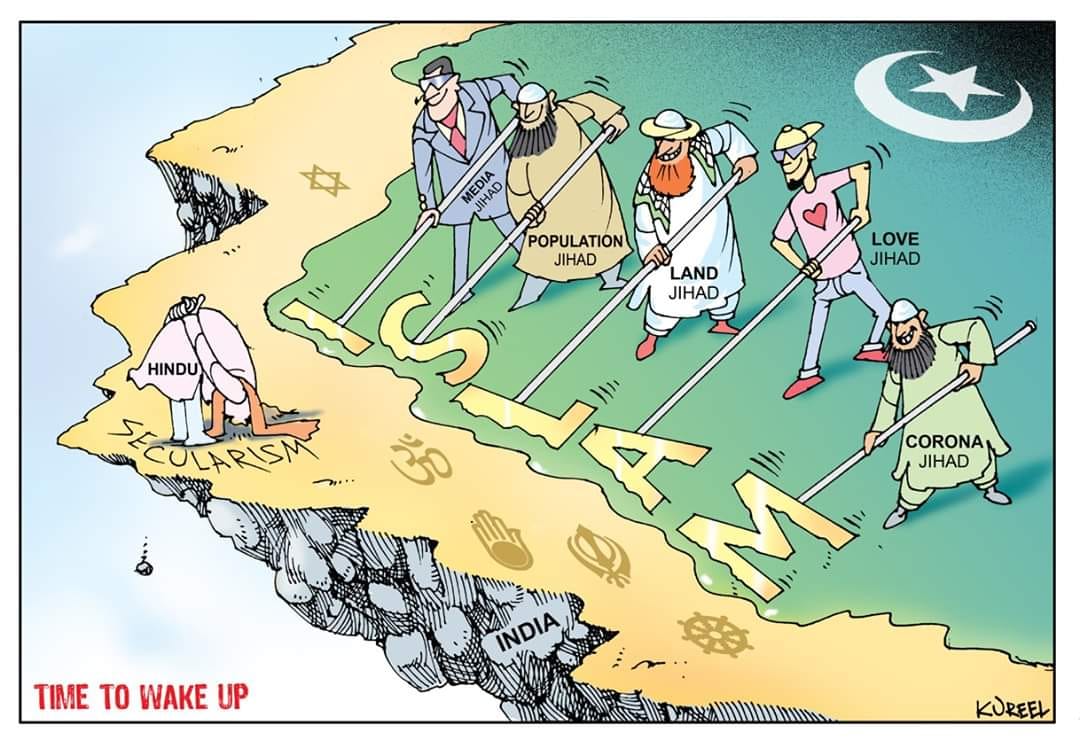
The Islamic concept of jihad and its distorted meaning is often mentioned in mainstream media to create anxiety and fear in the majority. If Muslims buy land in some prime areas or localities inhabited largely by Hindus, the media will call it “bhoomi (land) jihad,” if a Muslim boy falls in love with a Hindu girl, it will be projected as “love jihad,” or if Muslim youth qualify the national administrative services exam, it will be termed as “Indian Administrative Services (IAS) jihad.”

Muslim males are often projected as sexually obsessive and virulent, while Muslim women as “the most fertile” females breeding children. Muslims are blamed for the demographic explosion in India, and it is often argued that Muslims produce more children with a design as they want to outnumber Hindus. Thus, it becomes “population jihad.” Social media crosses all limits of Islamophobia, and the economic boycott of Muslims, calling for the genocide of Muslims, sexually assaulting Muslim women, and sending them to Pakistan are very common on social media platforms. 
1

The cartoon, drawn by the anti-Islam cartoonist Manoj Kureel, depicts “different types” of jihad.

COVID-19 was also used by the mainstream media as well as social media to create hate against Muslims. A narrative was constructed that Muslims are deliberately spreading Coronavirus in the country and waging “the Corona jihad.” During the Corona pandemic, Muslims were mainly targeted by the hateful media, and they were projected as “Corona super-spreaders.” Religious denominations of Muslims and places of worship were projected as Corona spreaders.

Predatory Media

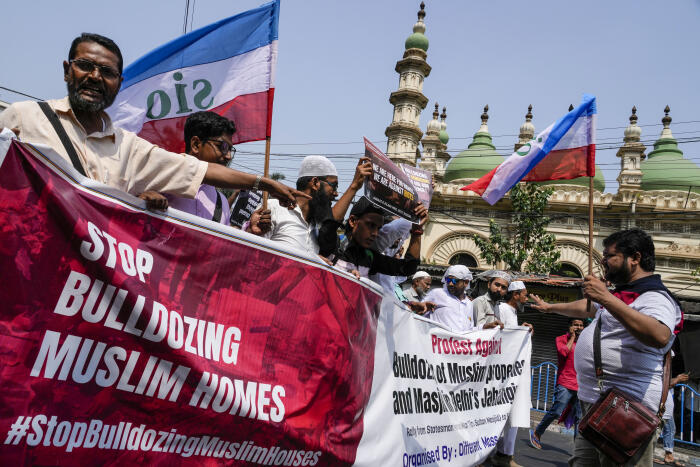
Since Modi came to power as Prime Minister, demolishing Muslim houses and places of religious worship on narrow technical grounds has become a common feature. The Indian media celebrate such demolitions and proudly call it “bulldozer justice.” The predatory media also celebrate and legitimize extra-judicial killings of alleged criminals and terrorists if they happen to be Muslims. In some cases, it becomes the supari media by pinpointing who should be the next to be neutralized. It is essential to mention that three Muslim members of Parliament with alleged criminal backgrounds have died in mysterious circumstances or were killed in police or judicial custody.
2

Indian Muslims protest against Hindu nationalists’ policies of destruction, 2022. (Bikas Dap/AP)

This escalating hatred has far-reaching consequences, threatening not only the safety and well-being of the Muslim community but also the very fabric of India’s democracy.

The Impending Danger

The overall Islamophobic political, social, and media environment increases the vulnerabilities of Muslims in India. Collective violence in the form of communal riots and mob lynching is becoming the order of the day. The U.S. Commission on International Religious Freedom (USCIRF) has expressed concern over the prevalence of anti-Muslim hate in India. The Genocide Watch has been issuing warnings of genocide of Muslims in India. This escalating hatred has far-reaching consequences, threatening not only the safety and well-being of the Muslim community but also the very fabric of India’s democracy. The pervasive atmosphere of fear and suspicion undermines social cohesion, leading to increased segregation and the breakdown of inter-communal relationships. As trust erodes, the potential for conflict and violence grows, destabilizing the entire society. If left unchecked, this dangerous trajectory could lead to severe crises and long-term socio-political instability in the country.

Conclusion

The rise of Islamophobia in India’s media and political landscape is a deeply troubling phenomenon that undermines the country’s democratic principles and secular ethos. The media, often in collusion with political forces, has played a significant role in constructing and perpetuating a narrative of fear and hatred against Muslims. This has led to increased discrimination, violence, and social exclusion of the Muslim community. The manipulation of truth and the creation of enemies for political gain has not only polarized society but also eroded the very fabric of India’s diverse and pluralistic identity. The dangerous rhetoric and actions stemming from Islamophobia pose a serious threat to social harmony and justice. To counter this, it is imperative to promote media literacy, encourage responsible journalism, and uphold the principles of equality and secularism enshrined in the Indian Constitution. Only through concerted efforts to challenge and dismantle these prejudiced narratives can India move towards a more inclusive and just society where all citizens, regardless of their religion, can live with dignity and respect.


Tags: AsiaConstruction of TruthIndiaIslamophobia
Previous Post

Seeing Pain: On the Visual Representation of Disaster and Online Censorship in Social Media

Next Post

Digital Da’wah: Transforming Islamic Preaching in Indonesia through New Media

Next Post
Digital Da’wah: Transforming Islamic Preaching in Indonesia through New Media

Digital Da'wah: Transforming Islamic Preaching in Indonesia through New Media

Bir yanıt yazın Yanıtı iptal et

E-posta adresiniz yayınlanmayacak. Gerekli alanlar * ile işaretlenmişlerdir

  • A Possible New Breath in Regional Balances: The Alliance of Türkiye, Pakistan, Egypt, and Saudi Arabia

    Bölgesel Dengelerde Olası Yeni Bir Soluk: Türkiye, Pakistan, Mısır ve Suudi Arabistan İttifakı

    0 shares
    Share 0 Tweet 0
  • Nakşibendi-Hakkani Tarikatı

    0 shares
    Share 0 Tweet 0
  • Bilime Yön Verenler: Nobel Ödüllü Müslüman Bilim İnsanları

    0 shares
    Share 0 Tweet 0
  • Fuad Sezgin

    0 shares
    Share 0 Tweet 0
  • Sosyal Medyada İslamcı-Muhafazakâr Kamusallığın Dönüşümü Üzerine

    0 shares
    Share 0 Tweet 0
  • The Gravity of What Took Place at Al-Aqsa Mosque During Ramadan 2026

    Ramazan 2026’da Mescid-i Aksa’da Yaşananların Ciddiyeti

    0 shares
    Share 0 Tweet 0
  • The Gravity of What Took Place at Al-Aqsa Mosque During Ramadan 2026

    0 shares
    Share 0 Tweet 0
  • FLA-JNIM Cooperation and Shifting Security Dynamics in Mali

    0 shares
    Share 0 Tweet 0
  • FLA-JNIM İş Birliği ve Mali’de Değişen Güvenlik Dinamikleri

    0 shares
    Share 0 Tweet 0
  • The Current State of Indonesia’s Luxury Industry and the Landscape of Independent Handcrafted Watchmaking

    0 shares
    Share 0 Tweet 0

Platform: Müslüman Dünyanın Gündemi, Müslüman toplumların fikrî, siyasi, sosyal, ekonomik ve kültürel gündemlerini takip ve tahlil edip Müslüman dünyaya dair güncel ve özgün perspektifler sunmayı amaçlayan bir yayın organı olarak İLKE İlim Kültür Eğitim Vakfı bünyesinde kurulmuştur.

  • SAYILAR
  • ANALİZLER
  • HABERLER
  • SÖYLEŞİLER
  • DÜNYADAN SESLER
  • platform@ilke.org.tr
  • (0216) 310 43 18
  • Aziz Mahmut Hüdayi Mah. Türbe Kapısı Sk. No: 13 Üsküdar, İstanbul

2025 @ PLATFORM bir İLKE Vakfı kuruluşudur. Tüm hakları saklıdır. 

No Result
View All Result
  • Home
  • Analizler
  • Haberler
  • Söyleşiler
  • Dünyadan Sesler