












İLKE Vakfı
Platform
No Result
View All Result
  • PLATFORM
  • HABERLER
    İLKE Agenda: Muzzammil Ayyub Thakur ile Keşmir’in “Filistinleştirilmesi”

    İLKE Agenda: Muzzammil Ayyub Thakur ile Keşmir’in “Filistinleştirilmesi”

    İLKE Agenda: Muzzammil Ayyub Thakur ile Keşmir’in “Filistinleştirilmesi”

    The Platform Talks: Kinda Hawasli ile 8 Aralık Sonrası Suriye

    İLKE Agenda: Muzzammil Ayyub Thakur ile Keşmir’in “Filistinleştirilmesi”

    The Platform Talks: Azzam Tamimi ile 7 Ekim Sonrası Filistin

    İLKE Agenda: Muzzammil Ayyub Thakur ile Keşmir’in “Filistinleştirilmesi”

    İLKE Agenda: Gazze Soykırımı Günlerinde Aktivizm ve İslamofobi

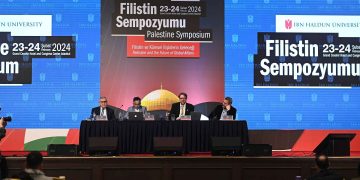
    Filistin Sempozyumu: Filistin ve Küresel İlişkilerin Geleceği

    Filistin Sempozyumu: Filistin ve Küresel İlişkilerin Geleceği

    Filistin Sempozyumu: Filistin ve Küresel İlişkilerin Geleceği

    Müslüman Dünyada Çağdaş Düşünce Konferansı’nda buluşuyoruz!

    Filistin Sempozyumu: Filistin ve Küresel İlişkilerin Geleceği

    Müslüman Dünyada Çağdaş Düşünce Konferansı

    Filistin Sempozyumu: Filistin ve Küresel İlişkilerin Geleceği

    Dr. Jonathan Brown “İslam’ın Siyahiliğe ve Köleliğe Yaklaşımı” adlı seminer gerçekleştirdi.

  • ANALİZLER
    • All
    • Düşünce
    • Eğitim
    • Ekonomi
    • Enerji ve Çevre
    • Göç
    • Medya, Kültür ve Sanat
    • Temel Hak ve Özgürlükler
    • Toplumsal Meseleler
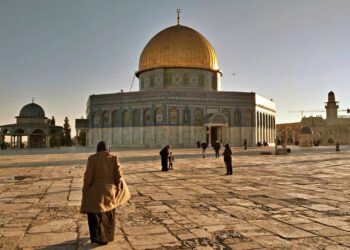
    The Gravity of What Took Place at Al-Aqsa Mosque During Ramadan 2026

    Ramazan 2026’da Mescid-i Aksa’da Yaşananların Ciddiyeti

    AFP/GETTY IMAGES

    FLA-JNIM İş Birliği ve Mali’de Değişen Güvenlik Dinamikleri

    Sosyal Medyada İslamcı-Muhafazakâr Kamusallığın Dönüşümü Üzerine

    Sosyal Medyada İslamcı-Muhafazakâr Kamusallığın Dönüşümü Üzerine

    Bangladeş’te 2026 Seçimleri Sonrası Siyasi Tartışmalar

    Bangladeş’te 2026 Seçimleri Sonrası Siyasi Tartışmalar

    Filistin’de Çocuk Olmak: 5 Nisan Filistinli Çocuklar Günü

    Filistin’de Çocuk Olmak: 5 Nisan Filistinli Çocuklar Günü

    Security, Fragility, and the Search for a New Equilibrium in the Gulf Following the Iranian Attacks

    İran Saldırıları Sonrası Körfez’de Güvenlik, Kırılganlık ve Yeni Denge Arayışı

  • SÖYLEŞİLER
    The Decolonization of Knowledge: Interview with Professor Souleymane Bachir Diagne

    Bilginin Dekolonizasyonu: Profesör Souleymane Bachir Diagne ile Röportaj

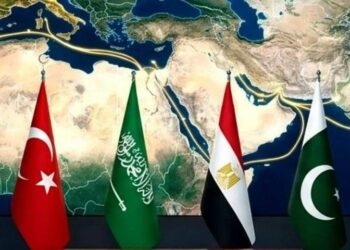
    A Possible New Breath in Regional Balances: The Alliance of Türkiye, Pakistan, Egypt, and Saudi Arabia

    Bölgesel Dengelerde Olası Yeni Bir Soluk: Türkiye, Pakistan, Mısır ve Suudi Arabistan İttifakı

    Digital Ummah and Muslim Identity: Dr. Sahar Khamis Interview

    Dijital Ümmet ve Müslüman Kimliği: Dr. Sahar Khamis ile Röportaj

    From the Ballot Box to the Street: The Rising Social Wave in Tanzania After the Election

    Sandıktan Sokağa: Tanzanya’da Seçim Sonrası Yükselen Toplumsal Dalga

    Müslüman Nüfusa Karşı Güvenlikleştirme

    Müslüman Nüfusa Karşı Güvenlikleştirme

    Gurbet Hikayeleri

    Gurbet Hikayeleri

    Göçü Yönetmek: Dr. Mehmet Köse’yle Söyleşi

    Göçü Yönetmek: Dr. Mehmet Köse’yle Söyleşi

    İstanbul’daki Uluslararası Öğrencilerle Söyleşi

    İstanbul’daki Uluslararası Öğrencilerle Söyleşi

    Zaytuna College Lisansüstü Eğitim Dekanı Maşuk Yamaç’la Söyleşi

    Zaytuna College Lisansüstü Eğitim Dekanı Maşuk Yamaç’la Söyleşi

  • DÜNYADAN SESLER
    Voices from the Muslim World | Sari Hanafi (with Turkish subtitles)

    Voices from the Muslim World | Sari Hanafi (with Turkish subtitles)

    Voices from the Muslim World | Ovamir Anjum

    Voices from the Muslim World | Ovamir Anjum

    VOICES FROM THE MUSLIM WORLD | DR. YASIR QADHI

    VOICES FROM THE MUSLIM WORLD | DR. YASIR QADHI

    VOICES FROM THE MUSLIM WORLD | DR. ADEEL MALIK

    VOICES FROM THE MUSLIM WORLD | DR. ADEEL MALIK

  • SAYILAR
  • VERİTABANI
    • All
    • Hareketler
    • Kurumlar
    • Şahsiyetler
    Pak-Türk Maarif

    Pak-Türk Maarif

    İslam Vakfı

    İslam Vakfı

    Avrupa Fetva ve Araştırma Konseyi

    Avrupa Fetva ve Araştırma Konseyi

    Tokyo Camii ve Diyanet Türk Kültür Merkezi

    Tokyo Camii ve Diyanet Türk Kültür Merkezi

  • PLATFORM
  • HABERLER
    İLKE Agenda: Muzzammil Ayyub Thakur ile Keşmir’in “Filistinleştirilmesi”

    İLKE Agenda: Muzzammil Ayyub Thakur ile Keşmir’in “Filistinleştirilmesi”

    İLKE Agenda: Muzzammil Ayyub Thakur ile Keşmir’in “Filistinleştirilmesi”

    The Platform Talks: Kinda Hawasli ile 8 Aralık Sonrası Suriye

    İLKE Agenda: Muzzammil Ayyub Thakur ile Keşmir’in “Filistinleştirilmesi”

    The Platform Talks: Azzam Tamimi ile 7 Ekim Sonrası Filistin

    İLKE Agenda: Muzzammil Ayyub Thakur ile Keşmir’in “Filistinleştirilmesi”

    İLKE Agenda: Gazze Soykırımı Günlerinde Aktivizm ve İslamofobi

    Filistin Sempozyumu: Filistin ve Küresel İlişkilerin Geleceği

    Filistin Sempozyumu: Filistin ve Küresel İlişkilerin Geleceği

    Filistin Sempozyumu: Filistin ve Küresel İlişkilerin Geleceği

    Müslüman Dünyada Çağdaş Düşünce Konferansı’nda buluşuyoruz!

    Filistin Sempozyumu: Filistin ve Küresel İlişkilerin Geleceği

    Müslüman Dünyada Çağdaş Düşünce Konferansı

    Filistin Sempozyumu: Filistin ve Küresel İlişkilerin Geleceği

    Dr. Jonathan Brown “İslam’ın Siyahiliğe ve Köleliğe Yaklaşımı” adlı seminer gerçekleştirdi.

  • ANALİZLER
    • All
    • Düşünce
    • Eğitim
    • Ekonomi
    • Enerji ve Çevre
    • Göç
    • Medya, Kültür ve Sanat
    • Temel Hak ve Özgürlükler
    • Toplumsal Meseleler
    The Gravity of What Took Place at Al-Aqsa Mosque During Ramadan 2026

    Ramazan 2026’da Mescid-i Aksa’da Yaşananların Ciddiyeti

    AFP/GETTY IMAGES

    FLA-JNIM İş Birliği ve Mali’de Değişen Güvenlik Dinamikleri

    Sosyal Medyada İslamcı-Muhafazakâr Kamusallığın Dönüşümü Üzerine

    Sosyal Medyada İslamcı-Muhafazakâr Kamusallığın Dönüşümü Üzerine

    Bangladeş’te 2026 Seçimleri Sonrası Siyasi Tartışmalar

    Bangladeş’te 2026 Seçimleri Sonrası Siyasi Tartışmalar

    Filistin’de Çocuk Olmak: 5 Nisan Filistinli Çocuklar Günü

    Filistin’de Çocuk Olmak: 5 Nisan Filistinli Çocuklar Günü

    Security, Fragility, and the Search for a New Equilibrium in the Gulf Following the Iranian Attacks

    İran Saldırıları Sonrası Körfez’de Güvenlik, Kırılganlık ve Yeni Denge Arayışı

  • SÖYLEŞİLER
    The Decolonization of Knowledge: Interview with Professor Souleymane Bachir Diagne

    Bilginin Dekolonizasyonu: Profesör Souleymane Bachir Diagne ile Röportaj

    A Possible New Breath in Regional Balances: The Alliance of Türkiye, Pakistan, Egypt, and Saudi Arabia

    Bölgesel Dengelerde Olası Yeni Bir Soluk: Türkiye, Pakistan, Mısır ve Suudi Arabistan İttifakı

    Digital Ummah and Muslim Identity: Dr. Sahar Khamis Interview

    Dijital Ümmet ve Müslüman Kimliği: Dr. Sahar Khamis ile Röportaj

    From the Ballot Box to the Street: The Rising Social Wave in Tanzania After the Election

    Sandıktan Sokağa: Tanzanya’da Seçim Sonrası Yükselen Toplumsal Dalga

    Müslüman Nüfusa Karşı Güvenlikleştirme

    Müslüman Nüfusa Karşı Güvenlikleştirme

    Gurbet Hikayeleri

    Gurbet Hikayeleri

    Göçü Yönetmek: Dr. Mehmet Köse’yle Söyleşi

    Göçü Yönetmek: Dr. Mehmet Köse’yle Söyleşi

    İstanbul’daki Uluslararası Öğrencilerle Söyleşi

    İstanbul’daki Uluslararası Öğrencilerle Söyleşi

    Zaytuna College Lisansüstü Eğitim Dekanı Maşuk Yamaç’la Söyleşi

    Zaytuna College Lisansüstü Eğitim Dekanı Maşuk Yamaç’la Söyleşi

  • DÜNYADAN SESLER
    Voices from the Muslim World | Sari Hanafi (with Turkish subtitles)

    Voices from the Muslim World | Sari Hanafi (with Turkish subtitles)

    Voices from the Muslim World | Ovamir Anjum

    Voices from the Muslim World | Ovamir Anjum

    VOICES FROM THE MUSLIM WORLD | DR. YASIR QADHI

    VOICES FROM THE MUSLIM WORLD | DR. YASIR QADHI

    VOICES FROM THE MUSLIM WORLD | DR. ADEEL MALIK

    VOICES FROM THE MUSLIM WORLD | DR. ADEEL MALIK

  • SAYILAR
  • VERİTABANI
    • All
    • Hareketler
    • Kurumlar
    • Şahsiyetler
    Pak-Türk Maarif

    Pak-Türk Maarif

    İslam Vakfı

    İslam Vakfı

    Avrupa Fetva ve Araştırma Konseyi

    Avrupa Fetva ve Araştırma Konseyi

    Tokyo Camii ve Diyanet Türk Kültür Merkezi

    Tokyo Camii ve Diyanet Türk Kültür Merkezi

No Result
View All Result
Platform
No Result
View All Result
Home Analyses

Music in a Cultural Dilemma: Algerian and Rai Music

Yusuf Ubeydullah Gülaçar by Yusuf Ubeydullah Gülaçar
7 Kasım 2025
in Analyses, Culture, Arts and Media
0
Music in a Cultural Dilemma: Algerian and Rai Music
0
SHARES
3
VIEWS
Share on FacebookShare on Twitter

Most of the musical genres that exist in the world reflect their own history and ideology in general terms. For this reason, music genres generally have not developed independently of the historical and social context to which they belong. The change and development of the musical process of Algeria and Rai Music have been through a chain of events. If we analyse the historical panorama of Algeria’s musical adventure and its sociological structure, we must start by shedding light on the events in the 19th and 20th centuries.

Rai music, especially after the 1960s, has become a musical style through which people living in the slums have expressed their distress, passions and heroism.

In Algeria, occupied by the French in the 1830s, people witnessed a difficult period in every sense. Like any other nation going through turbulent times, people have searched for communication channels that will motivate them in their struggles and convey their feelings and thoughts to others more effectively. One of these forms of expression that reflects the character of each nation is musical expression. Rai music, especially after the 1960s, has become a musical style through which people living in the slums have expressed their distress, passions and heroism.

Rai means idea and thought literally (Noor Al-Deen, 2005, p. 598). The homeland of Rai music is the city of Oran in Algeria, also known as Wahran. The city has a culturally multinational structure. When we analyse the inhabitants of the city, we can say that they are generally composed of French, Spanish, Arabs and Jews.

Origins of Rai Music

When we look at the basic elements that make up Rai music, we need to know two more types of music that underlie this music. In the early 20th century, two kinds of music were frequently listened to in Algeria: One of them is Andalusian music and the other is Malhun music. Andalusian music is a type of music that came to Algeria from Spain in the 19th century. Some of the main characteristics of this music are the preference for more colourful and major tones and the inclusion of lyrics from classical Arabic poetry (Morgan, 1999, p. 414). Malhun music, on the other hand, is a type of music composed of poems composed by Bedouins in spoken language. In Malhun music, pieces are also composed with lyrics containing odes, epics, religious topics, heroism, and love themes without aesthetic concerns, as in Andalusian music (Schade-Poulsen, 1999, p. 15). Another factor that distinguishes Andalusian music from Malhun music is that Andalusian music is listened to by the elite in Algerian society. Since it forms the base of Rai music, giving more information about Malhun music is crucial to understand the subject. The performers of Malhun music are called Cheikh. Cheikh is an essential and prestigious title in Arab culture. In some sources, its Turkish equivalent is translated as “wise man, sublime personality”. The words spoken by these wise men are called “rai”, and people go to Cheikhs for their opinions. In other words, they take their Rai. As mentioned above, Cheikhs have made almost every theme in daily life and language the subject of their songs. They performed their works at weddings, circumcision ceremonies and religious gatherings. During the French occupation, these wise men continued to perform their compositions by including political issues.

Is Occupation Creating a New Style of Music?

Until 1950, the musical styles performed in Oran were mainly Andalusian, Malhun, Egyptian and French. With the arrival of the Americans in Algeria around 1942, Algerians were introduced to jazz and swing music. The people of Oran, who had been performing their music with gillal (a percussion instrument) and kasbah (a flute-like instrument) until then, became closely acquainted with instruments such as accordion, piano, guitar and violin, and started to integrate them into their music (Kelfaoui, 2001). This acquaintance was the beginning of Rai music. With the instrumental knowledge they acquired from the Americans, a piece of new music started to be performed in the city of Oran with a much more modern understanding of style and lyrics instead of making music with kasbah or gillal. Therefore, since it is the homeland of Rai music, Oran/Wahran is often cited as an example regarding the genre.

In the 1960s, we see trumpet, saxophone and electric guitar as the first examples of this music. Here, the electric guitar is a striking breaking point in transforming music from its traditional/acoustic dimension to an electronic one. In addition, even synthesisers started to be used instead of piano in search of a new sound in later periods.

Rai Music as Rhytym, Melody, Language and Subject

When we analyse the rhythmic structure of Rai music, which gained its musical character, especially at the end of the 1980s, we see that rhythm structures such as rock, punk, soul, reggae and bossa-nova are used. When we look at its melodic structure, we notice that elements regarding maqam (melody) continue to be used in the linear succession and in the chord progression; we generally observe the use of chord voicings commonly found in blues and partially in jazz music. In terms of language, it is performed combined with French and Arabic lyrics. When we analyse the lyrics in relation to their subject, we see that, unlike traditional Malhun music, the topics of pleasure, love and rebellion are more predominant. These topics expressed in the songs sometimes created serious crises and even caused the murder of many rai artists such as Cheb[1] Hasni and Lounes Matoub.

From Algeria to the Worldwide Music Chart / 1, 2, 3 Soleils

There have been some breaking points that carried Rai music to the worldwide music charts. Some of these are technological advancements and the increasing migration flows from Algeria to Europe. Rai music became more widespread, especially after the migration to France.

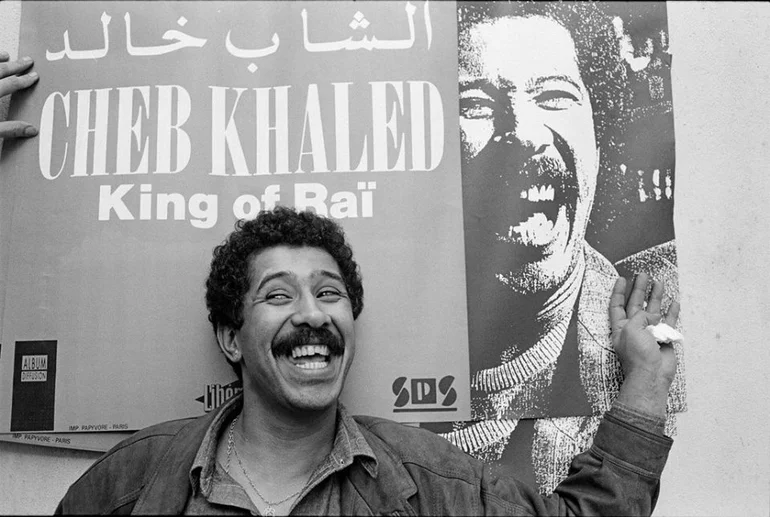
Cheb Khaled plays an important role here. In 1991, Cheb Khaled travelled to France and released his first album, Didi, which sold over 100,000 copies in France alone (Morgan, 1999). In 1996, he released the album, Sahra, which sold around 700,000 copies in France.
chenk

Chen Khaled

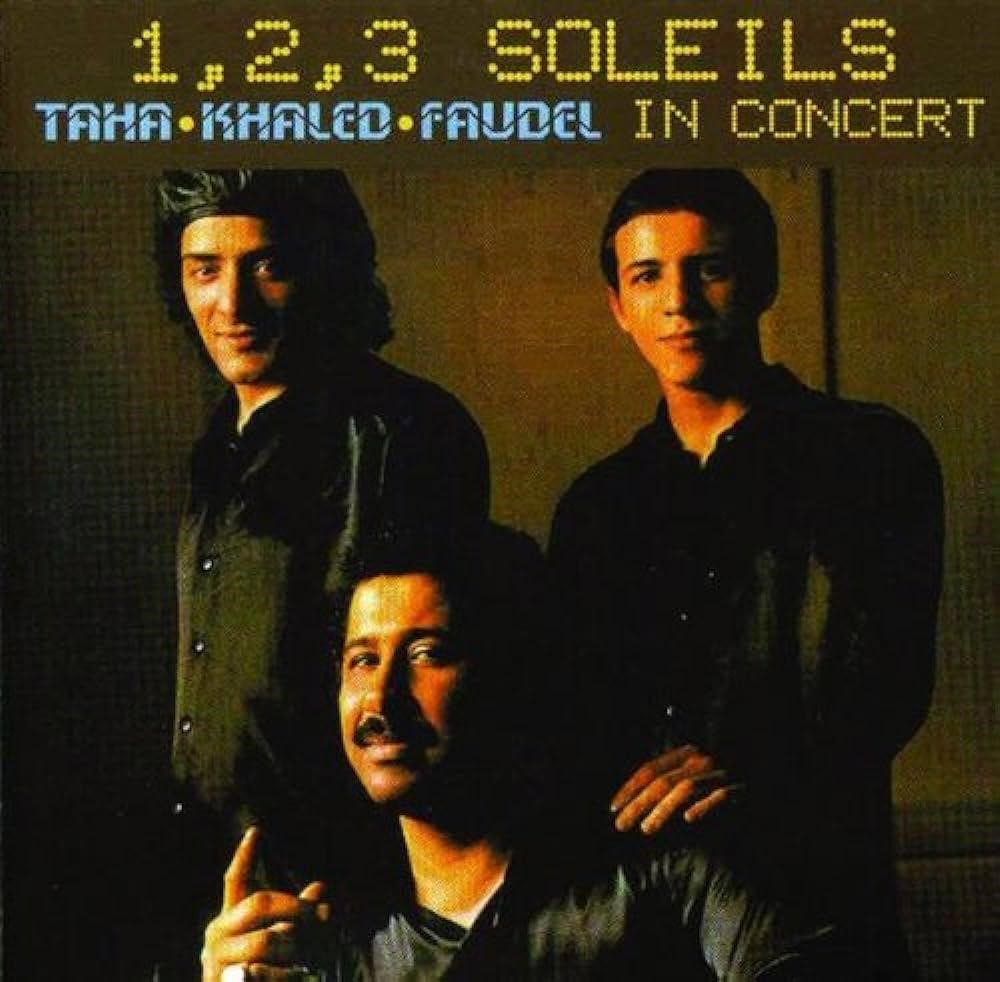
In 1998, with the offer of the Barclay company, Faudel and Rashid Taha gave a concert in Paris as the 1, 2, 3 Soleils group.[1] The concert, conducted by Hossam Ramzy, went down in world history as a concert where musicians from all over the world came together in orchestration and arrangement, and more than 50 musicians participated in the concert. After this concert, the recognition of Rai music has increased, and even reinterpreted examples have occurred all around the world. Worldwide, Sting did a joint project with Cheb Mami for the song Desert Rose. In Türkiye, artists such as Levent Yüksel and Süheyl-Behzat Uygur brothers have reinterpreted Rai music with Turkish lyrics.
123

1, 2, 3 Soleils

Conclusion

Throughout history, every nation has struggled for its existence, and Algeria’s struggle for independence is another example. Rai music was created during this struggle and became a source of motivation for people. It always defended the marginal in terms of its form but also expressed an impaired rebellion. However, today, with the dominance of fast music, just like fast food, the technical structure of Rai music has been increasingly restricted and seriously deformed. Therefore, Rai music is a subject that needs to be analysed in depth. This article is written from an introductory and partly analytical point of view, and it intends to explain a type of music performed in Muslim terrains and its formation process. With the hope of living with the unifying and encompassing power of music…

References

Kelfaoui, D. (Director). (2001). Memory of Rai. Cannes, France: Les Films du Village Mezzo Histoire Cannes TV in Association with Arte.

Morgan, A. (1999). Rai: Music under fire. In S. Broughton, M. Ellingham, & R. Trillo (Eds.), World Music (pp. 413-424). London: Rough.

Noor Al-Deen, H. (1995). The Algerian press: 1830 to present. International Communication Bulletin, 30(3-4), 5-7.

Schade-Poulsen, M. (1999). Men and popular music in Algeria. Austin: University of Texas Press.

[1] For the concert recording, see: https://bit.ly/3siR2VQ

[1] In Rai music, the male artist is called “cheb”, and the female artist is called “cheba”.

Tags: Algerian MusicRai Music
Previous Post

Kültürel İkilemde Bir Müzik: Cezayir ve Rai Müzik

Next Post

Yeniden Eskiye Bakmak: Yeni Mardin’de Geleneğin İcadı ve Canlandırmacı Mimarlık

Next Post
Inventing Tradition and Reviving Architecture in New Mardin

Yeniden Eskiye Bakmak: Yeni Mardin’de Geleneğin İcadı ve Canlandırmacı Mimarlık

Bir yanıt yazın Yanıtı iptal et

E-posta adresiniz yayınlanmayacak. Gerekli alanlar * ile işaretlenmişlerdir

  • A Possible New Breath in Regional Balances: The Alliance of Türkiye, Pakistan, Egypt, and Saudi Arabia

    Bölgesel Dengelerde Olası Yeni Bir Soluk: Türkiye, Pakistan, Mısır ve Suudi Arabistan İttifakı

    0 shares
    Share 0 Tweet 0
  • Nakşibendi-Hakkani Tarikatı

    0 shares
    Share 0 Tweet 0
  • Bilime Yön Verenler: Nobel Ödüllü Müslüman Bilim İnsanları

    0 shares
    Share 0 Tweet 0
  • Fuad Sezgin

    0 shares
    Share 0 Tweet 0
  • Sosyal Medyada İslamcı-Muhafazakâr Kamusallığın Dönüşümü Üzerine

    0 shares
    Share 0 Tweet 0
  • The Gravity of What Took Place at Al-Aqsa Mosque During Ramadan 2026

    Ramazan 2026’da Mescid-i Aksa’da Yaşananların Ciddiyeti

    0 shares
    Share 0 Tweet 0
  • The Gravity of What Took Place at Al-Aqsa Mosque During Ramadan 2026

    0 shares
    Share 0 Tweet 0
  • FLA-JNIM Cooperation and Shifting Security Dynamics in Mali

    0 shares
    Share 0 Tweet 0
  • FLA-JNIM İş Birliği ve Mali’de Değişen Güvenlik Dinamikleri

    0 shares
    Share 0 Tweet 0
  • The Current State of Indonesia’s Luxury Industry and the Landscape of Independent Handcrafted Watchmaking

    0 shares
    Share 0 Tweet 0

Platform: Müslüman Dünyanın Gündemi, Müslüman toplumların fikrî, siyasi, sosyal, ekonomik ve kültürel gündemlerini takip ve tahlil edip Müslüman dünyaya dair güncel ve özgün perspektifler sunmayı amaçlayan bir yayın organı olarak İLKE İlim Kültür Eğitim Vakfı bünyesinde kurulmuştur.

  • SAYILAR
  • ANALİZLER
  • HABERLER
  • SÖYLEŞİLER
  • DÜNYADAN SESLER
  • platform@ilke.org.tr
  • (0216) 310 43 18
  • Aziz Mahmut Hüdayi Mah. Türbe Kapısı Sk. No: 13 Üsküdar, İstanbul

2025 @ PLATFORM bir İLKE Vakfı kuruluşudur. Tüm hakları saklıdır. 

No Result
View All Result
  • Home
  • Analizler
  • Haberler
  • Söyleşiler
  • Dünyadan Sesler