
İLKE Vakfı
Platform
No Result
View All Result
  • PLATFORM
  • HABERLER
    İLKE Agenda: Muzzammil Ayyub Thakur ile Keşmir’in “Filistinleştirilmesi”

    İLKE Agenda: Muzzammil Ayyub Thakur ile Keşmir’in “Filistinleştirilmesi”

    İLKE Agenda: Muzzammil Ayyub Thakur ile Keşmir’in “Filistinleştirilmesi”

    The Platform Talks: Kinda Hawasli ile 8 Aralık Sonrası Suriye

    İLKE Agenda: Muzzammil Ayyub Thakur ile Keşmir’in “Filistinleştirilmesi”

    The Platform Talks: Azzam Tamimi ile 7 Ekim Sonrası Filistin

    İLKE Agenda: Muzzammil Ayyub Thakur ile Keşmir’in “Filistinleştirilmesi”

    İLKE Agenda: Gazze Soykırımı Günlerinde Aktivizm ve İslamofobi

    Filistin Sempozyumu: Filistin ve Küresel İlişkilerin Geleceği

    Filistin Sempozyumu: Filistin ve Küresel İlişkilerin Geleceği

    Filistin Sempozyumu: Filistin ve Küresel İlişkilerin Geleceği

    Müslüman Dünyada Çağdaş Düşünce Konferansı’nda buluşuyoruz!

    Filistin Sempozyumu: Filistin ve Küresel İlişkilerin Geleceği

    Müslüman Dünyada Çağdaş Düşünce Konferansı

    Filistin Sempozyumu: Filistin ve Küresel İlişkilerin Geleceği

    Dr. Jonathan Brown “İslam’ın Siyahiliğe ve Köleliğe Yaklaşımı” adlı seminer gerçekleştirdi.

  • ANALİZLER
    • All
    • Düşünce
    • Eğitim
    • Ekonomi
    • Enerji ve Çevre
    • Göç
    • Medya, Kültür ve Sanat
    • Temel Hak ve Özgürlükler
    • Toplumsal Meseleler
    The Gravity of What Took Place at Al-Aqsa Mosque During Ramadan 2026

    Ramazan 2026’da Mescid-i Aksa’da Yaşananların Ciddiyeti

    AFP/GETTY IMAGES

    FLA-JNIM İş Birliği ve Mali’de Değişen Güvenlik Dinamikleri

    Sosyal Medyada İslamcı-Muhafazakâr Kamusallığın Dönüşümü Üzerine

    Sosyal Medyada İslamcı-Muhafazakâr Kamusallığın Dönüşümü Üzerine

    Bangladeş’te 2026 Seçimleri Sonrası Siyasi Tartışmalar

    Bangladeş’te 2026 Seçimleri Sonrası Siyasi Tartışmalar

    Filistin’de Çocuk Olmak: 5 Nisan Filistinli Çocuklar Günü

    Filistin’de Çocuk Olmak: 5 Nisan Filistinli Çocuklar Günü

    Security, Fragility, and the Search for a New Equilibrium in the Gulf Following the Iranian Attacks

    İran Saldırıları Sonrası Körfez’de Güvenlik, Kırılganlık ve Yeni Denge Arayışı

  • SÖYLEŞİLER
    The Decolonization of Knowledge: Interview with Professor Souleymane Bachir Diagne

    Bilginin Dekolonizasyonu: Profesör Souleymane Bachir Diagne ile Röportaj

    A Possible New Breath in Regional Balances: The Alliance of Türkiye, Pakistan, Egypt, and Saudi Arabia

    Bölgesel Dengelerde Olası Yeni Bir Soluk: Türkiye, Pakistan, Mısır ve Suudi Arabistan İttifakı

    Digital Ummah and Muslim Identity: Dr. Sahar Khamis Interview

    Dijital Ümmet ve Müslüman Kimliği: Dr. Sahar Khamis ile Röportaj

    From the Ballot Box to the Street: The Rising Social Wave in Tanzania After the Election

    Sandıktan Sokağa: Tanzanya’da Seçim Sonrası Yükselen Toplumsal Dalga

    Müslüman Nüfusa Karşı Güvenlikleştirme

    Müslüman Nüfusa Karşı Güvenlikleştirme

    Gurbet Hikayeleri

    Gurbet Hikayeleri

    Göçü Yönetmek: Dr. Mehmet Köse’yle Söyleşi

    Göçü Yönetmek: Dr. Mehmet Köse’yle Söyleşi

    İstanbul’daki Uluslararası Öğrencilerle Söyleşi

    İstanbul’daki Uluslararası Öğrencilerle Söyleşi

    Zaytuna College Lisansüstü Eğitim Dekanı Maşuk Yamaç’la Söyleşi

    Zaytuna College Lisansüstü Eğitim Dekanı Maşuk Yamaç’la Söyleşi

  • DÜNYADAN SESLER
    Voices from the Muslim World | Sari Hanafi (with Turkish subtitles)

    Voices from the Muslim World | Sari Hanafi (with Turkish subtitles)

    Voices from the Muslim World | Ovamir Anjum

    Voices from the Muslim World | Ovamir Anjum

    VOICES FROM THE MUSLIM WORLD | DR. YASIR QADHI

    VOICES FROM THE MUSLIM WORLD | DR. YASIR QADHI

    VOICES FROM THE MUSLIM WORLD | DR. ADEEL MALIK

    VOICES FROM THE MUSLIM WORLD | DR. ADEEL MALIK

  • SAYILAR
  • VERİTABANI
    • All
    • Hareketler
    • Kurumlar
    • Şahsiyetler
    Pak-Türk Maarif

    Pak-Türk Maarif

    İslam Vakfı

    İslam Vakfı

    Avrupa Fetva ve Araştırma Konseyi

    Avrupa Fetva ve Araştırma Konseyi

    Tokyo Camii ve Diyanet Türk Kültür Merkezi

    Tokyo Camii ve Diyanet Türk Kültür Merkezi

  • PLATFORM
  • HABERLER
    İLKE Agenda: Muzzammil Ayyub Thakur ile Keşmir’in “Filistinleştirilmesi”

    İLKE Agenda: Muzzammil Ayyub Thakur ile Keşmir’in “Filistinleştirilmesi”

    İLKE Agenda: Muzzammil Ayyub Thakur ile Keşmir’in “Filistinleştirilmesi”

    The Platform Talks: Kinda Hawasli ile 8 Aralık Sonrası Suriye

    İLKE Agenda: Muzzammil Ayyub Thakur ile Keşmir’in “Filistinleştirilmesi”

    The Platform Talks: Azzam Tamimi ile 7 Ekim Sonrası Filistin

    İLKE Agenda: Muzzammil Ayyub Thakur ile Keşmir’in “Filistinleştirilmesi”

    İLKE Agenda: Gazze Soykırımı Günlerinde Aktivizm ve İslamofobi

    Filistin Sempozyumu: Filistin ve Küresel İlişkilerin Geleceği

    Filistin Sempozyumu: Filistin ve Küresel İlişkilerin Geleceği

    Filistin Sempozyumu: Filistin ve Küresel İlişkilerin Geleceği

    Müslüman Dünyada Çağdaş Düşünce Konferansı’nda buluşuyoruz!

    Filistin Sempozyumu: Filistin ve Küresel İlişkilerin Geleceği

    Müslüman Dünyada Çağdaş Düşünce Konferansı

    Filistin Sempozyumu: Filistin ve Küresel İlişkilerin Geleceği

    Dr. Jonathan Brown “İslam’ın Siyahiliğe ve Köleliğe Yaklaşımı” adlı seminer gerçekleştirdi.

  • ANALİZLER
    • All
    • Düşünce
    • Eğitim
    • Ekonomi
    • Enerji ve Çevre
    • Göç
    • Medya, Kültür ve Sanat
    • Temel Hak ve Özgürlükler
    • Toplumsal Meseleler
    The Gravity of What Took Place at Al-Aqsa Mosque During Ramadan 2026

    Ramazan 2026’da Mescid-i Aksa’da Yaşananların Ciddiyeti

    AFP/GETTY IMAGES

    FLA-JNIM İş Birliği ve Mali’de Değişen Güvenlik Dinamikleri

    Sosyal Medyada İslamcı-Muhafazakâr Kamusallığın Dönüşümü Üzerine

    Sosyal Medyada İslamcı-Muhafazakâr Kamusallığın Dönüşümü Üzerine

    Bangladeş’te 2026 Seçimleri Sonrası Siyasi Tartışmalar

    Bangladeş’te 2026 Seçimleri Sonrası Siyasi Tartışmalar

    Filistin’de Çocuk Olmak: 5 Nisan Filistinli Çocuklar Günü

    Filistin’de Çocuk Olmak: 5 Nisan Filistinli Çocuklar Günü

    Security, Fragility, and the Search for a New Equilibrium in the Gulf Following the Iranian Attacks

    İran Saldırıları Sonrası Körfez’de Güvenlik, Kırılganlık ve Yeni Denge Arayışı

  • SÖYLEŞİLER
    The Decolonization of Knowledge: Interview with Professor Souleymane Bachir Diagne

    Bilginin Dekolonizasyonu: Profesör Souleymane Bachir Diagne ile Röportaj

    A Possible New Breath in Regional Balances: The Alliance of Türkiye, Pakistan, Egypt, and Saudi Arabia

    Bölgesel Dengelerde Olası Yeni Bir Soluk: Türkiye, Pakistan, Mısır ve Suudi Arabistan İttifakı

    Digital Ummah and Muslim Identity: Dr. Sahar Khamis Interview

    Dijital Ümmet ve Müslüman Kimliği: Dr. Sahar Khamis ile Röportaj

    From the Ballot Box to the Street: The Rising Social Wave in Tanzania After the Election

    Sandıktan Sokağa: Tanzanya’da Seçim Sonrası Yükselen Toplumsal Dalga

    Müslüman Nüfusa Karşı Güvenlikleştirme

    Müslüman Nüfusa Karşı Güvenlikleştirme

    Gurbet Hikayeleri

    Gurbet Hikayeleri

    Göçü Yönetmek: Dr. Mehmet Köse’yle Söyleşi

    Göçü Yönetmek: Dr. Mehmet Köse’yle Söyleşi

    İstanbul’daki Uluslararası Öğrencilerle Söyleşi

    İstanbul’daki Uluslararası Öğrencilerle Söyleşi

    Zaytuna College Lisansüstü Eğitim Dekanı Maşuk Yamaç’la Söyleşi

    Zaytuna College Lisansüstü Eğitim Dekanı Maşuk Yamaç’la Söyleşi

  • DÜNYADAN SESLER
    Voices from the Muslim World | Sari Hanafi (with Turkish subtitles)

    Voices from the Muslim World | Sari Hanafi (with Turkish subtitles)

    Voices from the Muslim World | Ovamir Anjum

    Voices from the Muslim World | Ovamir Anjum

    VOICES FROM THE MUSLIM WORLD | DR. YASIR QADHI

    VOICES FROM THE MUSLIM WORLD | DR. YASIR QADHI

    VOICES FROM THE MUSLIM WORLD | DR. ADEEL MALIK

    VOICES FROM THE MUSLIM WORLD | DR. ADEEL MALIK

  • SAYILAR
  • VERİTABANI
    • All
    • Hareketler
    • Kurumlar
    • Şahsiyetler
    Pak-Türk Maarif

    Pak-Türk Maarif

    İslam Vakfı

    İslam Vakfı

    Avrupa Fetva ve Araştırma Konseyi

    Avrupa Fetva ve Araştırma Konseyi

    Tokyo Camii ve Diyanet Türk Kültür Merkezi

    Tokyo Camii ve Diyanet Türk Kültür Merkezi

No Result
View All Result
Platform
No Result
View All Result
Home Analyses

Muslim Charitable Practices in the UK

Samantha May by Samantha May
6 Kasım 2025
in Analyses, Opinion
0
Muslim Charitable Practices in the UK
0
SHARES
3
VIEWS
Share on FacebookShare on Twitter

The growth of the UK’s Muslim population and the related rise of Muslim charitable giving have augmented and strengthened the British charitable domain. Acting on humanitarian and faith grounds, Muslim charitable practices in the UK assist in creating a vibrant civil society. A recent report indicates that Muslims within the UK donate over four times as much to charitable causes than any other group by faith categorization (BlueState, 2024). Like elsewhere, Muslim charity also has its challenges, which include a cost-of-living crisis and post-pandemic recovery. However, Muslim charities and practitioners are also acting within an environment of Islamophobia and are disproportionately affected by Financial Counter-Terror policies (Metcalfe-Hough, 2015; FitzGerald, 2024; May, 2021). The terrain of Muslim charitable practices within Britain cannot be considered a homogenous whole. In 2011, around half (47%) of Muslims were born in the UK, and the diversity of ethnicities, socio-economic backgrounds, and religious interpretations is wide. 

Charitable Distribution Mechanisms 

Muslims living in the UK do so as a minority faith group, which affects their charitable practices. There are no formal state-run zakat committees, no formal official state-sponsored mosques or Islamic institutions. Therefore, Muslims within the UK have developed a variety of methods to collect and distribute their religious alms. 

Some Muslims will distribute their charitable obligations directly to those they know are in need, either personally or via bank transfers or Informal Value Transfer Systems. In addition, many Muslims will also contribute to charitable causes in their local mosque and Islamic centers by simply depositing money in collection boxes placed around the institutions. A further common way for Muslims to distribute their charitable funds is through established charities, either “Muslim” or secular. Most frequently, charitable funds are dispersed through a mixture of all the above mechanisms.

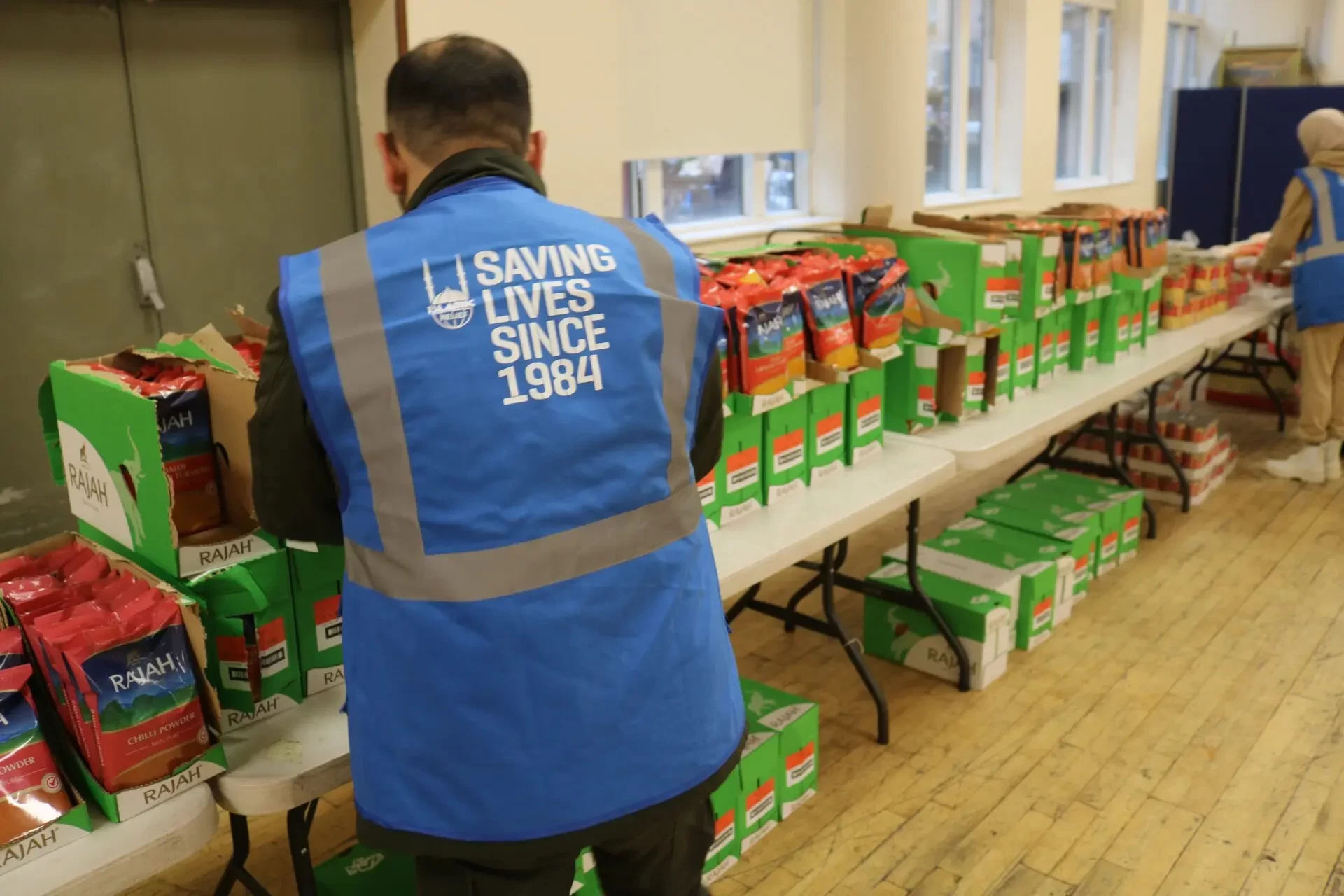
Islamic charities in the UK have established themselves in Britain since the mid-1980s with the founding of Islamic Relief. The 1990s saw the expansion and growth of the Muslim charitable sector spurned again by international political events such as the Bosnian crisis. Currently, there is an array of Muslim charities within the UK, with some of the most well-known being: Islamic Relief, The Ummah Welfare Trust, Muslim Hands, Human Appeal, Penny Appeal, The National Zakat Foundation, and many more. Different organizations will focus on different projects, with some focusing on dispersal solely in the UK while others focusing more overseas: most organizations focus on both domestic and international giving simultaneously.

Muslim charity in the UK 

Following 9/11 and the Financial War on Terror, charities have been viewed internationally with suspicion of being fronts for terrorist financing (May, 2021). In the UK, negative repercussions of financial counter-terror policies on charities are felt in numerous ways, with the most salient being increased regulation and surveillance of charities, suspicion of international humanitarian work, especially projects in high-risk conflict areas such as Afghanistan, Palestine, Syria, Somalia, and difficulties accessing mainstream banking and financial institutions. While all humanitarian and non-profit organizations have been affected, negative repercussions have been most acutely felt by Muslim charities, with a disproportionate number of Muslim charities facing an investigation from the Charity Commission and difficulties accessing mainstream banking facilities (Randeep, 2014; Imtiaz, 2017; May, 2021). Despite the challenges, the number of Muslim charities continually increases within the UK, providing relief from poverty and hardships both domestically and internationally.

There are currently over 1,600 Muslim charities registered with the Charity Commission for England and Wales with an estimated combined income of £275 million (Yasmin and Ghafran, 2019: 5). An NPC report indicated that Muslim charities may make up around 4.74% of the charitable sector in the UK, yet they receive only 3.32% of overall charitable income (Wharton and Las Casas, 2016: 12). What this suggests is that far from being isolationists and giving only to fellow Muslims, the British Muslim population are willing to financially support causes that transcend faith boundaries. Monies are therefore donated with the knowledge and intention that they fall into the category of sadaqah and will be used for charitable purposes for those in need regardless of faith, nationality, or other exclusive categories. Sadaqah is the term used for general charity and is not restricted to the giving of money alone, so a smile or picking up litter can also be considered an act of sadaqah. Unlike zakat, there are no Quranic restrictions on sadaqah, and Muslims in the UK will donate to any cause they feel worthy of. Muslim practices of sadaqah are, therefore, largely indistinguishable from non-Muslim charitable donating behaviors and are financially far more significant than annual zakat donations. Qualitative interviews with Muslim charitable practitioners indicated multiple motivations for giving sadaqah. However, they ultimately stemmed from the belief that Allah will reward charitable deeds, that the poor and needy have the right to alms, and that charitable acts create society belongings. A typical explanation of the motivations for sadaqah was articulated by one interviewee as: Automatically you have been brought up with the belief that you have to give to the poor… They have a right… When you give to them … they become like your brother, and this creates a love between you as a human race… it creates the bonds of one human race.

The Injunction to Give Locally 

The Qur’an instructs that there are eight rightful recipients of zakat. In the UK context, the emphasis of individual giving was largely on the first two categories: poor and needy. In contrast to charitable practices in Muslim-majority states, Muslims in the UK generally accept that a substantial percentage of zakat donations are received overseas. Participant interviewee’s explanations of charitable giving highlight concerns surrounding obligations to family and kin, religious obligations to the global ummah, and humanitarian purposes to alleviate suffering and hardship associated with poverty and economic insecurity. The generally accepted understanding of zakat in the four leading legal schools of Sunni Islam is that it should be given locally, although many Muslims in the UK donate their zakat overseas. Therefore, despite a clear and self-conscious awareness that the Islamic faith advocates donating charity to your own locality or community, many Muslims within the UK felt the overriding factor was not one of geography but need. 

Another aspect of this dilemma goes beyond just perceptions of greatest need but also in interpretations of “locality,” “family,” and “community.” Does the challenge arise in the contemporary era of mass migration of where it is considered “local”? Who is considered the “community”? Should “closeness” be associated with geographical proximity, or closeness of familiar/blood ties, or closeness in terms of religious affiliation? In the era of mass migration and in the context of a Muslim minority state such as the UK, the challenges and contradictions become more apparent. For instance, there may be a contradiction between donating “locally” and starting with “your family” if the family is geographically dispersed. The perception, therefore, for many individuals who chose to donate outside Britain was that the British state staved off the worst of the suffering associated with poverty and need by providing welfare provisions. Thus, in comparison to the levels of need, want, and poverty elsewhere, it was deemed inappropriate by some to donate within the UK. Rather than being an either/or choice to donate within the UK or elsewhere, Muslims in the UK are increasingly likely to do both as they negotiate their place in British society as fellow citizens while retaining obligations to the global ummah. British Muslims are demonstrating through charitable practices that they are both British and Muslim.

References

Bluestate. (2024). British Muslim Giving Behaviours: What we know about the most generous group of UK donors?. BlueState. Retrieved from https://www.bluestate.co/wp-content/uploads/2024/04/Blue_State_Muslim_Giving_Behaviours_Report_April_2024.pdf 

FitzGerald, G. (2024). Mapping anti-Muslim discrimination and information manipulation, and its impact on humanitarian aid and development. Fairfax, VA: The Schar School of Policy & Government, George Mason University. Retrieved from https://jliflc.com/resources/fitzgerald-mapping-anti-muslim-discrimination/ 

Imtiaz, A. (2019). An Examination of the Inquiries Conducted on British Muslim Charities by the Charity Commission. Muslim Charities Forum. Retrieved from https://www.muslimcharitiesforum.org.uk/wp-content/uploads/2020/01/MCF_JOURNAL_1920_WebSinglePage_FINAL.pdf

May, Samantha. (2021). Islamic Charity: How Charitable Giving Became Seen as a Threat to National Security. London: Zed Books.

Metcalfe-Hough. V, Keatinge, T. & Pantuliano, S. (2015). UK humanitarian aid in the age of counter-terrorism: perceptions and reality.  Humanitarian Policy Group Working Paper. London: Overseas Development Institute. Retrieved from https://www.odi.org/sites/odi.org.uk/files/odi-assets/publications-opinion-files/9479.pdf 

Muslim Council of Britain. (2015). British Muslims in Numbers: A Demographic, Socio-Economic and Health Profile of Muslims in Britain Drawing on the 2011 Census. Retrieved from www.mcb.org.uk/wp-content/uploads/2015/02/mcbCensusReport_2015.pdf 

Ramesh, Randeep (2014). Quarter of Charity Commission Inquiries Target Muslim Groups. The Guardian. Retrieved from  https://www.theguardian.com/society/2014/nov/16/charity-commission-inquiries-muslim-groups 

Yasmin, S. & Ghafran, C. (2019). The problematics of accountability: Internal responses to external pressures in exposed organisations. Critical Perspectives on Accounting, 64.

Wharton, R. & Lucy de Las Casas (2016). What a difference a faith makes: ınsights ınto faith-based charities. NCP Report. London: New Philanthropy Capital.

Tags: Muslim CharityUK
Previous Post

Civil Societies and Human Rights Advocacy: Lessons from Malaysia

Next Post

Mülteci Kampı ve İsrail Hapishaneleri Arasında Bir Hayat: Hamas’ın Yeni Lideri Yahya Sinvar

Next Post
Mülteci Kampı ve İsrail Hapishaneleri Arasında Bir Hayat: Hamas’ın Yeni Lideri Yahya Sinvar

Mülteci Kampı ve İsrail Hapishaneleri Arasında Bir Hayat: Hamas’ın Yeni Lideri Yahya Sinvar

Bir yanıt yazın Yanıtı iptal et

E-posta adresiniz yayınlanmayacak. Gerekli alanlar * ile işaretlenmişlerdir

  • A Possible New Breath in Regional Balances: The Alliance of Türkiye, Pakistan, Egypt, and Saudi Arabia

    Bölgesel Dengelerde Olası Yeni Bir Soluk: Türkiye, Pakistan, Mısır ve Suudi Arabistan İttifakı

    0 shares
    Share 0 Tweet 0
  • Bilime Yön Verenler: Nobel Ödüllü Müslüman Bilim İnsanları

    0 shares
    Share 0 Tweet 0
  • Nakşibendi-Hakkani Tarikatı

    0 shares
    Share 0 Tweet 0
  • Fuad Sezgin

    0 shares
    Share 0 Tweet 0
  • Sosyal Medyada İslamcı-Muhafazakâr Kamusallığın Dönüşümü Üzerine

    0 shares
    Share 0 Tweet 0
  • The Gravity of What Took Place at Al-Aqsa Mosque During Ramadan 2026

    Ramazan 2026’da Mescid-i Aksa’da Yaşananların Ciddiyeti

    0 shares
    Share 0 Tweet 0
  • The Gravity of What Took Place at Al-Aqsa Mosque During Ramadan 2026

    0 shares
    Share 0 Tweet 0
  • FLA-JNIM Cooperation and Shifting Security Dynamics in Mali

    0 shares
    Share 0 Tweet 0
  • FLA-JNIM İş Birliği ve Mali’de Değişen Güvenlik Dinamikleri

    0 shares
    Share 0 Tweet 0
  • The Current State of Indonesia’s Luxury Industry and the Landscape of Independent Handcrafted Watchmaking

    0 shares
    Share 0 Tweet 0

Platform: Müslüman Dünyanın Gündemi, Müslüman toplumların fikrî, siyasi, sosyal, ekonomik ve kültürel gündemlerini takip ve tahlil edip Müslüman dünyaya dair güncel ve özgün perspektifler sunmayı amaçlayan bir yayın organı olarak İLKE İlim Kültür Eğitim Vakfı bünyesinde kurulmuştur.

  • SAYILAR
  • ANALİZLER
  • HABERLER
  • SÖYLEŞİLER
  • DÜNYADAN SESLER
  • platform@ilke.org.tr
  • (0216) 310 43 18
  • Aziz Mahmut Hüdayi Mah. Türbe Kapısı Sk. No: 13 Üsküdar, İstanbul

2025 @ PLATFORM bir İLKE Vakfı kuruluşudur. Tüm hakları saklıdır. 

No Result
View All Result
  • Home
  • Analizler
  • Haberler
  • Söyleşiler
  • Dünyadan Sesler