









İLKE Vakfı
Platform
No Result
View All Result
  • PLATFORM
  • HABERLER
    İLKE Agenda: Muzzammil Ayyub Thakur ile Keşmir’in “Filistinleştirilmesi”

    İLKE Agenda: Muzzammil Ayyub Thakur ile Keşmir’in “Filistinleştirilmesi”

    İLKE Agenda: Muzzammil Ayyub Thakur ile Keşmir’in “Filistinleştirilmesi”

    The Platform Talks: Kinda Hawasli ile 8 Aralık Sonrası Suriye

    İLKE Agenda: Muzzammil Ayyub Thakur ile Keşmir’in “Filistinleştirilmesi”

    The Platform Talks: Azzam Tamimi ile 7 Ekim Sonrası Filistin

    İLKE Agenda: Muzzammil Ayyub Thakur ile Keşmir’in “Filistinleştirilmesi”

    İLKE Agenda: Gazze Soykırımı Günlerinde Aktivizm ve İslamofobi

    Filistin Sempozyumu: Filistin ve Küresel İlişkilerin Geleceği

    Filistin Sempozyumu: Filistin ve Küresel İlişkilerin Geleceği

    Filistin Sempozyumu: Filistin ve Küresel İlişkilerin Geleceği

    Müslüman Dünyada Çağdaş Düşünce Konferansı’nda buluşuyoruz!

    Filistin Sempozyumu: Filistin ve Küresel İlişkilerin Geleceği

    Müslüman Dünyada Çağdaş Düşünce Konferansı

    Filistin Sempozyumu: Filistin ve Küresel İlişkilerin Geleceği

    Dr. Jonathan Brown “İslam’ın Siyahiliğe ve Köleliğe Yaklaşımı” adlı seminer gerçekleştirdi.

  • ANALİZLER
    • All
    • Düşünce
    • Eğitim
    • Ekonomi
    • Enerji ve Çevre
    • Göç
    • Medya, Kültür ve Sanat
    • Temel Hak ve Özgürlükler
    • Toplumsal Meseleler
    The Gravity of What Took Place at Al-Aqsa Mosque During Ramadan 2026

    Ramazan 2026’da Mescid-i Aksa’da Yaşananların Ciddiyeti

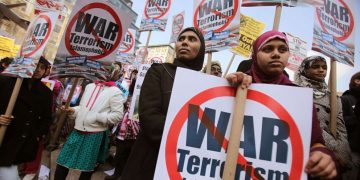
    AFP/GETTY IMAGES

    FLA-JNIM İş Birliği ve Mali’de Değişen Güvenlik Dinamikleri

    Sosyal Medyada İslamcı-Muhafazakâr Kamusallığın Dönüşümü Üzerine

    Sosyal Medyada İslamcı-Muhafazakâr Kamusallığın Dönüşümü Üzerine

    Bangladeş’te 2026 Seçimleri Sonrası Siyasi Tartışmalar

    Bangladeş’te 2026 Seçimleri Sonrası Siyasi Tartışmalar

    Filistin’de Çocuk Olmak: 5 Nisan Filistinli Çocuklar Günü

    Filistin’de Çocuk Olmak: 5 Nisan Filistinli Çocuklar Günü

    Security, Fragility, and the Search for a New Equilibrium in the Gulf Following the Iranian Attacks

    İran Saldırıları Sonrası Körfez’de Güvenlik, Kırılganlık ve Yeni Denge Arayışı

  • SÖYLEŞİLER
    The Decolonization of Knowledge: Interview with Professor Souleymane Bachir Diagne

    Bilginin Dekolonizasyonu: Profesör Souleymane Bachir Diagne ile Röportaj

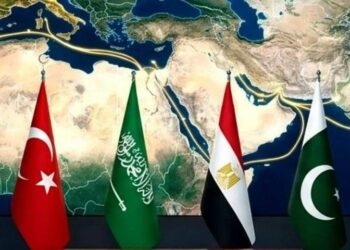
    A Possible New Breath in Regional Balances: The Alliance of Türkiye, Pakistan, Egypt, and Saudi Arabia

    Bölgesel Dengelerde Olası Yeni Bir Soluk: Türkiye, Pakistan, Mısır ve Suudi Arabistan İttifakı

    Digital Ummah and Muslim Identity: Dr. Sahar Khamis Interview

    Dijital Ümmet ve Müslüman Kimliği: Dr. Sahar Khamis ile Röportaj

    From the Ballot Box to the Street: The Rising Social Wave in Tanzania After the Election

    Sandıktan Sokağa: Tanzanya’da Seçim Sonrası Yükselen Toplumsal Dalga

    Müslüman Nüfusa Karşı Güvenlikleştirme

    Müslüman Nüfusa Karşı Güvenlikleştirme

    Gurbet Hikayeleri

    Gurbet Hikayeleri

    Göçü Yönetmek: Dr. Mehmet Köse’yle Söyleşi

    Göçü Yönetmek: Dr. Mehmet Köse’yle Söyleşi

    İstanbul’daki Uluslararası Öğrencilerle Söyleşi

    İstanbul’daki Uluslararası Öğrencilerle Söyleşi

    Zaytuna College Lisansüstü Eğitim Dekanı Maşuk Yamaç’la Söyleşi

    Zaytuna College Lisansüstü Eğitim Dekanı Maşuk Yamaç’la Söyleşi

  • DÜNYADAN SESLER
    Voices from the Muslim World | Sari Hanafi (with Turkish subtitles)

    Voices from the Muslim World | Sari Hanafi (with Turkish subtitles)

    Voices from the Muslim World | Ovamir Anjum

    Voices from the Muslim World | Ovamir Anjum

    VOICES FROM THE MUSLIM WORLD | DR. YASIR QADHI

    VOICES FROM THE MUSLIM WORLD | DR. YASIR QADHI

    VOICES FROM THE MUSLIM WORLD | DR. ADEEL MALIK

    VOICES FROM THE MUSLIM WORLD | DR. ADEEL MALIK

  • SAYILAR
  • VERİTABANI
    • All
    • Hareketler
    • Kurumlar
    • Şahsiyetler
    Pak-Türk Maarif

    Pak-Türk Maarif

    İslam Vakfı

    İslam Vakfı

    Avrupa Fetva ve Araştırma Konseyi

    Avrupa Fetva ve Araştırma Konseyi

    Tokyo Camii ve Diyanet Türk Kültür Merkezi

    Tokyo Camii ve Diyanet Türk Kültür Merkezi

  • PLATFORM
  • HABERLER
    İLKE Agenda: Muzzammil Ayyub Thakur ile Keşmir’in “Filistinleştirilmesi”

    İLKE Agenda: Muzzammil Ayyub Thakur ile Keşmir’in “Filistinleştirilmesi”

    İLKE Agenda: Muzzammil Ayyub Thakur ile Keşmir’in “Filistinleştirilmesi”

    The Platform Talks: Kinda Hawasli ile 8 Aralık Sonrası Suriye

    İLKE Agenda: Muzzammil Ayyub Thakur ile Keşmir’in “Filistinleştirilmesi”

    The Platform Talks: Azzam Tamimi ile 7 Ekim Sonrası Filistin

    İLKE Agenda: Muzzammil Ayyub Thakur ile Keşmir’in “Filistinleştirilmesi”

    İLKE Agenda: Gazze Soykırımı Günlerinde Aktivizm ve İslamofobi

    Filistin Sempozyumu: Filistin ve Küresel İlişkilerin Geleceği

    Filistin Sempozyumu: Filistin ve Küresel İlişkilerin Geleceği

    Filistin Sempozyumu: Filistin ve Küresel İlişkilerin Geleceği

    Müslüman Dünyada Çağdaş Düşünce Konferansı’nda buluşuyoruz!

    Filistin Sempozyumu: Filistin ve Küresel İlişkilerin Geleceği

    Müslüman Dünyada Çağdaş Düşünce Konferansı

    Filistin Sempozyumu: Filistin ve Küresel İlişkilerin Geleceği

    Dr. Jonathan Brown “İslam’ın Siyahiliğe ve Köleliğe Yaklaşımı” adlı seminer gerçekleştirdi.

  • ANALİZLER
    • All
    • Düşünce
    • Eğitim
    • Ekonomi
    • Enerji ve Çevre
    • Göç
    • Medya, Kültür ve Sanat
    • Temel Hak ve Özgürlükler
    • Toplumsal Meseleler
    The Gravity of What Took Place at Al-Aqsa Mosque During Ramadan 2026

    Ramazan 2026’da Mescid-i Aksa’da Yaşananların Ciddiyeti

    AFP/GETTY IMAGES

    FLA-JNIM İş Birliği ve Mali’de Değişen Güvenlik Dinamikleri

    Sosyal Medyada İslamcı-Muhafazakâr Kamusallığın Dönüşümü Üzerine

    Sosyal Medyada İslamcı-Muhafazakâr Kamusallığın Dönüşümü Üzerine

    Bangladeş’te 2026 Seçimleri Sonrası Siyasi Tartışmalar

    Bangladeş’te 2026 Seçimleri Sonrası Siyasi Tartışmalar

    Filistin’de Çocuk Olmak: 5 Nisan Filistinli Çocuklar Günü

    Filistin’de Çocuk Olmak: 5 Nisan Filistinli Çocuklar Günü

    Security, Fragility, and the Search for a New Equilibrium in the Gulf Following the Iranian Attacks

    İran Saldırıları Sonrası Körfez’de Güvenlik, Kırılganlık ve Yeni Denge Arayışı

  • SÖYLEŞİLER
    The Decolonization of Knowledge: Interview with Professor Souleymane Bachir Diagne

    Bilginin Dekolonizasyonu: Profesör Souleymane Bachir Diagne ile Röportaj

    A Possible New Breath in Regional Balances: The Alliance of Türkiye, Pakistan, Egypt, and Saudi Arabia

    Bölgesel Dengelerde Olası Yeni Bir Soluk: Türkiye, Pakistan, Mısır ve Suudi Arabistan İttifakı

    Digital Ummah and Muslim Identity: Dr. Sahar Khamis Interview

    Dijital Ümmet ve Müslüman Kimliği: Dr. Sahar Khamis ile Röportaj

    From the Ballot Box to the Street: The Rising Social Wave in Tanzania After the Election

    Sandıktan Sokağa: Tanzanya’da Seçim Sonrası Yükselen Toplumsal Dalga

    Müslüman Nüfusa Karşı Güvenlikleştirme

    Müslüman Nüfusa Karşı Güvenlikleştirme

    Gurbet Hikayeleri

    Gurbet Hikayeleri

    Göçü Yönetmek: Dr. Mehmet Köse’yle Söyleşi

    Göçü Yönetmek: Dr. Mehmet Köse’yle Söyleşi

    İstanbul’daki Uluslararası Öğrencilerle Söyleşi

    İstanbul’daki Uluslararası Öğrencilerle Söyleşi

    Zaytuna College Lisansüstü Eğitim Dekanı Maşuk Yamaç’la Söyleşi

    Zaytuna College Lisansüstü Eğitim Dekanı Maşuk Yamaç’la Söyleşi

  • DÜNYADAN SESLER
    Voices from the Muslim World | Sari Hanafi (with Turkish subtitles)

    Voices from the Muslim World | Sari Hanafi (with Turkish subtitles)

    Voices from the Muslim World | Ovamir Anjum

    Voices from the Muslim World | Ovamir Anjum

    VOICES FROM THE MUSLIM WORLD | DR. YASIR QADHI

    VOICES FROM THE MUSLIM WORLD | DR. YASIR QADHI

    VOICES FROM THE MUSLIM WORLD | DR. ADEEL MALIK

    VOICES FROM THE MUSLIM WORLD | DR. ADEEL MALIK

  • SAYILAR
  • VERİTABANI
    • All
    • Hareketler
    • Kurumlar
    • Şahsiyetler
    Pak-Türk Maarif

    Pak-Türk Maarif

    İslam Vakfı

    İslam Vakfı

    Avrupa Fetva ve Araştırma Konseyi

    Avrupa Fetva ve Araştırma Konseyi

    Tokyo Camii ve Diyanet Türk Kültür Merkezi

    Tokyo Camii ve Diyanet Türk Kültür Merkezi

No Result
View All Result
Platform
No Result
View All Result
Home Analyses

Protests Everywhere: What’s Really Going on with Indonesia’s Economy

Fatin by Fatin
6 Kasım 2025
in Analyses, Social Issues
0
Protests Everywhere: What’s Really Going on with Indonesia’s Economy
0
SHARES
2
VIEWS
Share on FacebookShare on Twitter

Protests in Indonesia have escalated from localized issues to widespread unrest, driven by rising living costs, stagnant wages, and inequality. Diverse groups, including students and workers, mobilize against state repression. The situation highlights structural economic weaknesses, raising concerns about stability and signaling deeper societal grievances around fairness and representation.

*This analysis is written by Fatin Fadhilah Hasib, Meri Indri Hapsari, Dina Fitrisia Septiarini

Introduction: From Sporadic Protests to Daily Unrest

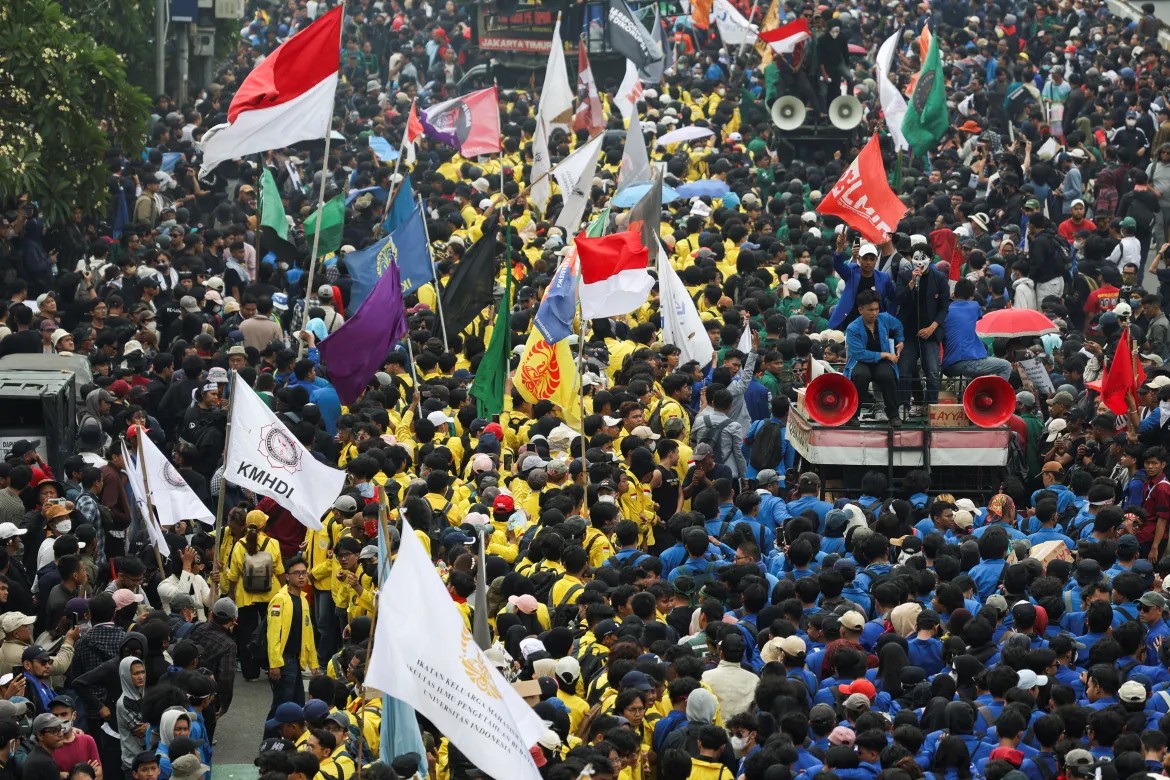
During most of Indonesia’s post-reform era, protests were episodic, localized, and related to specific issues, such as corruption or regional elections. Now, demonstrations have become widespread, frequent, and multisectoral. From Jakarta to Surabaya and Pati, riots escalated sharply in August 2025 after violent clashes that killed several people and led to the arrest of thousands.

This paper argues that these protests are not random disturbances, but rather symptoms of more profound structural weaknesses in the Indonesian economy. Rising living costs, stagnant wages, and striking inequality have created fertile ground for unrest, while state repression has further radicalized demonstrations.

Economic Roots of the Unrest

Inflation in Daily Life

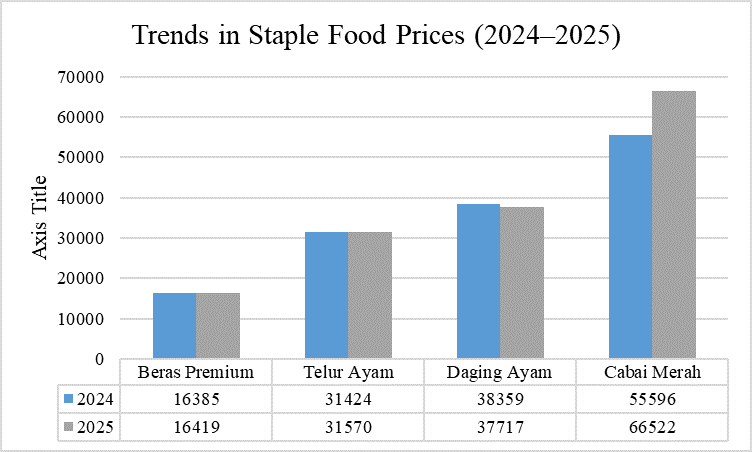
Although the official inflation rate appears to be “under control,” the year-on-year comparison of staple food prices tells another story. From August 2024 to August 2025, the price of premium rice increased slightly from IDR 16,385 to IDR 16,419 per kilogram, while eggs also rose marginally from IDR 31,424 to IDR 31,570 per kilogram. Chicken meat prices, on the other hand, edged down from IDR 38,359 to IDR 37,717 per kilogram. The most significant surge occurred in red chili peppers, which jumped from IDR 55,596 to IDR 66,522 per kilogram—an increase of nearly 20%. Even moderate shifts in rice and eggs, combined with spikes in volatile commodities like chili, strain household budgets and worsen the purchasing power of families already grappling with stagnant wages.

Visual 1: Trends in Staple Food Prices (2024–2025)
Source: Statistics Indonesia (BPS), 2025

Stagnant Incomes and Precarious Work

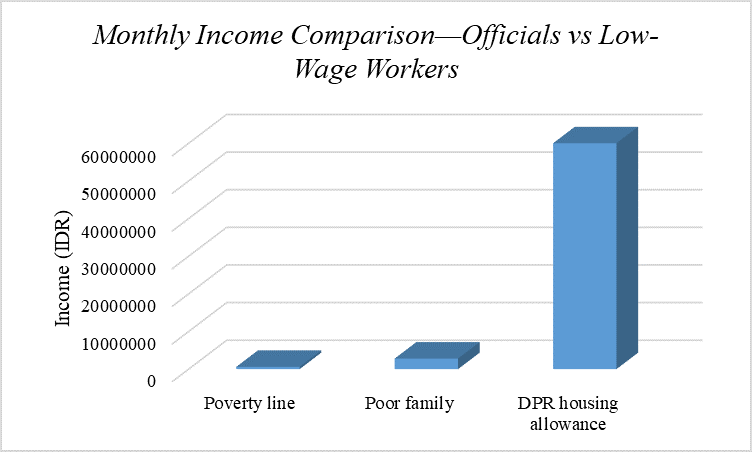
Contract teachers highlight the disparity between wages and living expenses. Seventy-four percent of them earn below the local minimum wage; some even receive only IDR 785,000 per month, while the average salary for elementary school teachers is only IDR 1.2 million. This reflects a broader phenomenon of unstable employment—short-term contracts, low wages, and minimal protections—that dominates Indonesia’s labor market. The contrast is striking: while members of parliament enjoy a monthly housing allowance of IDR 50 million, the official poverty line remains at IDR 595,242 per capita (BPS, 2024). A family of five living below the poverty line survives on only IDR 2.8 million per month. This imbalance reflects what relative deprivation theory predicts: as inequality becomes more visible, grievances deepen and mobilization spreads (Gurr, 1970).

Visual 2: Monthly Income Comparison—Officials vs Low-Wage Workers
Source: Statistics Indonesia (BPS), 2025

Who Is Protesting?

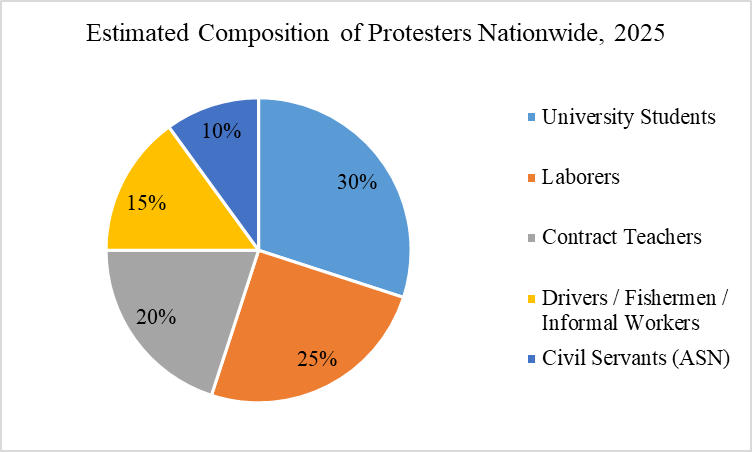
Unlike previous waves of unrest, which were dominated by students or organized labor unions, the current demonstrations involve almost all segments of society. The #IndonesiaGelap movement, led by the Indonesian Student Executive Board Alliance (BEM SI), successfully mobilized around 5,000 students in February 2025. In Pati, the scale of the demonstrations was much larger, with 85,000–100,000 participants taking part in protests in August. Demonstration participants now include contract teachers, fishermen, truck drivers, civil servants, and online motorcycle taxi drivers.

Charles Tilly’s (2004) work on social movements notes that when grievances unite, the “repertoire of resistance” expands across social groups. The current demonstrations in Indonesia demonstrate this: the transformation of economic pressure into cross-class mass mobilization and widespread financial insecurity.

Visual 3: Estimated Composition of Protesters Nationwide, 2025
Source: Compiled from media reports & protest estimates (2025)

The Social and Political Toll

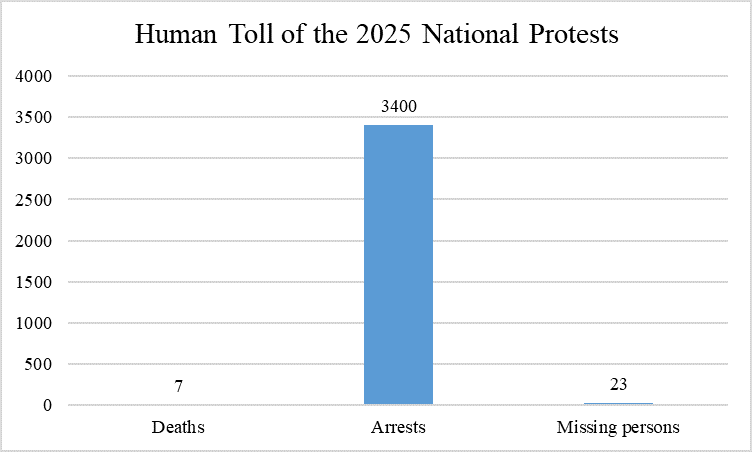
The demonstrations were not peaceful. In Pati, a viral video showed a protester being killed by a police water cannon, sparking nationwide outrage. During August 2025, at least seven protesters were killed, more than 3,400 were arrested, and around 20–23 people are still missing. This escalation illustrates what Della Porta & Tarrow (2012) describe as the radicalization of conflict—when state repression intensifies rather than defusing protest activity.

The riots also shook economic stability. The Jakarta Composite Index (IHSG) fell 2.27% over the week, while the rupiah weakened by nearly 1%, prompting Bank Indonesia to intervene. Such volatility signaled that social discontent was no longer solely a domestic issue but had turned into a broader political and market risk.

Visual 4: Impact of the 2025 National Protests—Human Toll of the 2025 National Protests
Source: Compiled from Tempo and AP News (2025).

Implications for Indonesia’s Stability

The convergence of food insecurity, wage stagnation, and inequality underscores structural fragilities in Indonesia’s development model. As Snow & Soule (2010) argue, movements escalate when everyday grievances align with perceptions of systemic injustice. Indonesia is reaching a critical inflection point: protests are not only about food prices, but also about fairness, dignity, and representation.

The government’s response—primarily deploying additional security forces—risks deepening mistrust and eroding the legitimacy of governance. If unchecked, unrest threatens not only political stability but also investor confidence. The challenge is thus dual: to manage short-term economic pain while implementing deeper reforms to reduce inequality and rebuild public trust.

Policy Recommendations: Dialogue, Not Repression

Responding with violence alone is ineffective. Instead:

  1. Stabilize food prices by strengthening domestic supply chains, reducing dependence on imports, and implementing targeted subsidies.
  2. Improve working conditions by expanding social protection, enforcing fair wages, and transitioning contract workers to safer jobs.
  3. Address inequality by rationalizing parliamentary allowances and redirecting fiscal resources to welfare programs and social investment.
  4. Institutionalize mechanisms for dialogue between the government and civil society, reduce dependence on repressive law enforcement, and build trust through participatory governance.

Only through economic justice and empathetic governance can Indonesia alleviate the current crisis.

Conclusion

Indonesia’s protests are not spontaneous flare-ups but the outcome of structural economic pressures, inequality, and disillusionment with the state. The unrest underscores that social stability cannot be purchased by repression alone—it requires justice, dialogue, and reform. As long as these root causes remain unaddressed, unrest will persist. The question is not why people protest—but why they feel compelled to do so.

References

Badan Pusat Statistik. (2024). Statistical Yearbook of Indonesia 2024. Jakarta: BPS.

Bank Indonesia. (2025). Monetary policy review, August 2025. Jakarta: BI.

Della Porta, D., & Tarrow, S. (2012). Interactive diffusion: The transnational spread of protest. European Political Science Review, 4(2), 163–189.

Gurr, T. R. (1970). Why men rebel. Princeton, NJ: Princeton University Press.

Snow, D. A., & Soule, S. A. (2010). A primer on social movements. New York: W. W. Norton.

Tilly, C. (2004). Social movements, 1768–2004. Boulder, CO: Paradigm.

World Bank. (2025). Indonesia economic prospects: Navigating rising prices. Jakarta: World Bank.

Tags: Asia
Previous Post

Pak-Türk Maarif

Next Post

Trump ve Netanyahu’nun Hezeyanları: Tahakküm Planlarının Çatışmayı Tetikleyen Boyutları

Next Post
Trump ve Netanyahu’nun Hezeyanları: Tahakküm Planlarının Çatışmayı Tetikleyen Boyutları

Trump ve Netanyahu’nun Hezeyanları: Tahakküm Planlarının Çatışmayı Tetikleyen Boyutları

Bir yanıt yazın Yanıtı iptal et

E-posta adresiniz yayınlanmayacak. Gerekli alanlar * ile işaretlenmişlerdir

  • A Possible New Breath in Regional Balances: The Alliance of Türkiye, Pakistan, Egypt, and Saudi Arabia

    Bölgesel Dengelerde Olası Yeni Bir Soluk: Türkiye, Pakistan, Mısır ve Suudi Arabistan İttifakı

    0 shares
    Share 0 Tweet 0
  • Nakşibendi-Hakkani Tarikatı

    0 shares
    Share 0 Tweet 0
  • Bilime Yön Verenler: Nobel Ödüllü Müslüman Bilim İnsanları

    0 shares
    Share 0 Tweet 0
  • Fuad Sezgin

    0 shares
    Share 0 Tweet 0
  • Sosyal Medyada İslamcı-Muhafazakâr Kamusallığın Dönüşümü Üzerine

    0 shares
    Share 0 Tweet 0
  • The Gravity of What Took Place at Al-Aqsa Mosque During Ramadan 2026

    Ramazan 2026’da Mescid-i Aksa’da Yaşananların Ciddiyeti

    0 shares
    Share 0 Tweet 0
  • The Gravity of What Took Place at Al-Aqsa Mosque During Ramadan 2026

    0 shares
    Share 0 Tweet 0
  • FLA-JNIM Cooperation and Shifting Security Dynamics in Mali

    0 shares
    Share 0 Tweet 0
  • FLA-JNIM İş Birliği ve Mali’de Değişen Güvenlik Dinamikleri

    0 shares
    Share 0 Tweet 0
  • The Current State of Indonesia’s Luxury Industry and the Landscape of Independent Handcrafted Watchmaking

    0 shares
    Share 0 Tweet 0

Platform: Müslüman Dünyanın Gündemi, Müslüman toplumların fikrî, siyasi, sosyal, ekonomik ve kültürel gündemlerini takip ve tahlil edip Müslüman dünyaya dair güncel ve özgün perspektifler sunmayı amaçlayan bir yayın organı olarak İLKE İlim Kültür Eğitim Vakfı bünyesinde kurulmuştur.

  • SAYILAR
  • ANALİZLER
  • HABERLER
  • SÖYLEŞİLER
  • DÜNYADAN SESLER
  • platform@ilke.org.tr
  • (0216) 310 43 18
  • Aziz Mahmut Hüdayi Mah. Türbe Kapısı Sk. No: 13 Üsküdar, İstanbul

2025 @ PLATFORM bir İLKE Vakfı kuruluşudur. Tüm hakları saklıdır. 

No Result
View All Result
  • Home
  • Analizler
  • Haberler
  • Söyleşiler
  • Dünyadan Sesler