




İLKE Vakfı
Platform
No Result
View All Result
  • PLATFORM
  • HABERLER
    İLKE Agenda: Muzzammil Ayyub Thakur ile Keşmir’in “Filistinleştirilmesi”

    İLKE Agenda: Muzzammil Ayyub Thakur ile Keşmir’in “Filistinleştirilmesi”

    İLKE Agenda: Muzzammil Ayyub Thakur ile Keşmir’in “Filistinleştirilmesi”

    The Platform Talks: Kinda Hawasli ile 8 Aralık Sonrası Suriye

    İLKE Agenda: Muzzammil Ayyub Thakur ile Keşmir’in “Filistinleştirilmesi”

    The Platform Talks: Azzam Tamimi ile 7 Ekim Sonrası Filistin

    İLKE Agenda: Muzzammil Ayyub Thakur ile Keşmir’in “Filistinleştirilmesi”

    İLKE Agenda: Gazze Soykırımı Günlerinde Aktivizm ve İslamofobi

    Filistin Sempozyumu: Filistin ve Küresel İlişkilerin Geleceği

    Filistin Sempozyumu: Filistin ve Küresel İlişkilerin Geleceği

    Filistin Sempozyumu: Filistin ve Küresel İlişkilerin Geleceği

    Müslüman Dünyada Çağdaş Düşünce Konferansı’nda buluşuyoruz!

    Filistin Sempozyumu: Filistin ve Küresel İlişkilerin Geleceği

    Müslüman Dünyada Çağdaş Düşünce Konferansı

    Filistin Sempozyumu: Filistin ve Küresel İlişkilerin Geleceği

    Dr. Jonathan Brown “İslam’ın Siyahiliğe ve Köleliğe Yaklaşımı” adlı seminer gerçekleştirdi.

  • ANALİZLER
    • All
    • Düşünce
    • Eğitim
    • Ekonomi
    • Enerji ve Çevre
    • Göç
    • Medya, Kültür ve Sanat
    • Temel Hak ve Özgürlükler
    • Toplumsal Meseleler
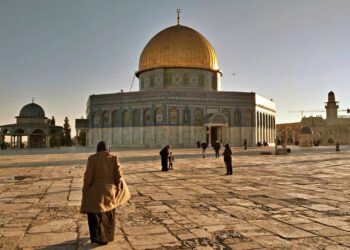
    The Gravity of What Took Place at Al-Aqsa Mosque During Ramadan 2026

    Ramazan 2026’da Mescid-i Aksa’da Yaşananların Ciddiyeti

    AFP/GETTY IMAGES

    FLA-JNIM İş Birliği ve Mali’de Değişen Güvenlik Dinamikleri

    Sosyal Medyada İslamcı-Muhafazakâr Kamusallığın Dönüşümü Üzerine

    Sosyal Medyada İslamcı-Muhafazakâr Kamusallığın Dönüşümü Üzerine

    Bangladeş’te 2026 Seçimleri Sonrası Siyasi Tartışmalar

    Bangladeş’te 2026 Seçimleri Sonrası Siyasi Tartışmalar

    Filistin’de Çocuk Olmak: 5 Nisan Filistinli Çocuklar Günü

    Filistin’de Çocuk Olmak: 5 Nisan Filistinli Çocuklar Günü

    Security, Fragility, and the Search for a New Equilibrium in the Gulf Following the Iranian Attacks

    İran Saldırıları Sonrası Körfez’de Güvenlik, Kırılganlık ve Yeni Denge Arayışı

  • SÖYLEŞİLER
    The Decolonization of Knowledge: Interview with Professor Souleymane Bachir Diagne

    Bilginin Dekolonizasyonu: Profesör Souleymane Bachir Diagne ile Röportaj

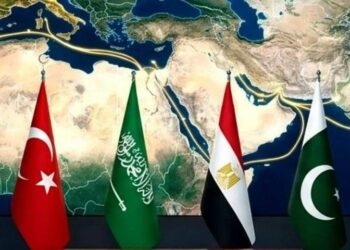
    A Possible New Breath in Regional Balances: The Alliance of Türkiye, Pakistan, Egypt, and Saudi Arabia

    Bölgesel Dengelerde Olası Yeni Bir Soluk: Türkiye, Pakistan, Mısır ve Suudi Arabistan İttifakı

    Digital Ummah and Muslim Identity: Dr. Sahar Khamis Interview

    Dijital Ümmet ve Müslüman Kimliği: Dr. Sahar Khamis ile Röportaj

    From the Ballot Box to the Street: The Rising Social Wave in Tanzania After the Election

    Sandıktan Sokağa: Tanzanya’da Seçim Sonrası Yükselen Toplumsal Dalga

    Müslüman Nüfusa Karşı Güvenlikleştirme

    Müslüman Nüfusa Karşı Güvenlikleştirme

    Gurbet Hikayeleri

    Gurbet Hikayeleri

    Göçü Yönetmek: Dr. Mehmet Köse’yle Söyleşi

    Göçü Yönetmek: Dr. Mehmet Köse’yle Söyleşi

    İstanbul’daki Uluslararası Öğrencilerle Söyleşi

    İstanbul’daki Uluslararası Öğrencilerle Söyleşi

    Zaytuna College Lisansüstü Eğitim Dekanı Maşuk Yamaç’la Söyleşi

    Zaytuna College Lisansüstü Eğitim Dekanı Maşuk Yamaç’la Söyleşi

  • DÜNYADAN SESLER
    Voices from the Muslim World | Sari Hanafi (with Turkish subtitles)

    Voices from the Muslim World | Sari Hanafi (with Turkish subtitles)

    Voices from the Muslim World | Ovamir Anjum

    Voices from the Muslim World | Ovamir Anjum

    VOICES FROM THE MUSLIM WORLD | DR. YASIR QADHI

    VOICES FROM THE MUSLIM WORLD | DR. YASIR QADHI

    VOICES FROM THE MUSLIM WORLD | DR. ADEEL MALIK

    VOICES FROM THE MUSLIM WORLD | DR. ADEEL MALIK

  • SAYILAR
  • VERİTABANI
    • All
    • Hareketler
    • Kurumlar
    • Şahsiyetler
    Pak-Türk Maarif

    Pak-Türk Maarif

    İslam Vakfı

    İslam Vakfı

    Avrupa Fetva ve Araştırma Konseyi

    Avrupa Fetva ve Araştırma Konseyi

    Tokyo Camii ve Diyanet Türk Kültür Merkezi

    Tokyo Camii ve Diyanet Türk Kültür Merkezi

  • PLATFORM
  • HABERLER
    İLKE Agenda: Muzzammil Ayyub Thakur ile Keşmir’in “Filistinleştirilmesi”

    İLKE Agenda: Muzzammil Ayyub Thakur ile Keşmir’in “Filistinleştirilmesi”

    İLKE Agenda: Muzzammil Ayyub Thakur ile Keşmir’in “Filistinleştirilmesi”

    The Platform Talks: Kinda Hawasli ile 8 Aralık Sonrası Suriye

    İLKE Agenda: Muzzammil Ayyub Thakur ile Keşmir’in “Filistinleştirilmesi”

    The Platform Talks: Azzam Tamimi ile 7 Ekim Sonrası Filistin

    İLKE Agenda: Muzzammil Ayyub Thakur ile Keşmir’in “Filistinleştirilmesi”

    İLKE Agenda: Gazze Soykırımı Günlerinde Aktivizm ve İslamofobi

    Filistin Sempozyumu: Filistin ve Küresel İlişkilerin Geleceği

    Filistin Sempozyumu: Filistin ve Küresel İlişkilerin Geleceği

    Filistin Sempozyumu: Filistin ve Küresel İlişkilerin Geleceği

    Müslüman Dünyada Çağdaş Düşünce Konferansı’nda buluşuyoruz!

    Filistin Sempozyumu: Filistin ve Küresel İlişkilerin Geleceği

    Müslüman Dünyada Çağdaş Düşünce Konferansı

    Filistin Sempozyumu: Filistin ve Küresel İlişkilerin Geleceği

    Dr. Jonathan Brown “İslam’ın Siyahiliğe ve Köleliğe Yaklaşımı” adlı seminer gerçekleştirdi.

  • ANALİZLER
    • All
    • Düşünce
    • Eğitim
    • Ekonomi
    • Enerji ve Çevre
    • Göç
    • Medya, Kültür ve Sanat
    • Temel Hak ve Özgürlükler
    • Toplumsal Meseleler
    The Gravity of What Took Place at Al-Aqsa Mosque During Ramadan 2026

    Ramazan 2026’da Mescid-i Aksa’da Yaşananların Ciddiyeti

    AFP/GETTY IMAGES

    FLA-JNIM İş Birliği ve Mali’de Değişen Güvenlik Dinamikleri

    Sosyal Medyada İslamcı-Muhafazakâr Kamusallığın Dönüşümü Üzerine

    Sosyal Medyada İslamcı-Muhafazakâr Kamusallığın Dönüşümü Üzerine

    Bangladeş’te 2026 Seçimleri Sonrası Siyasi Tartışmalar

    Bangladeş’te 2026 Seçimleri Sonrası Siyasi Tartışmalar

    Filistin’de Çocuk Olmak: 5 Nisan Filistinli Çocuklar Günü

    Filistin’de Çocuk Olmak: 5 Nisan Filistinli Çocuklar Günü

    Security, Fragility, and the Search for a New Equilibrium in the Gulf Following the Iranian Attacks

    İran Saldırıları Sonrası Körfez’de Güvenlik, Kırılganlık ve Yeni Denge Arayışı

  • SÖYLEŞİLER
    The Decolonization of Knowledge: Interview with Professor Souleymane Bachir Diagne

    Bilginin Dekolonizasyonu: Profesör Souleymane Bachir Diagne ile Röportaj

    A Possible New Breath in Regional Balances: The Alliance of Türkiye, Pakistan, Egypt, and Saudi Arabia

    Bölgesel Dengelerde Olası Yeni Bir Soluk: Türkiye, Pakistan, Mısır ve Suudi Arabistan İttifakı

    Digital Ummah and Muslim Identity: Dr. Sahar Khamis Interview

    Dijital Ümmet ve Müslüman Kimliği: Dr. Sahar Khamis ile Röportaj

    From the Ballot Box to the Street: The Rising Social Wave in Tanzania After the Election

    Sandıktan Sokağa: Tanzanya’da Seçim Sonrası Yükselen Toplumsal Dalga

    Müslüman Nüfusa Karşı Güvenlikleştirme

    Müslüman Nüfusa Karşı Güvenlikleştirme

    Gurbet Hikayeleri

    Gurbet Hikayeleri

    Göçü Yönetmek: Dr. Mehmet Köse’yle Söyleşi

    Göçü Yönetmek: Dr. Mehmet Köse’yle Söyleşi

    İstanbul’daki Uluslararası Öğrencilerle Söyleşi

    İstanbul’daki Uluslararası Öğrencilerle Söyleşi

    Zaytuna College Lisansüstü Eğitim Dekanı Maşuk Yamaç’la Söyleşi

    Zaytuna College Lisansüstü Eğitim Dekanı Maşuk Yamaç’la Söyleşi

  • DÜNYADAN SESLER
    Voices from the Muslim World | Sari Hanafi (with Turkish subtitles)

    Voices from the Muslim World | Sari Hanafi (with Turkish subtitles)

    Voices from the Muslim World | Ovamir Anjum

    Voices from the Muslim World | Ovamir Anjum

    VOICES FROM THE MUSLIM WORLD | DR. YASIR QADHI

    VOICES FROM THE MUSLIM WORLD | DR. YASIR QADHI

    VOICES FROM THE MUSLIM WORLD | DR. ADEEL MALIK

    VOICES FROM THE MUSLIM WORLD | DR. ADEEL MALIK

  • SAYILAR
  • VERİTABANI
    • All
    • Hareketler
    • Kurumlar
    • Şahsiyetler
    Pak-Türk Maarif

    Pak-Türk Maarif

    İslam Vakfı

    İslam Vakfı

    Avrupa Fetva ve Araştırma Konseyi

    Avrupa Fetva ve Araştırma Konseyi

    Tokyo Camii ve Diyanet Türk Kültür Merkezi

    Tokyo Camii ve Diyanet Türk Kültür Merkezi

No Result
View All Result
Platform
No Result
View All Result
Home Analyses

Reconstruction of Syria: Priorities and Challenges

Khaled Al-Terkawi by Khaled Al-Terkawi
6 Kasım 2025
in Analyses, Opinion
0
0
SHARES
8
VIEWS
Share on FacebookShare on Twitter

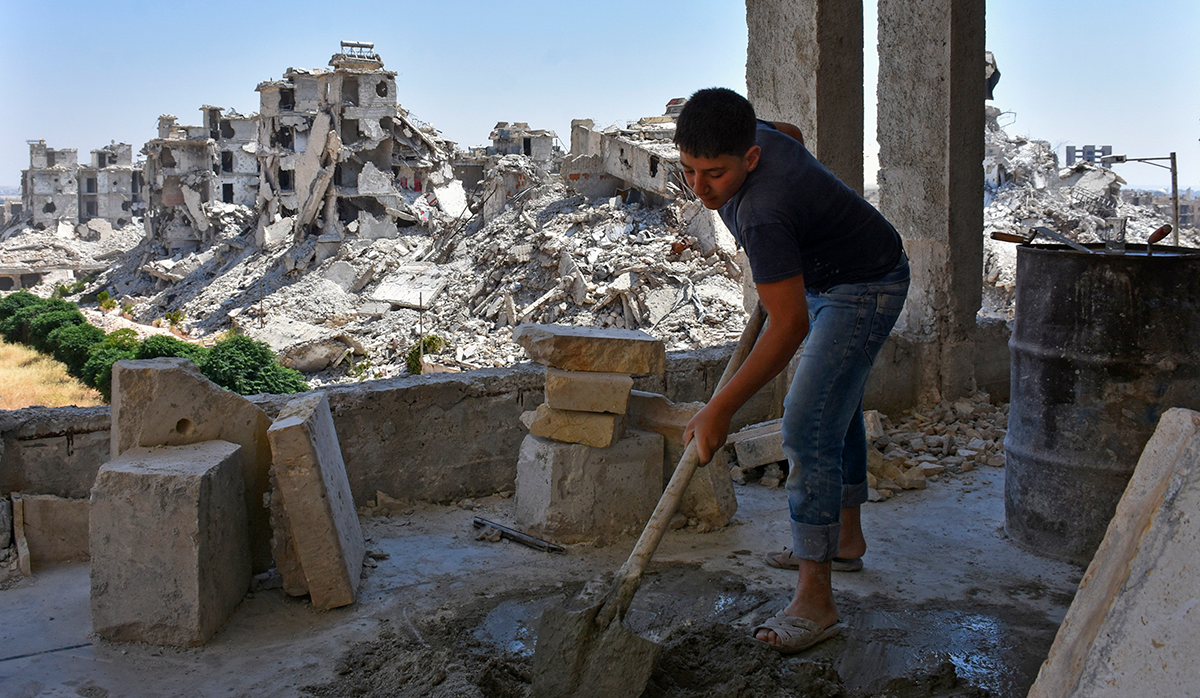
By the end of 2024, Syria emerged from the sixty-year era of rule of the Socialist Baath Party. Over the decades, the party fluctuated between the nationalization of private institutions in the seventies, the exploitation of the private sector in the nineties, and then the adaptation of state institutions and economic resources in the service of the war from 2011 until the fall of the Syrian regime in 2024. It was a phase whose negative consequences were great on the Syrian economy: entire destroyed cities, about 14 million Syrians living below the poverty line, a weak Syrian pound, and a non-productive state apparatus unable to meet needs. Syria’s GDP is estimated to have been $8 billion in 2023 while it was $70 billion in 2010 (2024, “الاقتصاد السوري”). More than 6 million Syrians (Al Terkawi, 2023), who are classified as refugees outside the country, have left the country, in addition to another 3 million who left for other countries for economic reasons. Most of these are young people who represent an important labor force for the economy, and we are talking about the presence of 40% of Syria’s population outside it. During this period, exports also declined dramatically from $18 billion in 2010 to $1.8 billion in 2021 (World Bank, 2023). The post-war phase is usually an opportunity to reassess and develop the economy on a basis commensurate with its real potential. Indeed, it represents a process starting from scratch towards a goal that is reformulated in harmony between the different components of the people and their interests, as well as in harmony with international and regional conditions. But this stage contains major challenges, starting with aspects of controlling security and ensuring stability and ending with the need for the return of merchants and workforce to the country.

In the Syrian case, we are facing a relatively complex reality, as the most important natural resources for the country, which are represented by oil fields, are still under the control of the PKK[1] and are protected by US military bases that support them. Also, the south and west of Syria still have military enclaves that have not completely been subject to the authority of the new government. Some countries emerging from war rely on loans and grants that often come from Western countries, but these funds may require harsh shifts in politics and economics and may not fit into the structure of the domestic economic sector.

We can develop a set of development approaches for the reconstruction phase in Syria, where the first approach is to focus on one or two sectors to drag the rest of the sectors to the development box, where we can focus on:

  1. Agriculture: It is estimated that 20% of the GDP in Syria comes from agriculture, which is the least expensive in terms of rehabilitation. It is also the most vital, as Syria has 6 million hectares of arable (a third of the country’s area), in addition to nearly one million workers (Syrian Constitution Party, 2025). The agriculture sector is the first source of food at this stage, and it is expected that the cost of relaunching it will be the least and most useful, as agriculture is mostly in the hands of farmers from the private sector who can develop their work. They need to subsidize the price of fertilizer, seeds, and fodder in the livestock sector, with the availability of modern agricultural inputs that can develop their production.

The agriculture sector is counting on providing the main grains to Syrians and meeting their needs for vegetables and fruits, with the possibility of exporting and transferring some of its products to the industrial sector. Good agricultural production can help reduce poverty and ensure the daily food supply for Syrians. It can also provide the state treasury with some resources related to taxes and fees.

  1. Industry: In Syria, the textile and chemical industries were popular before 2011, and we began to witness the manufacture of cars, electric cables, ceramics, iron, cement, and other large industries that were able to carry out good export operations. Yet, today, it is difficult to restore these industries quickly, as they need a lot of time and money, and the priority is concentrated in small and medium industries, especially in the field of food canning.

Focusing on these two sectors can create a kind of bright space, or what is known as development sectors, that pulls the rest of the industries and moves sectors such as transport, storage, and trade. The approach here is to promote interest in agriculture and the small industries based on it, meaning that nearly two million workers out of the six million workers who make the total labor force will be able to return to work quickly and easily, with little capital and small government support. This sector could trigger other activities in the medium term, such as the logistics sector, which employs a large number of Syrians. This approach is consistent with the theory of the leading sector and the unbalanced development model, which is based on focusing on one or two economic sectors to motivate the rest of the sectors to rise affected by these sectors. Despite the disadvantages that can be taken with this development model, it saves money and is commensurate with the simple capabilities that the Syrian government possesses in the post-war phase. Focusing on the agriculture sector and agriculture-based industries can also stimulate the agricultural machinery production sector, fertilizer, and feed industry, as it is easy to plan and evaluate, and government collection and government spending in this sector is more manageable than others and less complex.

The other approach that can be adopted in the development process in Syria during the post-war phase is the local development approach. This strategy is based on strengthening local councils in the governorates and trying to involve the people of each region in the development process, thus considering each Syrian governorate or region as an area with different resources from the other that can be focused on separately from the other region. Moreover, those responsible for the development process are figures elected by the region itself. However, this approach is faulted for weakening the centralization of the state and making the regions less connected to the center, but through controlling laws, this can be avoided. Moreover, maintaining security, the army, and strengthening its authority in the hands of the state can also maintain the cohesion of the state. This approach may be accepted on the Syrian street because of the multiplicity of sects and ethnicities in Syria, where these ethnicities aspire to obtain some of their own freedoms that can make them pay attention to the development of their regions instead of engaging in a central development process whose repercussions on their regions are difficult to estimate.

Therefore, Syria has oil and gas-related resources in the northeast of the country, in addition to agricultural resources and an appropriate workforce. Nevertheless, investing in oil and gas is expensive and collides with regional and local understandings that may take a long time, in addition to the fact that the industrial infrastructure is largely destroyed, which does not allow benefiting from all the natural resources of oil and gas. Yet, these resources can provide the country with its basic needs in the medium term. The focus in the few months following the liberation of the country from Assad’s power can be on simple and high-impact sectors that require minimal financial support yet have the ability to employ a large number of workers. Also, these sectors should demand low investment capital to support other industries and stimulate them to grow in the medium and long term. In this regard, since agriculture is widespread in Syria, the agricultural sector can play this role through the cultivation of grains and cotton in eastern Syria and in the north of the country through the cultivation of pistachio and olives. Furthermore, in the west, fruit and vegetable farming is prominent, whereas in the south where, tobacco, vegetables, and fruits are the main crops. In the vicinity of Damascus, there are good farms for growing vegetables, in addition to the availability of cow breeding institutions, and cattle, sheep, and poultry farms are spread out. Hence, thanks to agriculture, simple industries such as canning meat and vegetables and exporting as well as converting cotton into yarn can be established, guaranteeing Syria a quick start that takes the country one step forward.

References

Al Terkawi, K. (2023). Map of the distribution of Syrians inside and outside Syria. Jusoor Studies. Retrieved from: https://jusoor.co/en/details/map-of-the-distribution-of-syrians-inside-and-outside-syria

Syrian Constitution Party. (2025, January 9). The agricultural sector in Syria.

World Bank. (2023). Syria economic monitor.  http://documents.worldbank.org/curated/en/099540309012311026

الاقتصاد السوري: تحليل مقارن بين عامي 2010 و2023 (2024, March). Retrieved from https://bit.ly/4hJZzoI

[1] Editor’s Note: PKK is designated as a terrorist organization by Türkiye, the United States, and the European Union, and PYD is known as its extension of Syria.


Tags: AgricultureIndustryMiddle EastReconstructionSyria
Previous Post

Ölümü Üretmek: İsrail’in Savaş Ekonomisi ve Gazze Soykırımı

Next Post

Establishing Humanitarian Corridors in the Gaza Strip: A Comprehensive Analysis

Next Post
Establishing Humanitarian Corridors in the Gaza Strip: A Comprehensive Analysis

Establishing Humanitarian Corridors in the Gaza Strip: A Comprehensive Analysis

Bir yanıt yazın Yanıtı iptal et

E-posta adresiniz yayınlanmayacak. Gerekli alanlar * ile işaretlenmişlerdir

  • A Possible New Breath in Regional Balances: The Alliance of Türkiye, Pakistan, Egypt, and Saudi Arabia

    Bölgesel Dengelerde Olası Yeni Bir Soluk: Türkiye, Pakistan, Mısır ve Suudi Arabistan İttifakı

    0 shares
    Share 0 Tweet 0
  • Bilime Yön Verenler: Nobel Ödüllü Müslüman Bilim İnsanları

    0 shares
    Share 0 Tweet 0
  • Nakşibendi-Hakkani Tarikatı

    0 shares
    Share 0 Tweet 0
  • Fuad Sezgin

    0 shares
    Share 0 Tweet 0
  • Sosyal Medyada İslamcı-Muhafazakâr Kamusallığın Dönüşümü Üzerine

    0 shares
    Share 0 Tweet 0
  • The Gravity of What Took Place at Al-Aqsa Mosque During Ramadan 2026

    Ramazan 2026’da Mescid-i Aksa’da Yaşananların Ciddiyeti

    0 shares
    Share 0 Tweet 0
  • The Gravity of What Took Place at Al-Aqsa Mosque During Ramadan 2026

    0 shares
    Share 0 Tweet 0
  • FLA-JNIM Cooperation and Shifting Security Dynamics in Mali

    0 shares
    Share 0 Tweet 0
  • FLA-JNIM İş Birliği ve Mali’de Değişen Güvenlik Dinamikleri

    0 shares
    Share 0 Tweet 0
  • The Current State of Indonesia’s Luxury Industry and the Landscape of Independent Handcrafted Watchmaking

    0 shares
    Share 0 Tweet 0

Platform: Müslüman Dünyanın Gündemi, Müslüman toplumların fikrî, siyasi, sosyal, ekonomik ve kültürel gündemlerini takip ve tahlil edip Müslüman dünyaya dair güncel ve özgün perspektifler sunmayı amaçlayan bir yayın organı olarak İLKE İlim Kültür Eğitim Vakfı bünyesinde kurulmuştur.

  • SAYILAR
  • ANALİZLER
  • HABERLER
  • SÖYLEŞİLER
  • DÜNYADAN SESLER
  • platform@ilke.org.tr
  • (0216) 310 43 18
  • Aziz Mahmut Hüdayi Mah. Türbe Kapısı Sk. No: 13 Üsküdar, İstanbul

2025 @ PLATFORM bir İLKE Vakfı kuruluşudur. Tüm hakları saklıdır. 

No Result
View All Result
  • Home
  • Analizler
  • Haberler
  • Söyleşiler
  • Dünyadan Sesler