










This text has been translated from the original Turkish version.
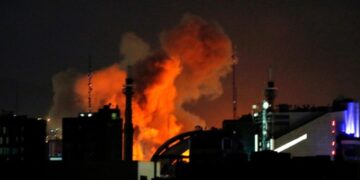
Since the last quarter of 2023, the Gaza Strip has entered a prolonged and deepening crisis that has fundamentally shaken the social, economic, and institutional structure of the region. The long-term effects of the conflict have made it difficult for the majority of the population to sustain daily life; many areas, from infrastructure to public services, have been severely affected. During this period, both the worsening of humanitarian conditions and the progressive weakening of essential service networks have brought the overall humanitarian picture in the region to a globally alarming point.
Since October 7, 2023, the Gaza Strip has faced severe devastation, which the United Nations (UN) and the World Health Organization (WHO) have described as an “unprecedented humanitarian crisis” (1). According to reports from the Office for the Coordination of Humanitarian Affairs (OCHA), as a result of intense bombardment, widespread forced displacement, and the collapse of basic life services during this period, approximately 2.3 million people are facing severe difficulties accessing safe shelter, food, clean water, and healthcare services (2). According to the WHO’s “Attacks on Health Care” data, at least 500 attacks targeting the healthcare system were confirmed during this period, with approximately 36 hospitals reported to have become semi-functional or completely closed (3). In terms of health workers, at least 1,400 health personnel have lost their lives, according to various sources; thousands of injuries and detention cases have also been reported (4). With the collapse of the health infrastructure, cases of infectious diseases, epidemic risks caused by water and sanitation issues, and trauma cases have sharply increased. The UN has stated that Gaza is now turning into “a region without a functioning healthcare system.” Both the WHO and the UN have repeatedly emphasized to the international community, in the nature of an appeal, the need for the protection of civilians, ensuring access to healthcare facilities, and the uninterrupted delivery of humanitarian aid to the region (5).
Under the current circumstances, most hospitals in northern Gaza are either completely out of service or are operating at a minimal level in emergency tents with limited personnel and insufficient bed capacity. Across the region, only a very small number of hospitals are partially operational, and the specialist doctors and nurses working in these facilities continue their duties despite all shortages and under immense psychological strain.
Official figures regarding the number of personnel are uncertain due to the difficulty of collecting reliable data under wartime conditions. However, local and international organizations such as the Palestinian Ministry of Health, OCHA, Doctors Without Borders (MSF), and the Union of NGOs of the Islamic World (UNIW) report that numerous health workers have been killed, injured, or detained since October 7, 2023, emphasizing that this situation has severely reduced the capacity of the health system (6). Figures indicate that at least 1,734 health workers in the Gaza Strip have lost their lives, been injured, or detained. The fact that hospitals operating with limited resources are overflowing with injured and sick people has also created severe pressure on health workers in the current tragic environment, with most staff providing services without receiving salaries, deprived of almost all humanitarian necessities, and unable to see their families (3).
Medical supply stocks in the current healthcare facilities are at critical levels. Essential supplies such as blood units, painkillers, basic antibiotics, medical solutions, pediatric vaccines, anesthetics, operating room equipment, oxygen, and fuel for generators can be procured under extremely difficult conditions in very limited quantities (7). International aid for both medical and basic necessities continues, but this aid only meets a fraction of the needs. Although the WHO and the UN state that the flow of supplies has improved during some periods, they note that it remains far below the amount required to restart the health system and cope with emergency cases and infectious disease outbreaks (1).
The need for medical supplies in the region is at a high level, but the inability to maintain safe conditions and the continuously increasing number of injured people make it harder for health workers to carry out their activities every day. For instance, Doctors Worldwide entered the field from day one, initiating emergency responses and providing medical supply support to Al-Shifa and Indonesian hospitals. However, the association’s headquarters and the Han Yunis Physical Therapy and Rehabilitation Center, affiliated with the association, were targeted, and supply points were struck. Despite this, the teams continued to provide services by establishing the only accessible health support station in the region. At the same time, even after the evacuation of North Gaza, some doctors remained in the area and continued their work despite the ongoing risk to life. At this juncture, strengthening infrastructure, ensuring security, and supporting health workers are critically important for the healthcare system in Gaza to become functional again.
It is not possible to determine a single fixed rate because medical support, water and food support, fuel support, and all other types of aid activities are delivered through different means and at various times. Coordination is carried out through OCHA, WHO, and UN agencies, as well as major international and humanitarian organizations such as the UN and the International Committee of the Red Cross (ICRC) (1). The ICRC plays a critical role in facilitating the passage and transport of patients and medical supplies in the field. Other organizations, consisting of MSF, MedGlobal, the UN, the United Nations Relief and Works Agency for Palestine Refugees in the Near East (UNRWA), and local partners, coordinate the distribution of supplies when the security situation permits. However, when security cannot be ensured, roads are closed, or fuel supplies are not possible, aid activities are disrupted, and coordination becomes difficult.
The entry of supplies into the region is permitted only through designated and agreed-upon organizations. This situation severely complicates the fair and effective delivery of humanitarian aid. The UN and the ICRC communicate with the relevant coordination center to coordinate humanitarian aid activities in the region. Although the State of Palestine is represented in this center, the vast majority of the coordination is practically managed under Israeli control. The aforementioned relevant organizations can be cited as examples of international organizations that have the most effective communication with the region in an emergency.
During a ceasefire, more aid trucks enter the region, medical evacuations and transfers increase, and access to medicine and equipment improves significantly. However, it should not be overlooked that this improvement is temporary and limited to the open crossing points during the ceasefire period. A sustainable supply chain requires border crossings to remain open, sufficient fuel and materials to be provided, and the security of warehouses containing essential supplies to be ensured. Due to high demand, the supplied materials are rapidly depleted and cannot be delivered to everyone in need. Therefore, it is certain that while the ceasefire temporarily alleviates the crisis, all needs cannot be fully met unless the embargo is completely lifted and comprehensive logistical measures are taken.
Following the agreement reached, aid can be delivered to the region in a more regular manner. This has led to a partial improvement felt in all aspects of life. However, the devastation caused by two years of conflict and the inability to meet even basic necessities have further increased the need for humanitarian assistance. Although health services can be provided to a limited extent, the scarcity of transportation options has both increased the need for mobile health services and made it difficult to sustain them. In a region facing severe logistical challenges, even though necessary materials for the repair of required vehicles are procured despite their high costs, the heavy damage to the vehicles and the condition of the existing roads, which damage the vehicles, significantly impede the sustainability of services. While the supply of materials has partially eased after the ceasefire, the occurrence of theft and confiscation incidents also complicates aid operations.
Due to the difficult conditions in the region, the figures reported by the Gaza Ministry of Health, international organizations, and health associations vary. However, many sources have documented that thousands of healthcare workers have been killed, detained, or injured since October 7. Reports, studies, and news articles refer to figures reaching hundreds of thousands. While the total number of deaths and detentions is currently unknown, many cases have yet to be officially documented, and warnings are being issued that the actual number could be much higher. Therefore, we cannot currently provide a single reliable final figure, but the compiled sources indicate that the losses among healthcare workers are very severe.
Regarding solidarity initiatives to support detained medical personnel, it is known that international campaigns have been organized by human rights organizations demanding the release of doctors and other health workers. Various reports are being published about individuals who have been the subject of media attention and solidarity programs, such as Dr. Hussam Abu Safiya. Furthermore, international medical organizations have issued solidarity statements requesting the protection and release of these individuals and demanding the lifting of other restrictions. Despite all these efforts, ongoing efforts for the release of detained health personnel continue to face significant legal and political obstacles. Authorities state that 1,734 health workers have lost their lives to date, and the current insecure environment remains the biggest obstacle to the continuation of health services (3). International organizations and states continue diplomatic negotiations for the rescue of the captives.
Eighteen international aid organizations, including NGOs from the United Kingdom, France, the United States, and Switzerland, issued a joint statement warning that the escalating tension in Gaza would lead to a humanitarian catastrophe; they released a declaration stating that the concept of a safe zone had disappeared for health workers, children, pregnant women, the sick, the disabled, and the elderly, and that civilians were not being protected by international humanitarian law (8). Many civil society organizations, including Doctors of the World (Médecins du Monde-(MdM), signed this declaration, while numerous civil society organizations in Türkiye also mobilized to assist Gaza. Many NGOs, such as the Turkish Red Crescent, the Disaster and Emergency Management Presidency (AFAD), Deniz Feneri, Sadakataşı, the Foundation for Human Rights and Freedoms and Humanitarian Relief (IHH), and the Union of NGOs of the Islamic World (UNIW), have initiated humanitarian aid efforts to support the crisis in Gaza.
Doctors Worldwide first began its work in Gaza voluntarily in 2001, organized advanced training in the diagnosis and treatment of psychological trauma for psychiatrists in the region, and carried out humanitarian aid activities focused on basic needs during crisis periods. Following the attacks in 2014, which included a ground operation against Gaza, emergency interventions were carried out by health teams in the region, and medical supplies and materials were provided to health centers; surgeries were performed in the fields of orthopedics, ophthalmology, plastic surgery, and neurology. As a result of the increase in physical disabilities and limb losses after the 2015 attacks, the Khan Yunis Physical Therapy and Rehabilitation Center was opened in the region, and physiotherapy services began to be offered. Subsequently, the organization opened an official regional representative office in the central Gaza region, where it could work in coordination with the Ministry of Health, establishing itself as a registered non-governmental organization in Gaza. This situation enabled the implementation of a long-term project against potential future problems regarding the entry and exit of short-term volunteer health teams to the region, and also provided employment for local health workers.
In 2016, mobile health services were added to the project, and home treatment, medical care, and psychological support services began to be provided by 5 different teams consisting of 22 personnel. Operating in various cities across the Gaza Strip, the teams provided physical therapy and rehabilitation, medical wound care, medication and medical supply support, and psychosocial support services to more than 65 thousand people through the Khan Yunis Physical Therapy and Rehabilitation Center until 2023.
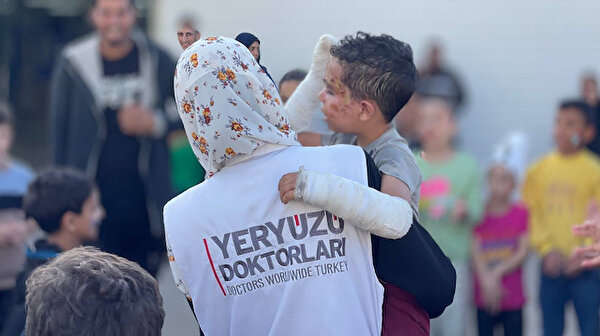
Despite all the impossibilities and risks in the region since the humanitarian crisis began on October 7, 2023, humanitarian aid efforts for the people of Gaza have continued uninterrupted, as they have for years. At the start of the crisis, initial emergency interventions were carried out for injured civilians with our 20-person health team present in the region; treatment of the sick and wounded continued at Al-Shifa, Indonesian, and Kuwait hospitals, as well as Nasser and Al-Aqsa hospitals, which are among the largest in the region. After hospitals in the northern region were evacuated, health services continued with mobile teams. Our association’s headquarters and our physical therapy and rehabilitation center in Gaza were destroyed by the attacks and rendered unusable. Following the destruction of health centers, a health center was established in the Yarmouk Refugee Camp in the North, and primary health care services began to be provided. This health center became the only accessible health point in the region. In the center, in cooperation with UNICEF, vaccinations were administered to prevent infectious diseases, and support was provided for the fight against malnutrition in children and pregnant women. At the same time, humanitarian aid materials were delivered to the region both via aid trucks prepared at the border crossings and via aid ships sent from the Mersin port under AFAD coordination. Field work continues actively with both mobile health teams and emergency aid work at Al-Shifa, Al-Aqsa, and Al-Ahli hospitals. The following activities are carried out within the scope of the services provided:
- Emergency intervention and surgery
- Treatment and examination
- Physiotherapy rehabilitation services
- Ambulance support
- Support for doctor uniforms and hospital kits
- Medical and clinical material support
- Salary support for health workers
- Support for flour, bread, water, and hot meals
- Food parcel support
- Canned sacrificial meat support (or Canned Qurbani Meat Support)
- Support for baby diapers, wet wipes, and baby formula
- Support for emergency needs and consumables
- Psychosocial support services
As Doctors Worldwide, we have reached over 900,000 beneficiaries and supported more than 43,000 families in Gaza since October 7, where the situation is deteriorating daily.
*Opinions expressed in this article are the author’s own and do not necessarily reflect Platform: Current Muslim Affairs’ editorial policy.
References
1. Emergency Situation Reports [Internet]. [a.yer 14 Kasım 2025]. WHO EMRO – Gaza Hostilities 2023 / 2024 – Emergency Situation Reports. Erişim adresi: https://www.emro.who.int/opt/information-resources/emergency-situation-reports.html?utm
2. United Nations Office for the Coordination of Humanitarian Affairs – Occupied Palestinian Territory [Internet]. 2025 [a.yer 14 Kasım 2025]. Humanitarian Situation Update #329 | Gaza Strip. Erişim adresi: https://www.ochaopt.org/content/humanitarian-situation-update-329-gaza-strip
3. Unified Health Dashboard [İnternet]. [a.yer 17 Kasım 2025]. WHO Power BI Report. Erişim adresi: https://app.powerbi.com/view?r=eyJrIjoiODAxNTYzMDYtMjQ3YS00OTMzLTkxMWQtOTU1NWEwMzE5NTMwIiwidCI6ImY2MTBjMGI3LWJkMjQtNGIzOS04MTBiLTNkYzI4MGFmYjU5MCIsImMiOjh9
4. Medical Aid for Palestinians OCHA. 1,400 healthcare workers killed in Israel’s systematic attacks on Gaza’s health system- occupied Palestinian territory [Internet]. 2025 May [a.yer 14 Kasım 2025]. Erişim adresi: https://reliefweb.int/report/occupied-palestinian-territory/1400-healthcare-workers-killed-israels-systematic-attacks-gazas-health-system
5. Health conditions in the occupied Palestinian territory, including east Jerusalem. 2025 May. (WHO, ed. Seventy-eighth World Health Assembly). Report No.: A78/15.
6. Medical Aid for Palestinians OCHA. Two healthcare workers are killed every day on average during Israel’s genocide in the Gaza-occupied Palestinian territory [Internet]. 2025 Eki [a.yer 14 Kasım 2025]. Erişim adresi: https://reliefweb.int/report/occupied-palestinian-territory/two-healthcare-workers-killed-every-day-average-during-israels-genocide-gaza
7. NTV.com.tr [Internet]. [a.yer 19 Kasım 2025]. Filistinli Doktor Mohammed Gahaniem NTV’nin sorularını yanıtladı: Şifa Hastanesi’nde son durum | NTV Haber. Erişim adresi: https://www.ntv.com.tr/video/dunya/filistinli-doktor-mohammed-gahaniem-ntvnin-sorularini-yanitladi-sifa-hastanesinde-son-durum,affaVHFJMEG4u4NRi-hzlg
8. Çetinkaya B. Uluslararası STK’ler, İsrail’in Gazze’nin kuzeyindekileri zorunlu göçe tabi tutmasına tepki gösterdi [İnternet]. [a.yer 19 Kasım 2025]. Erişim adresi: https://www.aa.com.tr/tr/dunya/uluslararasi-stkler-israilin-gazzenin-kuzeyindekileri-zorunlu-goce-tabi-tutmasina-tepki-gosterdi/3356538