



















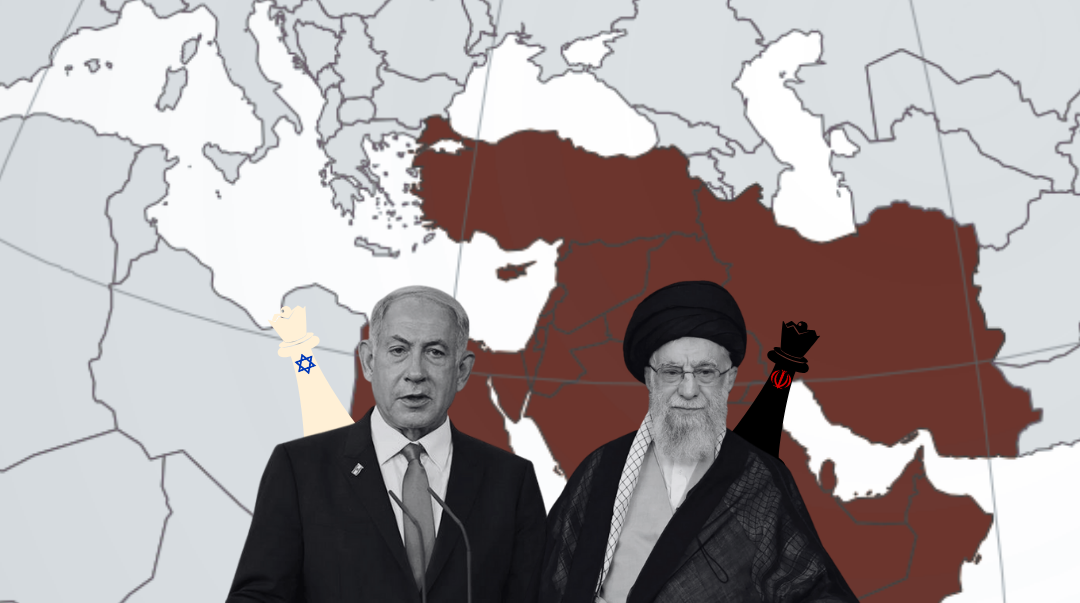
In June 2025, the United States entered the Iran-Israel conflict with targeted airstrikes on Iran’s nuclear facilities at Fordow, Natanz, and Isfahan to impede Iran’s nuclear program, delaying enrichment but not eliminating capacity. Iran retaliated with missile strikes on a U.S. base in Qatar. Despite heightened tensions, Iranian proxies remained inactive, prioritizing containment over escalation.
U.S. Strikes on Iran’s Nuclear Sites
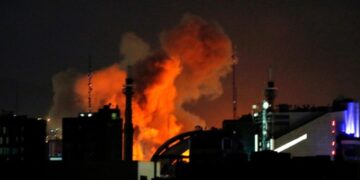
In June 2025, the United States entered the Iran-Israel conflict with targeted airstrikes on Iran’s nuclear facilities at Fordow, Natanz, and Isfahan. The operation “Midnight Hammer” was designed to cripple Iran’s nuclear capabilities and was executed with stealth bombers, bunker-busting bombs, and Tomahawk missiles (Rodgers, 2025). The rationale, according to U.S. officials, was to prevent Iran from reaching nuclear breakout, citing Tehran’s growing enriched uranium stockpile and refusal to reengage in talks (Bingen & Swope, 2025).
Israel welcomed the U.S. action, having earlier launched its own strikes in response to escalating tensions. President Trump hailed the mission a “spectacular success,” declaring Iran’s nuclear sites “obliterated” (Rodgers, 2025). The strikes marked the most direct U.S. military action against Iran in decades, significantly escalating the crisis.
Damage to Iran’s Nuclear Program
Initial U.S. and Israeli assessments suggested severe damage, especially to entrances and above-ground structures. However, underground centrifuge halls at Fordow and Natanz likely survived. A Defense Intelligence Agency report noted that the facilities were “sealed off” but not fully destroyed (Slattery et al., 2025). Crucially, Iran’s stockpile of enriched uranium remained intact, as most of it had been moved before the strikes. The IAEA confirmed no radiation leaks and reported that some key infrastructure at Isfahan and Natanz was compromised, though not irreparably (Psaropoulos, 2025). Iran’s leaders downplayed the damage, asserting readiness to rebuild quickly.
Experts agree that while the strikes imposed a setback of several months, Iran retains the technical knowledge and material to resume its program. Centrifuge production and uranium enrichment may resume at alternate or rebuilt sites, depending on political will and international pressure (Grajewski, 2025).
Iran’s Military Response
Iran retaliated with missile strikes on Al Udeid Air Base in Qatar, launching over a dozen ballistic missiles. The strike caused no casualties, as Iran provided advance warning through diplomatic channels (Ravid, 2025). This calculated retaliation was designed to demonstrate capability without provoking wider escalation. Iranian leaders described the attack as proportionate. Ayatollah Khamenei warned of future retaliation if attacked again but emphasized that Iran had “no desire for war” (Choukeir & Abdallah, 2025). The attack was also a message to U.S. allies that hosting American forces carries risk.
Qatar condemned the attack as a breach of sovereignty but continued to facilitate backchannel diplomacy. The absence of further strikes indicated Tehran’s preference for containment over escalation, as it opened the door to mediation.
Proxy Restraint and Regional Fallout
Despite fears of a broader regional war, Iran’s proxies Hezbollah, Iraqi militias, Houthis remained largely inactive. While they issued statements in solidarity, there were no major attacks on U.S. or Israeli targets. This restraint likely reflects Iran’s decision to avoid triggering a larger conflict, especially after the U.S. involvement.
In Iraq, minor security alerts were issued, and U.S. forces went on high alert, but no strikes occurred. In Lebanon, Hezbollah’s leadership avoided mobilizing, aware that an Israeli retaliation could be devastating. The quiet from Iran’s network of militias contributed to the war’s geographic containment (Schmitz, 2025). Gulf states, especially Saudi Arabia, the UAE, and Bahrain, condemned Iran’s missile strike but stopped short of direct involvement. Their primary concern was preventing the conflict from reaching their soil or energy infrastructure. Diplomatically, they coordinated with the U.S., Oman, and Qatar to support ceasefire efforts (Hafezi et al., 2025).
Strait of Hormuz and Economic Risk
Iran’s parliament symbolically voted to close the Strait of Hormuz, though no action followed. Iranian officials knew that physically closing the strait could provoke direct U.S. naval retaliation and damage Iran’s own economy. Nonetheless, the threat caused oil prices to spike temporarily before stabilizing after the ceasefire (Harris & El Husseini, 2025). However, the risk of a regional energy crisis remains. Had Iran followed through on closing the strait, global oil prices could have soared above $120/barrel. For now, economic and geopolitical self-interest prevailed over military adventurism.
Cyber and Covert Threats
Though many expected Iranian cyber retaliation, no major incidents occurred during the conflict. Western cybersecurity agencies reported only minor attacks and defacements by pro-Iran groups (Vicens & Satter, 2025). Covert retaliation remains a possibility. Iran’s past behavior, including operations in Europe and Latin America, suggests it may pursue longer-term revenge through espionage or sabotage. U.S. and Israeli intelligence remain alert to delayed asymmetric responses. These could take the form of cyberattacks, sabotage of energy infrastructure, or even targeted assassinations of officials involved in the strikes.
Ceasefire and Mediation
Within days of the U.S. strike and Iranian retaliation, a fragile ceasefire was brokered. Qatar, Oman, and Türkiye played crucial roles in mediation. Iran signaled its willingness to halt attacks if Israel and the U.S. did the same, and the U.S. pressed Israel to accept the ceasefire, which it reluctantly did (Mills et al., 2025). Oman offered a framework for de-escalation: Iran would suspend enrichment above low levels in return for sanctions relief and recognition of peaceful nuclear rights. The proposal, backed informally by Türkiye and Qatar, remains under discussion (Hafezi et al., 2025).
Turkey’s President Erdoğan condemned both Israel’s initial strikes and the U.S. escalation but reaffirmed Turkey’s willingness to mediate. His outreach to Iran, Israel, and the U.S. during the crisis positioned Ankara as a regional stabilizer (“Turkey says,” 2025).
Strategic Implications and Outlook
The U.S. strike demonstrated Washington’s red line: Iran must not reach nuclear breakout. Iran’s restrained response, while defiant, suggests a strategic calculus to avoid full war. Israel, while strengthened militarily, faces continued threats from Iran and its allies. The short-term effect of the war is a temporary rollback of Iran’s nuclear progress; the long-term consequences remain uncertain. Future scenarios include:
• Diplomatic reset: Mediation leads to a new nuclear framework involving phased sanctions relief and enrichment limits.
• Proxy resurgence: Iran unleashes its militias gradually if diplomacy fails or sanctions increase.
• Nuclear reconstitution: Iran rebuilds its sites covertly, shortening breakout time despite physical setbacks.
• Regional arms race: Gulf states pursue nuclear hedging strategies, fearing future Iranian retaliation.
The international community, particularly Europe, supports a return to diplomacy, fearing global instability and economic disruption. The IAEA has called for immediate reaccess to sites and transparent negotiations. China and Russia have stayed neutral but may step in diplomatically if tensions rise again.
Conclusion
The Iran-Israel war and U.S. intervention have reset the region’s strategic balance. Iran’s nuclear ambitions have been delayed but not erased. Its missile capabilities and regional networks remain intact. The conflict showed that while Iran will retaliate, it also seeks to avoid existential escalation. For Israel and the U.S., deterrence was demonstrated, but without a long-term political solution, the cycle of conflict may resume.
The mediation roles of Türkiye, Qatar, and Oman are now central. The U.S. may use the post-conflict lull to push for a broader regional security dialogue. The next steps will determine whether this crisis becomes a prelude to peace or merely an intermission in a prolonged confrontation.
***
References
Bingen, K. A., & Swope, C. (2025). Why the United States Acted Now Against Iran. Center for Strategic and International Studies. Retrieved from https://www.csis.org/analysis/why-united-states-acted-now-against-iran
Choukeir, J., & Abdallah, N. (2025). Supreme Leader, in first appearance since ceasefire, says Iran would strike back if attacked. Reuters. Retrieved from https://www.reuters.com/world/middle-east/supreme-leader-first-appearance-since-ceasefire-says-iran-would-strike-back-if-2025-06-26/
Grajewski, N. (2025). The Most Significant Long-Term Consequence of the U.S. Strikes on Iran. Carnegie Endowment for International Peace.
Turkey says US strikes on Iran raise risk of wider conflict (2025, June 22). Reuters. Retrieved from https://www.reuters.com/world/middle-east/turkey-says-us-strikes-iran-raise-risk-wider-conflict-2025-06-22/
Hafezi, P., Nakhoul, S., & Mills, A. (2025). Iran sought US pressure on Israel for ceasefire via Gulf states, sources say. Reuters. Retrieved from https://www.reuters.com/world/middle-east/iran-asks-gulf-arab-states-have-trump-press-israel-immediate-ceasefire-sources-2025-06-16/
Harris, T., & El Husseini, R. (2025). Military bases or vital waterway: Iran weighs response to US strikes. Al-Monitor/AFP. Retrieved from https://www.al-monitor.com/originals/2025/06/military-bases-or-vital-waterway-iran-weighs-response-us-strikes
Mills, A., Hafezi, P., & Cornwell, A. (2025). Iran fires missiles at US base in Qatar, Trump calls for peace. Reuters. Retrieved from https://www.reuters.com/world/middle-east/iran-weighs-retaliation-against-us-strikes-nuclear-sites-2025-06-23/
Psaropoulos, J. T. (2025). What’s next for Iran’s nuclear programme? Al Jazeera. Retrieved from https://www.aljazeera.com/news/2025/6/26/whats-next-for-irans-nuclear-programme
Ravid, B. (2025). No casualties reported after Iran missile attack on U.S. base in Qatar. Axios. Retrieved from https://www.axios.com/2025/06/23/iran-retaliation-trump-israel-war
Rodgers, J. (2025). What Operation Midnight Hammer Means for the Future of Iran’s Nuclear Ambitions. Center for Strategic and International Studies. Retrieved from https://www.csis.org/analysis/what-operation-midnight-hammer-means-future-irans-nuclear-ambitions
Schmitz, C. (2025). Iran’s allies hold back: Why Hezbollah and others stayed quiet. Deutsche Welle.
Slattery, G., Cornwell, A., & Hafezi, P. (2025). US strikes failed to destroy Iran’s nuclear sites, intelligence report says. Reuters. Retrieved from https://www.reuters.com/world/middle-east/trump-announces-israel-iran-ceasefire-2025-06-23/
Vicens, A. J., & Satter, R. (2025). Iran’s hackers keep a low profile after Israeli and US strikes. Reuters. Retrieved from https://www.reuters.com/world/middle-east/irans-hackers-keep-low-profile-after-israeli-us-strikes-2025-06-27/