







Afghanistan’s political history has seen rapid changes, and they have affected mass media. The press, which began in the second half of the 19th century under the leadership of Jamal al-Din al-Afghani and Mahmud Tarzi, was limited to Persian-language newspapers in India. However, these newspapers served to legitimize the British rule in the region by promoting British propaganda. Afghanistan’s first newspaper was published under state control and reported the activities of the Afghan government under British protection. As newspapers featuring new ideological movements began to emerge, restrictions on press freedom and attempts to shut them down increased.
The press continued under state control after the national independence in 1919. However, although there was a gradual improvement in press freedom during the reign of Amanullah Khan, strict state control and press bans continued during the reign of Nadir Khan. The “Press and Political Parties Law,” passed by the Afghan Parliament in the 1950s, revived the press. Following this law, most of the publications of the time were utilized as instruments for political propaganda. The press freedoms and restrictions were also implemented during Zahir Shah’s era. During the Daud Khan era, which began in 1973, the press was entirely brought under state control. During the communist regime that began in 1978 and continued throughout the Soviet occupation, the press was also restricted (Özkan & Rigiderakhshan, 2020), which led to different political and press activities by opposition groups. Then, a relatively liberal period followed the end of the Soviet occupation.
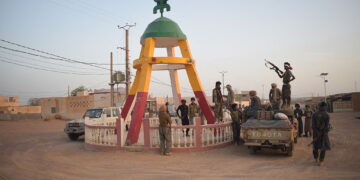
New regulations were introduced following the U.S. invasion and the Taliban’s return to power afterward. This article will evaluate the developments in Afghan media following the Taliban’s rise to power in 2021 and its new media strategy.
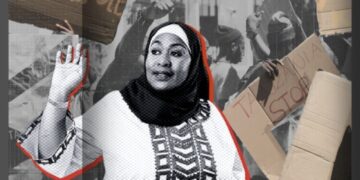
The unemployment of female journalists and the restrictions on shows focusing on women indicate a regression in gender equality and women’s rights in Afghanistan.
Restrictions and Bans on the Media
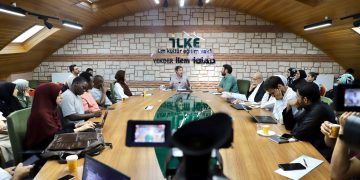
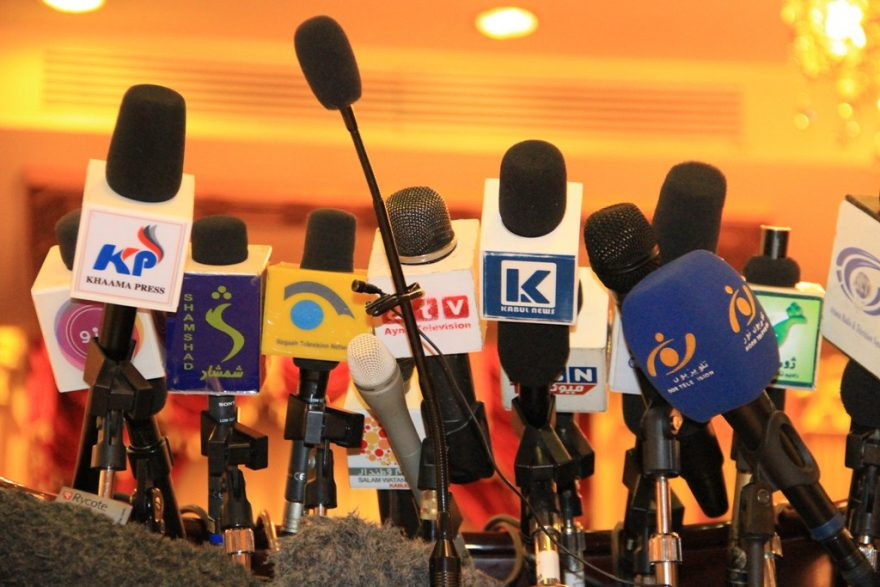
The return of the Taliban to power in August 2021 has brought along significant restrictions on press freedom in Afghanistan. These limitations have significantly constrained the opportunities for journalists in the country. Journalists encounter challenges when trying to reach news sources and arrange meetings with government officials, which directly restricts the public’s right to information. Government officials also fail to provide sufficient explanation and information in response to questions from journalists (Caferi, 2023). Media outlets that do not comply with the rules set by the Taliban government are shut down, and journalists face imprisonment (Khil, 2022).
Before the Taliban government came to power, 114 newspapers were actively publishing in Afghanistan; however, there are only 20 newspapers that continue to operate since the Taliban’s takeover. During this period, 51 television channels, 132 radio stations, and 49 online news sites stopped operating. The majority of the employees of these media outlets were forced to leave the country (Eqtesad, 2021). In its 2023 report on Freedom of Expression and the Press, the Afghanistan Journalists Center highlighted the restrictions imposed by the Taliban on freedom of expression and the media, listing the following restrictions and bans (Khil, 2022
The presence of women in the media has been dramatically restricted during the Taliban era. The unemployment of female journalists and the restrictions on shows focusing on women indicate a regression in gender equality and women’s rights in Afghanistan. Within the first two years of the Taliban regime, 80% of female journalists became unemployed. Before 2021, there were a total of 12,000 male and female media workers in Afghanistan, but two-thirds of them lost their jobs after the Taliban took control (Emiri, 2023)
- Women are banned from working on national radio and television.
- The broadcast of protests against the Taliban is banned.
- Media outlets are required to use the term “Taliban government” instead of “Afghan government.”
- The broadcast of music shows is banned.
- Women are banned from participating in entertainment shows.
- If a woman is to appear as a guest on a program, she is required to wear a burqa.
- There are restrictions on men and women working together in the media. For example, if a man is to be interviewed, it must be conducted by a male journalist. In Khost city, a male journalist was sentenced to six days in prison for interviewing a woman (Aram & Gani, 2024).
- The broadcasts of international media outlets are banned on Afghan television.
- When creating advertising content, especially on political and security matters, approval must be obtained from officials appointed by the Taliban government.
- There are restrictions on the use of women’s voices in local media.
- In Kandahar, it is specifically prohibited for media workers to photograph or film Taliban officials (Aram & Gani, 2024).
During the first year of Taliban rule, 59 journalists were arrested, and 80 journalists faced threats of death and imprisonment.
The shows that specifically focus on women, such as those addressing women’s rights and freedoms, have been banned. A journalist who reported on the unemployment problem among women was subjected to an investigation. Another journalist, who reported on high prices and criticized the lack of municipal services, was accused of espionage and spreading anti-government propaganda. The owner of a local radio station stated that the Taliban government appointed an official to manage the radio and insisted on intervening in all the contents of the broadcast, demanding that broadcasts favor the Taliban government. In a meeting with media workers, the Taliban government openly instructed that no cooperation should be made with foreign media outlets and that those who secretly collaborate should be reported to them (Aram & Gani, 2024). These actions and statements from officials are crucial in understanding the Taliban’s stance towards the media.
In a report released on Journalists’ Day, the Afghanistan Journalists Center shared 139 cases of violence against media workers. During the first year of Taliban rule, 59 journalists were arrested, and 80 journalists faced threats of death and imprisonment (International, 2024; Sobh, 2023). However, despite all these restrictions and bans, the struggle for press freedom in Afghanistan continues. After being forced to leave the country, many journalists have continued sharing information and reporting on events through social media, using local sources in Afghanistan.
The Taliban’s New Media Strategy
There has been a significant shift in the Taliban’s media strategy since their rule in the early 1990s. During that period, the information flow was heavily restricted, and the Taliban maintained full control over traditional media outlets like print media and radio. The international media was minimal, and local media were subjected to strict control and censorship. However, with the U.S. invasion of Afghanistan in 2001, the Taliban’s media strategy started to transform. During this period (2001-2021), the movement adopted a broader use of different media strategies, which reflect approaches similar to those used by groups like Al-Qaeda and ISIS in promoting their activities (Mehran, 2022).
After 2021, as the Taliban sought to regain control over information flow similar to their practices in the 1990s, pressure on traditional media increased. At the same time, the use of new media became increasingly widespread. Taliban officials and supporters reactivated their social media accounts, gaining visibility on both local and international platforms. With the rise of the Neo-Taliban, the use of technology has expanded to include new digital platforms such as Twitter (now known as X), Facebook (now Meta), YouTube, WhatsApp, and Telegram groups. The ban on Facebook and YouTube accelerated the Taliban’s use of Twitter, turning it into a crucial tool for spreading their messages, expanding their influence and reach, and attracting and radicalizing new members.
Propaganda, as Lippmann noted, is not exclusive to state use but is “a regular organ of popular government.” In this regard, the Taliban have effectively used Twitter to make their voices heard by the world and gain popular support. Twitter reflects the soft influence that the Taliban has chosen to consolidate and strengthen its support among the general public. The use of Twitter for political influence represents a significant shift in the Taliban’s transition to soft power. However, the impact of the Taliban’s social media activity in Afghanistan is limited because only 15% of the population has access to the internet, and just 9% of that group uses social media (Yousafzai, 2022). Moreover, pro-Taliban accounts actively use digital media platforms like websites, Twitter, and YouTube to respond to negative reports and posts by international media and anti-Taliban groups.
In conclusion, on the one hand, given the shrinking or even disappearance of physical space for activism in Afghanistan, many activists see social media, particularly platforms like Twitter and Facebook, as the only remaining space for discussing and criticizing the Taliban. On the other hand, the Taliban’s negative perception by the international community has led the new government to emphasize public diplomacy. It has optimized digital media to achieve its goals in public diplomacy and to present its government as more moderate and respectful of human rights. Thus, this strategy is part of the Taliban’s broader quest for gaining international legitimacy.
References
Aram, F., & Gani, F. (2024, May). Veziyete Resaneha Der Afganistan: Ez Memnunyet Pusheshe Movzuate Zenan Ta Estehdame Nezaret Konende Taliban Der Resaneha. Retrieved from: https://zantimes.com/fa/2024/05/03/the-recruitment-of-taliban-monitors-in-the-media/
Caferi, H. (2023, September). Che Gunegiye Destresi Be Ettelahat ve Veziyete Resaneha Der Afganistan. Retrieved from: https://bit.ly/4aZ6pCX
Emiri, İ. (2023, December). Der Sale 2023 Ber Resanehaye Afganistan Che Gozesht?. Retrieved from: https://www.bbc.com/persian/articles/cy9ev5d8dlxo
International, A. (2023, December). Veziyete Azadiye Resaneha ve Khabernegaran Der Afganistan. Retrieved from: https://www.afintl.com/202403175888
Khil, S. İ. (2022). Chardeh Desturulamele Taliban Der Zemineye Mehdudiyete Resaneha ve Khabernegaran. Retrieved from: https://bit.ly/4bXVjzp
Mehran, W. (2022, August). The Evolution in the Taliban’s Media Strategy. Retrieved from: https://extremism.gwu.edu/evolution-in-taliban-media-strategy
Özkan, H., & Rigiderakhshan, M. (2020). Afganistan’da basının tarihsel gelişimi: Monarşi rejiminden Taliban dönemine (1873-1994). The Journal of Social Sciences Research, 15(2), 438-449.
Shafaqna. (2023). Veziyete Resaneha Der Sale 2023 Der Afganistan Tehte Tesellote Taliban. Retrieved from: https://af.shafaqna.com/FA/589597
Sobh, K. (2023, December). 2023 ve Veziyete Resaneha ve Khabernegarane Afganistan. Retrieved from: https://8am.media/fa/2023-and-the-situation-of-afghan-media-and-journalists-restrictive-guidelines-have-intensified-self-censorship/
Yousafzai, Z. I. (2022, October). The Taliban’s Use of Twitter as a Tool to Spread their Voice. Retrieved from: https://gnet-research.org/2022/10/12/the-talibans-use-of-twitter-as-a-tool-to-spread-their-voice/