











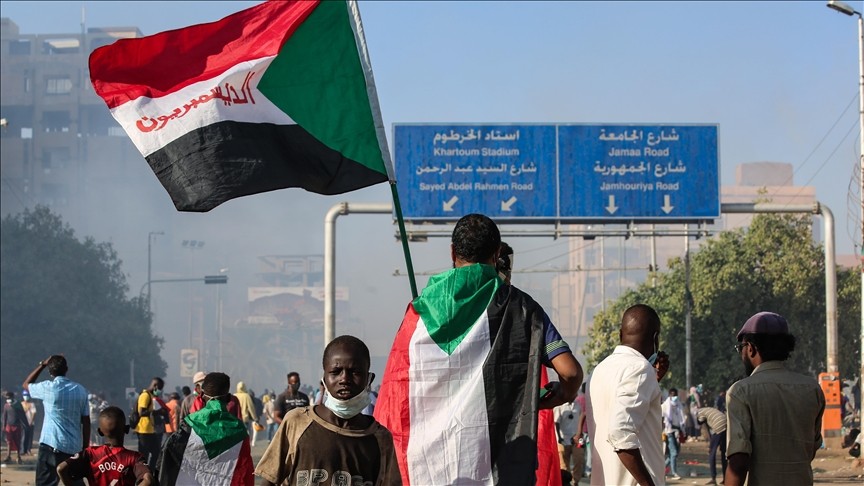
Despite decades of political transitions, Sudan remains trapped in a cycle of military dominance, weak governance, and unresolved power struggles between armed factions. The 2023 war between the SAF and RSF deepens this fragmentation, fueling mass displacement and state collapse. A sustainable resolution requires an inclusive national dialogue that addresses structural inequalities and redefines power-sharing through legitimate, participatory processes.
Introduction
April 15, 2025, marks the second anniversary of the outbreak of war in Sudan between the Rapid Support Forces (RSF) and the Sudanese Armed Forces (SAF). This conflict is not an isolated event but part of a protracted pattern of internal wars rooted in Sudan’s longstanding political, economic, and military instability since its independence in 1956. Military coups have served as the primary mechanism for regime change, with more than thirty attempts recorded, six of which were successful (Statista, 2023). The most recent coup occurred in October 2021. This recurring cycle of military intervention has led analysts to describe Sudan as a “laboratory of coups” (Fabricius, 2020). The resulting instability has catalyzed numerous armed conflicts, including the South Sudan War, the Darfur conflict, the Blue Nile and South Kordofan insurgencies, and the April 2023 war. While many rebel groups cite marginalization and inequality, the root cause remains the inequitable distribution of power and resources.
This analysis examines the ongoing crisis in Sudan, focusing on the April 2023 war between the SAF and RSF, within the broader context of Sudan’s history of political instability and militarized power transitions. The study traces the roots of the conflict to structural failures in governance, the marginalization of civilian actors, and unresolved tensions between competing military factions. Drawing on recent political developments, the analysis highlights how the collapse of the transitional framework initially established after the 2019 revolution paved the way for renewed armed confrontation and institutional breakdown. It also explores the shifting political and military landscape since the outbreak of war, including the emergence of competing civilian alliances, parallel governance claims, and failed peace initiatives. It also examines the humanitarian toll, noting that Sudan now faces the world’s largest internal displacement crisis, with over 15 million people displaced and more than 25 million in need of humanitarian assistance.
The Background of the War in Sudan
The war erupted in Sudan’s capital, Khartoum, on 15 April 2023. The conflict was between the Rapid Support Forces (RSF) and the Sudanese Armed Forces (SAF). Key drivers of the war included rising political tensions between civilian and military actors, and a growing rivalry between the RSF and SAF. The most critical point of contention was the proposed integration of the RSF into the regular army.
The Sudanese revolution in April 2019 led to the overthrow of President Omar Hassan Ahmed al-Bashir, who had ruled the country for thirty years. In the aftermath of the revolution, the military component (SAF and RSF) and civilian component (represented by the Forces of Freedom and Change) reached an agreement to share power during a 39-month transitional period. General elections were to be held at the end of that period. In August 2019, both parties signed.
One of the critical flaws of the agreement was the failure to hold the RSF accountable for its documented crimes during the Darfur conflict. Instead, the RSF was granted formal participation in the transitional government. This decision significantly enhanced the RSF’s military and political power, making it a parallel force to the Sudanese Armed Forces.
The military component initially held the presidency of the Sovereign Council. However, tensions escalated as the deadline for transferring leadership to the civilian component approached. The handover ultimately failed to occur. In October 2021, General Abdel Fattah al-Burhan, head of the Sovereign Council, dissolved the council, dismissed all governors and ministers, declared a state of emergency, and suspended several articles of The Constitutional Charter (“Sudan’s military ruler”, 2021). The failure to implement the terms of The Constitutional Charter led to the collapse of the transitional governance framework. As a result, full authority was consolidated under the military, further deepening political instability and undermining prospects for democratic transition.
Reactions to these actions were divided. The civilian bloc described them as a military coup, while the military and some allied civilian groups argued that the measures were necessary to prevent further instability. The African Union officially recognized the move as a coup and suspended Sudan’s membership. This response aligned with the AU’s broader efforts to deter unconstitutional changes of government in Africa (Torshin, 2025).
In the aftermath, Sudan entered a period of heightened political unrest and widespread protests. To resolve the crisis, the military and some civilian groups signed “The Framework Agreement” in December 2022. This agreement proposed a new 24-month transitional period. Leadership of this period would be transferred to civilian authorities. However, the agreement failed to gain consensus. Not all civilian forces accepted the terms. Moreover, disagreements between the SAF and RSF over the integration process and its implementation remained unresolved. These tensions triggered a renewed political and military crisis. No settlement was reached by the time war broke out in Khartoum in April 2023.
Social and Political Conditions Since the Outbreak of the War
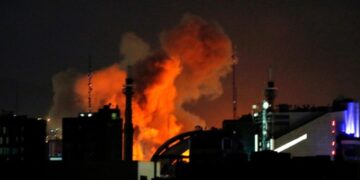
The war began in Khartoum on 15 April 2023 and rapidly expanded to Darfur, Kordofan, Sennar, and Al-Jazirah. Within months, the RSF controlled large parts of the country, while the SAF maintained control over the north and east (“قوات الدعم “, 2025). Between mid-2024 and early 2025, the SAF regained key territories, including Khartoum on 26 March 2025. A militarily significant development during this period was the SAF’s recapture of the Republican Palace on 21 March 2025. This achievement enhanced operational command and the SAF’s negotiating position in potential political settlements. However, these gains coincided with intensified conflict in Darfur, particularly in North Darfur, where violence escalated despite the SAF’s consolidation of power in the capital.
Politically, General Abdel Fattah al-Burhan remained head of the Sovereignty Council. He reshuffled its members and, in September 2023, dissolved the RSF through a constitutional decree, repealing its legal status. The RSF was declared a rebel force. Civilian component, previously aligned with the military, rejected the war and formed a new coalition, the Coordination Body of the Democratic Civil Forces (Taqaddam) on May 30, 2024. Its main objective was to end the war through negotiations. Although Taqaddam’s goal is to end the war, it is a coalition that does not include all the civilian forces in Sudan that can contribute to a vision for ending the war.
Although Taqaddam’s goal is to end the war, it is a coalition that does not include all the civilian forces in Sudan that can contribute to a vision for ending the war.
On February 15, 2025, the Sovereignty Council introduced amendments to the 2019 Constitutional Charter and announced plans to establish a civilian-led transitional government (Sudan News Agency, 2025). In parallel, the Rapid Support Forces signed a “Founding Charter” in Nairobi with several armed and civilian groups, proposing the establishment of a civilian government. This move triggered diplomatic tensions between Sudan and Kenya (“السودان يستنكر”, 2025). The United Nations warned that such developments could jeopardize Sudan’s territorial integrity (United Nations, 2025).
No government can effectively govern Sudan while war persists. Establishing parallel authorities during war risks further fragmentation. Without a comprehensive political settlement, Sudan faces the possibility of division echoing the trajectory of the Libyan crisis.
The Negative Consequences of War on the Population
The war in Sudan has produced one of the most severe displacement crises in the world. According to international sources, Sudan now has the highest number of displaced persons globally (IDMC, 2024; UNHCR, 2024). As of 2025, approximately 15 million people have been displaced in search of safety (UNHCR, 2025). Internally, 25 million people require humanitarian assistance out of a total population of 49.4 million (UNFPA, 2024), the majority of whom are Muslim.
According to international sources, Sudan now has the highest number of displaced persons globally. As of 2025, approximately 15 million people have been displaced in search of safety.
In addition to displacement, the war has caused widespread destruction of infrastructure. Hospitals, schools, banks, water and electricity plants, telecommunications towers, roads, and bridges have been damaged or rendered inoperable. As a result, access to basic services has become increasingly restricted. The prolonged conflict has also placed the population at heightened risk of famine. The Integrated Food Security Phase Classification (IPC) estimates that 24.6 million people are experiencing acute food insecurity (WFP, n.d.). The healthcare system has collapsed. Over 20 million people are in urgent need of medical services. Disease outbreaks, including malaria, dengue fever, measles, and cholera have intensified the crisis (WHO, 2025).
Without urgent intervention, Sudan risks becoming one of the most devastating humanitarian disasters of the 21st century.
As the conflict continues, the Sudanese population longs for a resolution that would allow them to return home and begin rebuilding their lives. Despite the scale of the crisis, international engagement remains limited. Humanitarian access is restricted, and no viable political resolution has emerged. Without urgent intervention, Sudan risks becoming one of the most devastating humanitarian disasters of the 21st century.
Conclusion
The April 2023 war in Sudan has significantly deepened an already protracted and multifaceted crisis, rooted in the country’s enduring political, military, and humanitarian challenges. This latest conflict has not only laid bare the persistent fragility of Sudan’s political institutions but has also exacerbated divisions within and between civilian and military actors. The proliferation of new armed groups and civilian alliances aligned with either the Sudanese Armed Forces (SAF) or the Rapid Support Forces (RSF) underscores the fragmentation of authority and the erosion of national cohesion. The absence of consensus on a viable pathway to end the war continues to pose a grave threat to Sudan’s territorial integrity and political unity.
This war, however, must be understood not as an isolated episode but as part of a continuum of conflicts that have marked Sudan’s post-independence history. The recurrence of armed confrontations reflects systemic governance failures, particularly the absence of an inclusive constitutional framework capable of ensuring equitable power and resource distribution. Military solutions and externally driven peace initiatives have repeatedly proven insufficient, as illustrated by the SAF’s recapture of the Republican Palace in Khartoum an event that symbolized strategic gain yet failed to stem the escalation of violence in regions such as Darfur.
A sustainable resolution to Sudan’s crisis necessitates more than temporary ceasefires or political reshuffles. It demands an inclusive national dialogue that addresses the structural and historical roots of conflict. Foundational issues including governance, national identity, and the equitable allocation of power must be redefined through a participatory and legitimate process. Lessons from past transitional failures must inform a new political vision, one grounded in justice, accountability, and shared ownership of the future. Without such a framework, Sudan risks enduring fragmentation, protracted instability, and the collapse of its statehood.
References
Sudan’s military ruler declares national state of emergency. (2021, October 25). [Video]. Al Jazeera English YouTube. https://www.youtube.com/watch?v=NKM2N4fJEgw
قوات الدعم السريع في السودان [Rapid Support Forces in Sudan] (2023, May 15). Al Jazeera Net. https://www.aljazeera.net/encyclopedia/2023/5/15/قوات-الدعم-السريع-في-السودان
السودان يستنكر استضافة كينيا اجتماعاً [Sudan denounces Kenya hosting a meeting] (2025, February 19). Al Jazeera Net. https://www.aljazeera.net/news/2025/2/19/السودان-يستنكر-استضافة-كينيا-اجتماعا
Fabricius, P. (2020, July 31). Sudan, a coup laboratory. Institute for Security Studies (ISS Today). https://issafrica.org/iss-today/sudan-a-coup-laboratory
Internal Displacement Monitoring Centre (IDMC). (2024). 2024 global report on internal displacement (GRID). https://www.internal-displacement.org/
Sky News Arabic. (2025, April 10). Sudan files ICC complaint against UAE [Video]. YouTube. https://www.youtube.com/watch?v=T3wCiLVqQNQ
Sudan News Agency. (2025, February 23). الحكومة تعلن التعديلات على الوثيقة الدستورية لسنة ٢٠٢٥م [The government announces amendments to the 2025 constitutional document.] [Video]. YouTube. https://www.youtube.com/watch?v=ebspXAfgXc4
Statista. (2023, May 15). Sudan coup timeline [Infographic]. https://www.statista.com/chart/26044/sudan-coup-timeline/
Torshin, M. (2025). قراءة في الفترة الانتقالية السودانية 2019–2024 [Reading in the Sudanese transitional period 2019–2024]. Arab Council Foundation. https://arabcouncil.foundation/2025/01/قراءة-في
UNHCR. (2024). Sudan crisis explained. https://www.unrefugees.org/news/sudan-cri sis-explained
UNHCR. (2025). Sudan Situation, Global focus. https://reporting.unhcr.org/operational/situations/sudan-situation
United Nations. (2025, February). UN Secretary-General warns of Sudan’s unity risk. United Nations News. https://news.un.org/ar/story/2025/02/1139361
World Food Programme (WFP). (n.d.). Sudan. https://www.wfp.org/countries/sudan
World Health Organization (WHO). (2025, April 14). Sudan: A deepening health crisis that calls for urgent attention. WHO Regional Office for the Eastern Mediterranean. https://www.emro.who.int/countries/sdn/index.html
United Nations Population Fund (UNFPA). (2024). World Population Dashboard: South Sudan. https://www.unfpa.org/data/world-population/SS