

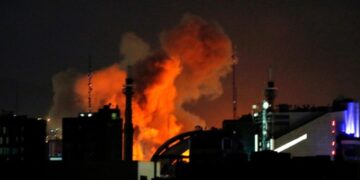


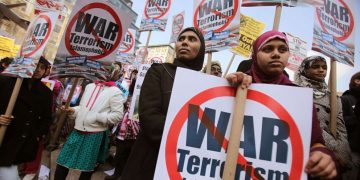









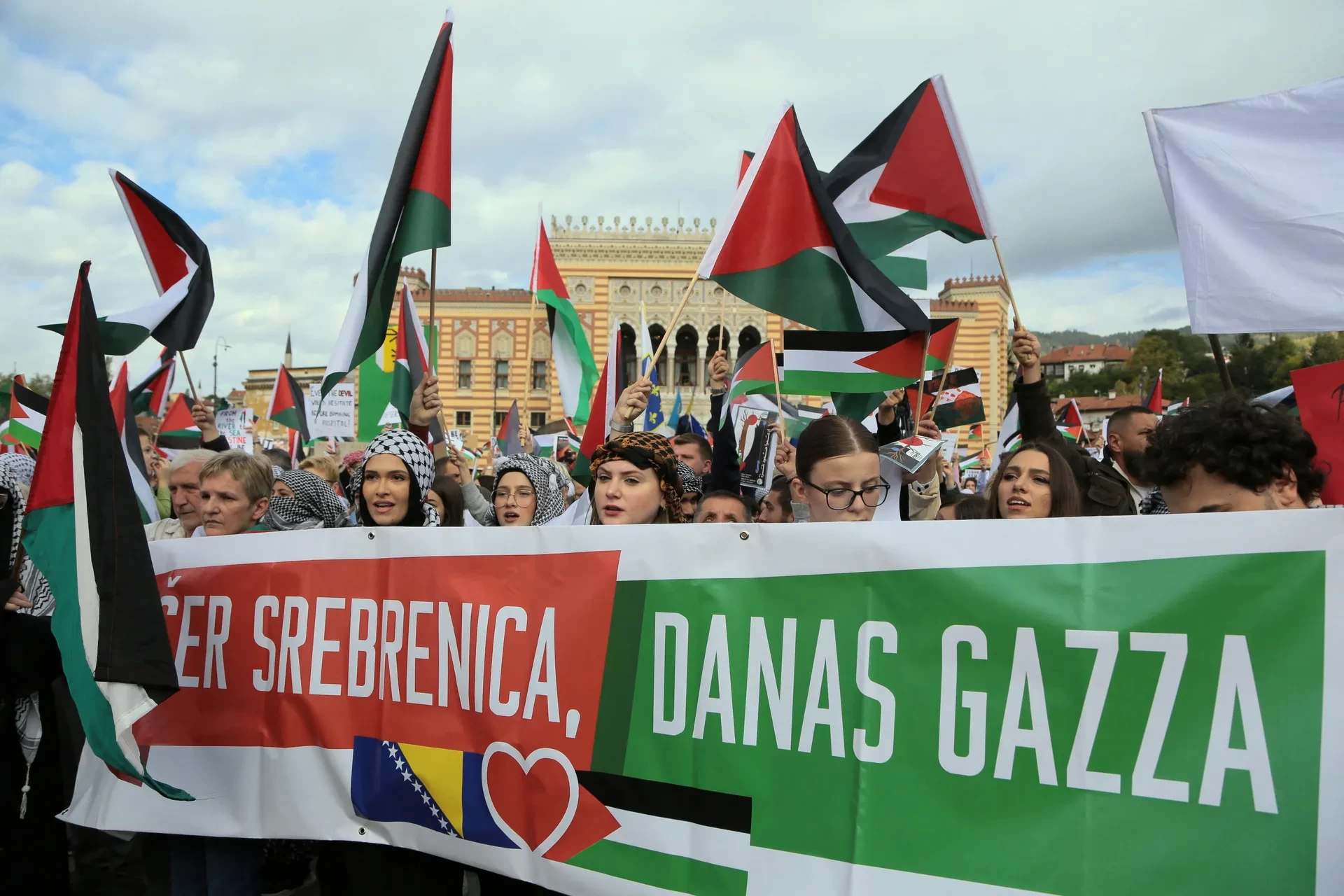
As the 30th anniversary of the Srebrenica genocide approaches in 2025, this article examines the Srebrenica massacre, its recognition as genocide by international courts, and its similarities to the ongoing genocide in Gaza. The current situation in Gaza recalls the Srebrenica genocide in terms of its scale and the way it is being ignored as it unfolds.
Srebrenica: Thirty Years On
2025 will mark the thirtieth anniversary of the Srebrenica genocide, which started on the 11th of July 1995, following the fall of Srebrenica. In 2024, the United Nations General Assembly adopted the Resolution establishing the 11th of July as the International Day of Remembrance of the Srebrenica genocide, recommending educational activities related to the topic and reaffirming the numerous court decisions (UN, 2024). The adoption of the Resolution saw great opposition from those who deny, minimize the Srebrenica genocide, and even glorify its perpetrators (Turčalo & Karčić, 2021). However, the support of the international community and many countries co-sponsoring the Resolution, including the Republic of Türkiye, gave hope to the families of the victims.
The war in Bosnia and Herzegovina between 1992-1995 showed some of the most shocking atrocities and war crimes in Europe after World War II, including forcible expulsions, concentration camps, sexual violence, and mass killings. The Srebrenica genocide, however, is specifically emblematic due to the scale of the crimes and the legal qualifications that separate it from other war crimes and crimes against humanity that were committed during the war. The national and international courts have qualified that what took place in Srebrenica can be legally defined as genocide. Among the different judgments, the judgments adopted by international courts carry specific weight, especially those adopted by the International Criminal Tribunal for the former Yugoslavia (ICTY) as a specialized ad-hoc court and the International Court of Justice (ICJ) as a permanent “world” court. It is important to note that certain judgments by the national courts in Germany, acting on the basis of universal jurisdiction, have ascertained that genocide took place in other towns in Bosnia and Herzegovina as well, and not just Srebrenica. The towns include Doboj, Kotor Varoš, Zvornik (Gurda, 2015). The ICJ judgment in the case of Bosnia v Serbia on Application of the Convention on the Prevention and Punishment of the Crime of Genocide (ICJ Judgment Case Bosnia v Serbia, 2007) itself states that elements of the crime of genocide, specifically the acts amounting to genocide as defined by the Article II of 1948 Convention on the Prevention and Punishment of the Crime of Genocide, can be established in other places in Bosnia and Herzegovina, such as Prijedor, however there was not enough evidence to prove the existence of the specific genocidal intent required by the Genocide Convention.
The Genocide Convention generally sets requirements for crimes to be legally defined as genocide, and they refer to the part related to acts and certain specific requirements related to intent. In regard to acts, Article II of the Genocide Convention 1948 states that genocide can be committed by acts (actus reus element) such as “(a) Killing members of the group; (b) Causing serious bodily or mental harm to members of the group; (c) Deliberately inflicting on the group conditions of life calculated to bring about its physical destruction in whole or in part; (d) Imposing measures intended to prevent births within the group; (e) Forcibly transferring children of the group to another group.” However, specific requirements are the ones related to mental element, referring to specific intent (mens rea), defining that above-mentioned acts need to be “committed with intent to destroy, in whole or in part, a national, ethnical, racial or religious group, as such” in order for the crimes to be legally considered genocide. The courts have established that those elements exist in the case of Srebrenica, including the mens rea element of genocidal intent, as a requirement that is notoriously difficult to prove and sets the crime of genocide apart from other crimes, regardless of the shocking nature of other instances of crimes (Gaeta, 2009). The ICJ judgment was itself heavily criticized as contradictory and as not following the jurisprudence previously established by the ICTY (Cassese, 2007) and by applying different standards of control, thus finding Serbia responsible only for not preventing the genocide in Srebrenica and not responsible for complicity or aiding the acts of genocide, whose primary perpetrator was identified as army and police forces of Republic of Srpska.
Article II of the Genocide Convention 1948 states that genocide can be committed by acts (actus reus element) such as “(a) Killing members of the group; (b) Causing serious bodily or mental harm to members of the group; (c) Deliberately inflicting on the group conditions of life calculated to bring about its physical destruction in whole or in part; (d) Imposing measures intended to prevent births within the group; (e) Forcibly transferring children of the group to another group.”
Echoes of Srebrenica in Gaza
While marking the anniversary of the Srebrenica genocide and the adoption of the UN General Assembly Resolution on Srebrenica, the public in Bosnia and Herzegovina, as in the rest of the world, was shocked and appalled by the ongoing slaughter in Gaza. Gaza and Srebrenica have many similarities, the most obvious one being the genocide case before the ICJ. The case related to Srebrenica was concluded in 2008, while the ICJ case related to Gaza is yet in its early stages. The cases before the ICJ usually last over long periods of time, even decades, and their decisions often come belated.
If we consider the remaining cases related to genocide after the adoption of the Genocide Convention referring to the Rwanda genocide, we can see that the majority of victims of genocide in today’s world are Muslims.
There are not many cases of genocide following the adoption of the Genocide Convention, especially when it comes to ICJ. It is worth noting that, besides Srebrenica, where the targeted victim group were Bosnian Muslims (Bosniaks), and related ICTY cases, genocide was also established by the special tribunal Extraordinary Chambers in the Courts of Cambodia (ECCC), where the victim group was Muslim Cham minority, together with the Vietnamese minority in Cambodia. Other ongoing cases before the ICJ relate to the Rohingya Muslim minority in Myanmar and, of course, Palestinian Muslims in Gaza. If we consider the remaining cases related to genocide after the adoption of the Genocide Convention referring to the Rwanda genocide, we can see that the majority of victims of genocide in today’s world are Muslims.
That points out the deep-rooted Islamophobia, prejudice, and prosecution of Muslims all around the world. Islamophobia is an especially important similarity between Srebrenica and Gaza when it comes to the global reaction, and especially the reaction of Western powers to prevention and acknowledgment of even the possibility that the genocide is taking place. The Srebrenica genocide was ignored while it was happening and is denied even today, despite overwhelming evidence and numerous judicial decisions. Similarly, despite credible evidence pointing out the existence of not only actus reus but of mens rea as well, and the reports, including the one by the UN special rapporteur (UN, 2024), the genocide case before the ICJ related to Gaza is dismissed as “antisemitic” and “baseless.” The evidence of the indiscriminate killing of civilians, destruction of civilian property and facilities, and denial of basic provisions point to the existence of acts described in Article II of the Genocide Convention, while the statements made by government officials labeling the Palestinians as “amalek” and calling for their destruction can even point to elements of special intent. The ICJ itself adopted provisional measures calling for the cessation of all activities that could amount to genocide and to allow the provision of necessities to the civilians (ICJ Case South Africa v Israel).
Another similarity between the war in Bosnia and Herzegovina in general, including the Srebrenica and Gaza, is the call for forcible expulsion of civilians. One of the goals of political and military leaders of the Republic of Srpska, as was established by the court decisions such as the ones against Karadzic and Mladic (ICTY, 2025), was to create an ethnically homogeneous territory from which the non-Serb population would be forcibly removed. That goal, defined as “territorial division” between three ethnic groups in Bosnia and Herzegovina (namely, Bosniaks, Serbs, and Croats), was even set as one of the strategic points during the formation of the Republic of Srpska (now recognized as an entity and part of Bosnia and Herzegovina with broad autonomous powers, following the signing of Dayton Peace Agreement). Prior to the war, three main ethnic groups of Bosnia and Herzegovina lived intertwined for centuries, but if we look at the ethnic map of Bosnia and Herzegovina following the war, sadly, this goal of homogenous ethno-territorial separation is fulfilled (Pejanović, 2017). We can see the reflection of that in the recent calls for forcible expulsion of the Palestinian population from Gaza to other states, with the denial of their possibility to return (Yeni Safak, 2025). The world must act and stand in opposition to such requests and all measures leading to it before it is too late.
References
Cassese, A. (2007, February 27). A judicial massacre. The Guardian. Retrieved from https://www.theguardian.com/commentisfree/2007/feb/27/thejudicialmassacreofsrebr
Gaeta, P. (2009). The UN Genocide Convention: A Commentary. Oxford University Press.
Gurda, V. (2015). The prosecution of genocide in Bosnia and Herzegovina before international, domestic, and national courts of other jurisdictions. Monumenta Srebrenica, 4, 35–69.
International Court of Justice. (2007). Case concerning application of the Convention on the prevention and punishment of the crime of genocide (Bosnia and Herzegovina v. Serbia and Montenegro). Retrieved from https://www.icj-cij.org/public/files/case-related/91/091-20070226-JUD-01-00-EN.pdf
International Court of Justice. Application of the Convention on the prevention and punishment of the crime of genocide in the Gaza Strip (South Africa v. Israel) – Provisional measures. Retrieved from https://www.icj-cij.org/case/192/provisional-measures
Pejanović, M. (2017). Promjena etničke strukture opština u Bosni i Hercegovini prema popisu stanovništva iz 2013. godine / Ethnic Structure Changes in B-H Municipalities According to the Census of 2013. Pregled: časopis Za društvena Pitanja / Periodical for Social Issues, 1(1), 1–26. Retrieved from https://pregled.unsa.ba/index.php/pregled/article/view/424
Sead, T., & Karčić, H. (Eds.). (2021). Bosnian Genocide Denial and Triumphalism: Origins, Impact and Prevention. Faculty of Political Science, University of Sarajevo.
Turkish president says no power can force Palestinians out of their homeland, slams US’s relocation proposal (2025, February). Yeni Safak. Retrieved from https://www.yenisafak.com/en/news/turkish-president-says-no-power-can-force-palestinians-out-of-their-homeland-slams-uss-relocation-proposal-3698264
United Nations. Prevention and Punishment of the crime of Genocide. Retrieved from https://www.un.org/en/genocideprevention/genocide-convention.shtml
United Nations (2024). Report of the Special Rapporteur on the situation of human rights in the Palestinian territories occupied since 1967, Francesca Albanese (A/HRC/55/73) (Advance unedited version). Retrieved from https://reliefweb.int/report/occupied-palestinian-territory/anatomy-genocide-report-special-rapporteur-situation-human-rights-palestinian-territories-occupied-1967-francesca-albanese-ahrc5573-advance-unedited-version
United Nations. (2024). UN General Assembly Resolution A/78/L.67/Rev.1. Retrieved from https://docs.un.org/en/A/78/L.67/Rev.1
United Nations International Tribunal for the former Yugoslavia. Cases. Retrieved from https://www.icty.org/en/cases