
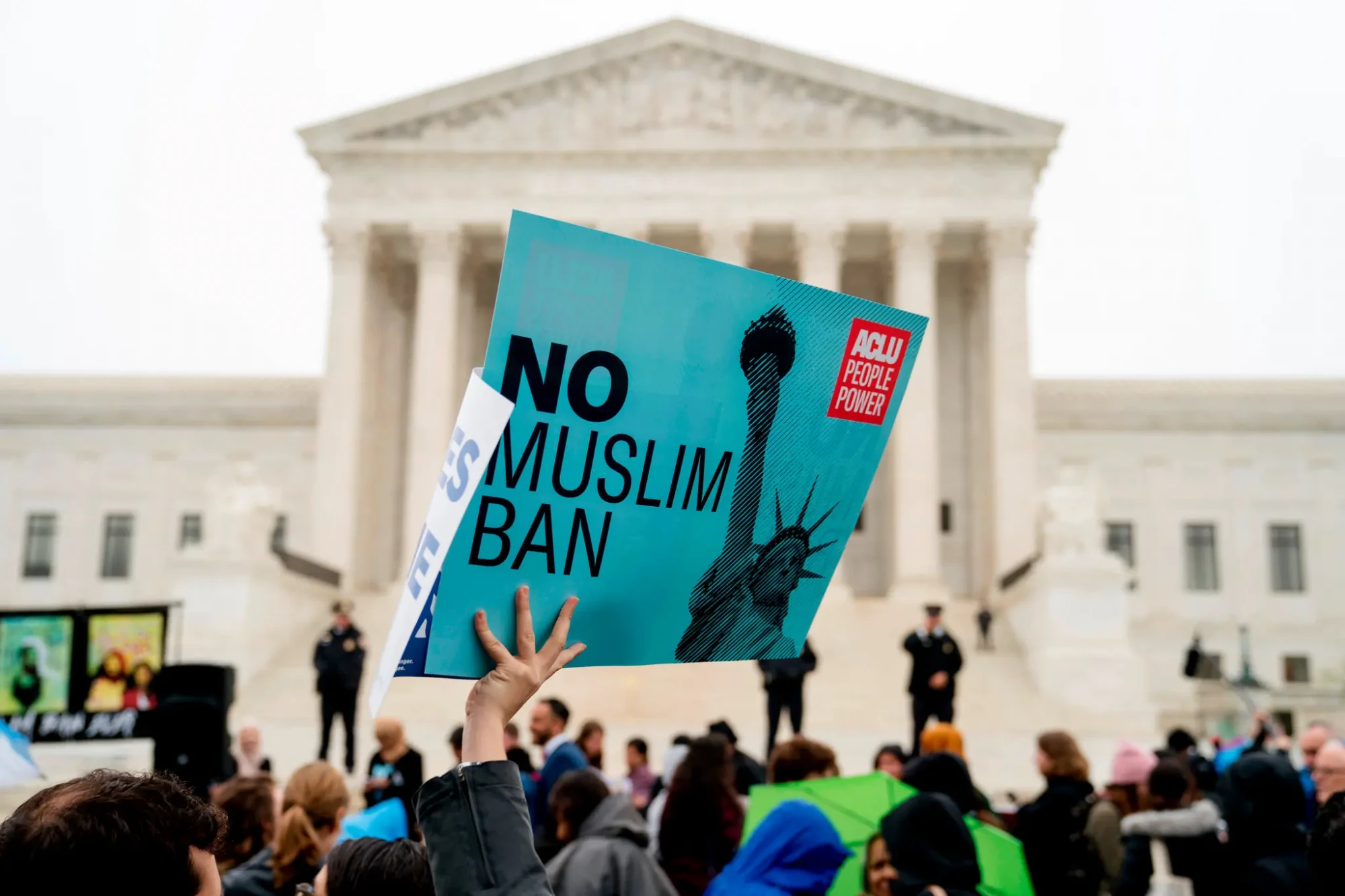
In summer 2025, President Trump’s intensified immigration policies, including “Muslim Ban 2.0,” target Muslim-majority countries, leading to increased ICE raids and fear in Muslim communities. California emerges as a resistance hub, with protests against federal crackdowns, as activists unite to fight against intimidation and uphold democratic values.
In the summer of 2025, the United States of America is once again grappling with a familiar crisis. The return of Donald Trump to the presidency has brought back hardline immigration policies, including mass deportations, controversial travel bans, and increasing tensions between federal and local authorities. But beyond the broader immigrant experience, one community has found itself at the intersection of religious and political fault lines: American Muslims. As raids intensify and immigration policies harden, Trump’s agenda is reshaping the legal and social landscape for Muslim immigrants and citizens alike, raising a pressing question: What does this mean for the future of Muslim communities in the U.S.?
A Harder Line Than Before: What’s New in Trump’s 2025 Immigration Agenda?
Trump’s second-term immigration policies have gone beyond his already aggressive 2017–2021 stance. His administration has reinvigorated Immigration and Customs Enforcement (ICE), expanded deportation protocols, and broadened travel restrictions, this time explicitly targeting Black and Muslim-majority countries. A new executive order, dubbed by critics as the “Muslim Ban 2.0,” restricts travel from several Muslim-majority countries, including Iran, Libya, Somalia, Nigeria, Sudan, Yemen, Chad, and others. The Council on American-Islamic Relations (CAIR) has condemned this policy, calling it “morally corrupt, racist, and anti-Muslim.”
What distinguishes Trump’s 2025 policies is not only their scale but also their institutional boldness.
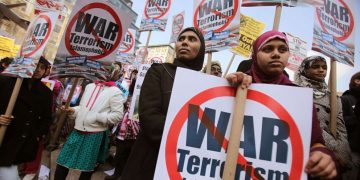
ICE operations have increased in cities that have historically resisted federal immigration crackdowns, such as Los Angeles and Chicago. These cities, many with large Muslim populations, have seen protests erupt as community members condemn racial profiling and the weaponization of immigration policy.
ICE Raids and Fear in Muslim Communities
The latest wave of ICE raids has disproportionately affected Muslim immigrants, particularly those from countries targeted by the updated travel ban or holding precarious visa statuses. Among the most alarming cases were the detentions of F-1 student visa holders, Rümeysa Öztürk in Boston, University of Minnesota graduate student Doğukan Günaydın, and Georgetown scholar Badar Khan Suri, all apprehended under vague national security pretexts. Many other students have faced visa revocations and disciplinary actions. Even green card holders like Mahmoud Khalil were not spared. Increasingly, Muslim students, academics, and activists are being surveilled, targeted, and silenced.
These detentions reflect a disturbing pattern of abuse in which legal immigration status offers little protection when political activism, especially related to Palestine, is perceived as a threat. What makes this moment particularly alarming in U.S. history is the apparent misuse of immigration enforcement by the State Department to silence pro-Palestinian voices. Under the guise of national security and foreign policy, the Trump government is weaponizing its authority to intimidate those who criticize U.S. policy in the Middle East, particularly its unconditional support for Israel’s ongoing genocide in Gaza. While several federal judges have intervened by halting deportations and questioning the administration’s legal justifications, the chilling effect is undeniable. Muslim communities now live under a shadow of fear.
The California Flashpoint: A Battle Over Values
California has become the symbolic and strategic center of resistance against federal immigration crackdowns. With a Democratic supermajority, large refugee and homeless populations, a longstanding progressive stance on immigration, and its self-declared status as a “sanctuary state,” the world’s fourth-largest economy stands in direct opposition to President Trump’s agenda, and may be specifically targeted because of its symbolic significance.
Protests erupted in Los Angeles, America’s second-largest city, against Trump’s authoritarian overreach, reflecting a long legacy of activism from the 1968 Chicano Movement to the 2020 Black Lives Matter demonstrations following George Floyd’s death. Amid widespread anti-deportation rallies, some of which escalated into clashes with police, President Trump threatened to invoke the Insurrection Act of 1807 and deployed approximately 5,000 National Guard troops to the city without Governor Gavin Newsom’s consent. Governor Newsom’s response was sharp and historic. In a nationally televised address, he declared that “Democracy is under assault,”[1] framing the conflict with Trump not as a partisan feud, but as a struggle for the soul of the republic. This is no longer just a local protest; it has become a national battle over America’s core values. The reach of this struggle is unmistakable: even I, living in Maryland, received a text from Governor Newsom asking for support in his fight against President Trump. It is a clear sign that this is no longer a state-level issue, but a national battle over fundamental values.
Muslim Solidarity and Activism Against Immigration Crackdowns
According to the U.S. Religion Census, Muslims are estimated to make up just 1–2% of the U.S. population[2], yet they have played a disproportionate role in opposing Trump’s immigration agenda. From mosque-based organizing to legal aid coalitions and public protests, Muslim communities are mobilizing. Organizations like CAIR, Muslim Advocates, and local masajid have partnered with immigrant justice groups to provide legal support, raise awareness, and document abuses.
This mobilization has been especially visible in response to the militarized crackdown on anti-ICE protests. Both CAIR and CAIR-California (CAIR-CA) have strongly condemned the Trump administration’s escalation, while also welcoming Governor Newsom’s firm opposition to federal overreach. Their statement framed the crackdown not just as a political overstep, but as a direct threat to civil liberties and religious freedom.
Under the guise of national security and foreign policy, the Trump government is weaponizing its authority to intimidate those who criticize U.S. policy in the Middle East, particularly its unconditional support for Israel’s ongoing genocide in Gaza.
High-profile Muslim figures, such as Imam Omar Suleiman, have become vocal critics of ICE, calling for its abolition. In a widely shared op-ed for Religious News Service, Suleiman wrote: “ICE is not too big to fail. It is too dangerous to continue. We don’t need a gentler deportation force. We need a government that refuses to criminalize protest, weaponize immigration or suppress dissent.”[3]This statement reflects a growing strategy among American Muslim leaders: linking their community’s struggles to migrant justice and aligning with other marginalized groups within the broader American narrative. By aligning with Latinx, African, and Asian immigrant communities, Muslims are creating interfaith, interracial coalitions that push back against xenophobia and Islamophobia alike.
With over 50 million immigrants in the U.S., including large populations of Asian (28%), Mexican (25%), and other Latin American (25%) origins, Muslims are forming coalitions across communities. While small in number, American Muslims are part of a growing moral and civic force in a country historically built by immigrants. Unlike many other nations, immigrant dissatisfaction in the U.S. carries deeper political weight, and poses serious implications for the nation’s democratic future and social cohesion.
Surveillance and Selective Citizenship
Despite their contributions to American society, Muslims remain among the most surveilled and legally vulnerable communities in the United States. Investigations by organizations like CAIR have revealed widespread government surveillance programs targeting Muslim communities, such as the NYPD’s monitoring of mosques and the FBI’s use of informants and entrapment tactics.[4] CAIR has launched multiple lawsuits challenging the federal terrorist watchlist (TSDS), which includes approximately 1.5 million individuals, 98% of them Muslims, who are often listed without due process and continue to face lasting consequences even after removal.[5] These practices have persisted despite a lack of evidence linking the broader Muslim community to criminal activity, reinforcing a climate of suspicion and systemic discrimination. Furthermore, Trump’s Islamophobic rhetoric, along with his foreign and domestic policies, has only deepened this vulnerability. His unconditional support for Israel, inflammatory statements on Gaza, and public alignment with far-right European leaders have further alienated Muslims at home and abroad.
Trump’s attempt to cut off foreign student visas from prestigious universities, particularly those with large Muslim populations like Harvard and Columbia, was viewed not only as xenophobic but as an attack on the intellectual diversity that once defined American higher education. Ironically, in attempting to make “America First,” Trump’s policies increasingly prioritize foreign allies like Israel over domestic pluralism. In his effort to “make America great again,” he is undermining the very values, such as diversity and civil liberties, that once made America great.
What Future for American Muslims?
This moment may prove to be one of the greatest tests for American democracy. Should the Trump administration intensify its crackdown on protesters and immigrants, it risks igniting a national crisis, one that could spiral beyond control and inflict lasting damage on the very foundations of democratic governance. The American Muslim community stands at a crossroads. While its demographic size is small, its moral and civic voice is growing louder. While Trump’s policies have fueled fear and cast Muslims as suspects and outsiders, they have also sparked unprecedented political engagement, pushing the community to organize, build coalitions, and reclaim public space. Organizations like CAIR have expanded legal advocacy and mobilization efforts, forming coalitions to defend civil liberties and promote voter participation. Most recently, the election of Zohran Mamdani as the Democratic nominee for New York City mayor[6], the first Muslim to achieve this, reflects the community’s rising influence and commitment to reclaiming public space in the face of exclusionary policies.
If history is any guide, the current crisis could become a defining moment. Just as the civil rights struggles of the 1960s reshaped American democracy, today’s anti-authoritarian coalition, including the Muslim community, may help reimagine what citizenship, civil liberties and justice look like in 21st-century America. And perhaps this is the moment when American Muslims finally claim their place in the story of this nation with dignity, not as tolerated outsiders, but as equal co-authors of its democratic future.
***
[1]Chabria, A. (2025, June 11). Newsom’s ‘Democracy is under assault’ speech could turn the tables on Trump. Los Angeles Times. https://www.latimes.com/california/story/2025-06-11/chabria-column-newsom-address-trump-ice-raids-national-guard-marines
[2] Association of Statisticians of American Religious Bodies. (2020, November 11). U.S. Religion Census shows both stability and change in congregational life [Press release]. U.S. Religion Census 2020. https://www.usreligioncensus.org/node/1641
[3] Suleiman, O. (2025, June 10). Abolish ICE. This time for real. Religion News Service. https://religionnews.com/2025/06/10/abolish-ice-this-time-for-real/
[4] Council on American-Islamic Relations. (2014, December 9). Written statement of the Council on American-Islamic Relations: The state of civil and human rights in the United States. Submitted to the Senate Judiciary Subcommittee on the Constitution, Civil Rights, and Human Rights. https://www.cair.com/wp-content/uploads/2017/08/civil-and-human-rights-in-the-United-States.pdf
[5] Barakat, M. (2023, September 18). Lawsuit by Islamic rights group says US terror watchlist woes continue even after names are removed. Associated Press. https://www.apnews.com/article/terror-watchlist-lawsuit-jersey-mayor-47765ad91468d7e04f0e7155d3baf134
[6] Tawfik, N. (2025, June 24). Left-wing Democrat stuns former governor in NY mayor primary. BBC News. https://www.bbc.com/news/articles/ckg6yg7x467o