



















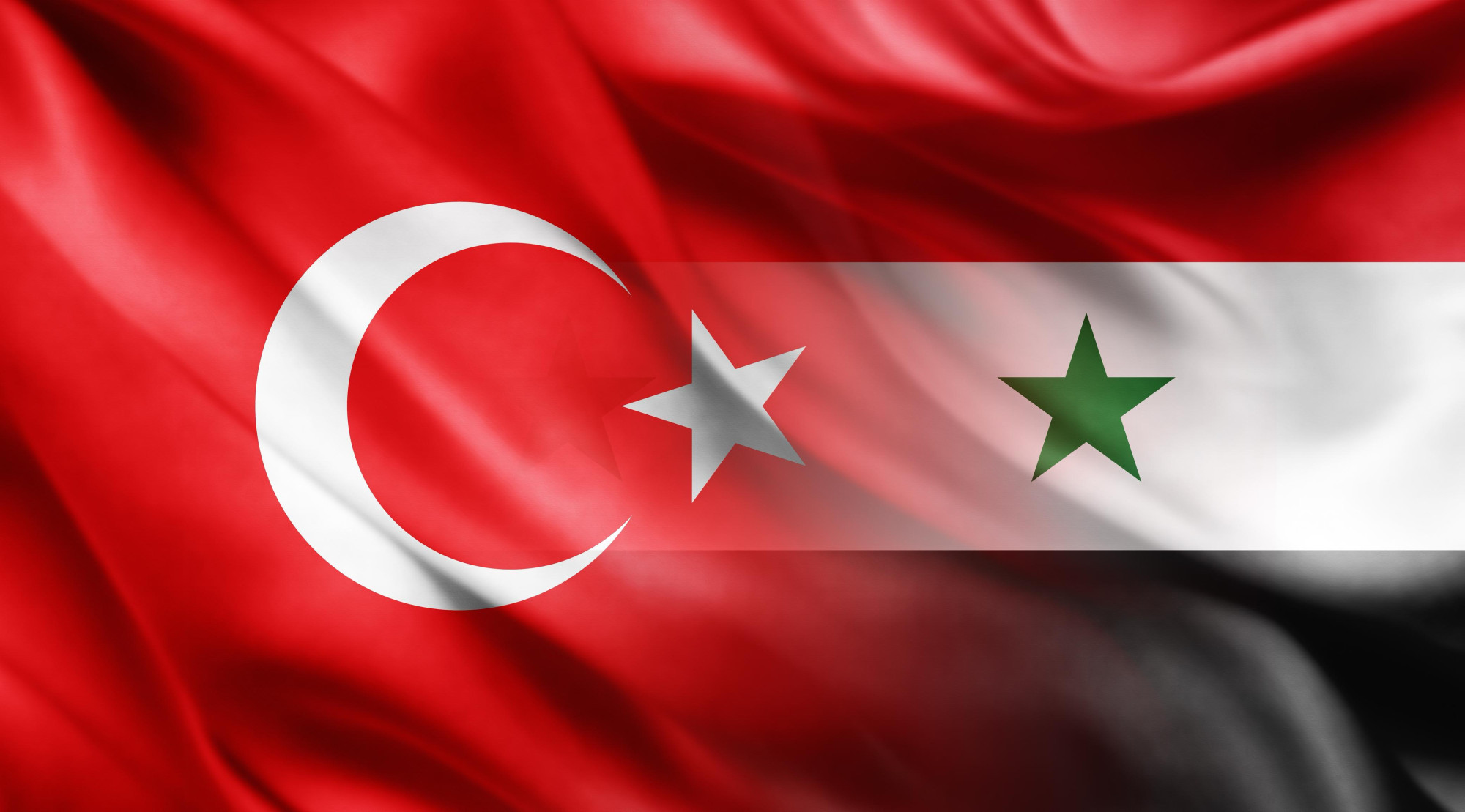
In the fourteenth year of the Syrian crisis, Ankara’s initiative to normalize relations with the Bashar al-Assad regime has become a major topic of discussion in recent weeks. Due to its 911-kilometer-long border, it was inevitable that Türkiye would be affected by the crisis in its neighboring country. Türkiye engaged in serious shuttle diplomacy early in the crisis to encourage the Syrian regime to implement reforms. However, after it became clear that the Assad regime was brutally suppressing peaceful protests and would not tolerate even the slightest opposition, Ankara began supporting Syrian opposition forces. Following the severance of ties with the regime, Türkiye refrained from establishing diplomatic relations with Syria for an extended period.
Nevertheless, particularly in the last few years, developments both in Syria and across the broader Middle East have brought the issue of Ankara reconciling with the Syrian regime back to the agenda from time to time. With Russia, one of the main actors in the Syrian crisis, becoming more involved, meetings between Ankara and Damascus were held in Moscow from late 2022 onwards (Özer, 2022) with officials from intelligence services and defense ministries from both sides. In fact, just before the 2023 Turkish Presidential elections, a quadrilateral meeting, including the foreign ministers of both countries, was held again in Moscow (Yıldırım, 2023). Despite these meetings, the process stalled due to two preconditions set by the Assad regime:
- Turkish troops to withdraw from Syria (The Assad regime describes the current situation as an “occupation”).
- Türkiye to stop its support for the Syrian opposition (The Syrian regime refers to the Türkiye-backed Syrian opposition as “terrorists”).
The Assad regime made it clear that the normalization process with Türkiye could not move forward unless these two preconditions were met.
However, following a meeting between Alexander Lavrentiev, Special Envoy of Russian President Vladimir Putin, and the Assad regime in Damascus in June 2024, there seemed to be a slight softening in the regime’s rhetoric towards Türkiye. During the meeting, Bashar al-Assad’s remarks were conveyed to the media, stating that “Syria is open to all initiatives regarding Syrian-Turkish relations based on respect for the sovereignty of the country over all its territory and the fight against terrorism and its organizations” (Musa, 2024). Nonetheless, it was also reported in different channels that the regime had not changed its position significantly and was still expecting Türkiye to publicly promise to withdraw from Syria and announce a withdrawal plan. Following these events, President Erdoğan repeatedly expressed his desire to normalize relations with the regime. He even mentioned that they could invite President Assad to Türkiye at any time, and if Assad refused, they could meet in another country to overcome “resentment” between them (“Erdoğan’dan Sayın Esed’e,” 2024). With Iraq also getting involved, there have been discussions about a possible meeting between Erdoğan and Assad in Baghdad since April.
Following President Erdoğan’s conciliatory approach, where he referred to Bashar al-Assad as “Mr.” Assad, and the attacks on Syrian refugees in Kayseri, there were incidents of anti-Türkiye sentiment in northern Syria at the beginning of July. During these protests that were likely manipulated, the Turkish flag was burned, Turkish authorities were attacked, Turkish trucks were targeted, and clashes occurred between Turkish forces and the Syrian National Army (Hülaku, 2024). Several Syrians lost their lives in these incidents. However, calm was restored in the region shortly afterward.
Zeitgeist and Seeking Peace
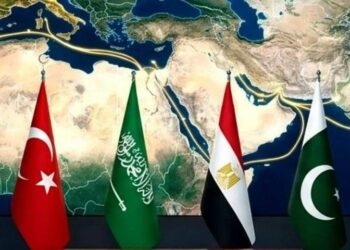
In the context of talks with the Syrian regime, Foreign Minister Hakan Fidan stated, “The spirit of the times* compels us to seek peace” (“Hakan Fidan’dan Suriye ile Normalleşme’ Açıklaması,” 2024). Fidan also sought to reassure that the normalization process with Syria would not negatively impact the Syrian refugees in Türkiye or the Türkiye-backed Syrian opposition. It is understood that the main issue Fidan referred to with the concept of the spirit of the times is the Gaza crisis and the potential for this crisis to trigger a regional war. Ankara seems to believe that Israel’s aggression in Gaza could escalate to involve Lebanon, Yemen, Iraq, and Syria, and thinks that in such a situation, Türkiye must minimize its problems with neighboring countries, establish strong relationships, and avoid the spread of conflicts. On the other hand, the possibility of Trump winning the U.S. presidential election and subsequently increasing Washington’s unconditional support for Israel, which could make Israel even more reckless and aggressive, might push the entire region into a much more dangerous and unpredictable situation. Thus, this possibility is driving Ankara to take preemptive action. Türkiye has normalized its relationship with countries like Egypt, Saudi Arabia, and the UAE, with which it had troubled relations, by gradually resolving its problems since 2021. During this period, tension in the region decreased, and many parties increased their reconciliation efforts with countries with which they had contentious relations.
Before the outbreak of the Gaza crisis, Türkiye was also engaged in a similar normalization process with Israel. However, with the genocide in Gaza, the normalization process between Israel and Türkiye was put on hold. And the final link in this chain of diplomatic normalization efforts was Syria. After the Assad regime gained control of approximately two-thirds of Syrian territory through military means with the support of Iran and Russia, it was expected that Ankara would intensify its efforts to normalize relations with Syria.
After the Assad regime gained control of approximately two-thirds of Syrian territory through military means with the support of Iran and Russia, it was expected that Ankara would intensify its efforts to normalize relations with Syria.
Türkiye’s Expectations from Normalization with Syria
Beyond positioning itself in the context of the potential regional war mentioned earlier, Türkiye primarily has three main objectives in normalizing relations with the Assad regime:
- Ensuring Türkiye’s border security,
- Preventing the establishment of a YPG/PKK-controlled statelet in northeastern Syria,
- Facilitating the return of Syrian refugees in Türkiye to their homeland.
However, when we examine these objectives, it seems unlikely that Türkiye will be able to address these issues through normalization with the Syrian regime. In fact, we can argue that Türkiye is more likely to be at a disadvantageous position at the end of this normalization period.
Although the Assad regime has regained control over much of the country through military means, it lacks the state capacity to control its borders fully. The regime shares sovereignty with Russia and Iran, and Iran-backed militias control Syria’s borders. Thousands of Iran-backed Shia militias (particularly around Aleppo) are stationed near the Turkish border, posing potential future security threats to Türkiye. In short, securing the borders through reconciliation with the Assad regime seems unlikely under the current conditions. Moreover, the idea of eliminating a PKK statelet through a joint Türkiye-Syria intervention against the PYD/YPG doesn’t align with the realities on the ground. Because the Syrian regime’s army has collapsed entirely in the war, and without the support of Iran-backed militias on the ground and Russian air support, the regime lacks the capacity to carry out any military operations in the country. In other words, the regime has no capacity to fight the YPG. Furthermore, the Assad regime has no intention of fighting the YPG/SDF. Today, the regime forces and YPG groups are cooperating along the Turkish border.
Another point to consider is that the Assad regime does not perceive the YPG as a significant threat as it perceives the Türkiye-backed Syrian opposition. Drawing on its long history of cooperation with the PKK before 1998, the regime believes it can eventually reach an agreement with the YPG/SDF. Indeed, the YPG/SDF consistently asserts that they do not have a separatist agenda and that they see themselves as part of Syria, thereby seeking a way to reconcile with the regime. However, although there have been many meetings between the two sides, often mediated by Russia, none led to an agreement. Nevertheless, the current situation indicates that even though it is not symbiotic, the parties have a pragmatic relationship.
When it comes to the issue of refugees and asylum seekers, Türkiye’s expectations from the regime do not align with the realities on the ground. First and foremost, the regime is unwilling to accept Syrian refugees back into the country, viewing them as dissenters and even “traitors.” Additionally, those who were forced to leave Syria often send financial support to their relatives who remained behind. This flow of money into Syria from abroad helps keep the economy afloat, and the regime is reluctant to lose this financial lifeline. Moreover, the regime is quite satisfied with the demographic changes that occurred as a result of the Syrian war and believes that the departure of people during the conflict has created a more homogeneous structure within the country. For example, General Jamil Hassan, head of the Syrian Air Force Intelligence, once stated, “A Syria with 10 million trustworthy citizens is better than a Syria with 30 million vandals” (Lucas, 2018). Also, many reports have documented human rights abuses experienced by those who trusted the regime’s guarantees and returned to Syria. The country’s destroyed infrastructure, the worsening economic crisis, and the lack of a self-sustaining ecosystem further hinder the “voluntary” return of Syrians. A large portion of the Syrian population is already living in conditions of severe humanitarian need. Therefore, it seems unlikely that Türkiye will achieve its third objective regarding the return of refugees.
When it comes to the issue of refugees and asylum seekers, Türkiye’s expectations from the regime do not align with the realities on the ground.
Moreover, if Türkiye were to withdraw its troops from Syria, it would be very easy for the regime, with the support of its allies, to attempt to reclaim by military means the regions under the control of Syrian opposition forces, where over five million Syrians currently live. It’s important to remember that the Assad regime recently attacked a Turkish military base in the al-Nayrab area of Idlib. In such a scenario, millions of Syrians would flee to the Turkish border. The regime already gave Türkiye a preview of this in 2020, when nearly a million people were forced to move toward the Turkish border due to the attacks by the regime and Russia. This crisis, along with Russia targeting Turkish soldiers in Idlib, compelled Türkiye to launch Operation Spring Shield against the regime. The operation caused significant losses for both the regime and the Iran-backed militias. Following the Spring Shield Operation, large-scale conflicts across Syria ended to a great extent. There has been no change within the borders of the control zones in Syria since March 2020. During this time, the actors of the civil war have consolidated their control over these areas.
Different Normalization Attempts with the Syria Regime: Experiences with the Arab States and the European Union
Two main patterns emerge when we look at other normalization attempts with Syria. The first is related to Arab states, and the second is to the European Union. Arab countries have intensified their efforts to normalize relations with the Syrian regime since 2018. The United Arab Emirates, Lebanon, and Jordan gradually normalized ties with Syria. Then, Saudi Arabia normalized its ties with the country, and in May 2023, Syria was re-admitted to the Arab League. Bashar al-Assad also participated in the last two Arab League meetings in Jeddah and Manama. The primary motivations for Arab states to pursue the normalization process were to send Syrian refugees back to their home country and to curb the drug trafficking (Captagon) flowing into their countries from Syria, which has turned into a narco-state. During these processes, the Assad regime dictated its terms to the Arab countries and got what it wanted. However, Arab states failed to overcome the problems of Syrian refugees and the Captagon trade. Following normalization, there was minimal refugee return from countries like Lebanon and Jordan to Syria (Cengiz, 2022). As a result, Lebanon started returning refugees to Syria forcibly. Additionally, Jordan, unable to curb the drug trade after normalization, had to launch airstrikes on regions in Syria where drug smugglers were located. In short, Arab states experienced a defeat in their normalization efforts.
When we look at Western attempts to normalize with the regime, the situation is as follows: Generally, in the West, and specifically within the European Union, there are two camps regarding the normalization process. Countries like the United States, France, Germany, and the United Kingdom oppose normalization with the Assad regime and want to pursue their current policies. On the other hand, the foreign ministers of eight countries—Austria, Cyprus, Greece, the Czech Republic, Croatia, Slovenia, Slovakia, and Italy—sent a letter to the High Representative of the EU, Josep Borrell (Hamidi, 2024). In this letter, these countries argued that the EU’s 2017 Syria strategy is not working, that the balance in Syria has shifted in favor of the Assad regime, and therefore proposed establishing relations with the regime. The Italian government even went a step further by officially appointing an ambassador to Damascus. The main issue behind the desire of European Union countries to normalize relations with the Syrian regime is to prevent potential refugee influxes from Syria. Because people from Syria, including areas not affected by war and controlled by the regime, are living in poor conditions and attempting to cross into Europe illegally.
Türkiye’s normalization attempt, on the other hand, stands out as a different pattern from these two. The country already hosts millions of Syrian refugees, and Ankara views Syria through the perspective of national security. Therefore, it is crucial to follow a well-established strategy in the normalization effort. Because there is a significant difference between Türkiye’s expectations from the process and the regime’s demands. The Assad regime believes it has won the war in Syria, that it holds a strong position against Türkiye, and that time is on its side. Therefore, it sets the bar high in terms of demands for normalization and is in no rush.
Türkiye’s normalization attempt, on the other hand, stands out as a different pattern from these two. The country already hosts millions of Syrian refugees, and Ankara views Syria through the perspective of national security.
In conclusion, if Ankara believes that the geopolitical situation and realpolitik require engaging with Syria, it would be beneficial to carefully establish its rhetoric and the level of its diplomatic engagement in the normalization process. Otherwise, the process, which is already fraught with risks, could be vulnerable to potential manipulations.
*Editor’s note: I have used the German term “Zeitgeist” instead of “the spirit of the times” in the title, referring to Fidan’s words.
References
Cengiz, M. (2022). Türkiye’de göç meselesinde rasyonel siyasi akıl ihtiyacı. Al Sharq Strategic Research. Retrieved from https://research.sharqforum.org/tr/2022/05/25/turkiyede-goc-meselesinde-rasyonel-siyasi-akil-ihtiyaci/
Hamidi, I. (2024). Exclusive: European push to end long isolation of Syria’s regime. Al Majalla. Retrieved from https://en.majalla.com/node/321644/documents-memoirs/exclusive-european-push-end-long-isolation-syria%E2%80%99s-regime
Hülaku, S. (2024), Suriye’de Türk TIR’larına provokatif saldırı! Suriye TIR saldırısı son durum ne?. Gdh Digital. Retrieved from https://gdh.digital/suriye-tir-olayi-son-durum-ne-suriyeliler-turkiyeden-gelen-tirlara-saldirdi-119116
Lucas, S. (2018). Syria Daily: “10 Million Trustworthy People Better Than 30 Million Vandals.” EA Worldview. Retrieved from https://eaworldview.com/2018/08/syria-daily-10-million-trustworthy-people-better-than-30-million-vandals/
Musa, E. (2024), Suriye Devlet Başkanı Esed, Putin’in Özel Temsilcisi Lavrentiev ile görüştü. Anadolu Agency. Retrieved from https://www.aa.com.tr/tr/dunya/suriye-devlet-baskani-esed-putinin-ozel-temsilcisi-lavrentiev-ile-gorustu/3259167
Özer, S. (2022). Bakan Akar: Suriye sorununun bütüncül şekilde çözülmesi gerektiğini vurguladık. Anadolu Agency. Retrieved from https://www.aa.com.tr/tr/gundem/bakan-akar-suriye-sorununun-butuncul-sekilde-cozulmesi-gerektigini-vurguladik/2775001
Yıldırım, Mehmet A. (2023), Moskova’daki dörtlü görüşmenin ardından | Seçimlerden sonra Türkiye dış politikasında nasıl değişimler beklenebilir?. Medyascope. Retrieved from https://medyascope.tv/2023/05/11/moskovadaki-dortlu-gorusmenin-ardindan-secimlerden-sonra-turkiye-dis-politikasinda-nasil-degisimler-beklenebilir/
Erdoğan’dan “Sayın Esed”e: “Bu dargınlığı, kırgınlığı bitirelim istiyoruz” (July, 2024). Serbestiyet. Retrieved from https://serbestiyet.com/haberler/erdoganda-sayin-esede-bu-darginligi-kirginligi-bitirelim-istiyoruz-174051/
Hakan Fidan’dan “Suriye ile Normalleşme” Açıklaması: “Gönüllü Olmadıkça Kimseyi Zorla Göndermeyeceğiz” (July, 2024). Gerçek Gündem. Retrieved from https://www.gercekgundem.com/guncel/hakan-fidandan-suriye-ile-normallesme-aciklamasi-zamanin-ruhu-bizi-baris-aramaya-zorluyor-469998