










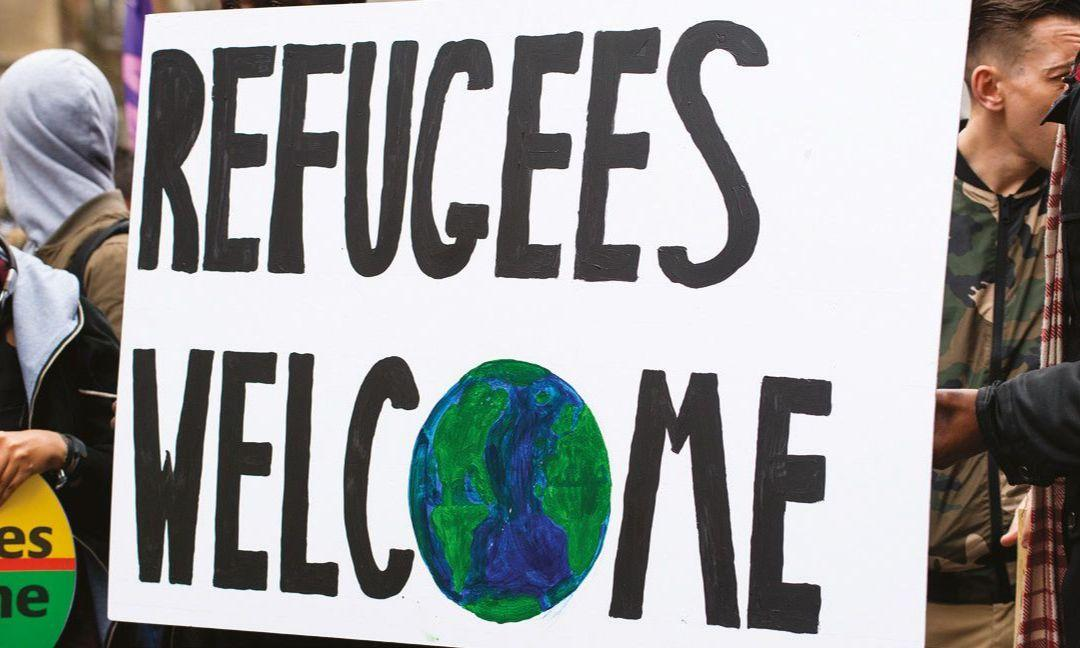
In 2022, the global number of forcibly displaced persons increased to over 100 million, a number which continues to rise and has more than doubled since 1991 (UNHCR, 2022).Forcibly displaced persons include asylum seekers, refugees, internally displaced persons, and climate change migrants—people who leave their homes due to persecution and unlivable conditions. Refugees and asylum seekers are protected when they meet the legal definition of past persecution, or a well-founded fear of future persecution based on protected grounds. While refugees undergo extensive screening, vetting, and approval processes prior to arriving to the United States, asylum seekers must prove their case at or within the border at which they seek to resettle permanently. The other categories of forced migrants do not readily have pathways to legal status. In response to these persistent trends, scholars, policymakers, practitioners, and civil societies engage in discussions and debates over whether and how to offer protection and support for the needs of forcibly displaced persons.
The United States is one site in which these conversations are taking place. While the number of resettled refugees waned under the past presidential administration, the United States overall resettles a relatively high number of government-sponsored refugees. In 2022, over 25,000 refugees were admitted, and about 470,000 asylum applications were pending (American Immigration Council, 2022; Migration Policy Institute, 2022). Among them are many Muslims who were forced to flee their homeland in search of safety (Krogstad, 2019). In addition to government efforts, about 3,707 immigrant and refugee-serving organizations engage in various integration and support services (Garkisch et al., 2017; Refugee and Immigrant Services, 2021). Within this broader context, U.S. Muslims are engaging in multiple ways.
In this commentary, I examine U.S. Muslim philanthropic trends, including their support of forcibly displaced persons. I also provide an overview of how U.S. Muslims engage in legal and policy spaces on issues related to forced migration before turning to opportunities for future research and inquiry.
U.S. Muslim Philanthropy
U.S. Muslims—a racially and ethnically diverse group—account for about 1.1% of the total U.S. population, and they are predicted to be the second-largest U.S. faith-based group by 2040 (Hill et al., 2015; Mohamed, 2018). U.S. Muslims are part of America’s longstanding history, their presence dating back to before the establishment of the nation-state (Diouf, 1999).
In general, philanthropic behaviors are motivated by a range of egoism and altruism, where actions are likely motivated by a combination of these ends rather than pure selflessness or selfishness (Burlingame, 1993). While this reasoning likely extends to U.S. Muslims, one’s duty to God is also often a central consideration in Muslim giving (Mittermaier, 2019). The two most frequently stated motivations for U.S. Muslims to give include compassion toward people in need and a moral imperative to help those less fortunate (Siddiqui & Wasif, 2021). Overall, U.S. Muslims conceptualize philanthropy as generous acts that include non-monetary actions such as smiling, helping extended family, and informal acts of kindness (Siddiqui et al., 2022).
Respectively in 2020 and 2021, U.S. Muslims gave an estimated 4.3 billion U.S. dollars to philanthropic causes and an estimated 1.8 billion U.S. dollars in zakat, with zakat being first perceived as a charity, then philanthropy, and then a tax (Siddiqui et al., 2022; Siddiqui & Wasif, 2021). On average, compared to the general population, U.S. Muslims give a higher percentage of their contributions domestically, including to civil rights causes (Siddiqui & Wasif, 2021). Compared to the general population, they also gave more to international relief causes, with Muslims between 18-29 years of age giving less to international relief than older age groups (Siddiqui & Wasif, 2021). While this research does not dive into refugee-specific causes, it does provide an overall framework for understanding giving behaviors.
U.S. Muslims Respond to Refugee Crises
Across the United States, there are nine national refugee resettlement agencies and about 3,707 refugee and immigrant-serving organizations (Refugee & Immigrant Services, 2021). While the majority of the national refugee resettlement agencies are faith-based, none are affiliated with Islam. Among the 3,707 immigrant-serving organizations, however, there appears to be at least a handful that identifies as Muslim NGOs—organizations inspired by faith-based, Islamic values (Refugee & Immigrant Services, 2021).
While there is not yet research to acknowledge the exact size and scope of U.S. Muslim responses to refugee crises, it is apparent that U.S. Muslims are among those who welcome and offer protection for forced migrants. Overall, U.S. Muslims appear embedded in various social networks, building relationships between their faith-based communities and the larger society, and partaking in responses to refugee crises. For example, the Latina Muslim Foundation—a female-led group—recognized unmet housing and faith-based needs at the U.S.-Mexico border (Solis, 2019). They responded by raising funds to build a shelter for women and children of all faiths while providing faith-based accommodations for dietary needs and prayer spaces for Muslims (Solis, 2019).
During the unprecedented 2021 crisis in which the Afghan government collapsed, over 120,000 Afghans were evacuated by the U.S. military and onto military bases in the United States. While many Afghan families and friends were separated during the evacuation, U.S. Muslims were integral to the welcome and transition response through government positions, interpretation services, and broader civil society responses (National Immigration Forum, 2022).
Many U.S. Muslim responders were previously Afghan refugees, seemingly able to make connections and build trust based on shared, lived experiences. For example, the Department of Homeland Security established a national task force led by former Afghan refugee Mr. Tarin. Taskforce outreach efforts included regular engagement with faith-based communities, including Muslim NGOs and individuals keen on supporting efforts and ensuring human dignity, protection, and faith-based sensitivity.
Across states and localities, responses were also robust. For example, multiple universities sought professional opportunities to welcome Afghan scholars (National Immigration Forum, 2022). In states as far as Alaska, a former Afghan interpreter was in position for reception and placement of new arrivals. In my home state of Indiana, the Muslim Alliance of Indiana took a leading role in coordinating masjids and various actors across the state, updating messaging through social media posts about the most up-to-date in-kind needs, and coordinating the delivery of donations to the U.S. military base in Indiana. Indiana Muslims and interfaith partners also gathered prayer rugs to donate to the military base at Camp Atterbury (Jaipuriar, 2021). At the same time, a high school student of former Afghan refugee parents helped raise over $11,000 to buy shoes and socks for Afghan evacuees (McQuaid, 2021). And at least several U.S. Muslim physicians took the lead in providing culturally-mindful and evidence-based obstetric and pediatric care for many high-risk patients. As the crisis peak has waned, resettlement agencies and community partners continue to help Afghan evacuees rebuild their lives through job training and placement, legal status and protection, mental health support, and housing needs.
Legal and Policy Initiatives
Alongside humanitarian efforts, legal protection and policy considerations are crucial to promoting the human dignity of forced migrants. As a handful of U.S. Muslims are becoming elected officials and working towards building a more inclusive government and society, they are also leveraging relationships and becoming part of conversations in which solutions are being developed.
For example, after Donald Trump assumed the U.S. presidency, he issued executive orders to ban Muslims and refugees from entering the United States. U.S. Muslim lawyers were among legal counsel and plaintiffs to challenge multiple renditions of these exclusionary, racially-charged policies (Panduranga et al., 2017). Similarly, U.S. lawyers of Muslim and Afghan backgrounds joined and led national efforts to navigate legal pathways forward during the Afghan evacuation. For example, Ms. Khanbabai co-chairs the American Immigration Lawyers Association Afghan Response Task Force, a pro bono effort among the legal community to find resources and offer legal protection. Meanwhile, Ms. Aziz serves as co-director of the Berkeley Law Afghanistan Project to provide pro bono legal support to Afghan individuals seeking safety from persecution. Similarly, U.S. Muslim lawyers and policy-oriented nonprofits zealously advocated for the Afghan Adjustment Act, a bipartisan bill to move forward a permanent pathway for the legal status of Afghan refugees and avoid the lengthy and time-consuming asylum process. These examples demonstrate the role of institutional relationships in building robust responses to crises.
Conclusion
Research-driven humanitarian and policy solutions are critical as forced migration trends increase. In the United States, faith-based responses seemingly play a prominent role. U.S. Muslims are one faith-based group demonstrating a proclivity to humanitarian and policy responses to refugee crises. Still, they are not significantly represented in the research for their philanthropic activity. Thus, understanding their responses could help with moving forward solutions.
Researchers can move forward in a variety of directions. Participatory and ethnographic research can help illuminate why and how individuals and communities respond. Mixed-methods research can help understand the influence of U.S. Muslim responses on various outcomes among forced migrants. In the humanitarian setting, it can help support more carefully tailored programs and effectively maximize limited resources. In policy spaces, understanding the impacts of philanthropic support, nonprofit organizations, and legal representation might also provide potential empirical justification for moral claims for legal representation and protection in the legal and policy environments. Ultimately, understanding, learning from, and improving the practices of engaged communities such as U.S. Muslims can support the broader goal of fostering human dignity and protection for forced migrants.
References
Burlingame, D. (1993). Altruism and philanthropy: Definitional issues. Indianapolis: Indiana University Center on Philanthropy.
Diouf, S. A. (1999). Sadaqa among African Muslims enslaved in the Americas. Oxford University Press, 10(1), 22–32. http://www.jstor.com/stable/26198221
Garkisch, M., Heidingsfelder, J., & Beckmann, M. (2017). Third Sector Organizations and Migration: A Systematic Literature Review on the Contribution of Third Sector Organizations in View of Flight, Migration and Refugee Crises. Voluntas, 28(5), 1839–1880. https://doi.org/10.1007/s11266-017-9895-4
Jaipuriar, R. (2021). ‘You’re welcome here’: Hoosiers donate hundreds of prayer rugs to Afghan refugees. IndyStar. Retrieved December 28, 2022 from https://www.indystar.com/story/news/local/2021/09/20/afghan-refugees-indiana-donate-prayer-rugs-families-camp-atterbury/8271161002/
McQuaid, R. (2021). Zionsville teen raises $11,000 for Afghan refugees. Fox59. Retrieved December 28, 2022 from https://fox59.com/news/zionsville-teen-raises-11000-for-afghan-refugees/
Mittermaier, A. (2019). Giving to God: Islamic charity in revolutionary times. California: University of California Press.
National Immigration Forum (2022). Interactive map: Welcoming Afghans across America (and the world). Retrieved December 28, 2022 from https://immigrationforum.org/article/interactive-map-welcoming-afghans-across-america-and-the-world/
Panduranga, H., Patel, F., & Price, M. (2017). Extreme vetting and the Muslim ban. Brennan Center for Justice.
Refugee & Immigrant Services. (n.d.) GuideStar Pro. Retrieved August 20, 2021 from https://www.guidestar.org
Siddiqui, S., & Wasif, R. (2021). Muslim American Giving 2021.
Siddiqui, S., Wasif, R., Hughes, M., Paarlberg, A., & Noor, Z. (2022). Muslim American zakat report 2022. Bloomington, USA: Muslim Philanthropy Initiative at Indiana University.
Solis, G. (2019). A group of Latina women are building a shelter for Muslim migrants in Tijuana. San Diego Tribune. Retrieved December 31, 2022 from https://www.sandiegouniontribune.com/news/border-baja-california/story/2019-10-19/a-group-latina-women-are-building-a-shelter-for-muslim-migrants-in-tijuana
UNHCR. (2022). UNHCR – Figures at a Glance. https://www.unhcr.org/en-us/figures-at-a-glance.html