



İLKE Vakfı
Platform
No Result
View All Result
  • PLATFORM
  • HABERLER
    İLKE Agenda: Muzzammil Ayyub Thakur ile Keşmir’in “Filistinleştirilmesi”

    İLKE Agenda: Muzzammil Ayyub Thakur ile Keşmir’in “Filistinleştirilmesi”

    İLKE Agenda: Muzzammil Ayyub Thakur ile Keşmir’in “Filistinleştirilmesi”

    The Platform Talks: Kinda Hawasli ile 8 Aralık Sonrası Suriye

    İLKE Agenda: Muzzammil Ayyub Thakur ile Keşmir’in “Filistinleştirilmesi”

    The Platform Talks: Azzam Tamimi ile 7 Ekim Sonrası Filistin

    İLKE Agenda: Muzzammil Ayyub Thakur ile Keşmir’in “Filistinleştirilmesi”

    İLKE Agenda: Gazze Soykırımı Günlerinde Aktivizm ve İslamofobi

    Filistin Sempozyumu: Filistin ve Küresel İlişkilerin Geleceği

    Filistin Sempozyumu: Filistin ve Küresel İlişkilerin Geleceği

    Filistin Sempozyumu: Filistin ve Küresel İlişkilerin Geleceği

    Müslüman Dünyada Çağdaş Düşünce Konferansı’nda buluşuyoruz!

    Filistin Sempozyumu: Filistin ve Küresel İlişkilerin Geleceği

    Müslüman Dünyada Çağdaş Düşünce Konferansı

    Filistin Sempozyumu: Filistin ve Küresel İlişkilerin Geleceği

    Dr. Jonathan Brown “İslam’ın Siyahiliğe ve Köleliğe Yaklaşımı” adlı seminer gerçekleştirdi.

  • ANALİZLER
    • All
    • Düşünce
    • Eğitim
    • Ekonomi
    • Enerji ve Çevre
    • Göç
    • Medya, Kültür ve Sanat
    • Temel Hak ve Özgürlükler
    • Toplumsal Meseleler
    The Gravity of What Took Place at Al-Aqsa Mosque During Ramadan 2026

    Ramazan 2026’da Mescid-i Aksa’da Yaşananların Ciddiyeti

    AFP/GETTY IMAGES

    FLA-JNIM İş Birliği ve Mali’de Değişen Güvenlik Dinamikleri

    Sosyal Medyada İslamcı-Muhafazakâr Kamusallığın Dönüşümü Üzerine

    Sosyal Medyada İslamcı-Muhafazakâr Kamusallığın Dönüşümü Üzerine

    Bangladeş’te 2026 Seçimleri Sonrası Siyasi Tartışmalar

    Bangladeş’te 2026 Seçimleri Sonrası Siyasi Tartışmalar

    Filistin’de Çocuk Olmak: 5 Nisan Filistinli Çocuklar Günü

    Filistin’de Çocuk Olmak: 5 Nisan Filistinli Çocuklar Günü

    Security, Fragility, and the Search for a New Equilibrium in the Gulf Following the Iranian Attacks

    İran Saldırıları Sonrası Körfez’de Güvenlik, Kırılganlık ve Yeni Denge Arayışı

  • SÖYLEŞİLER
    The Decolonization of Knowledge: Interview with Professor Souleymane Bachir Diagne

    Bilginin Dekolonizasyonu: Profesör Souleymane Bachir Diagne ile Röportaj

    A Possible New Breath in Regional Balances: The Alliance of Türkiye, Pakistan, Egypt, and Saudi Arabia

    Bölgesel Dengelerde Olası Yeni Bir Soluk: Türkiye, Pakistan, Mısır ve Suudi Arabistan İttifakı

    Digital Ummah and Muslim Identity: Dr. Sahar Khamis Interview

    Dijital Ümmet ve Müslüman Kimliği: Dr. Sahar Khamis ile Röportaj

    From the Ballot Box to the Street: The Rising Social Wave in Tanzania After the Election

    Sandıktan Sokağa: Tanzanya’da Seçim Sonrası Yükselen Toplumsal Dalga

    Müslüman Nüfusa Karşı Güvenlikleştirme

    Müslüman Nüfusa Karşı Güvenlikleştirme

    Gurbet Hikayeleri

    Gurbet Hikayeleri

    Göçü Yönetmek: Dr. Mehmet Köse’yle Söyleşi

    Göçü Yönetmek: Dr. Mehmet Köse’yle Söyleşi

    İstanbul’daki Uluslararası Öğrencilerle Söyleşi

    İstanbul’daki Uluslararası Öğrencilerle Söyleşi

    Zaytuna College Lisansüstü Eğitim Dekanı Maşuk Yamaç’la Söyleşi

    Zaytuna College Lisansüstü Eğitim Dekanı Maşuk Yamaç’la Söyleşi

  • DÜNYADAN SESLER
    Voices from the Muslim World | Sari Hanafi (with Turkish subtitles)

    Voices from the Muslim World | Sari Hanafi (with Turkish subtitles)

    Voices from the Muslim World | Ovamir Anjum

    Voices from the Muslim World | Ovamir Anjum

    VOICES FROM THE MUSLIM WORLD | DR. YASIR QADHI

    VOICES FROM THE MUSLIM WORLD | DR. YASIR QADHI

    VOICES FROM THE MUSLIM WORLD | DR. ADEEL MALIK

    VOICES FROM THE MUSLIM WORLD | DR. ADEEL MALIK

  • SAYILAR
  • VERİTABANI
    • All
    • Hareketler
    • Kurumlar
    • Şahsiyetler
    Pak-Türk Maarif

    Pak-Türk Maarif

    İslam Vakfı

    İslam Vakfı

    Avrupa Fetva ve Araştırma Konseyi

    Avrupa Fetva ve Araştırma Konseyi

    Tokyo Camii ve Diyanet Türk Kültür Merkezi

    Tokyo Camii ve Diyanet Türk Kültür Merkezi

  • PLATFORM
  • HABERLER
    İLKE Agenda: Muzzammil Ayyub Thakur ile Keşmir’in “Filistinleştirilmesi”

    İLKE Agenda: Muzzammil Ayyub Thakur ile Keşmir’in “Filistinleştirilmesi”

    İLKE Agenda: Muzzammil Ayyub Thakur ile Keşmir’in “Filistinleştirilmesi”

    The Platform Talks: Kinda Hawasli ile 8 Aralık Sonrası Suriye

    İLKE Agenda: Muzzammil Ayyub Thakur ile Keşmir’in “Filistinleştirilmesi”

    The Platform Talks: Azzam Tamimi ile 7 Ekim Sonrası Filistin

    İLKE Agenda: Muzzammil Ayyub Thakur ile Keşmir’in “Filistinleştirilmesi”

    İLKE Agenda: Gazze Soykırımı Günlerinde Aktivizm ve İslamofobi

    Filistin Sempozyumu: Filistin ve Küresel İlişkilerin Geleceği

    Filistin Sempozyumu: Filistin ve Küresel İlişkilerin Geleceği

    Filistin Sempozyumu: Filistin ve Küresel İlişkilerin Geleceği

    Müslüman Dünyada Çağdaş Düşünce Konferansı’nda buluşuyoruz!

    Filistin Sempozyumu: Filistin ve Küresel İlişkilerin Geleceği

    Müslüman Dünyada Çağdaş Düşünce Konferansı

    Filistin Sempozyumu: Filistin ve Küresel İlişkilerin Geleceği

    Dr. Jonathan Brown “İslam’ın Siyahiliğe ve Köleliğe Yaklaşımı” adlı seminer gerçekleştirdi.

  • ANALİZLER
    • All
    • Düşünce
    • Eğitim
    • Ekonomi
    • Enerji ve Çevre
    • Göç
    • Medya, Kültür ve Sanat
    • Temel Hak ve Özgürlükler
    • Toplumsal Meseleler
    The Gravity of What Took Place at Al-Aqsa Mosque During Ramadan 2026

    Ramazan 2026’da Mescid-i Aksa’da Yaşananların Ciddiyeti

    AFP/GETTY IMAGES

    FLA-JNIM İş Birliği ve Mali’de Değişen Güvenlik Dinamikleri

    Sosyal Medyada İslamcı-Muhafazakâr Kamusallığın Dönüşümü Üzerine

    Sosyal Medyada İslamcı-Muhafazakâr Kamusallığın Dönüşümü Üzerine

    Bangladeş’te 2026 Seçimleri Sonrası Siyasi Tartışmalar

    Bangladeş’te 2026 Seçimleri Sonrası Siyasi Tartışmalar

    Filistin’de Çocuk Olmak: 5 Nisan Filistinli Çocuklar Günü

    Filistin’de Çocuk Olmak: 5 Nisan Filistinli Çocuklar Günü

    Security, Fragility, and the Search for a New Equilibrium in the Gulf Following the Iranian Attacks

    İran Saldırıları Sonrası Körfez’de Güvenlik, Kırılganlık ve Yeni Denge Arayışı

  • SÖYLEŞİLER
    The Decolonization of Knowledge: Interview with Professor Souleymane Bachir Diagne

    Bilginin Dekolonizasyonu: Profesör Souleymane Bachir Diagne ile Röportaj

    A Possible New Breath in Regional Balances: The Alliance of Türkiye, Pakistan, Egypt, and Saudi Arabia

    Bölgesel Dengelerde Olası Yeni Bir Soluk: Türkiye, Pakistan, Mısır ve Suudi Arabistan İttifakı

    Digital Ummah and Muslim Identity: Dr. Sahar Khamis Interview

    Dijital Ümmet ve Müslüman Kimliği: Dr. Sahar Khamis ile Röportaj

    From the Ballot Box to the Street: The Rising Social Wave in Tanzania After the Election

    Sandıktan Sokağa: Tanzanya’da Seçim Sonrası Yükselen Toplumsal Dalga

    Müslüman Nüfusa Karşı Güvenlikleştirme

    Müslüman Nüfusa Karşı Güvenlikleştirme

    Gurbet Hikayeleri

    Gurbet Hikayeleri

    Göçü Yönetmek: Dr. Mehmet Köse’yle Söyleşi

    Göçü Yönetmek: Dr. Mehmet Köse’yle Söyleşi

    İstanbul’daki Uluslararası Öğrencilerle Söyleşi

    İstanbul’daki Uluslararası Öğrencilerle Söyleşi

    Zaytuna College Lisansüstü Eğitim Dekanı Maşuk Yamaç’la Söyleşi

    Zaytuna College Lisansüstü Eğitim Dekanı Maşuk Yamaç’la Söyleşi

  • DÜNYADAN SESLER
    Voices from the Muslim World | Sari Hanafi (with Turkish subtitles)

    Voices from the Muslim World | Sari Hanafi (with Turkish subtitles)

    Voices from the Muslim World | Ovamir Anjum

    Voices from the Muslim World | Ovamir Anjum

    VOICES FROM THE MUSLIM WORLD | DR. YASIR QADHI

    VOICES FROM THE MUSLIM WORLD | DR. YASIR QADHI

    VOICES FROM THE MUSLIM WORLD | DR. ADEEL MALIK

    VOICES FROM THE MUSLIM WORLD | DR. ADEEL MALIK

  • SAYILAR
  • VERİTABANI
    • All
    • Hareketler
    • Kurumlar
    • Şahsiyetler
    Pak-Türk Maarif

    Pak-Türk Maarif

    İslam Vakfı

    İslam Vakfı

    Avrupa Fetva ve Araştırma Konseyi

    Avrupa Fetva ve Araştırma Konseyi

    Tokyo Camii ve Diyanet Türk Kültür Merkezi

    Tokyo Camii ve Diyanet Türk Kültür Merkezi

No Result
View All Result
Platform
No Result
View All Result
Home Analyses

What if the Teaching of International Law is Itself Colonialist?

Muhammed Karayağlı by Muhammed Karayağlı
7 Kasım 2025
in Analyses, Opinion
0
What if the Teaching of International Law is Itself Colonialist?
0
SHARES
1
VIEWS
Share on FacebookShare on Twitter

Teaching international law from an objective, universal, and positivist perspective is a widespread problem worldwide. In recent years, one of the movements that point out and object to this problem is the growing awareness and visibility of “Third World Approaches to International Law” (TWAIL). TWAIL is a critical theory that criticizes Western-centric views, denies the claim that colonialism is a historical fact of the past, and argues instead that it continues to exist in transformed forms. It contends that international law and institutions operate in favor of the interests of first-world countries and against those of third-world countries.

Some have argued that the European character of international law reflects a historical reality and, therefore, should not be dismissed. However, contrary to popular belief, TWAIL rejects the claim that international law emerged from European scholarship and argues that this “European” international law was created through imperialist intervention (Anghie & Chimni, 2003). It is designed to advance the interests of European states while denying that it is neutral and intended to apply equally to all (Anghie, 2020). TWAIL theorists not only critically examine the institutions and principles of international law but also argue that international legal education should be thoroughly examined and critiqued by TWAIL’s methods and should be free from a colonialist and Western-centric perspective. Moreover, they argue that this perspective overlooks nuances within societies and masks deficiencies and contradictions in international law (Al Attar & Godínez, 2023).

Mainstream approaches, such as the positivist perspective, have dominated the teaching of international law. These dominant approaches hold privileged status in the teaching and research of international law; critical approaches are often seen as “other,” while the positivist mainstream remains the “subject” of instruction (Shako, 2023). TWAIL scholars call for a change in the teaching curriculum, advocating for critical approaches not to be taught merely as an alternative alongside the positivist mainstream but to be the “subject” of legal education (Shako, 2023). In the curriculum of international law, issues such as colonialism, slavery, and numerous genocides are downplayed, while non-European cultures, practices, and epistemologies are completely ignored (Al Attar & Godínez, 2023). Furthermore, according to the mainstream perspective, the solution to any international legal problem is always twofold: either better implementation of existing laws or the creation of more laws. In other words, if an international agreement fails, a new one must be made. Thus, it is assumed that there is no inequality, injustice, deficiency, gap, or distortion in the system but only a need for updating. Hence, this perspective perpetuates a self-reinforcing cycle instead of offering an approach that can be adjusted according to broad geographical and cultural differences.

In the curriculum of international law, issues such as colonialism, slavery, and numerous genocides are downplayed, while non-European cultures, practices, and epistemologies are completely ignored 

The early academics of mainstream international law, such as Vitoria, Vattel, Grotius, Pufendorf, and Westlake, were predominantly white Europeans. Their Euro-centric works reinforced the West’s epistemic hegemony by ignoring legal practices and traditions outside of Europe and thus normalizing bias against non-European approaches (Al Attar & Godínez, 2023). An example cited at the TRILA conference in Singapore in 2018 summarizes the gravity of the situation: “I have difficulty interesting my students in [international law] when the only reference made to my country in a major textbook is that it was ‘uncivilized.'” (Anghie, 2020).

Although international law is claimed to be universal, the founding fathers of international law have openly admitted that international law is geographically European and religiously and culturally Christian. Lassa Francis Lawrence Oppenheim, regarded as one of the most eminent international law scholars by positivists, wrote that international law “in its origin is essentially a product of Christian civilization” (Oppenheim, 1905). Similarly, Hugo Grotius, considered the “father” of international law, traced the origins of this discipline back to the sixteenth-century Spanish Christian theologian and jurist Francisco de Vitoria (Mutua & Anghie, 2000).
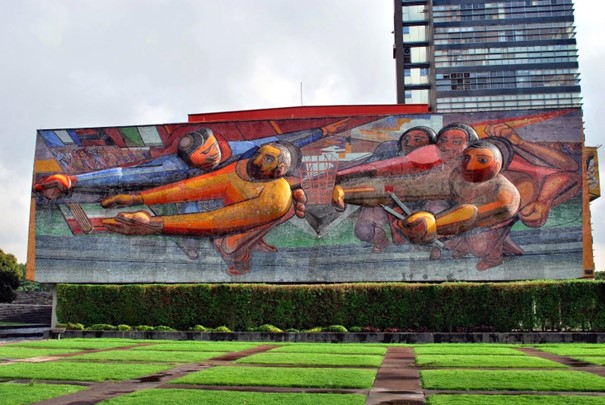
Mural by David Alfaro Siqueiros at UNAM, called “El pueblo a la universidad, la universidad al pueblo (The people to the university, the university to the people).”

Even a brief review of its history shows that international law (was) developed through the encounter and struggle between Europe and the rest of the world. With the adoption of classic Western textbooks in other countries, the dominant and inevitably Western-centric perspective in these sources has also spread (Anghie, 2020). For instance, the concept of sovereignty served as the key to justifying, directing, and legitimizing the colonial enterprise, which enabled a small number of European states to expand across more than three-quarters of the globe for their own interests.

 
International law (was) developed through the encounter and struggle between Europe and the rest of the world. 

TWAIL emphasizes the contradictions in the practice of international law to instill a critical understanding of the dialectic within the international legal system (Al Attar & Godínez, 2023). Unlike positivist jurists, it argues that the cause of these practical difficulties lies not in the incorrect application of international legal rules but rather in the rules themselves and their historical origins. For instance, when considering principles such as the maintenance of world peace, the sovereign equality of states, and the prohibition of the use of force in international law, there is no difference between the invasion of Iraq and the invasion of Ukraine. However, there is a vast difference in the international community’s reactions to these two invasions. While the International Criminal Court issued an arrest warrant for Russian President Vladimir Putin (Leff et al., 2023), it did not issue arrest warrants for the political leaders responsible for the invasion of Iraq, namely Prime Minister of the UK, Tony Blair and US President George W. Bush. Another obvious example is Palestine. In international law, the principle of recognition is addressed in establishing states. So why does Palestine, recognized by 137 out of 193 states worldwide, fail to attain statehood? There is no legal answer to this question. Decision-making processes in international organizations such as the United Nations General Assembly, IMF, and World Bank also serve as examples of these contradictory situations. The rules these organizations impose are also contrary to the principle of sovereign equality of states. Furthermore, neither United Nations mechanisms nor customary international law rules foresee a process for abolishing the veto power of the permanent five members of the United Nations Security Council.

Why does Palestine, recognized by 137 out of 193 states worldwide, fail to attain statehood?

TWAIL pedagogy, on the other hand, offers a nuanced understanding of the history of international law, presenting a perspective that exposes the injustices of international law and narrates the struggles of the third world against them. TWAIL authors emphasize the necessity of reflecting different geographies and perspectives in international law and, thus, in the teaching of international law (Anghie, 2020). However, as some argue, the call and effort of TWAIL is not merely a call for a comparative approach (Al Attar & Godínez, 2023). Therefore, while TWAIL calls for epistemic renewal, it aims to redirect legal pedagogy to consider the values, experiences, and epistemologies of non-Europeans. Antony Anghie, one of the prominent figures of TWAIL, emphasized the importance of this issue by stating, “Critical teaching is a crucial way of at least attempting to ensure that the act, the vocation, of teaching itself might resist these developments and perhaps in some small way further the struggle against inequality and injustice” (Anghie, 2020). Despite being limited and insufficient, the awareness and effort demonstrated through TWAIL and similar movements and studies show how crucial it is to pursue this awareness and effort. With this awareness, international law researchers will understand that positivist international law is not the only and indispensable way to understand and articulate this field, but rather one of many paths. Mohsen Al Attar, one of the prominent names associated with TWAIL and pedagogy, expressed the function of TWAIL in this regard: “Using history, dialectics, and epistemic renewal, we can build momentum towards international law’s reimagination. TWAIL has shown the way; whether mainstream international legal scholars can keep up remains to be seen” (Al Attar & Godínez, 2023).

While TWAIL calls for epistemic renewal, it aims to redirect legal pedagogy to consider the values, experiences, and epistemologies of non-Europeans.

References

Al Attar, M., & Godínez, R. Q. (2023, March 23). TWAIL pedagogy: Un-learning colonial ways of teaching international law. Opinio Juris. https://opiniojuris.org/2023/03/23/twail-pedagogy-un-learning-colonial-ways-of-teaching-international-law/

Anghie, A. (2020, August 31). Critical Pedagogy Symposium: Critical thinking and teaching as common sense—random reflections. Opinio Juris. https://opiniojuris.org/2020/08/31/critical-pedagogy-symposium-critical-thinking-and-teaching-as-common-sense-random-reflections/

Anghie, A., & Chimni, B. S. (2003). Third world approaches to international law and individual responsibility in internal conflicts. Chinese Journal of International Law, 2(1), 77-103. https://doi.org/10.1093/oxfordjournals.cjilaw.a000480

Leff, A., Kelemen, M., & Maynes, C. (2023, March 17). The International Criminal Court issues an arrest warrant for Putin. NPR. https://www.npr.org/2023/03/17/1164267436/international-criminal-court-arrest-warrant-putin-ukraine-alleged-war-crimes

Mutua, M., & Anghie, A. (2000). What Is TWAIL? Proceedings of the Annual Meeting (American Society of International Law), 94, 31-40.

Oppenheim, L. (1905). International law: A treatise. Longmans, Green, and Company.

Shako, F. (2023, November 27). Dismantling epistemic violence and eurocentrism in the teaching and research of international law in the Global South: A reflection – Blog. Kabarak Law Review Blog. https://kabarak.ac.ke/klrb/dismantling-epistemic-violence-and-eurocentrism-in-the-teaching-and-research-of-international-law-in-the-global-south-a-reflection


Tags: ColonialismInternational Law
Previous Post

Ya Uluslararası Hukuk Öğretiminin Kendisi Kolonyalistse?

Next Post

Uluslararası Eğitimin Ulusal Motivasyonları, Küresel Sonuçları ve Türkiye Bağlamı

Next Post
The National Motivations and Global Consequences of International Education and the Turkish Context

Uluslararası Eğitimin Ulusal Motivasyonları, Küresel Sonuçları ve Türkiye Bağlamı

Bir yanıt yazın Yanıtı iptal et

E-posta adresiniz yayınlanmayacak. Gerekli alanlar * ile işaretlenmişlerdir

  • A Possible New Breath in Regional Balances: The Alliance of Türkiye, Pakistan, Egypt, and Saudi Arabia

    Bölgesel Dengelerde Olası Yeni Bir Soluk: Türkiye, Pakistan, Mısır ve Suudi Arabistan İttifakı

    0 shares
    Share 0 Tweet 0
  • Nakşibendi-Hakkani Tarikatı

    0 shares
    Share 0 Tweet 0
  • Bilime Yön Verenler: Nobel Ödüllü Müslüman Bilim İnsanları

    0 shares
    Share 0 Tweet 0
  • Fuad Sezgin

    0 shares
    Share 0 Tweet 0
  • Sosyal Medyada İslamcı-Muhafazakâr Kamusallığın Dönüşümü Üzerine

    0 shares
    Share 0 Tweet 0
  • The Gravity of What Took Place at Al-Aqsa Mosque During Ramadan 2026

    Ramazan 2026’da Mescid-i Aksa’da Yaşananların Ciddiyeti

    0 shares
    Share 0 Tweet 0
  • The Gravity of What Took Place at Al-Aqsa Mosque During Ramadan 2026

    0 shares
    Share 0 Tweet 0
  • FLA-JNIM Cooperation and Shifting Security Dynamics in Mali

    0 shares
    Share 0 Tweet 0
  • FLA-JNIM İş Birliği ve Mali’de Değişen Güvenlik Dinamikleri

    0 shares
    Share 0 Tweet 0
  • The Current State of Indonesia’s Luxury Industry and the Landscape of Independent Handcrafted Watchmaking

    0 shares
    Share 0 Tweet 0

Platform: Müslüman Dünyanın Gündemi, Müslüman toplumların fikrî, siyasi, sosyal, ekonomik ve kültürel gündemlerini takip ve tahlil edip Müslüman dünyaya dair güncel ve özgün perspektifler sunmayı amaçlayan bir yayın organı olarak İLKE İlim Kültür Eğitim Vakfı bünyesinde kurulmuştur.

  • SAYILAR
  • ANALİZLER
  • HABERLER
  • SÖYLEŞİLER
  • DÜNYADAN SESLER
  • platform@ilke.org.tr
  • (0216) 310 43 18
  • Aziz Mahmut Hüdayi Mah. Türbe Kapısı Sk. No: 13 Üsküdar, İstanbul

2025 @ PLATFORM bir İLKE Vakfı kuruluşudur. Tüm hakları saklıdır. 

No Result
View All Result
  • Home
  • Analizler
  • Haberler
  • Söyleşiler
  • Dünyadan Sesler