















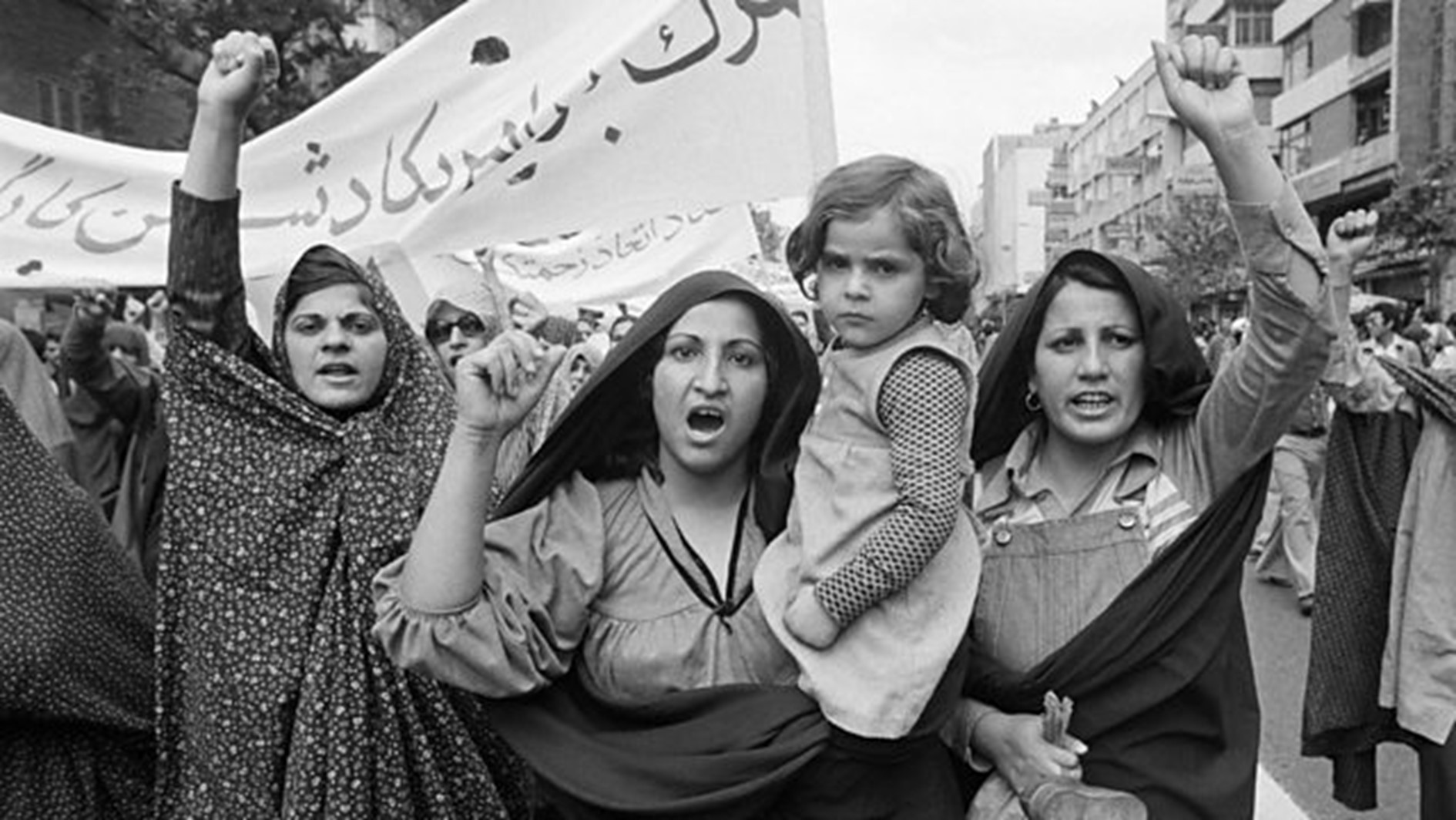
One of the main problems with women studies is to not separate feminist theory from the women movements. In many Muslim countries, these studies have been influenced by feminist theories developed in the West but are shaped around domestic issues. Women movements can interact with national political movements. It can also be said that women movements albeit diverse in their worldviews yet are interconnected in their functioning. In the case of Muslim societies, these issues become more ambiguous. Importantly, what kind of differentiation Muslim women movements, which are fed by Western feminist theories, make within themselves. Women movements in Muslim societies can generally be divided into secular and religious, but it is worth remembering that not all women movements develop on the same track due to the unique issues of each country.
This article will provide an overview of women movements in the Muslim societies. This evaluation will emphasize the importance of country and regional differences. Each country’s own historical adventure and internal dynamics are reflected in its women movements. Accordingly, there are some differences between colonized and non-colonized countries, as well as between Middle Eastern countries and Asian or African countries. While women movements in the Middle East emerged at an earlier stage, the characteristics of women movements in countries with colonial experience are more prominent and representative.
It should be noted that there are mainly two trends in women’s movements of the Muslim societies: Secular and, religious or Islamist women’s movements. According to Margot Badran (2013), it is not possible to entirely separate these two women’s movements, as there are points of intersection between them. With this in mind, we can say that the characteristics of women’s movements are determined by the internal dynamics and political struggles of the countries in which they develop. However, when some countries in the Middle East, Asia and Africa are taken into account, the impact of the colonial experience on the emergence of women’s movements also becomes evident.
The fittingness of feminist critique in Muslim societies is debatable. Therefore, the ongoing feminist theoretical debates and women activism in Muslim societies sometimes do not coincide. The secular politics of countries can also be influential due to this distinction. Accordingly, the points of intersection vary between countries. While countries such as Malaysia, Indonesia and Iran are similar in some points, there are significant differences between them when they are evaluated together.
Malaysia and Indonesia can be considered countries where the feminist movement and intellectual development are mutually supportive, given their former colonial experiences and different cultural and historical backgrounds (Martyn, 2004). In these countries, it is possible to see the effects of theoretical debates on politics and society. On the other hand, Iran is one of the most striking countries with its unique conditions and political experience. The women’s movement in Iran is one of the most emphasized examples since it is associated with the Iranian Revolution. The experience here differs from the other two countries because there is more political counter-positioning. Women have developed a political stance against the compulsory hijab and certain other laws.
Women had a leading role in the Iranian Revolution.
Women’s movements evolved in closer connection with nationalist movements in nations without a colonial past, like Türkiye. Women’s movements have evolved since the 1980s as religious women have grown increasingly active in society, while initially having a secular-leaning. In this period, the efforts of socialist women who criticized Kemalist feminism stand out. Although there are similarities between these women movements and the women movements that emerged in the last years of the Ottoman Empire, it is difficult to see them as a continuation of each other. Nevertheless, the Ottoman women movement is an important example to see the correlation between women movements and women’s magazines. Many women movements that developed in the 1980s displayed this tendency. An example of this is the Zanan magazine in Iran.
Colonial struggles had important consequences for the women movements. The removal of the veil by well-known female figures in Egypt is regarded as the start of the emergence of women movements there. However, in the Algerian case, wearing the veil as a counter-movement was reconstructed as a symbol of freedom. Fanon called the anti-colonial stance of the Algerian women movement that had a national tendency as well, a “veil war”. On the other hand, in Türkiye, which is striving to become a nation-state, wearing the headscarf was considered a counter-movement. The “Hand in Hand Protest” in 1998, which was a turning moment for Muslim women’s civil rights in Türkiye, and other civil initiatives contributed to create a discourse on rights that was distinct from that of the other two nations. As can be seen, historical experiences as well as domestic developments determine the characteristics of women movements.
Women’s social protest in Egypt.
Given the popular uprisings in Egypt, Indonesia and Tunisia, Malaysia and Morocco can be assumed to be more stable in terms of women’s movements. In these five countries, women’s movements developed as counter-movements against an Islamic perspective (Derichs, & Fennert, 2014). However, political liberalization processes have not worked in favour of women. The tension between gender equality and gender rights discourses still persists.
When the experiences of Muslim societies are taken into account, it is seen that there are parallels and variances. The prominent countries in the debates are Iran, Algeria, Egypt and Malaysia, where Western countries pay special attention and where rich debates can be held. Türkiye is partially involved in these debates. Religiously oriented women’s movements in Türkiye are not sufficiently organized. For a long time, the women’s movement, which has been associated with the headscarf issue, does not provide an adequate representation. Compared to many other countries, this movement seems disorganized and far from theoretical orientation. Again, it can be said that there is not enough consensus between this movement and secular women movements.
Women’s support to the Algerian war of independence.
Different experiences are noteworthy in the positioning of women movements regarding the hijab. In the anti-colonial movements in Algeria, women developed a resistance by wearing the veil. In this case, the veil was separated from a traditional dress code and turned into an instrument of opposition in the new political sphere (Yeğenoğlu, 1998). On the other hand, in the Iranian experience, it appeared as a symbol of women’s withdrawal of support for a political movement. In Türkiye, on contrary, wearing the headscarf has become an object of religious individuals’ efforts to assert themselves in public life. These instances serve as a reminder of the importance of assessing each nation while taking into account its unique conditions.
The visibility of the female body has evolved into a contentious topic, which is something that all women movements have in common. Although there are different views regarding the objectification of the female body, it can be said that all discussions are basically united on the women’s position in the society. Although the emphases in the discourse on rights converge at some points, in general they vary according to the experiences of the countries in question. It should be noted that these emphases have shifted in different directions with the participation of Western actors. In recent years, campaigns such as “stop FGM” have been effective with the joint efforts of national women’s movements and international civil organizations. FGM is a regional practice, but it has fuelled debates across the Muslim world about the domination of Muslim women over their bodies.
In terms of the four waves of Western feminist discourse, the first wave of feminism influenced the Ottoman and Egyptian women movements, but women movements in Muslim societies gained momentum with the second wave of feminism. Over time, women movements in the Middle East influenced women movements in Muslim societies of Africa and Asia (Moghadam, 2001; Mohamad & Ng, 2006). The second period was marked by movements in postcolonial countries and the women’s movement in Iran. In the third wave of feminism debates, Islamist feminist discourse became more prominent. The fourth wave of feminism continues to be shaped by social media on the harassment and abuse of the female body. This last wave may become an example of the transnational articulation of women’s movements in different countries. This process may further affect the fragmented nature of women’s movements in Muslim societies. On the other hand, women who live in Western countries but were born in a Muslim country or have cultural ties with a Muslim country, as well as those who have converted to Islam, are participating in the debates, creating a richer and more diverse picture that is more difficult to analyse.
In conclusion, it can be said that there has been a growing interest in the rights of Muslim, but the discussions have not sufficiently emphasized national and regional differences. This makes it difficult to analyse women’s movements as social phenomena developing in separate contexts. Due to the perception that liberal feminist movements restrict the rights of Muslim women to some limited domains i.e. the demand for rights such as voting, education, and participation in society, the disposition of Muslim women’s rights movements becomes ambiguous. However, alternative debate points may emerge in various nations, sometimes requiring intellectual output and engagement in society, other times requiring the reading of religious texts from a woman-sensitive perspective.
References
Badran, M. (2013). Feminism in Islam: Secular and religious convergences. New York: Simon & Schuster.
Derichs, C., Fennert, D. (Eds.). (2014). Women’s movements and countermovements: The quest for gender Eequality in Southeast Asia and the Middle East. UK: Cambridge Scholars Publishing.
Martyn, E. (2004). The women’s movement in postcolonial Indonesia: Gender and nation in a new democracy. New York: Routledge.
Moghadam, V. M. (2001). Organizing women: The new women’s movement in Algeria. Cultural Dynamics, 13(2), 131-154.
Mohamad, M., Ng C. (2006). Feminism and the women’s movement in Malaysia: An unsung (r)evolution. London: Routledge.
Yeğenoglu, M. (1998). Colonial fantasies: Towards a feminist reading of orientalism. UK: Cambridge University Press.