


Islam in Europe or the Islam of Europe, which one is the correct term? Do Europe and Islam develop independently of each other in a historical and spatial context? (Sunar, 2022, p. 3) He considers Islam not as the other of modern Western identity, but also as the founding subject that builds modern world politics. From this point of view, don’t these conceptualizations materialize Islam? Is the goal Islam’s adapting to Europe or Europeans’s adaptation to Islam? The uncertainty of the answers to these questions emerges in the practices of the public sphere, which is one of the most important problems of today. In this context, how is the representation of Muslim youth associations in Europe in the public sphere?
This analysis aims to understand the relationship between Europe and Islam in the public space and to determine the position of Muslim youth in Europe in this context. In the first part of the study, we will examine the dilemmas of Muslims between the public space and Islam. In the second part, we will analyse Europe’s policies towards Muslim youth. In the last part, we will cover the nature of the youth work of Muslim associations in the public space created in Europe. In this context, we will discuss the impact of Muslim associations in Europe focusing on youth work. In this study, we will also examine the policies in the public space towards Muslim youth. It is a crucial fact that the role and problems of Muslim youth in Europe should not be ignored.
Islam in the Public Space Discussions
The public space can be defined as a common ground where citizens can coexist and express their thoughts. The notion of “dialogue” is at the centre of public space discussions. In these discussions, the debaters discuss the boundaries of religion, language, race and gender-centred problems. In this context, these borders between Muslims and European states, who cannot resolve the ethical and social borders of religious life, are explained through dealing with the notion of “security”.
Göle attributes the increasing importance of public space discussions to two reasons. First, he states that the principle of pluralism finds its place in the debates on democracy in Western societies. The second reason, as we can see from Habermas’s disregard for the principle of “pluralism” in his theory of the public space, argues that thinkers have begun to examine the relationship between democracy and pluralism (Göle, 2013, p. 8). At this point, the factors and actors that are effective in the public space have also become the subject of discussion. Another issue are the discussions on modernism. With modernism, the public soace has undergone a transformation. According to the idea of modernism, the dominant element in the public sphere is the “rational mind”. Modernists accept that religion is an irrational object in this modern era where practices are carried out through rational reason. This distinction has led to the secularization of the public space as well as the understanding of religion as a “personal choice” (Uluç, 2011, p. 358). Thus, religion was narrowed down to the private life space. However, the problems of Muslims in the public space cover a wide area ranging from halal food to education and politics and it cannot be limited to the private space.
Göle thinks that Islamic movements, unlike the West, shape the public space by putting women in the center, and that the public space is developed by producing discussions on the moral structure of the society. (2013, p. 14) He says that the Islamic public sphere is based on “women’s visibility” and the social communication of men and women (p. 24). Göle narrowly draws the boundaries of Islamist movements and the Islamic public space. We should point out that the idea of “Muslim female identity” in the public space debates in Europe is also shaped in line with Göle’s understanding.
Europe’s Policies for the Muslim Youth
It is aimed to build a “common space” and “common language” in the relationship established between the notions of public sphere and democracy (Göle, 2013, p. 10). In this context, European states are developing projects aimed at integration. In one of these projects, “European Islam”, they aim to ensure cultural and moral integration by focusing on the idea of a common life. European states focus especially on young people in these projects. Franco Frattini, who took office in the European Commission between 2004 and 2008, says that an education approach free from hatred and violence will be provided to young people. In addition, he mentions that it aims to build common educational and social institutions with Muslims and to create such a society in Europe (DW, 2007). Thus, European states will ensure the transformation of Muslims in the public space with the idea of “European Islam”. With this idea they will ensure that Muslim Youth cooperate and harmonize with new actors. At this point, we should not ignore the following question: Who will represent the Islam in this version of Islam they want to establish? This understanding of Islam embraces the centrality of European identity.
Bassam Tibi, who supports the idea of European Islam and is a follower of the Habermas tradition, said that since Islamism is a different concept from Islam, it is necessary to build a tradition of idea through “Islam”. He emphasized that Muslims should create an inclusive accumulation of Islam, modernity and democracy (USHMM, 2007). Therefore, Tibi aims to construct a European Muslim identity through “rationality”. It is obvious that the young population shapes the European Muslim identity.
According to the research conducted by the Pew Research Center (2017), Muslims in the 0-29 age group in Europe are 50% of the total. However, non-Muslim 0-29 age group is only 32% of their total population. On the other hand, Muslims over the age of 75 are only 1% percentage of their population, while non-Muslims make up around 10%. These two results show that the Muslim youth population is increasing in Europe and the non-Muslims are in the aging side. For this reason, we should not ignore the problems and values of the young Muslim population in Europe related to the public space.
In recent years, discussions on Islamophobia have increased. Muslims are also exposed to state-based discrimination and social exclusion. For example, in France in 2004, students in public schools were banned from carrying any religious symbols (Yıldız, 2019). In addition, some countries have imposed restrictions on the dress of Muslim women in the public space. For example, wearing burqas and veils in public places was banned for “security reasons” in 2010 in France, 2011 in Belgium, and 2018 in Denmark and the Netherlands (Yıldız, 2019). European states’ policies towards youth in the public space are built on goals to ensure compliance with the European identity, and to prevent radicalization and discrimination. As a matter of fact, these three policy understandings are developed through public space practices and education.
Youth Activities and Work of Muslim Associations in Europe: Germany as an Example
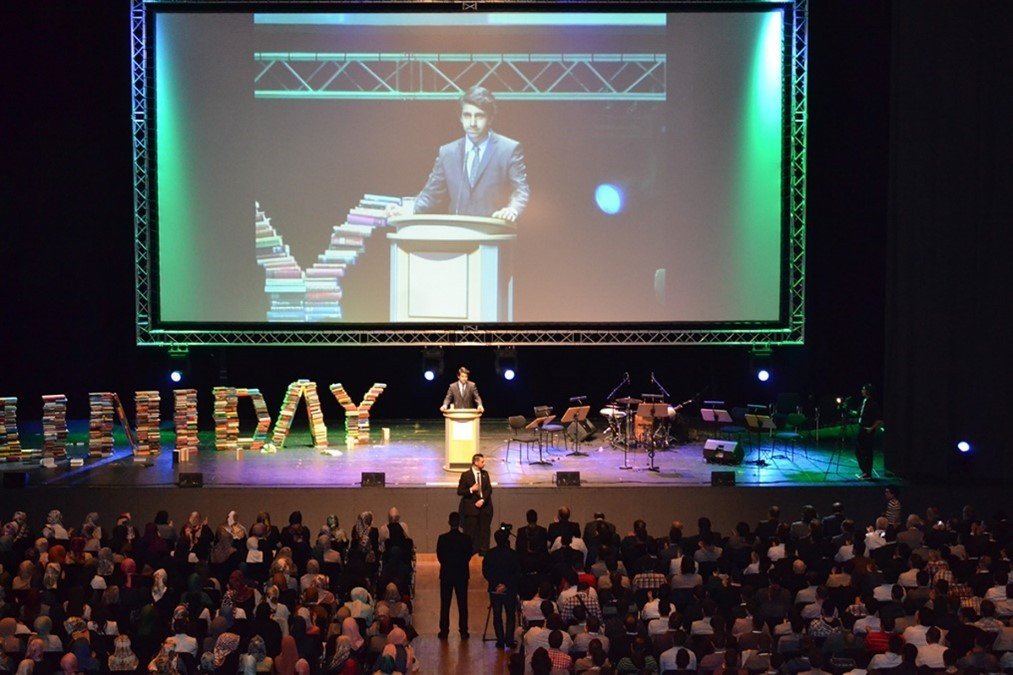
When we talk about work in Muslim youth and their organisations in Europe, Islamic Community Millî Görüş and the Turkish-Islamic Union for Religious Affairs (DITIB) come to the fore. In this analysis, we will evaluate the Muslim youth associations in Germany. The German Government is trying to build a “European-Islamic identity” through its ties with Muslim associations and policies towards youth.
The German Government is developing policies in the education for Muslim youth. France in 2004, students in public schools were banned from carrying any religious symbols (Yıldız, 2019). In addition, some countries have imposed restrictions on the dress of Muslim women in the public space. For example, wearing burqas and veils in public places was banned for “security reasons” in 2010 in France, 2011 in Belgium, and 2018 in Denmark and the Netherlands (Yıldız, 2019).
European states’ policies towards youth in the public space are built on goals to ensure compliance with the European identity, and to prevent radicalization and discrimination. As a matter of fact, these three policy understandings are developed through public space practices and education.
Youth Activities and Work of Muslim Associations in Europe: Germany as an Example
When we talk about work in Muslim youth and their organisations in Europe, Islamic Community Millî Görüş and the Turkish-Islamic Union for Religious Affairs (DITIB) come to the fore. In this analysis, we will evaluate the Muslim youth associations in Germany. The German Government is trying to build a “European-Islamic identity” through its ties with Muslim associations and policies towards youth.
The German Government is developing policies in the education for Muslim youth. gathers university students for discussions and education programs on racism, dialogue, urbanization and many other issues. These three organizations aim to empower young people in the field of personal development and to ensure that they do not break away from their religious and cultural identity.
Founded in 2010, the German Muslim Scout Association (BMPPD) provides scouting training to young people between the ages of 7 and 21. In this way, it aims to both provide leadership training and enable young people to establish a dialogue with other cultures. The Association of Dedicated Muslims (EMD) in Germany, on the other hand, continues its efforts to establish a dialogue with Shiite Muslim youth.
This association is a member of the “Muslim Youth Studies” organization, which is supported by the Regional Center for Education, Integration and Democracy (RAA Berlin). These associations support Germany’s policies and try to strengthen integration. In addition to focusing on issues of belonging, dialogue and personal development, they also try to create a “general network”. These associations are supported by the German, Turkish Governments and Balkan countries. Another problem is the question of how much Muslim youth associations take the preferences of Muslim youth seriously. However, we could not find any data on how much Muslim youth associations can reach Muslim youth.
Although the German government and Muslim associations try to establish a strong relationship through education, Muslim youth choose a different way. In the symposium (Dautschke) evaluating the orientations of Muslim youth, Konrad Adenauer Foundation, known for its closeness to the Christian Democratic Union, stated the following: Instead of joining traditional movements, young people form their own groups on social media, criticize the work of Muslim organizations and express their opinions on Islamic, social and political issues on social and online platforms. As a result, it is necessary for Muslim associations to reconsider their youth policies and strengthen their relations with the newly emerging public spheres (Reported by DW, 16 December 2010).
References
DW (2010, 15 May). “Almanya’nın açılımı: İslam Konferansı” h ttps://w w w .dw .c om/tr/alman yan%C4%B1n-a%C3%A7%C4%B1l%C4%B-1m%C4%B1-i%CC%87slam-konf er ans%C4%B1/a-5576887
DW (2010, 16 December). “Müslüman Gençlerin Tercihleri” https://www.dw.com/tr/m%C3%BCsl%C3%BCman-gen%C3%A7lerin-tercihleri/a-6349357
Dilek, A. Y. (2020). Avrupa’daki Müslümanlar ve Avrupa İslamı. Çukurova Üniversitesi İlahiyat Fakültesi Dergisi, 20(1), 124-137.
Leloğlu, D. (2007, 13 July). “Avrupa İslamı’nın inşasında Türkiye’ye rol” https://www. dw.com/tr/avrupa-i%CC%87slam%C4%B-1n%C4%B1n-in%C5%9Fas%C4%B1n-
da-t%C3%Bcrkiyeye-rol/a-2681273
Göle, N. (2013). İslam’ın Yeni Kamusal Yüzleri: İslam ve Kamusal Alan Üzerine Bir Atölye Çalışması. Metis Yayınları, İstanbul.
Pfündel, K., Stichs, A., and Tanis, K. (2021). “Executive Summary of the study Muslim Life in Germany 2020”. https://www.ssoar.info/ ssoar/bitstream/handle/document/75547/ ssoar-2021-pfundel_et_alExecutive_Summary_of_the_study.pdf?sequence=1&isAllowed=y&lnkname=ssoar-2021-pfundel_et_ al-Executive_Summary_of_the_study.pdf
Pew Research Center (2017, 29 Kasım). “Europe’s Growing Muslim Population” h ttps://w w w .pewr esear ch.or g/r eli gion/2017/11/29/europes-growing-muslim-population/#:~:text=European%20Muslims%20are%20concentrated%20 in,1%25%20of%20Muslims%20in%20 Europe.
Sunar, L. (2022). “Modern Sosyal Teoride İslam’ın Yeri”, Müslüman Dünyada Çağdaş Düşünce, Vol. 8, pp. 1-25
Uluç, Ö. (2013). Kamusal Alanda Din. Istanbul: Yarın Yayıncılık. United States Holocaust Memorial
Museum (USHMM). (2007, 29 March). “Bassam Tibi” https://www.ushmm.org/antisemitism/podcast/ voices-on-antisemitism/bassam-tibi-tr
Yılız, Z. (2019, 26 June). “Avrupa’da başörtüsü ve peçe yasağını hangi ülke nasıl uyguluyor?”Euro News https://tr.euronews.com/2019/04/28/avrupa-da-basortusunu-burkayi-ve-nikabi-yasaklayan-ulkeler