













The field of Islamic economics and finance has emerged as a new discipline. The occasional inadequacy of conventional finance in providing solutions to global financial crises brings Islamic economics and finance to the fore as a solid alternative. After the global financial crisis, Islamic finance attracted the attention of researchers across the world. In 2019, research published in prestigious journals indexed in the Scopus grew by 18%, a trend that progressively continues (Alshater, Hassan, Khan, & Saba, 2021). After the financial crises caused by Covid-19 in the last two years, Islamic finance is again being discussed as an alternative therefore, considerable research has been published, and various applications have been implemented.
Malaysia ranks first as a center of Islamic finance. Countries such as the USA and England follow Malaysia in academic studies. Muslim countries like Turkey, Tunisia, and Indonesia are among the top ten countries (Alshater, Hassan, Khan, & Saba, 2021; Yenice, Özdemir, & Koç, 2022).
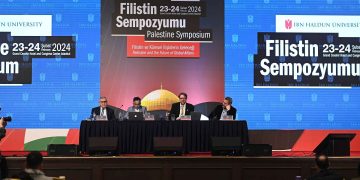
This study will comparatively analyze the topics that are being studied more in the field of Islamic economics and finance and the applications that are more frequently implemented in these countries. In this context, the terms “Islamic economics” and “Islamic finance” were scanned in the Google Scholar database for sources from 2021-2022, and the topics were determined and classified according to the titles and keywords of approximately 200 studies. In addition, they were categorized according to their countries, such as South Asian countries (Pakistan, Bangladesh), Southeast Asian countries (Malaysia, Indonesia), Gulf countries (Saudi Arabia, Iran, Qatar), African countries (Egypt, Nigeria, Tunisia) and Turkey. To understand the situation of non-Muslim countries, countries like Japan, the USA, and England were also taken into consideration. Moreover, recent academic events such as symposiums, panels, and workshops in Islamic Economics and finance in these countries were examined, classified, and analyzed comparatively.
General Situation
The high level of academic studies also increases the sectoral activities. For instance, Malaysia, which continues to be a global hub in Islamic finance according to some bibliometric studies on the field (Alshater, Hassan, Khan & Saba, 2021; Yenice, Özdemir & Koç, 2022), is also in the first place in the world as an Islamic finance center in sectoral applications. Furthermore, the Sukuk market in Malaysia became the leader in global exports with a 42.4% of market share in the first quarter of 2021 (Ming, 2022, p. 101). Among the Muslim countries, not only Malaysia but also countries like Turkey, Indonesia and Tunisia are considered among the rising stars and are among the top 10 countries (Yenice, Özdemir & Koç, 2022).
Malaysia, Pakistan, Indonesia, Saudi Arabia, and Turkey are among the leading Muslim countries that conduct research and publications in Islamic economics and finance (Akten Çürük & Kaynar, 2021, p. 14). Even though the studies and their applications in these countries are diversifying and increasing day by day, it is observed that studies on certain subjects are intense. The findings of some studies indicate that academic studies in Muslim countries are related to Islamic banking and finance rather than Islamic economics (Akten Çürük & Kaynar, 2021, p. 14). This shows that the practical dimension of the field is studied rather than the theoretical basis. When considering the studies of the countries, it is discerned that the practical issues related to banking and the studies on product development are at the forefront. Practical solutions related to Islamic law and topics dealing with Islamic economics and finance, in general, come to the fore. In addition to this, it noticed that specific topics such as halal tourism, zakah, microfinance, takaful, mudarabah and musharakah are studied more. Studies and applications examining the field from a theoretical and relatively more macro perspective are rare when compared with others. The categorization we made according to the concepts of the studies we have researched in Islamic economics and finance confirms this situation.
According to the classification we have made based on the topics and keywords, research, publication, and other activities related to sharia, fiqh, or Islamic law are in the first place. The general and introductory studies on Islamic economics and finance take second place. Studies on halal tourism, Islamic microfinance, zakat, and waqf are also considerable. Studies and applications concerning ethics, socioeconomics, circular economy, qard al-hasan, fintech, and money are lesser than the others.
Since our examination covers 2021-2022, there are many types of research, publications, and activities that have been done related to Covid-19 or pandemic. Due to Covid-19, a significant number of the studies in recent years are commonly connected with the pandemic. However, these studies still related to the topics like zakat, waqf, etc. Most of these studies evaluated Islamic economics as the panacea for the pandemic and the crises it has induced, or have tried to present Islamic economics as an alternative to the conventional system. Almost all of the 11 studies on Covid-19 and Islamic economics address the issue from the same perspective.
Comparative Analysis
Malaysia and Indonesia from Southeast Asian countries are the leading Muslim countries in the field. These two countries are also at the top among other Muslim countries in academic studies, sectoral activities, and applications in Islamic economics and finance. In line with the general trend, the subjects of the studies conducted in these two countries are very similar to each other. In a bibliometric study of Islamic economics and finance studies in Indonesia, the similarity ratio between Indonesia and Malaysia is 93, while the similarity between Indonesia and Australia, England and Saudi Arabia is 9, 7, and 13, respectively (Handoko, 2020). In both countries, subjects such as Islamic banking, fiqh, zakat, waqf, takaful, and microfinance are studied intensively. In a study examining the theses prepared at the Islamic University of Malaysia between 2005 and 2019, the following picture is depicted
The main areas of study in graduate theses are banking, finance-capital market, fiqh-law, takaful-re-takaful, waqfs, zakat, and microfinance. The figure shows that the percentage of banking, finance, and capital market subjects in all theses was 57% with 174 theses submissions. Studies on law and shariah regulations, takaful, waqf-zakat, and microfinance constitute the remaining 42% of the theses. (Yurtseven, 2019, p. 120).
Studies in Indonesia also shows similarity with these topics. There are also many co-authored studies in these two countries. Although the study topics in these two countries are similar to each other, subjects such as halal tourism and Islamic fintech, Islamic economics and development, education, and curriculum development are concentrated in Indonesia, while theoretical and conceptual studies are more prominent in Malaysia. Studies on halal tourism and the halal industry in Indonesia stand out not only in comparison with Malaysia but also in comparison to practically all other Muslim countries. In other words, there are relatively more halal tourism practices in Indonesia.
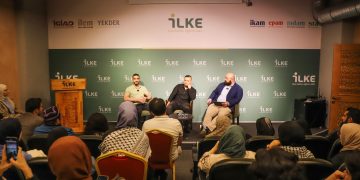
While in addition to the subjects of Islamic law, general studies introducing the field, literature studies on Islamic economics, studies, practices, and activities related to curriculum development and employment creation are more prominent in Turkey, this situation is seen only in studies on Islamic economics and finance literacy in the field of education in Indonesia. Academy-sector collaboration etc. studies are more common in Turkey than in other countries. The policy brief published by the Research Centre for Islamic Economics (IKAM) and the workshop of academy-sector collaboration can be exemplified.
While the number of studies related to Islamic law, and general studies introducing Islamic economics and its fields outnumbers in Bangladesh, one of the South Asian countries, money, Islamic social finance, and ethical and theoretical and conceptual studies stand out in Pakistan. It is noticed that Pakistan attaches more importance to studies on Islamic economics and ethics among these countries. Nevertheless, in the field of Islamic social finance, it comes second after Indonesia. Even though Bangladesh is a growing country day by day in terms of sectoral applications, a similar growth is not observed in the academic studies.
Studies in Iran and Qatar, which are among the Gulf countries, seem to be less than in other countries. Among Saudi Arabia, Iran, and Qatar, it is understood that Iran is at the forefront of theoretical and socioeconomic studies as well as works related to qard al-hasan, while Saudi Arabia leads in microfinance, Covid-19, and Islamic economic literacy. African countries like Nigeria, Egypt, and Tunisia, on the contrary, have fewer studies and practices compared to other Muslim countries.
Evaluation and Conclusion
In conclusion, studies, and applications in the field of Islamic economics and finance in most cases in the examined countries are mostly discussed from a micro perspective. Although it is good in the sense that there are many general studies promoting the field, and practical subjects with banking and fiqh are generally in the first place in every country, however a fear remains that the quality of the studies will dwindle after a certain period. Even though the field of Islamic economics and finance is still considered a new field, theoretical, and conceptual studies at the macro level should be increased rather than introductory studies.
Judging by the study topics, most of them are still carried out at the micro-level and within the framework of certain subjects/concepts. Studies dealing with theoretical and macro perspectives are relatively few and insufficient. More comparative research on other financial systems such as capitalism would be excellent for the development of the field. There should be studies that focus more on the system, not just in practice, such as the comparison of conventional and Islamic banks. Furthermore, more diversification of study, and application areas is required. Studies in areas like Islamic economics and environment, circular economy, sustainable economy, Islamic economics and industry are essential to increase as well.
References
Akten Çürük, S. and Kaynar, Z. (2021). Bibliometric analysis of Islamic finance literature. International Journal of Business & Economic Studies, 3(1), 27-42.
Alshater, M.M., Hassan, M.K., Khan, A. and Saba, I. (2021), Influential and intellectual structure of
Islamic finance: a bibliometric review, International Journal of Islamic and Middle Eastern Finance and Management, 14(2), 339-365.
Handoko, L. H. (2020). Bibliometric analysis and visualization of Islamic economics and finance articles indexed in Scopus by Indonesian authors. Science Editing, 7(2), 169-176.
Ming, S. S. (2022). Annual Guide 2022 (Country report: Malaysia). London: Islamic Finance News.
Retrieved 15.05.2022 from https://www.islamicfinancenews.com/supplements/ifn-annual-guide-2022
Yenice, A. C., Özdemir, M., and Koç, A. (2022). Looking at the ‘big picture’ in Islamic economics
and finance literature: A bibliometric analysis of WoS indexed documents. Turkish Journal of Islamic Economics, 9(1), 59-93.
Yurtseven, M. (2019). İslam ekonomisi alanında yapılan tezlerin bibliyometrik açıdan incelenmesi:
Malezya Uluslararası İslam Üniversitesi örneği. Review of the Faculty of Divinity University of Süleyman Demirel, 43, 111-138.