





















(The original Turkish version of this article was published by the Platform: Current Muslim Affairs on December 18, 2025)
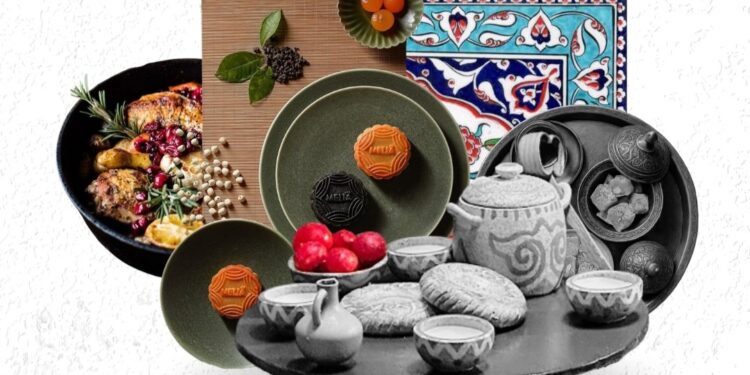
When we think about Muslim societies’ relationship with food, the most basic and important issue is undoubtedly “halal food.” Yet Muslims’ relationship with food cannot be confined to the framework of producing and consuming halal food alone, because eating and table practices also contain cultural components. In fact, the differences in eating and drinking practices among millions of Muslims around the world are often shaped not so much by religious rules as by cultural codes.
Looking globally, we can also see—alongside religious beliefs—the visible, decisive role of culture in attitudes toward food and nutrition. We encounter traces of cultural memory in many areas: differences in staple foods across societies; how foods are classified (tasty/tasteless, beneficial/harmful, etc.); modes of production and consumption; storage conditions; and rituals formed around eating and drinking. Some researchers even describe this cultural influence—its power to determine what is edible and what is not—as “the tabooing of foods” (Haksöz, 2018).
Over the years, in parallel with processes of social change, the meanings that societies and individuals attach to food have also transformed. On a global scale, one of the greatest ruptures reshaping table practices—both among Muslims and in other societies—has been industrialization and modernization. In rapidly urbanizing, Muslim-majority metropolises such as Istanbul, Cairo, Casablanca, Dakar, and Kuala Lumpur, factors like smaller housing, long distances between home and workplace, intense working hours, and changes in family life driven by women’s rising participation in the labor force have redefined everyday eating and drinking practices. As industrialization transformed family and working life, large family tables became less a part of daily routine and more associated with special occasions or weekends; hot, home-cooked pot meals gradually gave way to quick and practical foods.
Claude Fischler, who contributed to theories in the sociology of food through his structuralist work on French society, drew on Émile Durkheim’s concept of “anomie” to describe this new social order as “gastro-anomie.” In this setting, modern individuals ceased to use their “logic of nourishment”; food lost its traditional and sacred qualities and became merely an object of cultural consumption (Fischler, 1979).
In this period, the consumption of ready-made food, fast food, and the culture of eating out also rose sharply. Originating in France and spreading worldwide as one of the emblematic spaces of urban life, restaurants turned into indispensable arenas of socialization—whether out of necessity or for pleasure (Akarçay & Suğur, 2015). Not only in Turkiye but also in Indonesia and Malaysia, younger generations have embraced café culture instead of home cooking; in Egypt, the rise in women’s labor-force participation has led dishes requiring long preparation to be replaced by more practical options (El-Aswad, 2019).
A second major rupture affecting table practices globally emerged as a result of neoliberal policies that gained momentum in the 1980s. In the Turkish context, the investments of multinational food companies, the entry of fast-food chains into the domestic market, increased migration from rural to urban areas, and the spread of supermarket (hyper/mega-market) chains reshaped modes of access to food and brought flows of imported capital to the fore. In parallel, driven by an enduring cultural desire to resemble “Western modern” societies, eating and drinking practices became intertwined with a system of McDonaldization (Ritzer, 1998) and commodification (Ahıska & Yenal, 2006).
A third major turning point in the transformation of modern eating and drinking practices came with the spread of social media and digitalization after the 2000s. Under their influence, everyday life itself has turned into a stage and a world of spectacle. For example, when going to a café or restaurant to eat out, people often prioritize presentation and photos over taste or conversation—and then present each photo to followers for approval on social media. Not only when dining out, but even at home—whether within the family or while hosting guests—a “like frenzy” has emerged in which every moment is curated and documented in the digital world. In a sense, Fischler’s gastro-anomie has ceased to be an exception and become the rule: the logic of nourishment has been replaced by a logic of display.
In this recent period, much like the way foods in traditional societies may be imbued with religious symbolic meanings as taboos or totems, the identity- and status-defining quality of food and drink has become more striking. For instance, the now very popular idea of “you are what you eat” constructs an existential bond between body, identity, and food, asserting an inseparable unity between what we consume and our modes of existence. This idea also contains a class dimension: food choices and tastes function as mechanisms that distinguish upper, middle, and lower classes as indicators of lifestyles and social status. In the sphere Pierre Bourdieu (2015) calls the “hierarchy of tastes,” the authority figures who draw these boundaries appear as elites belonging to the upper class, holders of both cultural and economic capital. Thus, acts of eating and drinking take on the role of signaling not only culture but also identity and status. Yet this existential relationship between food and identity can generate various problems within the terrain of modernity, where cultures and identities rest on highly slippery ground. In modern societies, the collapse of traditional dietary rules leaves individuals alone with endless and contradictory nutritional options (Fischler, 1988).
Today, a third element—digital capital (follower counts, advertising revenue, visibility, etc.)—is added to the capital groups that shape the hierarchy of tastes. There are multiple and conflicting digital authorities over what counts as healthy or unhealthy, and which foods and drinks are popular and/or prestigious; this produces a multilayered confusion of knowledge. Rather than a table order established through adaptation to geography, seasonality, and tradition, individuals are swimming in an ocean churned by contradictory information about nutrition, manipulative marketing messages, and digital “likes.” Moreover, in this era, digital networks are replacing organic social ties built around eating. The idea of “healthy and balanced nutrition” becomes not culturally transmitted knowledge but a persistent intellectual puzzle. This gastro-anomie especially affects adolescents and young adults, and even lays the groundwork for various eating disorders such as anorexia and bulimia—seen in many developed countries (Alliel, 2025).
The individualization and digitalization of the table not only transform ways of eating; they also weaken collective practices such as social solidarity, hospitality, and sharing. In Muslim societies, this brings distinct moral debates to the agenda. Modern consumer culture and the effort to be visible on social media—especially on Instagram and TikTok—have turned food presentation into an element of showiness; immaculate invitation tables, extravagant wedding meals, and “Instagrammable” flavors have become new status symbols.
Given Islam’s prohibition of wastefulness, the hundreds of kilograms of food wasted especially during Ramadan are criticized in many countries by religious authorities and civil society (Moufakkir & Auzun, 2024). For example, “influencer iftars” in Malaysia; lavish tables spreading via social media in Turkiye; jaw-dropping iftar menu prices at luxury restaurants; and the massive waste seen at wedding feasts in Gulf countries or mall iftars in Kuala Lumpur are among the areas where modern consumer culture produces new tensions regarding religion and morality (Wahab et al., 2023; Elshaer et al., 2021; Yıldırım et al., 2016). This points both to the commercialization of religious rituals and to the reconfiguration of food-and-drink practices with religious value—not within the family, but outside the home as a public consumption activity. In this process, the luxury and halal consumption industry also turns Islamic identity into a lifestyle brand. Halal tourism, halal cosmetics, organic halal food products, and luxury halal restaurants redefine religiosity through consumption patterns (Fischer, 2011).
In conclusion, modernity does not so much eliminate traditional food cultures as transform and re-signify them. As the “logic of nourishment,” shaped through intergenerational transmission and collective experience, increasingly evolves into a “logic of display” based on visibility, performance, and approval, the table becomes a central social space where not only nutrition but also identity, status, and moral negotiation are conducted. Particularly with social media’s influence, the digitalization and individualization of eating generate clear tensions between Islamic ethical principles—such as sharing, moderation, and opposition to waste—and modern consumer culture. This transformation also relocates food practices onto a terrain where social solidarity and collective memory are being redefined. In this sense, the table has become a powerful social and individual indicator in modern Muslim societies—making visible not only what is eaten, but also what kind of moral and cultural world imagination is embraced.
*Opinions expressed in this article are the author’s own and do not necessarily reflect Platform: Current Muslim Affairs’ editorial policy.
References
Ahıska, M., & Yenal, Z. (2006). Aradığınız Kişiye Şu An Ulaşılamıyor?: Türkiye’de Hayat Tarzı Temsilleri 1980-2005. İstanbul: Osmanlı Bankası Arşiv ve Araştırma Merkezi.
Alliel, A. (2025). Integrating Claude Fischler’s Food Anthropology in Eating Disorder Treatment: A Humanistic Approach. Alliel Alexis Alimentation Aimante. https://www.alexis-alliel-dn.fr/en/claude-fischler-food-anthropology-eating-disorders. (Accessed: 10 Dec 2025).
Akarçay, E., & Suğur, N. (2015). Dışarıda Yemek: Eskişehir’de Yeni Orta Sınıfın Fast-Food Yeme-İçme Örüntüleri. Sosyoloji Araştırmaları Dergisi, 18(1), 1–29. https://doi.org/10.18490/sad.19085.
Bourdieu, P. (2015). Ayrım: Beğeni yargısının toplumsal eleştirisi. Heretik Yayıncılık.
El-Aswad, E. (2019). Food Practices in Muslim Societies: Rituals, Meanings, and Transformations. Anthropology of the Middle East.
Elshaer, I., Sobaih, A. E. E., Alyahya, M., & Abu Elnasr, A. (2021). The Impact of Religiosity and Food Consumption Culture on Food Waste Intention in Saudi Arabia. Sustainability, 13(11), 6473. https://doi.org/10.3390/su13116473.
Fischler, C. (1979). Gastro-nomie et gastro-anomie. Communications, 31, 189–210.
Fischler, C. (1988). Food, self and identity. Social Science Information, 27(2), 275–292. https://doi.org/10.1177/053901888027002005.
Fischer, J. (2011). The Halal Frontier: Muslim Consumers in a Globalized Market. Palgrave Macmillan.
Haksöz, C. (2018). Yemek alışkanlıklarımızı son 10 yıldır kadın programları belirliyor! https://haberler.bogazici.edu.tr/tr/news/akademik/1/yemek-aliskanliklarimizi-son-10-yildir-kadin-/1359.
Moufakkir, O., & Auzun, B. (2024). Leveraging Religion to Reduce Food Waste: Examining Food Waste Through the Lens of Islam and Arab Hospitality. Preprints.org. https://doi.org/10.20944/preprints202409.1659.v1.
Ritzer, G. (1998). The McDonaldization Thesis: Explorations and Extensions. SAGE Publications. http://site.ebrary.com/lib/alltitles/docDetail.action?docID=10369709.
Wahab, M. F. A., Talhah, H. F., & Zamry, N. N. (2023). Religion, Culture and Food Waste Behavior among Muslim Consumers in Selangor. ESTEEM Journal of Social Sciences and Humanities, 7, 157–171.
Yıldırım, H., Capone, R., Karanlik, A., Bottalico, F., Debs, P., & El Bilali, H. (2016). Food Wastage in Turkey: An Exploratory Survey on Household Food Waste. Journal of Food and Nutrition Research, (4), 483–489.
*Opinions expressed in this article are the author’s own and do not necessarily reflect Platform: Current Muslim Affairs’ editorial policy.