













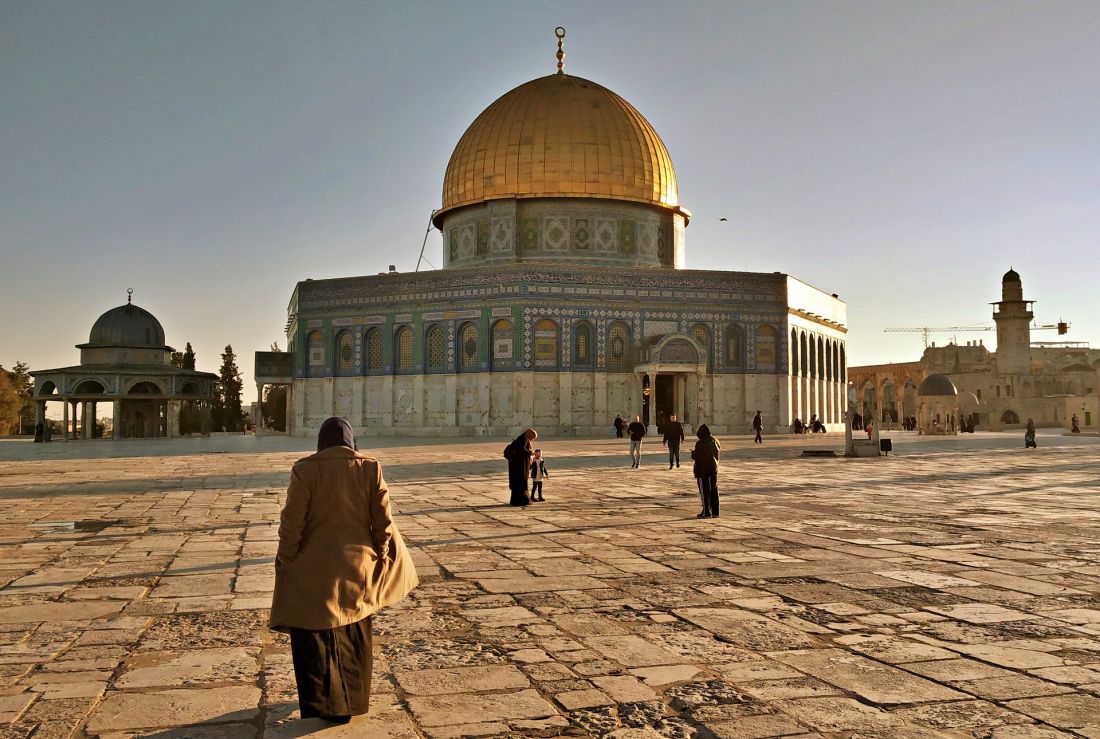
The closure of Al-Aqsa Mosque during the last ten days of Ramadan 2026, by order of the Israeli occupation authorities, for the first time since 1967, drew widespread attention across the Muslim world. Many observers realized—albeit belatedly—the scale of what had been unfolding at the mosque during those nights, particularly when the Islamic world awoke to the unprecedented image of Al-Aqsa completely empty on the final Friday of Ramadan, traditionally one of the largest annual gatherings at the site, when attendance normally exceeds 300,000 worshippers. The same scene was repeated on the twenty-seventh night of Ramadan, when more than 150,000 worshippers would usually remain in spiritual retreat inside the mosque, and again during Eid al-Fitr. This marked the first time in 539 years, since Saladin’s recapture of Jerusalem, that such a closure had occurred during these occasions. Equally striking were the scenes of repression and stun grenades witnessed around the walls of Jerusalem’s Old City during the final nights of Ramadan, as Israeli forces pursued worshippers in an effort to reduce their numbers as much as possible.
At the same time, unprecedented restrictions were imposed on the Islamic Waqf administration in Jerusalem, leaving it nearly paralyzed and unable to perform its administrative functions inside the mosque compound. Israeli authorities limited the number of Waqf employees permitted to enter the mosque to only twenty-five individuals, all subject to prior Israeli approval. A serious report published by Middle East Eye revealed that when the Manuscripts Department of the Islamic Waqf attempted to add just one additional employee, Israeli police threatened to reopen the compound immediately to settler incursions if the Waqf exceeded the quota imposed by the authorities.
Taken together, the events of Ramadan and the period that followed strongly suggest that Al-Aqsa Mosque has entered a new and critical phase in which its future status is being actively contested. What occurred during Ramadan appears not as an isolated incident, but as a preliminary stage in a broader process.
Why does this conclusion appear justified?
Several developments point in the same direction: namely, an Israeli intention to decisively reshape the status of Al-Aqsa during the current period. Beginning in late 2025, Israeli authorities initiated a series of measures that collectively served this objective. One example was the appointment of Avshalom Peled, associated with the Religious Zionist movement, as commander of the Jerusalem District Police. His appointment followed a dispute between National Security Minister Itamar Ben-Gvir and former Jerusalem police commander Amir Arzani, who had reportedly refused to allow settlers to bring tables, chairs, and ritual equipment into Al-Aqsa Mosque out of concern that such actions could trigger unrest.
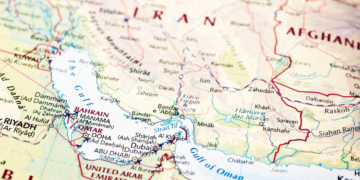
Another significant indicator emerged at the beginning of Ramadan, when Israeli police summoned the head of the Jerusalem Waqf Council for questioning and he refused to comply. The Israeli response revealed the broader political context of the confrontation. Authorities subsequently prohibited the installation of sunshades inside the mosque compound, blocked the entry of iftar and suhur meals for guards and staff, and prevented preparations for the mosque clinic. In practical terms, this meant denying the mosque any distinctive Ramadan atmosphere for the first time in modern history. The situation culminated in the complete closure of Al-Aqsa under the justification of the regional war involving Iran, precisely during the most sensitive period of the Islamic calendar for worshippers at the mosque: the final ten days of Ramadan and Eid al-Fitr.
From a security and political perspective, imposing the highest level of restrictions during Ramadan, particularly during its final ten days, when Muslim presence in Jerusalem reaches its annual peak, functioned as a field test for Israeli authorities. Historically, Ramadan has represented the most difficult period for Israel to impose unilateral measures at Al-Aqsa due to the massive public presence. If Israeli authorities succeeded in fully implementing their decisions and containing Palestinian reactions during the period they traditionally view as most volatile, then they are likely to conclude that imposing similar policies during less crowded periods would be considerably easier.
This opportunity was quickly exploited in relation to settler activity inside Al-Aqsa during the Jewish Passover holiday, which occurred between April 2 and April 9, only ten days after Eid al-Fitr. During that period, unprecedented forms of settler incursions took place inside the mosque compound, including repeated attempts to introduce ritual sacrifices into the site. The only factor that appears to have limited these attempts was the large-scale Muslim presence that continued in response to the forty-day closure and the events surrounding it.
Equally significant was the manner in which Al-Aqsa was reopened shortly before Passover. The mosque was reopened simultaneously to Muslims and Jewish settlers alike, rather than exclusively to Muslim worshippers. This effectively signaled that Israeli authorities now regard themselves as the sole authority regulating access to the compound, replacing the historical administrative role of the Islamic Waqf. In practical terms, the mosque was closed by Israeli decision and reopened by Israeli decision, without meaningful external political pressure from the broader Muslim world.
The most dangerous aspect of the entire episode was not simply that Al-Aqsa was closed during Ramadan and Eid al-Fitr, but that the closure itself passed as a precedent that may now be repeated. Once the opening and closing of Al-Aqsa become subject entirely to Israeli police authority, the issue extends beyond restrictions on religious freedom. What is taking place is effectively a redefinition of sovereignty and administrative control over the site itself.
This represents one of the most consequential dimensions of the broader process of Judaization in Jerusalem: transferring practical authority over the mosque compound away from the Islamic Waqf and consolidating it under Israeli police administration. Under such conditions, Israel no longer functions merely as a military power carrying out incursions into the site, but increasingly as the central executive authority deciding when Muslims may enter, under what conditions, in what numbers, and when they may be excluded altogether. Repeated warnings were issued before and after the reopening of the mosque that Israeli control over decisions of closure and reopening constitutes another major step toward dismantling the historical status quo.
What is unfolding can also be understood as an attempt to reshape public consciousness regarding Al-Aqsa. When a mosque is closed for forty days and then reopened, many observers may focus primarily on the restoration of prayer and conclude that the crisis has ended. Yet the more significant danger lies elsewhere: the reopening itself may obscure the precedents established by the closure. States do not always require dramatic new measures in order to transform realities on the ground. Sometimes it is sufficient to normalize an exceptional action, allow public attention to fade, and then build incrementally upon the new reality that has already been established.
One of the most consequential outcomes of the recent closure, therefore, was the shift in public discourse itself. The central question gradually moved from: “How can Israeli authorities be prevented from altering the status of Al-Aqsa?” to the far narrower question: “When will Israel allow Al-Aqsa to reopen?” Once the debate descends to that level, the transformation of the status quo has already advanced significantly, even before its full implications become visible.
Al-Aqsa Mosque is now entering a highly sensitive and decisive stage. The only effective means of protecting the site lies in restoring a broad state of public deterrence, both within Palestinian society and across the wider Muslim world, so that Israeli authorities understand in practical terms, not merely rhetorically, that any attempt to alter the status of Al-Aqsa carries substantial political and social consequences. Without such deterrence, the current trajectory risks producing irreversible changes to one of the most symbolically and politically significant sites in Jerusalem.
*Opinions expressed in this article are the author’s own and do not necessarily reflect Platform: Current Muslim Affairs’ editorial policy.