






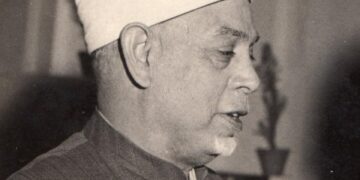
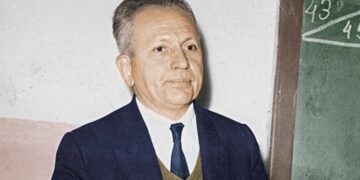
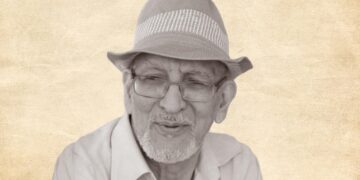
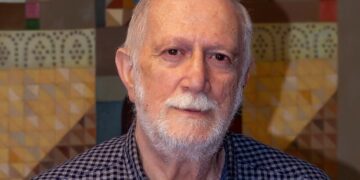

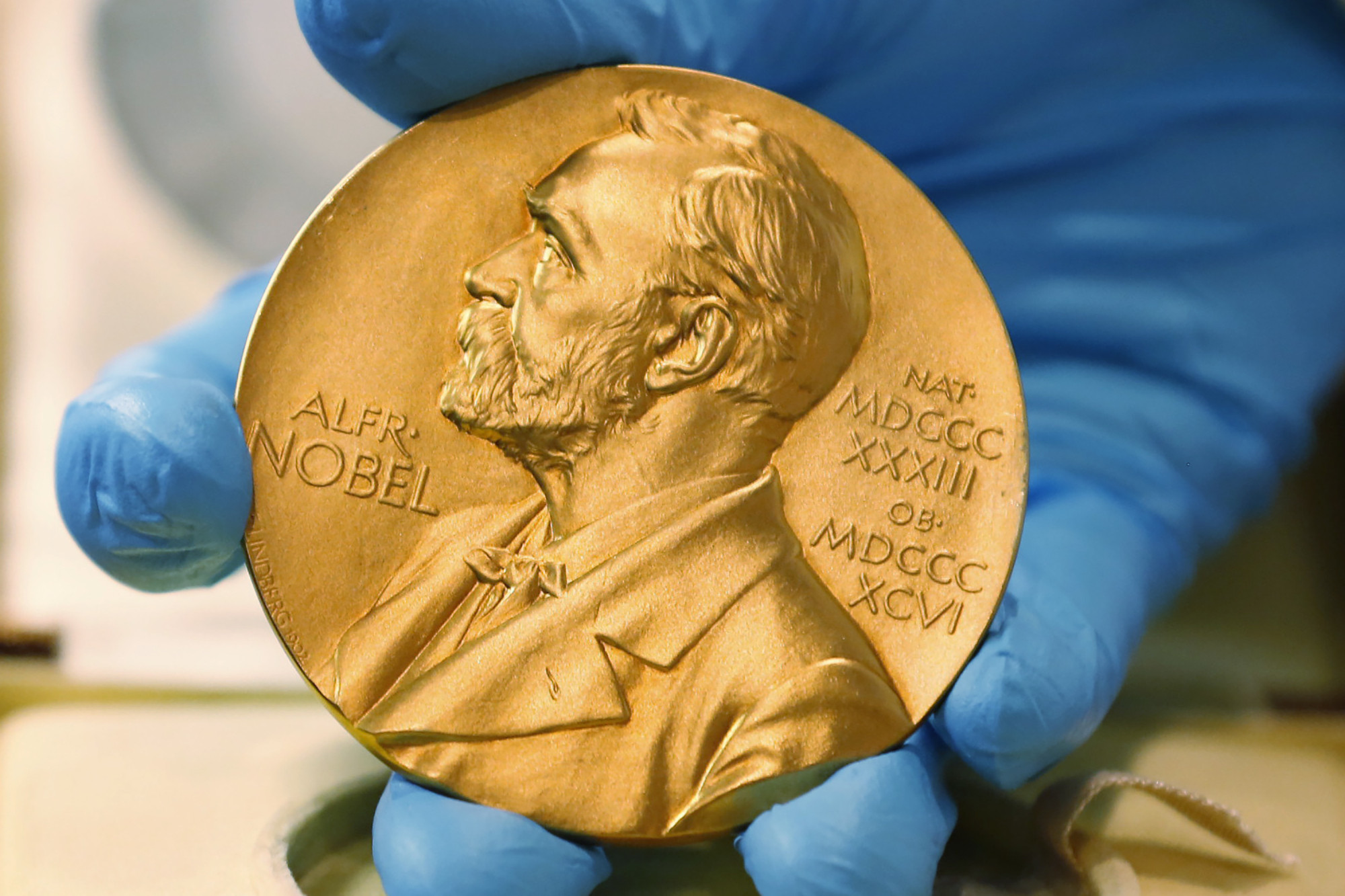
The Nobel Prize is a prestigious award granted to individuals who have made important contributions to science, literature, and peace. Among Muslim scientists, Mohammad Abdus Salam (1926-1996), Ahmed Zewail (1946-2016), Aziz Sancar (1946-), and Moungi Bawendi (1961-) have made significant contributions to their respective fields and earned Nobel prizes in science with their groundbreaking works. This article provides an in-depth look at these four Nobel laureates’ lives, works, award-winning projects, lifestyles, and research environments.
Mohammad Abdus Salam
Mohammad Abdus Salam, the first Muslim scientist to receive the Nobel Prize, was born in 1926 in Jhang, Pakistan. His passion for physics was inspired by his grandfather, Gul Mohammad. Abdus Salam’s father worked as an education officer in a poor neighborhood in Punjab state. Even at 14, his exceptional abilities were apparent when he achieved the highest marks on the Punjab University entrance exam, which attracted significant attention.
Initially studying Urdu and English literature at Government College University, Abdus Salam later discovered his interest in mathematics, published a thesis on Srinivasa Ramanujan’s problem, and graduated at the top of his class. After completing his studies at Government College, he earned a scholarship to the University of Cambridge, where he graduated with high honors in mathematics and physics, earning the prestigious Smith’s Prize for his contributions to physics (“Abdus Salam Facts,” 2024). Later, he served as a mathematics professor at Government College University and became the Head of the Mathematics Department at Punjab University. His academic journey brought him back to Cambridge, where he joined St. John’s College as a mathematics professor, supported by a fellowship from the Pakistan Academy of Sciences (“Abdus Salam Biographical,” 2024). In 1965, Abdus Salam established Pakistan’s first space program and founded the Pakistan Institute of Nuclear Science & Technology (PINSTECH), initiating nuclear research, including work on atomic bombs. Additionally, he collaborated with the Theoretical Physics Group (TPG) to develop nuclear weapons design and contributed to the country’s nuclear weapons program.
In 1979, Abdus Salam was awarded the Nobel Prize in Physics for his work on the electroweak unification theory, a collaboration with Weinberg and Glashow. This achievement marked a historic milestone in Pakistan’s scientific history and represented both personal success and international recognition for his homeland. Moreover, he continued his research on the Grand Unified Theory through the Pati-Salam model, which highlighted similarities between quarks and leptons (Matthews & Salam, 1952). These works remain influential today and serve as a foundation for young researchers.
Ahmed Zewail
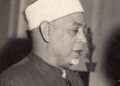
The second Muslim scientist to win a Nobel Prize, Ahmed Zewail, was born on February 26, 1946, in Damanhur, Egypt. He completed his undergraduate and master’s studies at Alexandria University, followed by a Ph.D. at the University of Pennsylvania (“Ahmed Zewail Biographical,” 2024). Zewail received multiple prestigious international awards, including the Wolf Prize in Chemistry (1993), the Tolman Medal (1997), and the Priestley Medal from the American Chemical Society (2011). In the same year he received his Nobel Prize, Zewail was also honored with Egypt’s highest state decoration, the Grand Collar of the Nile.
Zewail was awarded the Nobel Prize in Chemistry in 1999 for his pioneering work in femtochemistry, which involves studying the dynamics of chemical bond formation and breaking using ultrafast laser techniques. His work revolutionized the understanding of chemical reactions at the femtosecond scale (10⁻¹⁵ seconds), paving the way for significant applications in fields such as energy conversion, biomolecular processes, and the development of new materials (Bao, 2002). This achievement elevated Egypt’s global reputation in the scientific community, serving as both the pinnacle of his career and a profound honor for his nation (“Ahmed Zewail Interview,” 1999).
Zewail’s innovations opened new avenues for research across diverse domains by enabling the observation of chemical reactions on a femtosecond timescale. This technique has inspired young scientists and facilitated advancements in areas ranging from nuclear and weapon technologies to biology, chemistry, and materials science (Jiang et al., 2024; Robinson & Küpper, 2024). These breakthroughs have laid the groundwork for the development of innovative technologies and transformative research across disciplines. Ahmed Zewail’s scientific impact is evident in his prolific publication record, with over 200 papers referencing his femtochemistry work by 2024. He garnered nearly 3000 citations in Web of Science, over 5000 citations in Google Scholar, and achieved an impressive H-index of 32. Zewail dedicated his life to science until his passing in 2016, leaving a lasting legacy that continues to inspire researchers worldwide.
Aziz Sancar
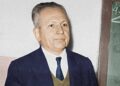
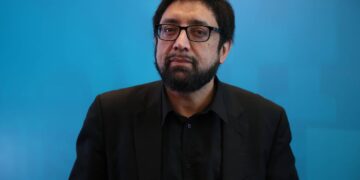
Born in 1946 in Türkiye, Aziz Sancar is the third Muslim scientist to win a Nobel Prize. He is a physician, academician, biochemist, and molecular biologist. Sancar graduated from Istanbul University’s Faculty of Medicine in 1969 and began postdoctoral research at Johns Hopkins University and later the University of Texas in 1970 with a scholarship from TÜBİTAK. His persistent dedication to his studies allowed him to rapidly advance his academic career (Ulupınar, 2023). Currently, he serves as a professor of biochemistry and biophysics at the University of North Carolina (UNC) and leads a laboratory at the same institution (“Aziz Sancar Biographical,” 2015).
Sancar’s Nobel-winning work focused on DNA repair mechanisms and cellular response processes. His research illuminated pathways such as nucleotide excision repair (NER) and base excision repair (BER), which highlights how cells protect their genetic information. Additionally, he made groundbreaking contributions to understanding the molecular basis of circadian rhythms, unraveling the genetic regulation of the circadian clock.
Due to his perseverance, disciplined work ethic, and resilient determination, Sancar earned numerous prizes, including several awards from TÜBİTAK in Türkiye. Among his most notable achievements is mapping cellular mechanisms for repairing damaged DNA and preserving genetic information, which earned him the 2015 Nobel Prize in Chemistry. This milestone not only marked a peak in his career but also significantly elevated Türkiye’s visibility in the field of science internationally, which has made him a role model for younger generations (“Aziz Sancar Interview,” 2015). In 2022, TÜBİTAK launched the Aziz Sancar Overseas Postdoctoral Research Fellowship Program in his honor. Selected researchers have the opportunity to conduct postdoctoral studies in Sancar’s laboratory under his guidance (TÜBİTAK, 2024). His efforts have also facilitated the integration of Turkish scientists into global research networks, creating opportunities for collaboration on international projects.
As of 2024, Sancar continues to contribute to research on DNA repair mechanisms, the circadian clock, and developing new therapies for genetic diseases and cancer. His work is documented in Web of Science, which reports over 5000 SCI-Expanded citations and a remarkable H-index of 55. With more than 500 publications, Sancar remains a pioneering figure in the global scientific community (Kose, Sancar & Jiang, 2023).
Moungi Bawendi
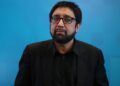
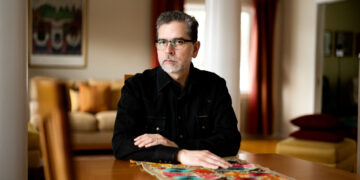
Born in France in 1961 to Lebanese parents, Moungi Bawendi is the fourth Muslim scientist to win a Nobel Prize. He is renowned for his groundbreaking work on quantum dots, earning the 2023 Nobel Prize in Chemistry for his discoveries and for explaining the properties of these nanostructures (“Moungi Bawendi Facts,” 2023).
Bawendi has published over 200 works on quantum dots, which have garnered more than 20,000 citations, including over 1500 in 2024 alone. He continues to research quantum dots and their applications actively. In addition, his work extends to nanocrystals, solar cells, electroluminescent devices, and nanosensors capable of inhibiting tumors (Shi et al., 2024). Bawendi’s prolific contributions include an H-index of 97, over 30,000 citations, and more than 360 publications, with nearly 3000 SCI-Expanded citations in 2024 alone.
When he won the Nobel prize, Bawendi recounted in an interview: “I think it’s so important to be well-read, to understand history. Science is a part of history. To understand science’s role in our community and the world. You need to understand all these other things.” (“Moungi Bawendi Podcast,” 2024). His study of solution-phase sample-averaged single-particle spectroscopy of quantum emitters with femtosecond resolution has opened the door to innovative quantum emitter technologies, highlighting the importance of understanding history and context in science (Shi et al., 2024). Bawendi’s work not only advances theoretical knowledge but also holds significant potential for practical applications in energy, medicine, and technology. His pioneering efforts in quantum dots have positioned him as a leading figure in contemporary chemistry and nanoscience.
By introducing new paradigms in their respective fields, they have advanced scientific progress both in their home countries and globally, inspiring countless scientists around the world. Their achievements have not only influenced the scientific community but also had profound societal and cultural impacts.
Conclusion
The Nobel laureate Muslim scientists—Mohammad Abdus Salam, Ahmed Zewail, Aziz Sancar, and Moungi Bawendi—have made groundbreaking discoveries and significant contributions to the world of science. By introducing new paradigms in their respective fields, they have advanced scientific progress both in their home countries and globally, inspiring countless scientists around the world. Their achievements have not only influenced the scientific community but also had profound societal and cultural impacts. While working abroad, these scientists collaborated with researchers from diverse backgrounds, fostering knowledge exchange and initiating influential collaborative projects. Their success is rooted in strong scientific foundations, mentorship, and a disciplined approach to research. However, had they remained in their home countries, the limitations of local scientific infrastructure might have hindered their ability to conduct research at the same level. Therefore, their stories highlight the importance of global collaboration and the role of supportive environments in nurturing scientific excellence, serving as a testament to the transformative power of education and research.