


İLKE Vakfı
Platform
tr Türkçe en English
No Result
View All Result
  • PLATFORM
  • NEWS
    İLKE Agenda: Muzzammil Ayyub Thakur ile Keşmir’in “Filistinleştirilmesi”

    Khaled Beydoun: “Islamophobia is a modern manifestation of the crusades”

    Filistin Sempozyumu: Filistin ve Küresel İlişkilerin Geleceği

    Exploring Islam’s View on Slavery and Blackness: Seminar by Jonathan A.C. Brown

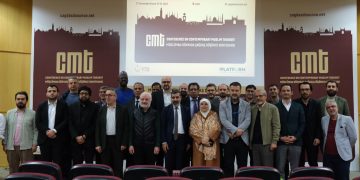
    The Conference on Contemporary Muslim Thought

    The Conference on Contemporary Muslim Thought

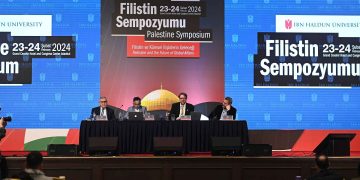
    Filistin Sempozyumu: Filistin ve Küresel İlişkilerin Geleceği

    Palestine Symposium: Palestine and the Future of Global Affairs

    İLKE Agenda: Muzzammil Ayyub Thakur ile Keşmir’in “Filistinleştirilmesi”

    The Platform Talks: Palestine after October 7 with Azzam Tamimi

    İLKE Agenda: Muzzammil Ayyub Thakur ile Keşmir’in “Filistinleştirilmesi”

    The Palestine Talks: Syria after December 8 with Kinda Hawasli

    İLKE Agenda: Muzzammil Ayyub Thakur ile Keşmir’in “Filistinleştirilmesi”

    İLKE Agenda: The “Palestinization” of Kashmir with Muzzammil Ayyub Thakur

  • ANALYSIS
    • All
    • Culture, Arts and Media
    • Economy
    • Education
    • Energy and Environment
    • Fundamental Rights and Freedoms
    • Migration
    • Opinion
    • Social Issues
    Teşhis ile Gelecek İnşası Arasında Malik b. Nebi’nin Sömürülebilirlik Olgusunu Anlamak

    Between Diagnosis and Building the Future: Understanding the Phenomenon of Colonizability in Malik Bennabi

    A New Wave of Youth Dissidence? Gen-Z Protests in Tunisia and Morocco

    A New Wave of Youth Dissidence? Gen-Z Protests in Tunisia and Morocco

    Siyonist Hareketin Terör Mirası

    The Terror Legacy of the Zionist Movement

    İsrail Neden Klasik Sömürgeci Bir Aktör Olarak Görülmeli?

    Why Shouls Israel Be Regarded As a Classical Colonial Actor?

    Beyond Zero-Sum: Connectivity for Shared Prosperity

    Beyond Zero-Sum: Connectivity for Shared Prosperity

    The ‘Malay World’ and Cultural Structuring

    The ‘Malay World’ and Cultural Structuring

  • INTERVIEWS
    A Conversation with Dr. Fadi Zatari on Zionist Terrorism and the Palestinian Resistance

    A Conversation with Dr. Fadi Zatari on Zionist Terrorism and the Palestinian Resistance

    Veri Sömürgeciliği, Yapay Zeka ve Dijital Geleceğimiz: Prof. Ulises Ali Mejias ile Söyleşi

    Data Colonialism, Artificial Intelligence, and Our Digital Future: An Interview with Prof. Ulises Ali Mejias

    Casir el-Bergusi ile Filistin Mücadelesi ve Esaret Yılları Üzerine Bir Röportaj

    An Interview with Jaser Albarghouthi on the Palestinian Struggle and the Years of Captivity

    The Decolonization of Knowledge: Interview with Professor Souleymane Bachir Diagne

    The Decolonization of Knowledge: Interview with Professor Souleymane Bachir Diagne

    A Possible New Breath in Regional Balances: The Alliance of Türkiye, Pakistan, Egypt, and Saudi Arabia

    A Possible New Breath in Regional Balances: The Alliance of Türkiye, Pakistan, Egypt, and Saudi Arabia

    From the Ballot Box to the Street: The Rising Social Wave in Tanzania After the Election

    From the Ballot Box to the Street: The Rising Social Wave in Tanzania After the Election

    Kafkasya’da Müslümanlar ve İslami Eğitim: TCDİB Kuzey Kafkasya Koordinatörü Selim Akburak ile Söyleşi

    Muslims and Islamic Education in the Caucasus: An Interview with Selim Burak North Caucasus Coordinator in Directorate of Religious Affairs

    Göçü Yönetmek: Dr. Mehmet Köse’yle Söyleşi

    Interview with Mehmet Köse

    Gurbet Hikayeleri

    Interview on Gurbet Hikayeleri

  • VOICES
    Anas Altikriti | Voices from the Muslim World | Türkçe Altyazılı

    Anas Altikriti | Voices from the Muslim World | Türkçe Altyazılı

    Basil Mustafa (Oxford) | Voices from the Muslim World | with Turkish subtitles

    Basil Mustafa (Oxford) | Voices from the Muslim World | with Turkish subtitles

    OMAR SULEIMAN | VOICES FROM THE MUSLIM WORLD

    OMAR SULEIMAN | VOICES FROM THE MUSLIM WORLD

    Paul Williams | Voices from the Muslim World

    Paul Williams | Voices from the Muslim World

  • DATABASE
    • All
    • Institutions
    • Movements
    • People
    • Q-A
    Mekke Ortak Savunma Anlaşması Nedir?

    What is Makkah Joint Defence Agreement?

    Husiler Kimdir?

    Who are the Houthis?

    Afrika Haritalarda Neden Küçük Görünüyor?

    Why Does Africa Appear Smaller on Maps?

    Salman Sayyid

    Salman Sayyid

    Muhammed Abdullah Draz

    Muhammad Abdullah Draz

    Nurettin Topçu

    Nurettin Topçu

    Taha Abdurrahman

    Taha Abdurrahman

    Süleyman Mansur

    Sliman Mansour

    5 Ağustos İslami İnsan Hakları ve İnsan Onuru Günü Nedir?

    What is August 5 Islamic Human Rights and Human Dignity Day?

  • DISCOVER
  • AUTHORS
  • PLATFORM
  • NEWS
    İLKE Agenda: Muzzammil Ayyub Thakur ile Keşmir’in “Filistinleştirilmesi”

    Khaled Beydoun: “Islamophobia is a modern manifestation of the crusades”

    Filistin Sempozyumu: Filistin ve Küresel İlişkilerin Geleceği

    Exploring Islam’s View on Slavery and Blackness: Seminar by Jonathan A.C. Brown

    The Conference on Contemporary Muslim Thought

    The Conference on Contemporary Muslim Thought

    Filistin Sempozyumu: Filistin ve Küresel İlişkilerin Geleceği

    Palestine Symposium: Palestine and the Future of Global Affairs

    İLKE Agenda: Muzzammil Ayyub Thakur ile Keşmir’in “Filistinleştirilmesi”

    The Platform Talks: Palestine after October 7 with Azzam Tamimi

    İLKE Agenda: Muzzammil Ayyub Thakur ile Keşmir’in “Filistinleştirilmesi”

    The Palestine Talks: Syria after December 8 with Kinda Hawasli

    İLKE Agenda: Muzzammil Ayyub Thakur ile Keşmir’in “Filistinleştirilmesi”

    İLKE Agenda: The “Palestinization” of Kashmir with Muzzammil Ayyub Thakur

  • ANALYSIS
    • All
    • Culture, Arts and Media
    • Economy
    • Education
    • Energy and Environment
    • Fundamental Rights and Freedoms
    • Migration
    • Opinion
    • Social Issues
    Teşhis ile Gelecek İnşası Arasında Malik b. Nebi’nin Sömürülebilirlik Olgusunu Anlamak

    Between Diagnosis and Building the Future: Understanding the Phenomenon of Colonizability in Malik Bennabi

    A New Wave of Youth Dissidence? Gen-Z Protests in Tunisia and Morocco

    A New Wave of Youth Dissidence? Gen-Z Protests in Tunisia and Morocco

    Siyonist Hareketin Terör Mirası

    The Terror Legacy of the Zionist Movement

    İsrail Neden Klasik Sömürgeci Bir Aktör Olarak Görülmeli?

    Why Shouls Israel Be Regarded As a Classical Colonial Actor?

    Beyond Zero-Sum: Connectivity for Shared Prosperity

    Beyond Zero-Sum: Connectivity for Shared Prosperity

    The ‘Malay World’ and Cultural Structuring

    The ‘Malay World’ and Cultural Structuring

  • INTERVIEWS
    A Conversation with Dr. Fadi Zatari on Zionist Terrorism and the Palestinian Resistance

    A Conversation with Dr. Fadi Zatari on Zionist Terrorism and the Palestinian Resistance

    Veri Sömürgeciliği, Yapay Zeka ve Dijital Geleceğimiz: Prof. Ulises Ali Mejias ile Söyleşi

    Data Colonialism, Artificial Intelligence, and Our Digital Future: An Interview with Prof. Ulises Ali Mejias

    Casir el-Bergusi ile Filistin Mücadelesi ve Esaret Yılları Üzerine Bir Röportaj

    An Interview with Jaser Albarghouthi on the Palestinian Struggle and the Years of Captivity

    The Decolonization of Knowledge: Interview with Professor Souleymane Bachir Diagne

    The Decolonization of Knowledge: Interview with Professor Souleymane Bachir Diagne

    A Possible New Breath in Regional Balances: The Alliance of Türkiye, Pakistan, Egypt, and Saudi Arabia

    A Possible New Breath in Regional Balances: The Alliance of Türkiye, Pakistan, Egypt, and Saudi Arabia

    From the Ballot Box to the Street: The Rising Social Wave in Tanzania After the Election

    From the Ballot Box to the Street: The Rising Social Wave in Tanzania After the Election

    Kafkasya’da Müslümanlar ve İslami Eğitim: TCDİB Kuzey Kafkasya Koordinatörü Selim Akburak ile Söyleşi

    Muslims and Islamic Education in the Caucasus: An Interview with Selim Burak North Caucasus Coordinator in Directorate of Religious Affairs

    Göçü Yönetmek: Dr. Mehmet Köse’yle Söyleşi

    Interview with Mehmet Köse

    Gurbet Hikayeleri

    Interview on Gurbet Hikayeleri

  • VOICES
    Anas Altikriti | Voices from the Muslim World | Türkçe Altyazılı

    Anas Altikriti | Voices from the Muslim World | Türkçe Altyazılı

    Basil Mustafa (Oxford) | Voices from the Muslim World | with Turkish subtitles

    Basil Mustafa (Oxford) | Voices from the Muslim World | with Turkish subtitles

    OMAR SULEIMAN | VOICES FROM THE MUSLIM WORLD

    OMAR SULEIMAN | VOICES FROM THE MUSLIM WORLD

    Paul Williams | Voices from the Muslim World

    Paul Williams | Voices from the Muslim World

  • DATABASE
    • All
    • Institutions
    • Movements
    • People
    • Q-A
    Mekke Ortak Savunma Anlaşması Nedir?

    What is Makkah Joint Defence Agreement?

    Husiler Kimdir?

    Who are the Houthis?

    Afrika Haritalarda Neden Küçük Görünüyor?

    Why Does Africa Appear Smaller on Maps?

    Salman Sayyid

    Salman Sayyid

    Muhammed Abdullah Draz

    Muhammad Abdullah Draz

    Nurettin Topçu

    Nurettin Topçu

    Taha Abdurrahman

    Taha Abdurrahman

    Süleyman Mansur

    Sliman Mansour

    5 Ağustos İslami İnsan Hakları ve İnsan Onuru Günü Nedir?

    What is August 5 Islamic Human Rights and Human Dignity Day?

  • DISCOVER
  • AUTHORS
No Result
View All Result
Platform
No Result
View All Result
tr Türkçe en English
Home Analyses

Between Diagnosis and Building the Future: Understanding the Phenomenon of Colonizability in Malik Bennabi

Atike Çiçek Atsız by Atike Çiçek Atsız
30 September 2026
in Analyses, Opinion
Teşhis ile Gelecek İnşası Arasında Malik b. Nebi’nin Sömürülebilirlik Olgusunu Anlamak
Share on FacebookShare on Twitter

(The original Turkish version of this article was published by the Platform: Current Muslim Affairs on September 29, 2026)

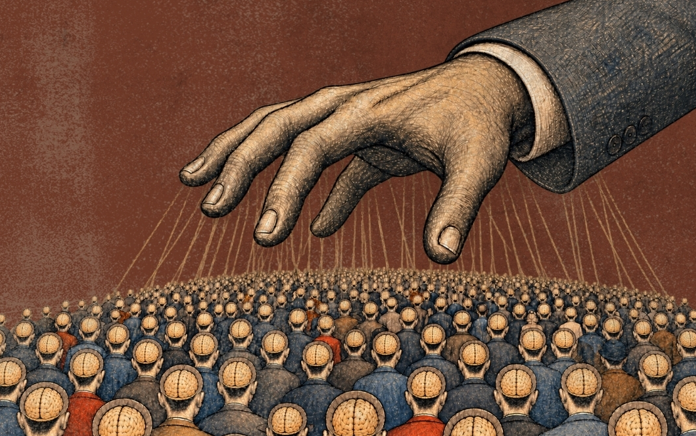
Defining colonialism, one of the most devastating experiences in human history, merely as the occupation of a country’s territory, the seizure of its resources, and the imposition of a foreign political will gives rise to the illusion that this process came to a complete end after the Second World War. Although the changing of flags and the withdrawal of military forces undoubtedly create a sense of political independence, this apparent independence is insufficient for grasping the essence of the matter. Indeed, the original ideas that the Algerian thinker Malek Bennabi advanced on colonialism remind us that the issue cannot be confined to the physical presence of the coloniser or to military occupation alone. In his works, Bennabi clearly demonstrates that colonial domination extends far beyond territorial borders, permeating every capillary of social life, from education to culture, from health to the economy, and from architecture to the arts, and ultimately intervening in the intellectual sphere. In this depiction, the coloniser resembles the Hecatoncheir, the famous monster of Greek mythology with fifty heads and a hundred arms. In this respect, the coloniser appears as an immense power that besieges and transforms the colonised from every direction and from which escape seems impossible. What most distinguishes Bennabi from his contemporaries in this regard, however, is that he focuses not so much on this driving force of the coloniser as on the social ground that allows it to take root within a society. In other words, Bennabi directs his critique not at the coloniser itself but at the internal constitution that renders colonisation possible. In Bennabi’s thought, this corresponds to the concept of qābiliyyat al-istiʿmār (قابلية الاستعمار), which may be translated as “colonisability,” that is, a society’s susceptibility or predisposition to being colonised. Within Bennabi’s intellectual framework, colonialism is not an incidental calamity that suddenly descends from outside; rather, it is an outcome that the social body itself makes room for, enables, and produces. When the intellectual life of a society withers, its morality erodes, and its construction of civilisation stagnates, a natural ground for exploitation takes shape for external mechanisms of domination. Accordingly, in this understanding, colonialism is not the primary cause of a society’s collapse but rather the inevitable consequence of internal decay and intellectual inertia within the social body.

The greatest fallacy we overlook when analysing the current problems of the Muslim world today is the tendency to attribute all crises to the injustices of the global system or to the manoeuvres of external actors. Imperial policies are, of course, concrete realities; however, for these policies to become operative, there must exist within the society a “colonisable” character, an intellectual fragility, and a state of passivity. Indeed, when we discuss the Islamic world’s relations of tutelage vis-à-vis the West, its technological and economic dependence, or the intellectual stagnation in which it finds itself, we are still confronted with the same vital question: What are the structural weaknesses that have rendered us vulnerable to colonisation, and how can we overcome them?

Viewed through Malek Bennabi’s lens, this question reveals not only the diagnosis but also the cure. If the fundamental problem lies not in the dominating external powers but in our own internal constitution, then the first and most essential step towards a solution is the reconstruction of self-consciousness. In Bennabi’s conception of civilisation, social transformation requires developing a profound self-awareness of our condition, demonstrating an unwavering resolve to change this state, and translating that resolve into concrete effort. In this vein, the thinker, who carries the Qur’anic principle “God does not change the condition of a people until they change what is in themselves” (al-Raʿd 13:11) onto a sociological plane, emphasises that salvation will not arrive as a favour bestowed from outside; rather, it will become possible only when a society confronts its own self, its thought, and its morality, and thereby eliminates the conditions of its “susceptibility to colonisation.”[2]

Looking at the intellectual agenda of the Muslim world today, this entrapment between two extremes is strikingly evident. On the one hand stands the conservative stance that seeks to respond to the complex political and social problems of the modern world with ahistorical narratives; on the other, the passive intellectual type who adopts Western theories, conceptual tools, and ideological templates without subjecting them to critical scrutiny. According to Malek Bennabi, both approaches ultimately nourish colonisability, for societies that cannot produce their own original system of thought and vision of civilisation are unable to escape being consumers of, and hence dependent upon, the intellectual world of others.[3] The phenomenon of colonisability is not confined to the intellectual plane; it also materialises in the economic, industrial, and technical spheres. Bennabi persistently emphasises that civilisation is neither an “accumulation of things” nor the mere importation of ready-made products, but rather a holistic process of construction. In this context, he sharply criticises the illusion that the Islamic world can develop or modernise simply by purchasing technology and consumer goods from the West.[4] Indeed, despite its rich natural resources and dynamic demographic potential, the contemporary Muslim world is shaped by a culture of consumption rather than a culture of production. Societies that passively consume the technology, digital infrastructure, and economic models produced by the West lose their capacity to act independently within their economic and political decision-making mechanisms. Social bodies that fail to develop their own technique, means of production, and economic ethics are condemned to become exploitable open markets for global financial and technological hegemony.

At this point, Malek Bennabi asserts that colonialism does not operate through a fixed method; rather, it changes form and applies various methods in accordance with the internal weaknesses of societies and the spirit of the age. Classical colonialism, which in the twentieth century was carried out through direct military occupation, has today given way to forms of intellectual, cultural, digital, and economic dependence, that is, to neo-colonialism. Rather than directly occupying territories, the new generation of colonial powers provoke and exploit the grounds of colonisability within target societies. Deepening social divisions, triggering ethnic and sectarian fault lines, and drying up indigenous and national currents of thought by degrading the quality of education systems are the principal instruments of this strategy. The Muslim world today is besieged by perception management operations, digital media hegemony, and the unilateral impositions of international institutions.[5] Yet when viewed through Bennabi’s analytical lens, the sole reason these new colonial methods succeed lies not so much in the magnitude of the external power as in the persistence of internal fragilities and the potential for colonisability within the social body.

Malek Bennabi’s thesis of colonisability is neither a manifesto of despair nor one of passive pessimism. On the contrary, it is a liberating call that summons the Islamic world to take its destiny into its own hands and to move beyond a passive discourse of victimhood towards becoming an agent. For if the source of the crisis lies not directly in the dominating external powers but in the weaknesses of the internal constitution, then salvation likewise rests not on the mercy or goodwill of others but on the very will of Muslims themselves. Bennabi’s epistemological and sociological framework reveals a clear truth: the way out of this impasse lies, above all, in the moral, intellectual, and spiritual reconstruction of the human element. At the same time, it is of vital importance to break free from the grip of dead and alien ideas, to produce an original Islamic intellectual idiom capable of comprehending the age through its own values, and to achieve a holistic revival that moves beyond being a passive object of consumption and places production and the ethics of civilisation at its centre.[6] Ultimately, in analysing the current intellectual, social, and political problems of the Muslim world, the most fundamental step is to confront our own constitution courageously, without resorting to the convenience of blaming external actors for everything. The diagnosis and prescription that Malek Bennabi offered years ago still stand before us today as the clearest, most dynamic, and most illuminating guide for an Islamic world that has freed itself from its historical burdens, is aware of its own capacities, and has reclaimed its civilisation-building aspirations.

Bibliography

Bennabi, Malek. İslam Davası [The Cause of Islam]. 2nd ed. Istanbul: Ekin Yayınları, 2018.

Bennabi, Malek. İdeolojik Savaş Ajanları [Agents of Ideological Warfare]. Istanbul: Fikir Yayınları, 2018.

Bennabi, Malek. Ekonomi Dünyasında Müslüman [The Muslim in the World of Economics]. Istanbul: Hicret Yayınları, 1976.

Bennabi, Malek. İslam Dünyasında Fikir ve Put [Ideas and Idols in the Islamic World]. Istanbul: Boğaziçi Yayınları, 2015.

Notes

  1. Malek Bennabi, İslam Davası [The Cause of Islam], 2nd ed. (Istanbul: Ekin Yayınları, 2018), 133.
  2. Bennabi, İslam Davası, 57.
  3. Malek Bennabi, İslam Dünyasında Fikir ve Put [Ideas and Idols in the Islamic World] (Istanbul: Boğaziçi Yayınları, 2015), 155.
  4. Malek Bennabi, İdeolojik Savaş Ajanları [Agents of Ideological Warfare] (Istanbul: Fikir Yayınları, 2018), 86; Malek Bennabi, Ekonomi Dünyasında Müslüman [The Muslim in the World of Economics] (Istanbul: Hicret Yayınları, 1976), 8.
  5. Bennabi, İslam Davası, 134–145.
  6. Bennabi, İslam Davası, 41, 56, 178; Malek Bennabi, Düşünceler [Reflections] (Istanbul: Mana Yayınları, 2012), 178, 231.

*Opinions expressed in this article are the author’s own and do not necessarily reflect Platform: Current Muslim Affairs’ editorial policy.
Tags: Colonialism
Previous Post

A New Wave of Youth Dissidence? Gen-Z Protests in Tunisia and Morocco

Popüler Seçkiler

Teşhis ile Gelecek İnşası Arasında Malik b. Nebi’nin Sömürülebilirlik Olgusunu Anlamak

Between Diagnosis and Building the Future: Understanding the Phenomenon of Colonizability in Malik Bennabi

30 September 2026
A New Wave of Youth Dissidence? Gen-Z Protests in Tunisia and Morocco

A New Wave of Youth Dissidence? Gen-Z Protests in Tunisia and Morocco

21 September 2026
Mekke Ortak Savunma Anlaşması Nedir?

What is Makkah Joint Defence Agreement?

17 September 2026
Siyonist Hareketin Terör Mirası

The Terror Legacy of the Zionist Movement

15 September 2026
Husiler Kimdir?

Who are the Houthis?

14 September 2026
Afrika Haritalarda Neden Küçük Görünüyor?

Why Does Africa Appear Smaller on Maps?

8 September 2026
Salman Sayyid

Salman Sayyid

2 September 2026
Muhammed Abdullah Draz

Muhammad Abdullah Draz

2 September 2026
Nurettin Topçu

Nurettin Topçu

2 September 2026

 Platform: Current Muslim Affairs was established under the İLKE Foundation for Science, Culture and Education as a publication aimed at following and analyzing the intellectual, political, social, economic, and cultural agendas of Muslim societies, while offering original perspectives on the Muslim world.

  • ANALYSIS
  • NEWS
  • INTERVIEWS
  • VOICES
  • platform@ilke.org.tr
  • (0216) 310 43 18
  • Aziz Mahmut Hüdayi Mah. Türbe Kapısı Sk. No: 13 Üsküdar, İstanbul
Instagram X-twitter

2025 @ PLATFORM is an İLKE Foundation organization. All rights reserved.

No Result
View All Result
  • Analyses
  • Interviews
  • Database
    • Q-A
    • People
    • Institutions
    • Movements
  • Voices
  • News
  • DISCOVER
  • Authors