



İLKE Vakfı
Platform
tr Türkçe en English
No Result
View All Result
  • PLATFORM
  • NEWS
    İLKE Agenda: Muzzammil Ayyub Thakur ile Keşmir’in “Filistinleştirilmesi”

    Khaled Beydoun: “Islamophobia is a modern manifestation of the crusades”

    Filistin Sempozyumu: Filistin ve Küresel İlişkilerin Geleceği

    Exploring Islam’s View on Slavery and Blackness: Seminar by Jonathan A.C. Brown

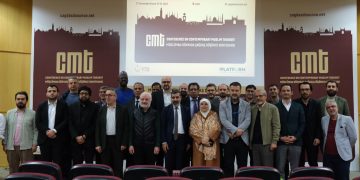
    The Conference on Contemporary Muslim Thought

    The Conference on Contemporary Muslim Thought

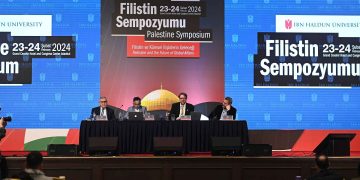
    Filistin Sempozyumu: Filistin ve Küresel İlişkilerin Geleceği

    Palestine Symposium: Palestine and the Future of Global Affairs

    İLKE Agenda: Muzzammil Ayyub Thakur ile Keşmir’in “Filistinleştirilmesi”

    The Platform Talks: Palestine after October 7 with Azzam Tamimi

    İLKE Agenda: Muzzammil Ayyub Thakur ile Keşmir’in “Filistinleştirilmesi”

    The Palestine Talks: Syria after December 8 with Kinda Hawasli

    İLKE Agenda: Muzzammil Ayyub Thakur ile Keşmir’in “Filistinleştirilmesi”

    İLKE Agenda: The “Palestinization” of Kashmir with Muzzammil Ayyub Thakur

  • ANALYSIS
    • All
    • Culture, Arts and Media
    • Economy
    • Education
    • Energy and Environment
    • Fundamental Rights and Freedoms
    • Migration
    • Opinion
    • Social Issues
    İsrail Neden Klasik Sömürgeci Bir Aktör Olarak Görülmeli?

    Why Shouls Israel Be Regarded As a Classical Colonial Actor?

    Beyond Zero-Sum: Connectivity for Shared Prosperity

    Beyond Zero-Sum: Connectivity for Shared Prosperity

    The ‘Malay World’ and Cultural Structuring

    The ‘Malay World’ and Cultural Structuring

    İran-ABD/İsrail Savaşı Sonrası Körfez’in Yeni Güvenlik Doktrini

    The Gulf’s New Security Doctrine After the Iran–U.S./Israel War

    The Carnivalization of the World

    The Carnivalization of the World

    Türkiye’s Evolving Role in Preserving the Memory of the Srebrenica Genocide

    Türkiye’s Evolving Role in Preserving the Memory of the Srebrenica Genocide

  • INTERVIEWS
    A Conversation with Dr. Fadi Zatari on Zionist Terrorism and the Palestinian Resistance

    A Conversation with Dr. Fadi Zatari on Zionist Terrorism and the Palestinian Resistance

    Veri Sömürgeciliği, Yapay Zeka ve Dijital Geleceğimiz: Prof. Ulises Ali Mejias ile Söyleşi

    Data Colonialism, Artificial Intelligence, and Our Digital Future: An Interview with Prof. Ulises Ali Mejias

    Casir el-Bergusi ile Filistin Mücadelesi ve Esaret Yılları Üzerine Bir Röportaj

    An Interview with Jaser Albarghouthi on the Palestinian Struggle and the Years of Captivity

    The Decolonization of Knowledge: Interview with Professor Souleymane Bachir Diagne

    The Decolonization of Knowledge: Interview with Professor Souleymane Bachir Diagne

    A Possible New Breath in Regional Balances: The Alliance of Türkiye, Pakistan, Egypt, and Saudi Arabia

    A Possible New Breath in Regional Balances: The Alliance of Türkiye, Pakistan, Egypt, and Saudi Arabia

    From the Ballot Box to the Street: The Rising Social Wave in Tanzania After the Election

    From the Ballot Box to the Street: The Rising Social Wave in Tanzania After the Election

    Kafkasya’da Müslümanlar ve İslami Eğitim: TCDİB Kuzey Kafkasya Koordinatörü Selim Akburak ile Söyleşi

    Muslims and Islamic Education in the Caucasus: An Interview with Selim Burak North Caucasus Coordinator in Directorate of Religious Affairs

    Göçü Yönetmek: Dr. Mehmet Köse’yle Söyleşi

    Interview with Mehmet Köse

    Gurbet Hikayeleri

    Interview on Gurbet Hikayeleri

  • VOICES
    Anas Altikriti | Voices from the Muslim World | Türkçe Altyazılı

    Anas Altikriti | Voices from the Muslim World | Türkçe Altyazılı

    Basil Mustafa (Oxford) | Voices from the Muslim World | with Turkish subtitles

    Basil Mustafa (Oxford) | Voices from the Muslim World | with Turkish subtitles

    OMAR SULEIMAN | VOICES FROM THE MUSLIM WORLD

    OMAR SULEIMAN | VOICES FROM THE MUSLIM WORLD

    Paul Williams | Voices from the Muslim World

    Paul Williams | Voices from the Muslim World

  • DATABASE
    • All
    • Institutions
    • Movements
    • People
    • Q-A
    Süleyman Mansur

    Sliman Mansour

    5 Ağustos İslami İnsan Hakları ve İnsan Onuru Günü Nedir?

    What is August 5 Islamic Human Rights and Human Dignity Day?

    Kritik Mineral Nedir?

    What is a critical mineral?

    Sömürgecilik Nedir?

    What is Colonialism?

    Uluslararası Ceza Mahkemesi (UCM) Nedir?

    What is International Criminal Court (ICC)?

    Soykırım Nedir?

    What is Genocide?

    Halil el-Hayye

    Khalil al-Hayya

    Şeyh Hamad bin Halife Al Sani

    Sheikh Hamad bin Khalifa Al Thani

    NATO 3.0 Nedir?

    What is NATO 3.0?

  • DISCOVER
  • AUTHORS
  • PLATFORM
  • NEWS
    İLKE Agenda: Muzzammil Ayyub Thakur ile Keşmir’in “Filistinleştirilmesi”

    Khaled Beydoun: “Islamophobia is a modern manifestation of the crusades”

    Filistin Sempozyumu: Filistin ve Küresel İlişkilerin Geleceği

    Exploring Islam’s View on Slavery and Blackness: Seminar by Jonathan A.C. Brown

    The Conference on Contemporary Muslim Thought

    The Conference on Contemporary Muslim Thought

    Filistin Sempozyumu: Filistin ve Küresel İlişkilerin Geleceği

    Palestine Symposium: Palestine and the Future of Global Affairs

    İLKE Agenda: Muzzammil Ayyub Thakur ile Keşmir’in “Filistinleştirilmesi”

    The Platform Talks: Palestine after October 7 with Azzam Tamimi

    İLKE Agenda: Muzzammil Ayyub Thakur ile Keşmir’in “Filistinleştirilmesi”

    The Palestine Talks: Syria after December 8 with Kinda Hawasli

    İLKE Agenda: Muzzammil Ayyub Thakur ile Keşmir’in “Filistinleştirilmesi”

    İLKE Agenda: The “Palestinization” of Kashmir with Muzzammil Ayyub Thakur

  • ANALYSIS
    • All
    • Culture, Arts and Media
    • Economy
    • Education
    • Energy and Environment
    • Fundamental Rights and Freedoms
    • Migration
    • Opinion
    • Social Issues
    İsrail Neden Klasik Sömürgeci Bir Aktör Olarak Görülmeli?

    Why Shouls Israel Be Regarded As a Classical Colonial Actor?

    Beyond Zero-Sum: Connectivity for Shared Prosperity

    Beyond Zero-Sum: Connectivity for Shared Prosperity

    The ‘Malay World’ and Cultural Structuring

    The ‘Malay World’ and Cultural Structuring

    İran-ABD/İsrail Savaşı Sonrası Körfez’in Yeni Güvenlik Doktrini

    The Gulf’s New Security Doctrine After the Iran–U.S./Israel War

    The Carnivalization of the World

    The Carnivalization of the World

    Türkiye’s Evolving Role in Preserving the Memory of the Srebrenica Genocide

    Türkiye’s Evolving Role in Preserving the Memory of the Srebrenica Genocide

  • INTERVIEWS
    A Conversation with Dr. Fadi Zatari on Zionist Terrorism and the Palestinian Resistance

    A Conversation with Dr. Fadi Zatari on Zionist Terrorism and the Palestinian Resistance

    Veri Sömürgeciliği, Yapay Zeka ve Dijital Geleceğimiz: Prof. Ulises Ali Mejias ile Söyleşi

    Data Colonialism, Artificial Intelligence, and Our Digital Future: An Interview with Prof. Ulises Ali Mejias

    Casir el-Bergusi ile Filistin Mücadelesi ve Esaret Yılları Üzerine Bir Röportaj

    An Interview with Jaser Albarghouthi on the Palestinian Struggle and the Years of Captivity

    The Decolonization of Knowledge: Interview with Professor Souleymane Bachir Diagne

    The Decolonization of Knowledge: Interview with Professor Souleymane Bachir Diagne

    A Possible New Breath in Regional Balances: The Alliance of Türkiye, Pakistan, Egypt, and Saudi Arabia

    A Possible New Breath in Regional Balances: The Alliance of Türkiye, Pakistan, Egypt, and Saudi Arabia

    From the Ballot Box to the Street: The Rising Social Wave in Tanzania After the Election

    From the Ballot Box to the Street: The Rising Social Wave in Tanzania After the Election

    Kafkasya’da Müslümanlar ve İslami Eğitim: TCDİB Kuzey Kafkasya Koordinatörü Selim Akburak ile Söyleşi

    Muslims and Islamic Education in the Caucasus: An Interview with Selim Burak North Caucasus Coordinator in Directorate of Religious Affairs

    Göçü Yönetmek: Dr. Mehmet Köse’yle Söyleşi

    Interview with Mehmet Köse

    Gurbet Hikayeleri

    Interview on Gurbet Hikayeleri

  • VOICES
    Anas Altikriti | Voices from the Muslim World | Türkçe Altyazılı

    Anas Altikriti | Voices from the Muslim World | Türkçe Altyazılı

    Basil Mustafa (Oxford) | Voices from the Muslim World | with Turkish subtitles

    Basil Mustafa (Oxford) | Voices from the Muslim World | with Turkish subtitles

    OMAR SULEIMAN | VOICES FROM THE MUSLIM WORLD

    OMAR SULEIMAN | VOICES FROM THE MUSLIM WORLD

    Paul Williams | Voices from the Muslim World

    Paul Williams | Voices from the Muslim World

  • DATABASE
    • All
    • Institutions
    • Movements
    • People
    • Q-A
    Süleyman Mansur

    Sliman Mansour

    5 Ağustos İslami İnsan Hakları ve İnsan Onuru Günü Nedir?

    What is August 5 Islamic Human Rights and Human Dignity Day?

    Kritik Mineral Nedir?

    What is a critical mineral?

    Sömürgecilik Nedir?

    What is Colonialism?

    Uluslararası Ceza Mahkemesi (UCM) Nedir?

    What is International Criminal Court (ICC)?

    Soykırım Nedir?

    What is Genocide?

    Halil el-Hayye

    Khalil al-Hayya

    Şeyh Hamad bin Halife Al Sani

    Sheikh Hamad bin Khalifa Al Thani

    NATO 3.0 Nedir?

    What is NATO 3.0?

  • DISCOVER
  • AUTHORS
No Result
View All Result
Platform
No Result
View All Result
tr Türkçe en English
Home Analyses

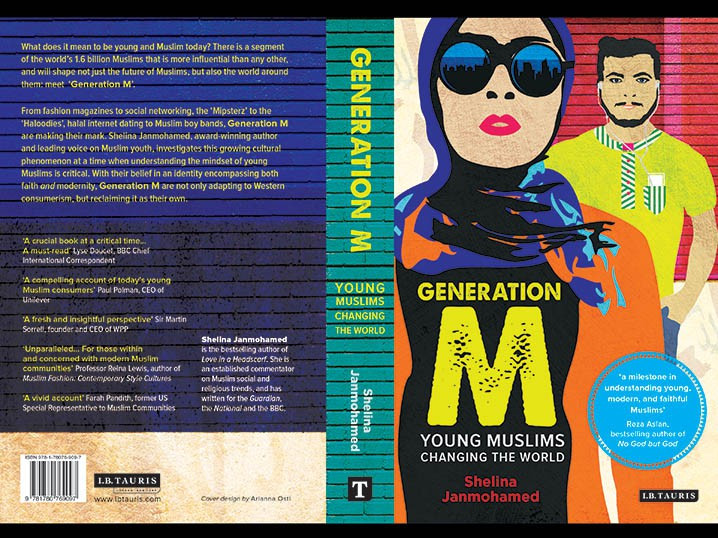
Book Review: Generation M: Young Muslims Changing the World

Ayşe Aykanat by Ayşe Aykanat
26 July 2023
in Analyses, Opinion
Book Review: Generation M: Young Muslims Changing the World
Share on FacebookShare on Twitter

In her writings, Shelina Zahra Janmohamed places a primary emphasis on topics concerning young Muslims, Muslim women, and the social and religious trends within the Muslim community. She is the author of the books “Love in a Headscarf” and “Generation M: Young Muslims Changing the World.” Selected as one of the world’s 500 most influential Muslims and one of the UK’s 100 most powerful Muslim women. With her extensive experience spanning many years, the author remains actively involved in various areas such as brand implementation, marketing, advertising, and writing.

The book “Generation M: Young Muslims Changing the World” is based on the author’s personal experiences and accumulated knowledge. By drawing from the stories and voices of Muslims, the author strives to shed light on various aspects. The author contends that studies and analyses on Muslim behaviour often fail to capture the multifaceted nature that extends beyond politics and theology. Within the pages of this book, the author directs their attention towards diverse Muslim experiences, attitudes towards the behaviours exhibited by Generation M, and the unique cultures and identities that emerge from these dynamics.

The author begins the book by addressing questions such as what is Generation M, what are its sources of inspiration, and what are its perceptions of identity and lifestyle practices. According to the author, Generation M refers to Muslims who shape their lives without concealing their identity while embracing modernity. They are a generation that embodies consumerism, entrepreneurship, digital fluency, and places importance on education and activism, while also valuing religious practices in their daily lives.

The emergence of this generation can be attributed to factors such as women’s movements, evolving identity structures, and the influence of social media and the internet. They seek to transform their lives and the society they inhabit by drawing inspiration from faith, education, and technology. In short, Generation M is a diverse group that fosters a creative identity construction and aims to lead a faithful life by drawing nourishment from religious sources.

Generation M, with a tendency to explore alternatives in various areas such as food, clothing, and entertainment, aims to popularize halal brands and create a Muslim lifestyle. Muslim consumers are not only satisfied with halal food; they also strive to access products that have undergone quality production and distribution processes, emphasizing health, halal, cleanliness, transparency, and integrity. According to the author, many individuals become acquainted with Generation M through the ethical consumer movement.

The relationship that this generation has formed with technology differs from previous generations. According to the author, Generation M relies less on traditional institutions compared to their elders and instead builds a new sense of identity as individuals through social media, experiencing a collective belonging to the ummah. The internet provides a space where young people, especially young women, can express themselves more freely and feel a strong sense of affiliation. It also offers the opportunity for curiosity, easier questioning, a sense of belonging, and the ability to make judgments. However, young individuals express concerns about the circulation of misinformation. They explore various interpretations and options online before making decisions, indicating the proliferation of diverse religious interpretations and identities in the virtual world.

In addition to digital platforms and technological advancements, they also show a tendency to create and explore alternatives in the realms of culture and entertainment. They seek to transform music into a means of life and entertainment by adapting cultural and Islamic values. Through their songs, they strive to address current issues. They aim to create and develop new spaces, such as humour, cartoons, novels, comics, films, animations, magazines, and blogs, where they can freely express their identities. Their main motivation is to produce alternative content by incorporating Islamic values and concepts into language. It is possible to say that they aspire to reach a different world and wider audiences through the culture they create and the identities they construct.

The book comprises five main sections with several subsections. The opening chapter, titled “Selam” (Greetings), provides an overview of the general characteristics, religious perceptions, and identity constructions of Generation M. The author enhances the narrative with illustrative examples that depict the generation’s relationship with technology, modernity, and tradition.

The section titled “Global Muslim Lifestyle” delves into challenges and alternative recommendations concerning the accessibility of halal products in diverse domains such as food, finance, the internet, and entertainment. Emphasis is placed on the significance of attaining halal and healthy production processes and goods.

Under the heading “Culture: New Muslim Cool,” the book concentrates on alternative music genres and instances, considering their Islamic connections and perceiving music as a source of inspiration. It explores various issues encompassing contemporary challenges and music, including the compatibility of music with Islamic content. The section named “The Twenty-First Century Ummah” tackles the subject of the global Muslim consumer, examining topics like celebrations, veiling, and modesty through concrete examples. The concluding segment, “The Faithful Future,” directs its attention towards consumption and production chains.

The author highlights the concept of the Muslim consumer as a significant topic in discussions about Generation M. The book’s examples illustrate the rise of a new economic power and a growing consumption capacity. Within this context, the evolving and changing Muslim consumer base is portrayed to readers, emphasizing the development of global Muslim brands and the influence of production, consumption, marketing, and advertising. In the book, it is possible to come across various narratives from different countries around the world, offering a wide range of examples from diverse geographical locations, providing insights into Muslim experiences. It is a work that contributes to keeping up with the contemporary world of Muslim youth.
Tags: Book ReviewShelina Zahra JanmohamedYoung Muslims
Previous Post

Book Review: Contemporary Thought in the Muslim World

Next Post

Inviting Critical Thinking: The Thought of Jabiri

Popüler Seçkiler

İsrail Neden Klasik Sömürgeci Bir Aktör Olarak Görülmeli?

Why Shouls Israel Be Regarded As a Classical Colonial Actor?

1 September 2026
Keşfet: El-Adiliye Medresesi

Discover: Al-Adiliyya Madrasa

31 August 2026
Keşfet: El-Ezher Medresesi

Discover: Al-Azhar Madrasa

31 August 2026
Beyond Zero-Sum: Connectivity for Shared Prosperity

Beyond Zero-Sum: Connectivity for Shared Prosperity

26 August 2026
Süleyman Mansur

Sliman Mansour

25 August 2026

     Platform: Current Muslim Affairs was established under the İLKE Foundation for Science, Culture and Education as a publication aimed at following and analyzing the intellectual, political, social, economic, and cultural agendas of Muslim societies, while offering original perspectives on the Muslim world.

    • ANALYSIS
    • NEWS
    • INTERVIEWS
    • VOICES
    • platform@ilke.org.tr
    • (0216) 310 43 18
    • Aziz Mahmut Hüdayi Mah. Türbe Kapısı Sk. No: 13 Üsküdar, İstanbul
    Instagram X-twitter

    2025 @ PLATFORM is an İLKE Foundation organization. All rights reserved.

    No Result
    View All Result
    • Analyses
    • Interviews
    • Database
      • Q-A
      • People
      • Institutions
      • Movements
    • Voices
    • News
    • DISCOVER