





















August 5 Islamic Human Rights and Human Dignity Day is a symbolic day representing the Islamic world’s effort to contribute to the global human rights discourse through its own legal and spiritual heritage.
On August 5, 1990, member states of the Organisation of Islamic Cooperation (OIC) adopted the Cairo Declaration on Human Rights in Islam at the 19th Islamic Conference of Foreign Ministers held in Egypt. To commemorate the adoption of this declaration, the Organisation of Islamic Cooperation officially declared August 5 as “Islamic Human Rights and Human Dignity Day” through a decision taken in 2008.
Human Rights in Islam
The Islamic concept of human rights is based on a balance between rights and responsibilities; it views individual rights as an integral whole alongside morality, justice, and the welfare of society. This holistic approach aims to preserve human dignity while fostering a peaceful and cohesive community structure.
How Did August 5 Islamic Human Rights and Human Dignity Day Emerge, and What Does It Aim For?
Rather than serving as a rejection of the UN’s 1948 Universal Declaration of Human Rights, the Cairo Declaration provides a cultural and philosophical framework that grounds fundamental rights in the values of Islamic law. In this approach, human dignity (karamat al-insan) is defined as an inalienable, inherent, and divine right. Concepts such as the right to life, property, justice, and the protection of the family institution are recognized as core elements of both individual inviolability and social balance.
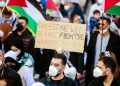
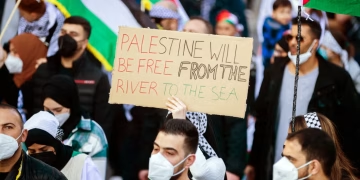
In contemporary international relations, August 5 stands out as a platform to legally combat Islamophobia, discrimination, and hate speech. International bodies such as the OIC Independent Permanent Human Rights Commission (IPHRC) and the Parliamentary Union of the OIC Member States (PUIC) emphasize in their assessments that universal human rights principles and the Islamic concept of justice do not conflict, but rather complement each other. In an era marked by rising Islamophobic acts and daily violations of human rights in Gaza, protecting human dignity is positioned not merely as a requirement of international treaties, but as an essential moral and social duty.
For the analysis by Sharifah Nursyahidah Syed Annuar on the role of Muslim NGOs in Malaysia in shaping the global human rights discourse: Civil Society and Human Rights Advocacy: Lessons from Malaysia